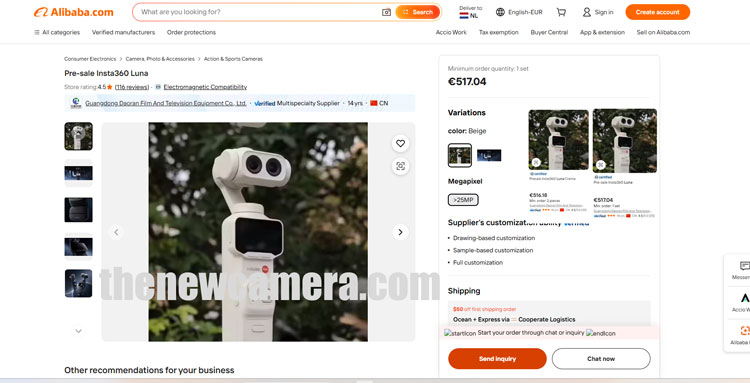
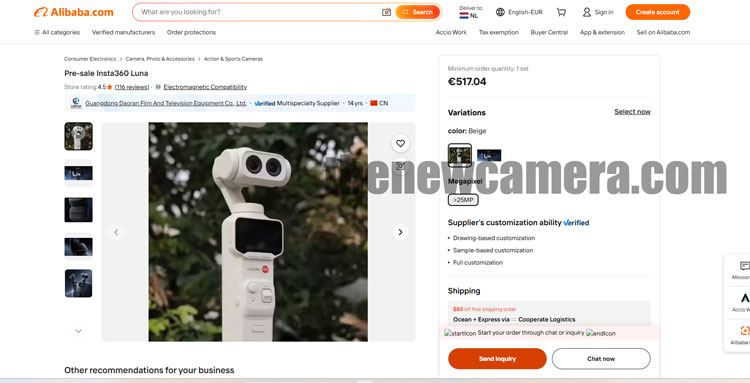
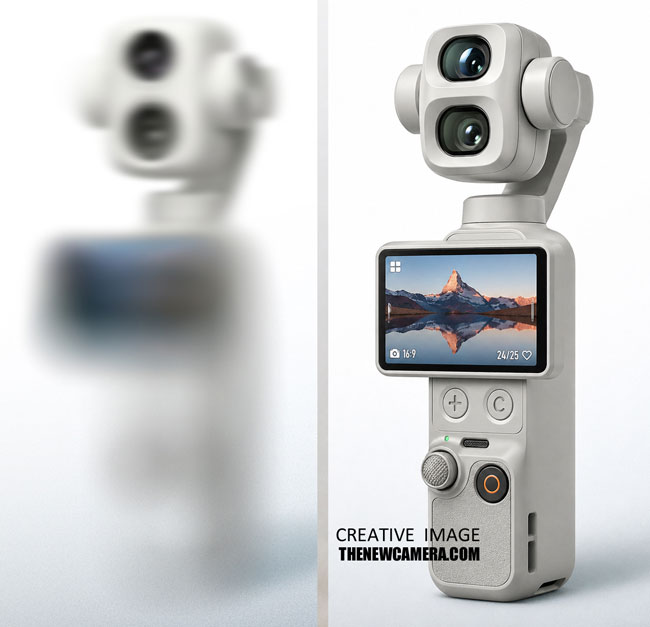
Insta360 Luna: the best part is that we now have pre-sale pricing confirmation from China. Leading retail outlets in China are listing Insta360 Luna on their page for pre-sale and pre-booking. Not from one but two different suppliers are accepting orders. The attractive beige Crema variant of the dual-lens Insta360 Luna Ultra is currently listed at €516–€517 (roughly $599–$600 USD).
Updates Content Here
What the Insta360 Luna Pre-Sale Listings Show
Keep in mind that sellers accepting orders for the luna 360 are verified Chinese B2B suppliers with a good reputation (ratings and reviews) and have started offering early pre-sale units of the Insta360 Luna series. Key details from the active listings include:
Resolution: >25MP (aligned with the 1-inch sensor setup)
Minimum Order: 1–2 pieces
Finally, we have some good news: these are typical third-party pre-sale listings that often appear for hot new Insta360 and DJI gear before official channels open. It’s a very clear indication that the first batch of orders is now ready to be dispatched from official retail stores, Chinese manufacturers, and usually precedes the global retail launch by a few weeks.
Important Note: These are not official Insta360 pre-order listings. Buyers should factor in potential shipping delays, early firmware versions, grey-market import duties, and standard warranty limitations when purchasing through third-party suppliers.
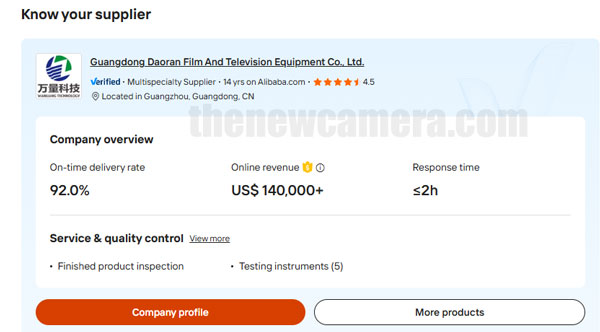
The supplier is a verified supplier, doing business for more than 14 years.
Highlights from NAB 2026 previews and early hands-on reports:
Sensor: Large 1-inch CMOS sensor
Lens: Leica-coengineered optics with f/1.8 bright aperture (Luna Ultra features dual lenses for true optical zoom)
Color Science: 10-bit iLog with approximately 14 stops of dynamic range
Video Capabilities: 4K recording at high frame rates (up to 240 fps in select modes)
Additional Features: AI subject tracking, excellent low-light performance, modular design elements
The dual-lens Luna Ultra is expected to stand out with its lossless zoom and natural bokeh — features that position it as a strong rival to the DJI Osmo Pocket series.
Insta360 Luna Release Date and Official Expectations
Insta360 has not yet opened official pre-orders or published final retail pricing on its website. Industry consensus points to a mid-to-late May 2026 announcement, with shipping likely beginning in June 2026.
Early rumours suggest official retail pricing will land in the $499–$699 range, making the current supplier’s pre-sale price very competitive for the premium Crema Ultra model.
Our recommendation: Most readers should wait for the official Insta360 launch for full warranty, support, and peace of mind. However, if you specifically want the Crema variant and accept the typical risks of early grey-market purchases, the current listings offer a viable option.
Insta360 Luna Ultra vs DJI Osmo Pocket 4
The biggest question in the pocket gimbal camera space: How will the Luna stack up against DJI’s upcoming Osmo Pocket 4 series?
Early indicators suggest Insta360 is pushing hard with:
Larger 1-inch sensor
Leica-tuned optics
Dual-lens optical zoom on the Ultra model
Superior 10-bit iLog recording
We will publish a full head-to-head comparison as soon as both cameras are available for testing.
The appearance of real Insta360 Luna pre-sale pricing at around €517 for the Crema model is a clear sign that the official launch is imminent. This Leica-coengineered pocket gimbal camera is shaping up to be one of the most exciting new releases of 2026 for vloggers, content creators, and travel filmmakers.
We will continue monitoring the situation and update this article as soon as Insta360 announces official pricing, pre-order links, and full specifications.
The article “Insta360 Luna Pre-Sale Price Leaked: $560 for Ultra Model” was written by thenewcamera.com team on 7:58 pm, Wednesday, 6 May 2026, Greenwich Mean Time (GMT) | You can also follow us on Our Official Social Media HandlesFACEBOOK | TWITTER | INSTAGRAM> get live news — > DJI Rumors
Now, what we have got today is a clear sample picture of the Insta360 Luna Ultra, which shows how this camera setup captures real images with natural background blur, which is actually expected from a large DSLR or mirrorless camera with a bright aperture-based lens, which is going to cost you a lot. If you have that setup already, you know that.
Even before we begin, let me tell you, I am waiting for the DJI Pocket 4 Pro. If that particular product is not available in America, then yes, I will be waiting for the Xtra Muse 2 Pro, but again, the Luna Ultra is one of the best handheld gimbal cameras we have seen to date, specifically in terms of camera capture. Actually, it’s a screenshot from a video captured by the Insta360 Luna Ultra.
Sample Image Captured by Luna
First Real Portrait Sample: Leica Dual-Lens Depth Profile in Action
That’s the best part of today’s leak, that we have a sample that clearly defines how the portraits will look when captured from the Insta360 camera.
This gorgeous portrait sample (shot on the Luna Ultra) demonstrates the exact selling point everyone’s talking about: real optical + computational depth instead of heavy software blur.
Creamy, natural bokeh on the background
Excellent subject isolation on the woman’s face
Flattering skin tones and micro-contrast that scream “Leica.”
Beautiful plane compression thanks to the telephoto lens
This is what happens when you combine a large 1-inch main sensor, bright f/1.8 aperture, and a dedicated telephoto module with stereo depth sensing. The result? Portrait mode that actually feels optical — not just “portrait mode.”
Watch: Insta360 Luna Ultra New Teaser Video
I have already posted Insta360 Luna videos. And the best part is, all these videos are uploaded by the testers and reviewers of the Insta360 Luna camera. Now, recently, a new short video has been published. Specifically, it looks like a kind of short promo video, but it is not available on the official Insta360 channel, so we have published it here.
The video highlights the premium build and the star of the show: the dual-lens Leica system that sets the Luna Ultra apart from every single-lens pocket gimbal camera on the market.
Insta360 Luna Ultra Key Specs & Features (Latest Confirmed)
Feature
Insta360 Luna Ultra Details
Lens System
Dual Leica lenses (Wide + Telephoto)
Main Sensor
1-inch CMOS (50MP)
Aperture
f/1.8 (wide lens)
Focal Length
~18-20mm wide + ~60-70mm telephoto
Zoom
~4x optical / up to 6x lossless / ~12x hybrid
Video
4K 240fps support, 10-bit iLog, 14 stops DR
Gimbal
3-axis mechanical stabilization
Screen
2-inch rotatable high-brightness OLED touchscreen
Design
Modular “Twist” design, available in Black & White
Audio
Integrated 32-bit float-ready ecosystem
Expected Launch
Late Q2 2026 (May/June)
The Luna Pro (single-lens version) will also be available, but the Luna Ultra is clearly positioned as the premium model for creators who want optical versatility in a pocket-sized package.
Why the Dual-Lens Leica System Changes Everything
Unlike the single-lens DJI Osmo Pocket 4, the Luna Ultra gives you:
True optical zoom without quality loss
Better low-light performance and depth of field control
More accurate stereo depth mapping for portraits and subject isolation
Leica co-engineered color science (natural skin tones + excellent micro-contrast)
This is exactly why the portrait sample above looks so cinematic.
Insta360 Luna Ultra vs DJI Osmo Pocket 4 — Quick Comparison
Optical Zoom & Depth: Luna Ultra wins with dual lenses
Sensor Size: Luna Ultra’s 1-inch main sensor beats most competitors
Portrait Performance: Luna Ultra’s depth profile is a clear step up
Stabilization: Both excellent, but Insta360’s new gimbal + modular design adds flexibility
Color Science: Leica tuning gives Luna Ultra a more filmic, flattering look
The Insta360 Luna Ultra is shaping up to be one of the most exciting pocket gimbal cameras of 2026. Between the Leica dual-lens system, massive 1-inch sensor, 10-bit iLog workflow, and real optical depth capabilities, it’s delivering exactly what creators have been asking for.
We’ll be updating this article with full review samples, pricing, and availability as soon as they drop. Stay tuned!
What do you think? Would you pick the Luna Ultra over the DJI Osmo Pocket 4? Drop your thoughts in the comments below.
The article “Insta360 Luna Ultra Portrait Sample and Teaser Video” was written by thenewcamera.com team on 7:40 pm, Tuesday, 5 May 2026, Greenwich Mean Time (GMT) | You can also follow us on Our Official Social Media HandlesFACEBOOK | TWITTER | INSTAGRAM> get live news — > DJI Rumors
The DJI Osmo Mobile 8P Gimbal is about to arrive, and the announcement is imminent. Most importantly, this new gimbal is coming with a breakthrough technology. Specifically, if we talk about Osmo FrameTap, which is associated with a magnetic touch with the gimbal. It allows you to control the Osmo Mobile 8P gimbal remotely from a distance with a live display unit, which will have synchronicity with a smartphone live recording, so this is one of the best professional gimbals that DJI has ever created for content creators.
Just before the official announcement of the DJI Osmo Mobile 8P Gimbal, we have the unboxing video of the gimbal clearly showing what you are getting inside the box when you are purchasing the Osmo Mobile 8P Gimbal. Along with that, we also get to see the basic functionality of the FrameTap and how it works, so let’s explore the Osmo Mobile 8P first unboxing video and the basic functionality of the FrameTap.
Biggest Highlight: Osmo FrameTap Detachable Magnetic Remote
I have to say one of the major stars of the show is the Osmo FrameTap. Yes, we have seen many of the DJI gimbals before, and I was never so excited when we first heard the news when the Mobile 8P was registered at the FCC ID back in 2025. Alongside that, FrameTap was also registered, and we had clearly told in our public post that FrameTap is coming to control most of the DJI gear remotely, and it will be an excellent tool, or better to say, a remote control for the DJI ecosystem.
The Frame tap can wirelessly control framing, tracking, and recording from up to 10 meters away while seeing exactly what your phone’s camera sees.
Key Features Shown in the DJI Osmo Mobile 8P Hands-On
Osmo FrameTap – Detachable wireless remote with live-view screen and tap-to-track
ActiveTrack 8.0 — Much improved AI subject tracking even in crowds
Up to 10-hour battery life with reverse charging
3-axis mechanical stabilization
Built-in extension rod, tripod, and fill light
Wide phone compatibility (170–300g)
Watch the full DJI Osmo Mobile 8P unboxing video below:
China pricing starts at around $130. The global price is expected to be between $149–$189.
Official global launch: May 7, 2026.
So this is the Osmo Mobile 8P, and finally, we will be having more updates about the upcoming DJI products. Stay updated with TheNewCamera.com.
Follow us on X @thenewcamera and subscribe to our newsletter for instant updates.
The article “DJI Osmo Mobile 8P + Osmo FrameTap Unboxing and Hands-On Review” was written by thenewcamera.com team on 7:25 am, Monday, 4 May 2026, Greenwich Mean Time (GMT) | You can also follow us on Our Official Social Media HandlesFACEBOOK | TWITTER | INSTAGRAM> get live news — > DJI Rumors
Just seven days after our exclusive photo shoot leaked on April 27 and was published on our website, we have now received some of the clearest images yet from the creator event that recently took place somewhere in mainland China. It was a warm-up session for influencers and creators to get hands-on experience with the product and create content ahead of its official release.
The new images confirm the vertical dual-camera design that has everyone talking: a 1-inch main sensor paired with a dedicated 3x optical telephoto lens. This is a massive upgrade over the standard Osmo Pocket 4.
New Close-Up Images from DJI Pocket 4 Pro Creator Meetup
These shots were captured during hands-on testing sessions and give us the best look yet at the device’s build quality and ergonomics:
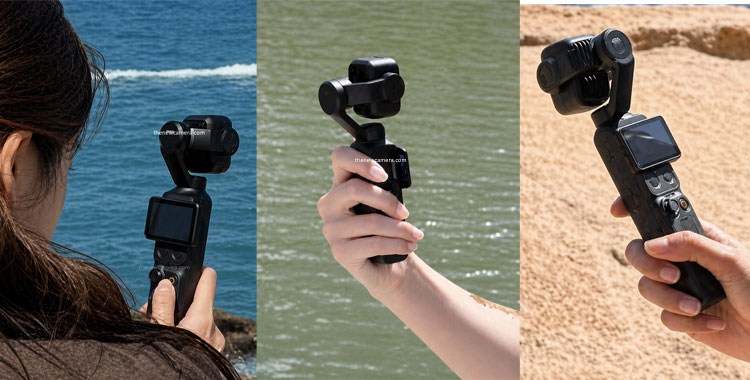
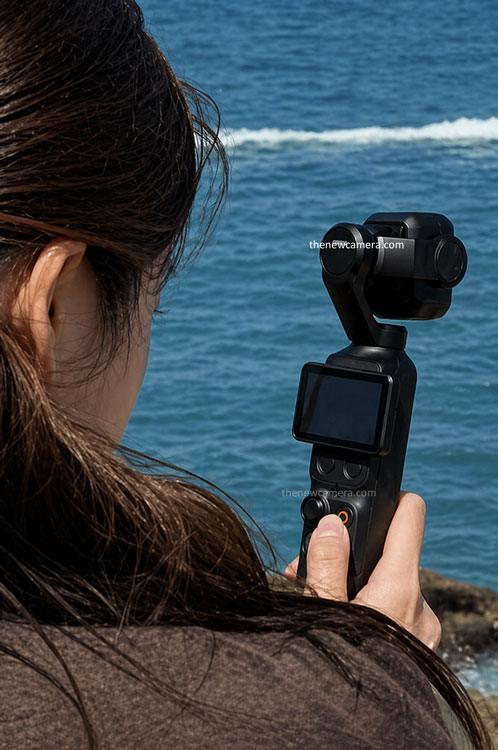
Caption: Rear view of the DJI Osmo Pocket 4 Pro in use – excellent ergonomics and stabilized gimbal visible
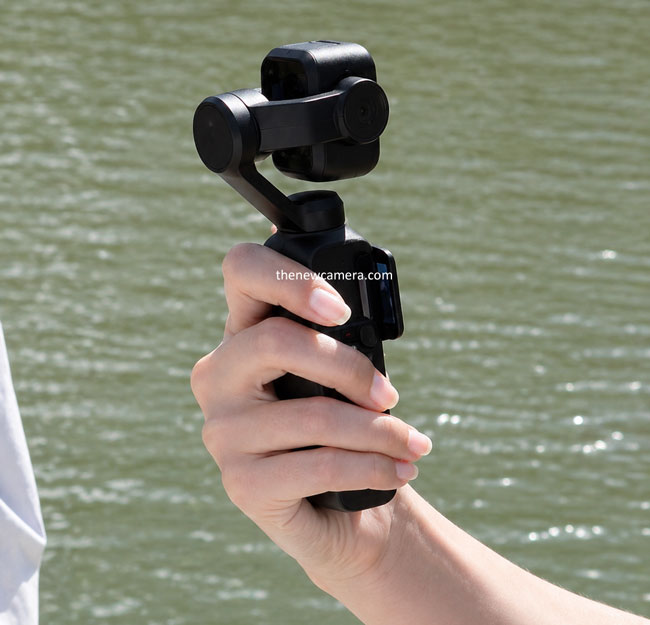
Best Dual-Lens Close-Up (Over Water) – Sharpest leaked image yet of the vertical dual-lens system on the DJI Pocket 4 Pro
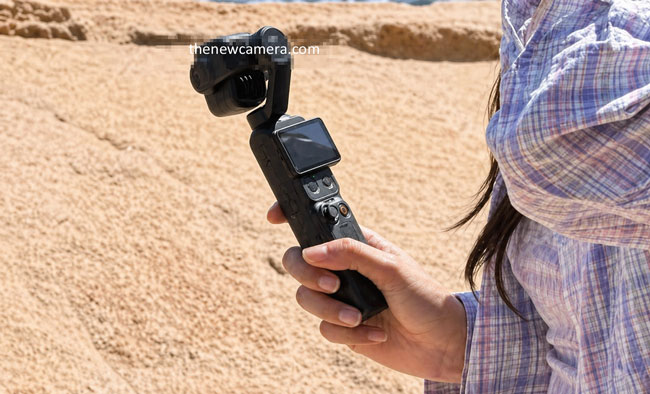
Desert Side Profile – Side profile showing the flip-out screen, physical controls and textured grip
And now its time to explore the latest teaser video
NEW Exclusive Teaser Video (Posted May 2)
Yes, we also have a 2nd teaser video for the Pocket 4 Pro camera, which is approx. a polished 26-second teaser video on our X account showing the Pocket 4 Pro in cinematic lifestyle footage, with HEX colour codes highlighting its 10-bit colour science.
DJI Pocket 4 Pro Specs (Rumored & Leaked)
Feature
Details
Sensor
1-inch main + 3x optical telephoto
Video
4K/240fps slow-mo, possible 6K support
Dynamic Range
14 stops
Color
10-bit D-Log, Hasselblad-style tuning
Storage
128GB built-in (vs 107GB on standard model)
Stabilization
3-axis mechanical gimbal + improved ActiveTrack
Screen
Flip-out touchscreen
Expected Price
~$699–$749
Important Launch Timeline Update (May 7 Clarified)
Be aware of the Fake news, Many websites (including PhotoRumors) previously reported a May 7 announcement. That date is now confirmed to be for the DJI Osmo Mobile 8P smartphone gimbal (“Wonders in Your Palm” event).
For the DJI Osmo Pocket 4 Pro, the latest consensus from reliable sources points to:
Announcement → Late May or early June 2026
First availability → China first, followed by global rollout
This staggered release strategy allows DJI to give the standard Pocket 4 its full spotlight before launching the premium dual-lens Pro model.
Will the DJI Pocket 4 PRO become available in the USA?
Yes, but with a twist. We do know that DJI FCC-approved products are also facing a lot of issues, even though they are not drones but only cameras. The pocket 4P (PRO) also cleared the FCC clearance before Dec 25, ban. But, still, we have no certainty over the arrival or sale of the Pocket 4 PRO camera in the USA.
But the best part is, we will be having the Xtra Mse Pro 2 in the United States of America, possibly at the end of May. So, Just hold your purchase and don’t worry about the Pocket 4 availability in USA.
Want to be the first to know when DJI officially announces the Pocket 4 Pro?
Follow us on X @thenewcamera and subscribe to our newsletter for instant updates.
The article “DJI Pocket 4 Pro: New Creator Meetup Close-Up Images Leak – Updated Launch Timeline” was written by thenewcamera.com team on 2:40 pm, Sunday, 3 May 2026, Greenwich Mean Time (GMT) | You can also follow us on Our Official Social Media HandlesFACEBOOK | TWITTER | INSTAGRAM> get live news — > DJI Rumors
Now we have double confirmation over the Canon R6 V camera core specifications. We had already shared details on April 22nd, 2026, and in that article, we clearly mentioned the possible core specifications of the upcoming camera, which include a 32.5-megapixel sensor that we have already seen in the Canon R6 Mark III, as well as 7K 60p internal RAW recording. Fortunately, the same core specifications were published by CanonRumors a day ago. That seems to confirm what we had written on April 22.
Before we begin lets talk about the official date of the upcoming camera,
Canon EOS R6 V Announcement Date Confirmed
Yes, as per rumors and Multiple reliable leaks now align perfectly:
Official unveiling: May 13, 2026
Shipping: June 2026
The camera will launch alongside the brand-new Canon RF 20-50mm f/4L IS USM PZ power-zoom lens — Canon’s first L-series PZ optic for the RF mount.
Canon EOS R6 V Full Specifications (Double Confirmed)
Here’s the complete, up-to-date spec list based on the latest Canon Rumours round-up and our previous coverage:
Feature
Canon EOS R6 V Details
Sensor
32.3–32.5 MP Full-Frame FSI CMOS (same as R6 Mark III / C50)
Max Resolution
6960 × 4640 pixels
Video Recording
7K 60p RAW Open Gate (internal)
7K 30p RAW
Up to 6.9K 4:2:2 / ProRes RAW 10-bit
Log Profiles
Canon Log 2 & Canon Log 3
Active Cooling
Yes — Built-in fan (low/medium/high) + vents
Image Stabilization
7.5-stop IBIS
Autofocus
1053 focus points (Dual Pixel AF, expected to match R6 III level)
Viewfinder
None (EVF removed for cine-style design)
Rear Screen
High-resolution vari-angle LCD (optimized for video)
Memory Cards
Dual slot: CFexpress Type B + UHS-II SD
Shutter
Electronic only (1/16000–30 sec)
ISO Range
100–64000 (expandable 50–102400)
Body Design
Cross-hatch grip (like EOS R1), weather-sealed, cinema-style ergonomics
Weight
Approx. 598 g (body only)
Battery
LP-E6P
Price (Body Only)
€2,549 (≈ $300–400 cheaper than EOS R6 Mark III)
Photography performance The upcoming Canon R6V is expected to be nearly identical to the EOS R6 Mark III, but in Video, the Canon R6V does have superiority over the R6 III, and is open for future firmware updates
Why the Canon EOS R6 V Is a Game-Changer for Video Creators
The biggest upgrades are exactly where creators need them most:
7K Open Gate RAW — Massive resolution and flexibility for cropping, reframing, and future-proofing your footage.
Active Cooling Fan — This was actually missing inside the Canon R6 III camera, so even while using the Canon R6V in extreme weather condition.No more overheating during long 7K takes or gimbal runs.
IBIS + Power-Zoom Lens Pairing — Perfect for run-and-gun documentary work and smooth cinematic zooms.
This is Canon’s direct answer to hybrid creators who want cinema-level video tools without jumping to the much more expensive Cinema EOS line.
Pricing Strategy: More Affordable Than You Expected
At $2,499 / €2,54 body only, the Canon EOS R6 V undercuts the current EOS R6 Mark III by roughly €350. That makes it one of the most accessible full-frame 7K RAW cameras ever from Canon – perfect for serious YouTubers, indie filmmakers, and wedding videographers who want pro features at a more reasonable price.
Canon RF 20-50mm f/4L IS USM PZ Lens – The Perfect Companion
The new power-zoom lens is also confirmed for the May 13 announcement. While full optical specs are still limited, early signs point to:
Constant f/4 aperture
L-series is built with weather sealing
Smooth power-zoom mechanism (USM motor)
Optical IS
This will be a killer kit lens for the R6 V — ideal for gimbal work, vlogging, and documentary shooting.
Final Thoughts: The Wait Is Almost Over
We called the core specifications weeks ago – and today’s Canon Rumors round-up gives us double confirmation on the sensor, 7K RAW capabilities, active cooling, price, and exact announcement date.
The Canon EOS R6 V is shaping up to be one of the most exciting releases of 2026 for video-first creators.
Mark your calendars: May 13, 2026.
We’ll be live-covering the announcement right here on thenewcamera.com with hands-on impressions, sample footage analysis, and full comparison guides the moment Canon pulls back the curtain.
What do you think? Will the Canon EOS R6 V replace your current hybrid camera? Drop your thoughts in the comments below — we read every single one!
Stay tuned to TheNewCamera.com — we’ll keep you updated
The article “Canon Really Wants to Bring These Retro Compacts to Life?” was written by thenewcamera.com team on 2:45 pm, Saturday, 2 May 2026, Greenwich Mean Time (GMT). | You can also follow us on Our Official Social Media HandlesFACEBOOK | TWITTER | INSTAGRAM> more live Camera News + Canon Rumors 24X7
Sony A7R VI & FE 100-400mm f/4.5 GM Lens Rumoured for May 13, 2026 Announcement: Full Specs, Pricing, and What It Means for Photographers. We have confirmation that Sony is gearing up for its major announcement on May 13, 2026. At London time 3 PM, alongside a Sony FE 100-400mm f/4.5 GM Master lens.
This is really exciting news, but we still need multiple confirmations. Specifically, we are waiting for official teasers from Sony itself before the announcement, which will be the maker’s final confirmation of the camera’s arrival.
Confirmed: Sony A7R VI Announcement Date is May 13, 2026
So, how did we come to this date? At first, the date matches the already registered Alpha Universe event, which is scheduled to take place in the United States of America between May 14 and 15. Now, this is not only a coincidence that the arrival date of the Sony A7R VI matches the date that has already been publicly posted by Alpha Universe.
So now the big question is, is the A7R VI camera really coming on that specific date, or is this just a claim made by the rumour mill? Well, it will become very clear in just a few days, but the good thing is the SonyAlphaRumors claim is now backed by PhotoRumors, which now does make us believe that yes, there is a probability with higher chances of the A7R VI camera’s arrival on that specific date, but still, we are waiting for further confirmations and teasers from official sources to confirm the same.
Multiple independent sources now align on May 13, 2026, as the official reveal date. This matches an already-registered Alpha Universe event in the US on May 14–15.
Sony A7R VI Rumoured Specs: 67MP Fully Stacked Sensor That Could “Kill” the A1 II
Let’s discuss the core specification of the upcoming camera. According to the rumor mill, the upcoming camera feature? A ~67 megapixel fully stacked (or heavily stacked) full-frame Exmor RS sensor — the second stacked sensor in Sony’s Alpha line after the A1 II, but with significantly higher resolution.
Here’s what trusted sources are reporting:
Sensor: ~67MP fully/partially stacked CMOS with ultra-fast readout (~60 fps full sensor in 14-bit mode)
Burst shooting: Up to 30 fps 14-bit RAW with AF/AE tracking and RAW pre-capture
IBIS: Up to 8.5 stops of compensation
Video: 4K 120p, 10-bit, plus possible 8K/30p or even higher modes (sources are still confirming exact video limits)
EVF: 9.44 million-dot OLED with latest upgrades from the A7R V
Autofocus: Latest AI processing engine with major improvements in subject recognition and tracking
Body design: All-new ergonomics (no left-side dial like the A1 II)
Processor: BIONZ XR2 + High-Bandwidth LSI
Dynamic range: Up to 16 stops in mechanical shutter via Dual Conversion Gain HDR
In short, the Sony A7R VI is rumored to combine the resolution of the A7R V with the speed and video prowess of the A1 II – at a much more accessible price point.
Sony A7R VI Price: Ballpark €5,000–5,500 / ~$4,999–$5,099
Yes, what we expected for now, and it’s a jump from the current A7R V (which sells for ~$3,000–$3,300 street price today).
Sources close to the launch indicate the Sony A7R VI body-only will land around $4,999–$5,099 in the US and slightly above €5,000 in Europe.
While that sounds steep, remember: you’re essentially getting A1 II-level performance + 67MP resolution for roughly $2,000 less than the current A1 II. Many photographers are already calling this the “A1 II killer” for stills-first hybrid shooters.
New Sony FE 100-400mm f/4.5 GM Lens: Not a Mark II – A Completely New Design
Alongside the A7R VI comes a brand-new constant-aperture telephoto: the Sony FE 100-400mm f/4.5 GM.
Important note: This is not a replacement for the existing 100-400mm f/4.5-5.6 GM. It’s a fresh G Master design with:
Constant f/4.5 aperture across the entire zoom range
Internal zoom mechanism (no extending barrel — better balance, weather sealing, and handling)
Super lightweight construction (sources describe it as “impressively light” for its class)
Premium GM optics and build quality
Expected price: Around €5,000 / ~$5,000 — premium pricing that reflects the internal zoom engineering and constant aperture. It will sit above the current variable-aperture 100-400mm GM and even the 50-150mm f/2 GM in cost.
This lens pairs perfectly with the high-resolution A7R VI for wildlife, sports, and travel photographers who want reach without sacrificing sharpness or speed.
Why This Launch Matters (And Why You Should Care)
The combination of a 67MP stacked sensor, blazing speed, pro video specs, and a brand-new lightweight constant-aperture telephoto makes this one of Sony’s most exciting launches in years. Whether you shoot landscapes at maximum detail, wildlife at distance, or hybrid video/content, the Sony A7R VI could finally deliver the “do-it-all” flagship many have been waiting for.
Bookmark this page and turn on notifications. As soon as Sony confirms anything, you’ll read it here first.
What do you think — is the Sony A7R VI the upgrade you’ve been waiting for, or are you holding out for something else? Drop your thoughts in the comments below. Are you planning to pre-order on day one?
GET LIVE NOTIFICATION, Select Your Trusted Source GET LIVE NOTIFICATION Click ON Check BOX for Latest NEWS and Rumors
The article “Sony 16MP Partially Stacked Sensor in FX3 II and A7S IV – Latest Sony Rumors February 2026” was written by thenewcamera.com team on 1:35 pm, Friday, 20 February 2026, Greenwich Mean Time (GMT). | You can also follow us on Our Official Social Media HandlesFACEBOOK | TWITTER | INSTAGRAM >see more Sony Alpha Rumor Latest Camera News
All information in this article is based on trusted industry sources (SAR – sonyalphaRumor website) and leaks as of April 30, 2026. Official specs and pricing will be confirmed by Sony on May 13
The Insta360 Luna is finally here, and we have the detailed hands-on images of the upcoming camera. Fortunately, we also have some early reviews of the Luna series camera, which have been added to this article and have been published.
But before jumping into the content and more details, let me clarify that Insta360 is one of the best handheld gimbal cameras I have seen since the DJI Pocket series. With the first announcement (yet to hit stores), they made a deep impact on the handheld camera world. And since the FCC certification for Pocket 4 and Pocket 4 Pro is pending for now, the Insta360 Luna will have more room to grow. Although XTramuse 2 PRO is also in the announcement pipeline, expected to arrive in May- June 2026.
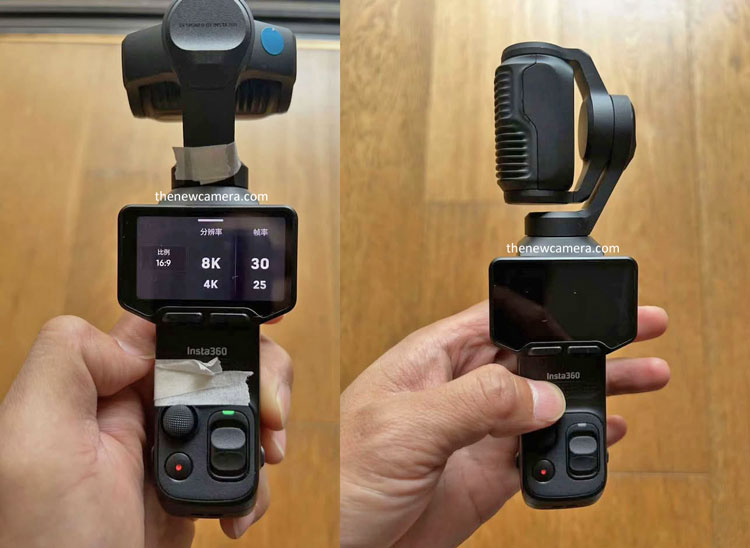
The Insta360 Luna is officially here — or at least its early prototype is. Fresh hands-on photos of what appears to be a pre-production Insta360 Luna (likely the dual-lens Luna Ultra or single-lens Luna Pro) have surfaced, giving us the clearest look yet at Insta360’s bold new pocket gimbal camera series.
Co-engineered with Leica and previewed at NAB Show 2026, the Luna series is shaping up to be the strongest challenger yet to DJI’s Osmo Pocket 4 lineup. These exclusive prototype images show the camera in action – screen on, menu visible, gimbal mechanism exposed — complete with classic pre-production white tape.
Here’s everything the photos reveal about the Insta360 Luna hands-on experience, specs, design, and what it means for vloggers, creators, and filmmakers in 2026.
First Look: Insta360 Luna Prototype Design & Build
The image not only gives detailed insight into the construction of the Insta360 Luna
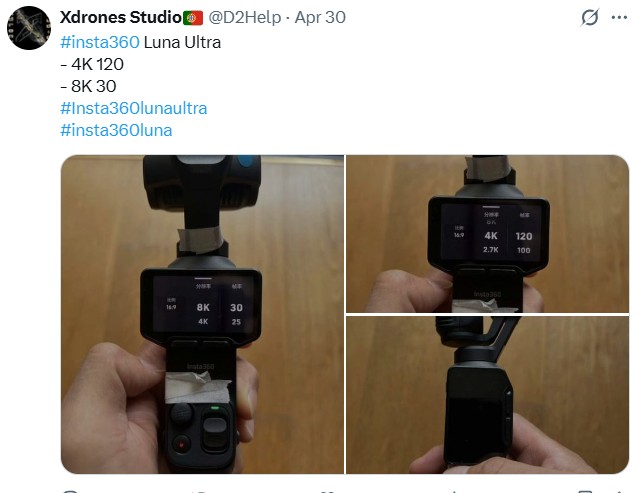
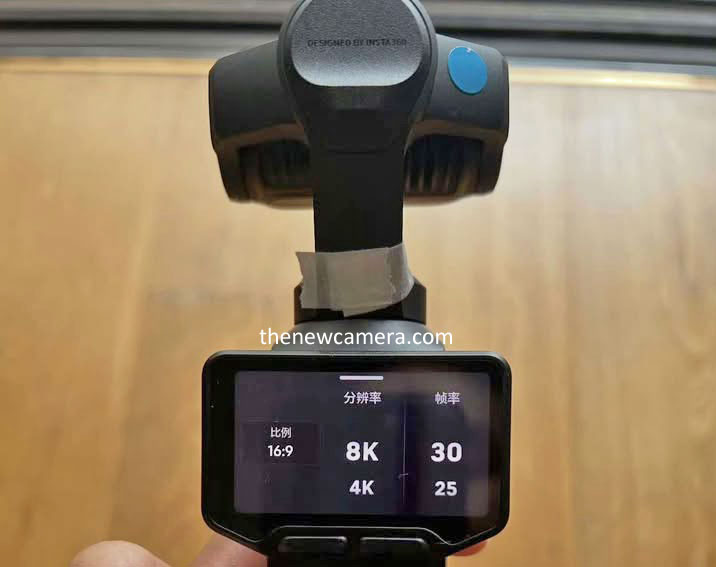
Insta360 Luna Screen Menu Breakdown: Real Specs Leaked
One of the most exciting parts of these hands-on shots is the on-screen menu in Chinese, which gives us the first concrete look at video capabilities:
Aspect ratio: 16:9 (standard cinematic)
Resolutions:
8K (likely marketing or future firmware — early hands-on videos mention 4K as primary)
4K
2.7K
Frame rates (highly competitive):
Up to 120 fps at 4K/2.7K (smooth slow-motion)
100 fps options
Standard 30/25 fps modes
Additional Key design highlights visible in the prototype photos:
Rotatable touchscreen – A crisp 2-inch OLED display (estimated 1000 nits brightness from early leaks) that flips and rotates for easy framing in selfie or low-angle shots.
Modular gimbal head – The top module detaches or twists, hinting at the “Twist Modular Design” mentioned in recent leaks. This could allow for creative mounting or future accessories.
Leica-tuned lens housing – The top module proudly reads “DESIGNED BY INSTA360” with a distinctive blue accent button (likely power or mode selector).
Physical controls – Dedicated record button with glowing red indicator light, joystick-style wheel, and a textured grip for one-handed operation.
This aligns perfectly with official NAB 2026 previews: the Luna series features a 1-inch sensor, f/1.8 bright aperture, 10-bit iLog colour, and up to 14 stops of dynamic range. The 8K listing suggests Insta360 is pushing boundaries beyond the DJI Osmo Pocket 4’s 4K/240fps claims.
Insta360 Luna Ultra Early Reviews
The dual-camera version (Luna Ultra) includes a wide-angle lens plus a telephoto module for seamless zoom — early leaks point to 3x–6x optical/lossless zoom with variable focal lengths. The single-lens Luna Pro targets direct Osmo Pocket 4 competition.
Final Thoughts: Is the Insta360 Luna a Game-Changer?
Yes its without an donut. These prototype photos prove the Insta360 Luna is a very strong contender and an excellent camera. The visible 8K video recording capability was never possible with Pocket series cameras, even with their newest addition, the Pocket 4 camera.
The announcement is about to happen on May 2026, shipping details and pre-order links will be posted alongside the official announcement
What do you think? Will the Insta360 Luna Ultra dethrone the Osmo Pocket 4? Drop your thoughts in the comments.
Images courtesy of an anonymous source who sent early prototype access. All specs are based on visible menu data and official NAB 2026 previews.
The article “Insta360 Luna Early Reviews and Hands-On Prototype Photos” was written by thenewcamera.com team on 5:01 pm, Wednesday, 29 April 2026, Greenwich Mean Time (GMT) | You can also follow us on Our Official Social Media HandlesFACEBOOK | TWITTER | INSTAGRAM> get live news — > DJI Rumors
Buy Canon Lenses, Buy Music CD or Digital Camera at amazon it helps this site, and you do not pay anything extra, it is just a way to help support this site.
New Camera Website, we list all type of new camera information, price review and all type camera rumors, subscribe us or follow us via twitter or facebook.
Disclaimer: We have attempted to select useful information to include on New Camera, and to ensure that the resources we have included on the site -- as well as the way we have described them -- are accurate, fair, and balanced. However, we make no claims, warranties, or other representations concerning the accuracy, completeness, or utility of the information provided, or concerning the abilities or performance of the organizations, agencies, companies, and other resources presented through New Camera