DJI drones have transformed aerial videography, but on December 22, 2025, a strict ban was imposed on DJI and all foreign-made drones. This halted FCC registration and authorization for new imports. However, recent amendments have introduced changes, and in this article, we’ll discuss them.
We’ll cover the DJI ban timeline, the latest FCC changes from January 7, 2026, exemptions until January 1, 2027, and how they affect DJI drone users and the industry. At the end, we’ll assess whether these changes alter the overall DJI ban situation.
Let’s dive into the details and explore the recent updates from the FCC and other U.S. government departments.
Understanding the DJI Drone Ban: Background and Timeline
We’ll start with the December 2025 ban, then cover the January 7, 2026, update from the Department of War (DoW), and finally the January 9–10 developments.
Key Timeline of the 2026 DJI Ban
December 22, 2025: The FCC adds all foreign-produced UAS and critical components to its “Covered List,” banning new equipment authorizations. This prevents importation, marketing, or sale of new foreign drones in the U.S. Critical components include flight controllers, cameras, batteries, sensors, communications systems, software, and ground stations.
January 7, 2026 (Latest Update): Following a Department of War (DoW) determination, the FCC updates the Covered List with temporary exemptions until January 1, 2027. This includes Blue UAS-cleared drones and those meeting Buy American standards (65% U.S. content).
January 9-10, 2026: The U.S. Commerce Department withdraws a broader drone restriction proposal, avoiding retroactive impacts on existing fleets.
Post-2027 Outlook: Exemptions expire on January 1, 2027, unless extended. Industry experts predict potential broader bans, pushing for U.S.-made alternatives.
These changes balance security with industry needs, but DJI remains largely restricted unless adapted. As of January 12, 2026, no further FCC updates have been announced, per official sources.
Latest FCC Changes: January 7, 2026 Exemptions Explained
The FCC’s January 7, 2026, update introduces temporary exemptions, providing “breathing room” for the drone market. According to the official FCC Fact Sheet (DOC-417528A1), “Today, the FCC updated its Covered List to remove certain Uncrewed Aircraft Systems (UAS) and UAS critical components determined by the Department of War (DoW) to not pose national security risks.”
Official FCC Quote on the Update
From the FCC Fact Sheet: “The FCC updated the Covered List to exempt certain UAS and UAS critical components until January 1, 2027, based on DoW’s determination. The updated Covered List now reads: ‘Uncrewed aircraft systems (UAS) and UAS critical components produced in a foreign country—except, until January 1, 2027, (a) UAS and UAS critical components included on the Defense Contract Management Agency’s (DCMA’s) Blue UAS Cleared List, and (b) UAS critical components that qualify as “domestic end products” under the Buy American Standard, 48 CFR 25.101(a)—and all communications and video surveillance equipment and services listed in Section 1709(a)(1) of the FY25 National Defense Authorization Act (Pub. L. 118-159).'”
This exemption applies to:
Buy American Standard: Requires at least 65% of the total cost (materials, labor, overhead) from U.S.-manufactured content. Even Chinese-designed drones could qualify with U.S. production shifts.
Blue UAS Cleared List: Drones vetted by the DoW for cybersecurity, hardware, and supply chain security. Mostly U.S. or allied-made, but a pathway for secure foreign models.
FCC Chairman Carr stated: “President Trump is unleashing American drone dominance. And I welcome the Department of War’s important work to restore American airspace sovereignty.”
Let’s Understand the 65% Rule
The U.S. government has a rule known as the 65% threshold for a product to qualify as a domestic end product under Buy American standards. At least 65% of the total cost of its components must come from parts mined, produced, or manufactured in the United States, with final assembly also in the U.S.
If a drone’s total component cost is $100, at least $65 must come from U.S.-sourced parts. This 65% threshold applies to items delivered in calendar years 2024 through 2028 (rising to 75% starting in 2029). Note that this is for federal procurement and Buy American Act purposes—such as government contracts and drone ban exemptions—and not the stricter FTC “Made in USA” labeling standard for consumer products, which requires “all or virtually all” of the product to be U.S.-made with negligible foreign content.
The Blue UAS Cleared List
The Blue UAS Cleared List, managed by the U.S. Department of War (formerly the Department of Defense) through the Defense Innovation Unit (DIU) and Defense Contract Management Agency (DCMA), includes vetted unmanned aircraft systems (UAS) that meet strict cybersecurity, supply chain, and national security standards.
Qualified Drone Manufacturers on Blue UAS Cleared List
Qualified Company Names as of January 2026
AeroVironment
Easy Aerial
Nokturnal AI
Teal
AgEagle Aerial Systems
Edge Autonomy
Parrot
Teledyne FLIR
Anduril Industries
FlightWave Aerospace Systems
PDW
Thunder Tiger Corporation
Ascent AeroSystems
Freefly Systems
Quantum Systems
Titan Dynamics
Auterion
Hoverfly Technologies
Red Cat
Vantage Robotics
Inspired Flight Technologies
Renegade UxS
Wingtra
Kraus Hamdani Aerospace
Shield AI
Zepher Flight Labs
ModalAI
Skydio
Zone 5 Technologies
Mountain Horse Solutions
Skyfront
Neros Technologies
Conclusion
The exemptions provide temporary relief until January 1, 2027, for UAS and components on the Blue UAS Cleared List or (for components) those qualifying as domestic end products under the 65% Buy American rule. Drone manufacturers can pursue either pathway to become eligible for FCC registration and sales in the U.S.
After qualifying via one of these routes, officials review potential threats, data transmission, and security aspects. Once cleared, the drone or component can be sold in the United States. There is already a list of manufacturers and drone models that have cleared this process, but it is limited, and no Chinese manufacturers like DJI are approved for NEW Drones (Drones Announced before Dec 22 / Reg at FCC remain available for sale in USA). This creates challenges for new drones from Chinese brands. However, models that received certification before the ban remain available for sale, so you can buy those right now. For DJI users, this means continued restrictions on new imports unless the company shifts to U.S. production or secures Blue UAS approval—otherwise, the push toward American alternatives will intensify.
The article “DJI Drone Ban Update 2026: Latest FCC Exemptions – What It Means for DJI Users” was written on 12:35 pm,Monday, 12 January 2026, Greenwich Mean Time (GMT)
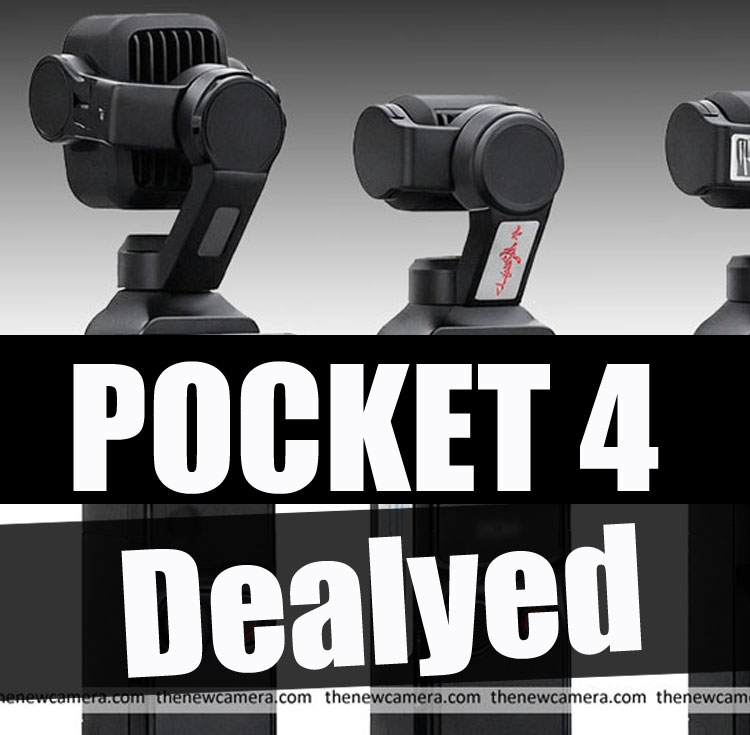
We have recently published that the DJI Pocket 4 camera is delayed, and we are trying to cover extensively all possible information related to the Pocket 4 camera release here at TheNewCamera.com. Now, the anticipation for the DJI Osmo Pocket 4 has reached a new height, since just recently a premature listing appeared on the Amazon Germany website, giving us our first official glimpse into what could be the DJI Osmo Pocket 4.
First Official DJI Osmo Pocket 4 Listing Spotted
Actually, this is the first time we have seen an official Pocket 4 listing. Obviously, this was accidental and was live for only a limited period of time. The page has now been pulled, but the screenshots shared by an eagle-eyed user and our subscriber reveal detailed specifications, features, and potential availability of the Pocket 4 camera, which we are going to discuss in detail in the article below.
Based on the detail from bernsteinius (nstein) that the Amazon.de listing initially displayed a March availability date when he discovered it (before it switched to “not available” and was pulled)
DJI Osmo Pocket 4 Release Date Rumors: March 2026?
While this Amazon placeholder—sponsored by DJI itself—lends credibility to the March 2026 hint, remember it’s not an official confirmation. DJI has a history of using such listings as teasers before pulling them, so we’ll keep monitoring for any updates. If you’re planning to upgrade from the Osmo Pocket 3, this could mean pre-orders open soon after an announcement.
We are expecting its arrival sometime between March 2026 to the latest leaked date, which we have very clearly mentioned in our previous post. Now, just recently, a premature listing appeared on Amazon.de (Germany), giving us our first official glimpse into what could be the DJI Osmo Pocket 4. It has been spotted on the Amazon DE website.
Although the listings are now removed, the Pocket 4 camera appeared via DJI. Special thanks to our subscriber, Bernsteinius, for sharing the information with us. We do have the screenshots of the DJI Care Refresh listing. When the listing was uploaded, it was showing March 2026 as the availability date, and later on, it was removed and rolled back.
Leaked DJI Osmo Pocket 4 Specs from Amazon Listing
So these are the initial set of specifications that we are getting from the DJI Care Refresh listing. These details were available via the Amazon marketplace listing page, and you can also see the following:
Specification: “DJI Osmo Pocket 4” listed as a vlogging camera with a 2.5 cm CMOS sensor (equivalent to about 1 inch), 4K/120fps video, 3-axis stabilization, fast focusing, face/object tracking, and YouTube compatibility. It includes DJI Care Refresh packaging and is marked “Derzeit nicht verfügbar” (currently not available).
A Note of Caution on the Leaked Specs
Keep in mind, the specifications that we see on the DJI Care Refresh page or in the product screenshots are the result of a premature listing. I would recommend, especially to those who are reading this article, not directly believe that these specs are confirmed for the camera. We still have to wait for further confirmation, but at this point in time, it has been made very clear to us by getting the same type of information from multiple sources over the past 3 to 4 days that the announcement of the Pocket 4 camera is expected in February or March 2026. Recent leaks suggest this is for the standard single-lens model, while a rumored “Pro” version with dual cameras (wide + telephoto) could arrive later in May or June 2026 due to accessory delays. The delay may extend up to April, but not beyond that, so the most highly probable month for the Pocket 4 announcement is again March 2026.
GET LIVE NOTIFICATION, Select Your Trusted Source GET LIVE NOTIFICATION Click ON Check BOX for Latest NEWS and Rumors
The article “DJI Pocket 4 Leaked on Amazon: Latest Release Date and Specifications” was written by thenewcamera.com team on 1:55 pm, Sunday, 11 January 2026, Greenwich Mean Time (GMT)
| You can also follow us on Our Official Social Media HandlesFACEBOOK | TWITTER | INSTAGRAM to get live news — > DJI Rumors
The DJI Osmo Pocket 4 is coming with ground-breaking technological upgrades over the Pocket 3, as detailed in our recent coverage. Leaked images from trusted sources confirm a lens-based dual-camera design for the upcoming model.
However, multiple delays have pushed back the DJI Pocket 4 announcement. It was initially expected in December 2025, but postponed due to unfinished accessories. A January 2026 date was then floated, but as we enter mid-January 2026 with no official word, hints from YouTuber Photorabz and our exclusive sources now point to a timeline from late January to early spring, potentially mid-March to April for the advanced variant.
The delay is unexpected, especially since leaked NDA documents surfaced months back in September 2025.
Initial Rumors and the Road to Delay: From December 2025 to Early 2026
As covered in our previous article—DJI Pocket 4 Front View Leaked – Dual Camera Design Exposed—the initial delay was confirmed via leaks and insider tips. With mid-January here and no updates, the DJI Pocket 4 release has slipped further, leaving fans eager for this highly anticipated vlogging camera.
We’ve relied on trusted insiders, but fresh tips from Photorabz (via his candid video recorded at Athens Airport after a holiday) include a shared screenshot confirming the end-of-January delay.
Key points from his video:
His source shared the following insight with him
Photorabz Insights: Two Versions and Further Postponements Confirmed
Photorabz, drawing from a DJI supplier friend and Chinese content creators, shared:
The end-of-January 2026 timeline has been delayed.
DJI plans two versions: a standard model (evolutionary upgrades from Pocket 3) and an advanced dual-camera variant with seamless optical zoom and better low-light performance.
The dual-lens model is now slated for around April 2026.
He mentioned two models – the standard Pocket 4 and a non-standard version—with one eyed for April, but no further details.
Latest Updated: Late Feb to April 2026 Timeline
Building on Photorabz’s report, our exclusive sources clarify without naming a “Pro” edition. They confirm the delay beyond January, with the innovative wide + telephoto dual-camera Pocket 4 now expected from late February to April 2026.
This is the current timeframe based on the latest updates. We’ll post any new developments here.
As writers for TheNewCamera.com, we’re monitoring DJI Osmo Pocket 4 developments through leaks, insiders, and official channels. While rumors from Photorabz and our sources are exciting, we’re awaiting DJI’s confirmation. Stay tuned—the wait for this game-changing gimbal camera might be worth it. What are your thoughts on the dual-camera DJI Pocket 4? Share in the comments below
GET LIVE NOTIFICATION, Select Your Trusted Source GET LIVE NOTIFICATION Click ON Check BOX for Latest NEWS and Rumors
The article “DJI Osmo Pocket 4 Delayed Once More: Latest Rumored Release Date for 2026” was written by thenewcamera.com team on 2:49 pm,Saturday, 10 January 2026, Greenwich Mean Time (GMT) | You can also follow us on Our Official Social Media HandlesFACEBOOK | TWITTER | INSTAGRAM to get live news — > DJI Rumors
The FCC has expanded its Covered List. Now, the blanket covers all foreign-made drones, and, as you were expecting, it is slamming the doors on all new approvals after December 23, 2025.
So now, as per the rule, the FCC has shut down all new registrations from foreign manufacturers, not only DJI or Autel. It includes all other brands manufactured outside the USA or assembled using parts sourced from multiple countries. All such drones are now blocked from future registrations.
Now, if you are searching heavily using keywords or phrases like “DJI drone ban 2026” or wondering “which DJI drones are still legal in the US,” this guide has it all.
What Is the FCC Covered List, and Why Does It Matter for DJI Drones in 2026?
Before we begin, I am going to explain what the FCC Covered List actually is and why it does not matter specifically for DJI alone.
The FCC Covered List stems from national security mandates under Section 889 of the National Defense Authorization Act (NDAA). This rule blacklists all foreign-made drones, not only China-specific manufacturers.
So, any drone manufactured in the USA is allowed after December 23, while all other drones that are manufactured outside the USA or assembled using foreign-sourced components fall under the blacklist category.
The Ban’s Core Impact on DJI
To make this easier to grasp at a glance, here’s a quick breakdown:
Impact Area
What It Means for DJI Users
Timeline
No New Approvals
Drones announced after Dec 22, 2025, can’t get FCC certification—illegal to import/sell in US.
Immediate (2026+)
Existing Models Safe
Pre-ban approved drones remain legal to buy, fly, and repair—no retroactive bans.
Indefinite
Ripple Effects
Prices may rise 20-30%; shift to US alternatives like Skydio for pros/farmers.
Short-term shortages
Why it ‘does not matter specifically for DJI alone’: Blocking all foreign UAS imports/sales of new models, unleashing “American drone dominance.
The big issue is that, as we have discussed earlier, no drone under $500 is U.S.-made. All drones in this price segment—even those offering some of the best video quality in the market—are affordable because they are manufactured outside the USA, specifically in mainland China or Thailand.
Popular models like the DJI Mini series, Holy Stone HS720, or Potensic ATOM, are all produced in China. A 2025 Drone U report on American-made drones lists no entries below $1,000, and a December 2025 analysis from The New Camera explicitly states: “There is no U.S.-made drone close to the $300 price range or even under $500 that we can realistically expect.”
If someone were to manufacture the same type of drone in the United States of America, they would have to pay approximately 3× to 4× higher manufacturing costs, which would result in sky-high prices.
Which DJI Drones Are Still Legal to Buy and Fly in the US After the 2026 Ban?
So, why are DJI drones still available in the USA, and why are other Chinese-manufactured drones also still allowed? The straightforward answer is that right now, the authorities have no other practical option than allowing already FCC-approved drones.
If they were to ban drones retroactively, there would be no existing drones that consumers could legally fly under $700. Everything would be affected, and this would create massive chaos among consumers, drone users, cinematographers, and especially professionals who rely on drones for their daily workflow.
No sub-$700 U.S.-made consumer drones exist in 2026—Skydio’s entry-level (2+) starts at $950+, and enterprise options climb from there (e.g., BRINC LEMUR 2 at $15K). A retroactive ban could theoretically un-approve existing models (FCC voted authority in October 2025), but it hasn’t happened and isn’t planned
By choosing to ban only new approvals after December 23, 2025, this becomes a win-win situation for the FCC and related agencies. On one side, they can promote United States–based drone manufacturers, and on the other side, they can keep users calm by leaving at least some options available, instead of enforcing a complete shutdown.
In the next 1–3 years, U.S.-based drone makers will have a clear and protected market to overtake DJI by introducing their own solutions. Since no new foreign-made drones will receive approval after December 23, 2025, over the next 2–4 years, existing DJI and other foreign drones will naturally start to feel outdated. As a result, users will gradually shift toward newer, domestically approved alternatives.
This is a very clever and strategic move, and consumers need to understand it clearly. For now, we still have some of the best drone options available, and there is no need to panic or immediately switch focus to another brand.
FCC Approved DJI Drones 2026
NEO Series (Newly Added) – All these models are allowed to be sold, re-sold, and fly
All Inspire Series Drones starting from Inspire Series 1 to Inspire Series 3 are allowed
All Matrice Series Drone starting from DJI Matrice 100 to DJI Matrice 400/400A are allowed
the extensive list of already FCC-approved DJI products that are eligible to be sold in the United States of America.
And the best part is that the DJI Avata 360 and the Osmo Pocket 4 camera, along with other products like the Mobile 8p, Lito X1, the DJI Power 1000 Mini, are already pre-approved by the FCC.
So, in the next 6 to 8 months, we are going to see a bunch of drone, camera, and gimbal announcements from DJI that were already approved earlier, and we will be able to enjoy all of them in the United States of America as well.
Sources: FCC filings, DJI.com, and verified retailer listings as of Jan 5, 2026. Note: Accessories like batteries and props are grandfathered if tied to approved models, but new foreign-sourced parts could hit snags.
Future Releases (FCC-Approved Pre-Ban)
These hustled through certification—expect U.S. availability:
Model
Expected Launch
Key Features
Price (USD)
Why It’s a Win
DJI Avata 360 (or Avata 3)
Q1 2026
5.7K 360° video, 30-min flight, immersive goggles
~$1,099 (kit)
Action sports revolution; full-circle views.
DJI Osmo Pocket 4
Jan 2026
1-inch sensor, 4K/120fps gimbal (drone-adjacent)
~$599
Portable cine tool; pairs with approved drones.
Red-Flagged: Future Drones That Won’t Get U.S. Approval
Yes, that’s true. Some future UPCOMING models, such as the DJI Neo 3, the DJI Air 4, and the DJI Mini 5, are not approved. The same applies to action cameras, such as the DJI Action 6, which is expected to arrive sometime in late 2026 or 2027. These products are not going to be officially announced in the United States of America, and they will not be available for sale.
This is because all the products mentioned here are future releases, scheduled for the later part of 2026 or 2027, and they are not FCC-approved. So yes, these will not appear on US market
Model
Expected Announcement
Key Features
Price (USD)
Why It’s Blocked
DJI Neo 3
Q3 2026 (July-Aug)
Modular mini with swappable cams, AR integration
Sub-$300
No pre-ban filing; U.S. misses AI innovation.
DJI Air 4
Summer 2026
Liquid-cooled sensors, 4K/200fps
~$1,199
Unfiled upgrade; pro video dreams deferred.
DJI Mini 5
Fall 2026
Lightweight with 48MP stills
~$699
Hobby staple sidelined; stock Mini 4 Pro now.
Final Thoughts: Navigate the DJI Ban 2026 Like a Pro
As I always say, as a consumer, you have to make a smart move for yourself, because it’s your money, and you must decide where to invest in the best possible solution for your work.
For now, drones are not banned. Yes, future models that do not receive approval are effectively banned, but all the drones we have mentioned in our list are green-flagged and FCC-approved, and you can buy them as long as inventory is available.
That said, customs is creating some trouble for DJI shipments, and even though DJI drones are not banned inside the United States, FCC-approved models are still facing delays while entering the country.
U.S. Customs and Border Protection (CBP) continues detaining DJI shipments under UFLPA (forced labor concerns in Xinjiang), independent of FCC rules—e.g., holds at Port of LA for approved models like Air 3S, lasting weeks/months. This escalated in late 2025 and persists into 2026, per DroneXL and UAV Coach
So yes, there are many green-flag, approved drones available, and you can buy them without any legal trouble—as long as stock lasts.
Disclosure: Affiliate links may apply. All info verified Jan 5, 2026—regs evolve, so check FCC.gov.
GET LIVE NOTIFICATION, Select Your Trusted Source GET LIVE NOTIFICATION Click ON Check BOX for Latest NEWS and Rumors
The article “FCC Covered List for DJI Drones 2026: Read This Before Buying a DJI Drone in the US” was written by thenewcamera.com team on 4:14 pm, Monday, 5 January 2026, Greenwich Mean Time (GMT)| You can also follow us on Our Official Social Media HandlesFACEBOOK | TWITTER | INSTAGRAM to get live news — > DJI Rumors
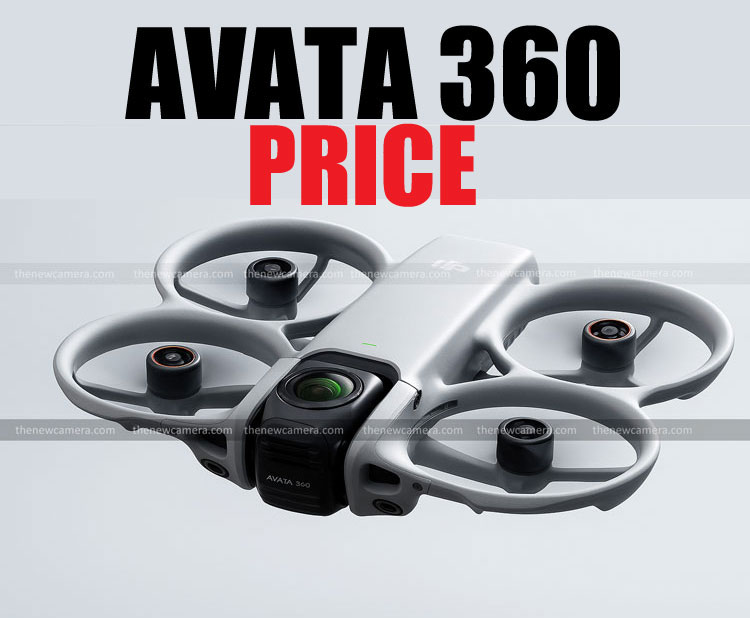
Finally, we now have the exact pricing of the DJI Avata 360 drone. Since the pricing table is officially out and was accidentally leaked by DJI China stores, it clearly indicates that the official announcement is very near. In this article, we will discuss the pricing of the DJI Avata 360 in China, as well as the estimated pricing in the United States of America.
Please keep in mind that we are trying to keep the United States pricing as realistic as possible, based on the USD to CNY conversion ratio and other important factors such as taxes, duties, and regional pricing differences etc.
The pricing table below includes all bundles, and one of the most important things you need to understand is that the DJI Avata 360 is a green-flag model. This means it has already cleared FCC registration before December 23, 2025, making it fully eligible for sale in the United States of America.
DJI Avata 360 Price Leak: China Bundles Exposed
The Chinese pricing of the DJI 360 does not look very competitive or reasonable when compared to the Insta360 Antigravity A1 drone. However, DJI is a market leader in the drone manufacturing segment, and as we all know, it had already captured more than 70–80% of the United States drone market share before December 23, 2025.
Keeping all these factors in mind, it is clear that DJI is going to keep the pricing very aggressive, and at the same time, the specifications are expected to be slightly better than what we have already seen in the Antigravity A1 drone.
Before we discuss the detailed specifications of the DJI 360, let’s first jump into the pricing of the drone.
Base Drone Only: ¥2,988 CNY (~$426 USD) – Drone + charger. Ideal for tinkerers.
Standard Combo (w/ DJI RC 2 Controller): ¥3,988 CNY (~$569 USD) – Adds FPV remote for solo flights.
Fly More Combo: ¥5,688 CNY (~$811 USD) – Everything above + 2 extra batteries, prop sets, hub, and bag. Best value at 20% savings.
Add-ons? DJI Care Refresh starts at ¥398 (~$57) for one replacement – a must for crash-prone FPV.
These align with Weibo rumors: Base at ¥2,988, combos scaling up. At this pricing, Chinese shoppers score a steal – but U.S. buyers? Read on.
DJI Avata 360 US Price: Estimated Markup and What You’ll Pay
It is quite obvious that the official pricing will become available once the DJI Avata 360 receives an official announcement from DJI. At the very same time, we have tried our best to estimate and suggest the most realistic pricing of the DJI Avata 360 for the U.S. market, based on the currently available information.
No official DJI Avata 360 US price yet on DJI’s store, but history (e.g., Avata 2’s 20-30% global hike) predicts pain. Using today’s 1 CNY = $0.1427 rate, direct conversions are low – but expect 15-40% premiums for tariffs, FCC certs, and retail cuts.
Bundle
China (CNY/USD Converted)
Est. US Price
Premium Over China
Base
¥2,988 / $426
$489
+$63 (15%)
Standard Combo
¥3,988 / $569
$680
+$111 (20%)
Fly More Combo
¥5,688 / $811
$999
+$188 (23%)
What You’ll Pay in the USA: So, the overall Fly More combo is a great option, offering all Fly More benefits. As we have mentioned above, the Budget you pay in getting the combo is $999 – matching Avata 2’s entry point but with 360° magic. Base might hit $489 if DJI keeps it aggressive and in budget to beat the competitors.
Is the DJI Avata 360 Worth the Hype (and Price)?
Absolutely, the DJI Avata 360, first of all, is FCC approved. It will soon become available in the USA if you’re into immersive 360° FPV. This Drone not only Beats Avata 2’s 1/1.3-inch sensor with spherical freedom but also the Antigravity A1 with its larger sensor size, and under 250g means no FAA registration hassle. And as we have already discussed, since it’s the green zone aka already got the FCC certificate, so will soon become available to the USA also.
Subscribe to TheNewCamera for live DJI leaks, drone reviews, and 2026 buyer’s guides. Follow us on X for instant updates.
The article “DJI Avata 360 Price Leaked: China Pricing Starts at $426 US Buyers Brace for $999 Fly More Combo” was written by thenewcamera.com team on 9:59 am, Thursday, 1 January 2026, Greenwich Mean Time (GMT). | You can also follow us on Our Official Social Media HandlesFACEBOOK | TWITTER | INSTAGRAM to get live news — > DJI Rumors
So you obviously have a question: which drone makers are the most affected by the December 22, 2025, ban? Obviously, DJI and Autel are the major ones that got affected. But other than that, we also have a set of drone manufacturers that are least affected. However, somehow they are also impacted by this ban and are not able to clear their drones in the FCC registration after December 23.
Other than that, there is also a set of drone manufacturers that are completely immune and not affected by the December 22 ban. So in this article, we are going to discuss in detail all these lists of drone makers.
The best part of the ban is that it’s not a retroactive ban, which means the existing stock of DJI drones can be sold to consumers, and consumers who already own DJI drones are allowed to fly them. However, new product announcements and spare parts are not allowed to be imported from China after the ban.
So for now, if you are planning to buy a DJI drone, it’s completely okay. We have already created a list of the best drones available under $500 if you are willing to buy a DJI drone for now. But apart from that, let’s discuss the facts—specifically the names of drone makers that are non-affected, least affected, and most affected.
Background on the FCC Covered List 2026
The FCC’s Covered List, established under the Secure and Trusted Communications Networks Act of 2019, identifies communications equipment and services that pose unacceptable risks to U.S. national security or the safety of U.S. persons.
Details of the December 2025 Update
But at the very same time, it is important to understand that DJI and Autel are at the epicenter of the December 22, 2025 ban, while many other drone makers have also received a parallel or indirect ban due to their foreign production.
This is because most of these manufacturers use foreign-produced components inside their drones, and the FCC clearly announced on December 22 that no new aerial vehicle can receive FCC approval if it uses foreign-produced UAS or critical components sourced from other countries.
What is Covered?
Foreign-Made UAS: Any drone manufactured outside the U.S., regardless of brand or origin country.
Critical Components: Includes data transmission devices, communications systems, flight controllers, ground control stations and controllers, navigation systems, sensors and cameras, batteries and battery management systems, motors, propulsion systems, gimbals, and associated software. These are prohibited if produced abroad.
So this move has not only restricted foreign-made drones, but has effectively impacted almost all new models of drones manufactured outside the USA.
So you should have a very clear understanding that if you search for the best drones under $500 on Amazon.com in the USA, you will find brands like Potensic, Holy Stone, Snaptain, and many other so-called budget drone brands under $500 or even under $1,000. Most of these brands are heavily dependent on foreign (often Chinese) components, which is clearly visible during the FCC registration process.
During registration, manufacturers are required to disclose supply chain details for covered items, including detailed information about the origin of potentially risky equipment, before receiving approval.
Now, this situation is going to prevent these companies from future FCC registrations of new foreign-produced products, because manufacturing costs in the United States are extremely high.
Even if these companies wish to set up factories or manufacturing facilities in the USA, the labor costs and compliance costs make it nearly impossible to offer drones under the $500 or $300 price segment, as we have seen with DJI Neo, DJI Mini series, and other third-party drones from China sold under different brand names.
So based on the current situation, the list of drones you see on Amazon.com today is likely the last active inventory. Technically, all drone makers—including DJI, Autel, and other Chinese manufacturers, or any brand that does not manufacture every single component within the United States—are not allowed to register any new drone with the FCC. And if a new wireless-enabled drone or any aerial vehicle is not FCC-approved, it cannot be legally sold in the USA. This clearly means no new registrations are allowed from Chinese/foreign drone makers.
Categorisation of Affected Drone Manufacturers
So the ban has been applied universally to all foreign-manufactured drones, and specifically to Chinese-manufactured drones. As a result, we now have three clear categories: the most affected, the least affected, and the non-affected manufacturers.
All the data listed in this article has been cross-verified using industry reports, market analysis, and FCC-related coverage that we have conducted, along with information published by other reputable websites so far.
All the details are updated as of December 27, 2025.
Most Affected: High-Market-Share Foreign Manufacturers
Unfortunately, the most affected company—specifically DJI, which dominates the U.S. market, will face the steepest revenue losses due to halted new product authorisations.
But at the very same time, DJI has made several smart moves. The company applied for multiple FCC registrations in advance, covering products such as the DJI 360, DJI Pocket 4 camera, Osmo Mobile 8 gimbal, as well as a few other products. These were briefly covered in our December article. As a result, a wireless product that already has FCC approval is still eligible to be sold in the United States of America.
DJI and Autel, both Chinese, control over 75% of U.S. sales combined.
Most Affected Manufacturer
Country
Key Products
U.S. Market Share (Est.)
Impact Summary
DJI (Da-Jiang Innovations)
China
Mavic, Mini, Matrice, Air series
~70% Covers an BIG portion of Market Share
Complete block on new models; existing Will remain available, but for sure the stock will deplete quickly. Major hit to commercial, consumer, and enterprise segments. No exemptions anticipated soon.
Autel Robotics
China
EVO, Dragonfish, Nano series
~5-10%
Similar to DJI; loss of enterprise and surveying market. Smaller scale amplifies proportional damage.
Least Affected: Low-Market-Share Foreign Manufacturers
These firms have niche U.S. presence (<2% market share each) and may sustain operations via existing inventories or exemptions. However, they cannot introduce new models without U.S. production shifts.
Least Affected Manufacturer
Country
Key Products
U.S. Market Share (Est.)
Impact Summary
Parrot
France
ANAFI USA, Bluegrass
~1%
Niche in agriculture/public safety; existing EU-made models continue, but growth stalled. Potential for U.S. assembly to comply.
Yuneec
China
Typhoon H, H520
<1%
Consumer/enterprise focus; minimal U.S. sales mean low immediate revenue loss, but future expansion blocked.
Potensic
China
ATOM, T25 series
<1%
Budget consumer drones; hobbyist market hit, but small scale limits overall disruption.
Holy Stone
China
HS series (e.g., HS720)
<1%
Entry-level toys; existing stock suffices for now, with little innovation pipeline affected.
Wingtra
Switzerland
WingtraOne VTOL
<1%
Surveying/mapping specialist; enterprise users may seek exemptions via DoD/DHS.
senseFly (AgEagle Aerial)
Switzerland
eBee series
<1%
Precision agriculture; U.S. subsidiary could facilitate compliance, reducing long-term impact.
Not Affected: U.S.-Based Manufacturers
Domestic producers are exempt as long as they use U.S.-sourced critical components, But they are costly and way beyond the reach of budget-oriented customers
Not Manufacturer
Key Products
U.S. Market Share (Est.)
Benefit Summary
Skydio
X10, X2 series
~5%
Autonomy leader; expected to gain 20-30% market shift in enterprise/public safety.
BRINC
LEMUR 2, Responder
~2%
Public safety focus; rapid scaling anticipated with DoD contracts.
Teal Drones
Golden Eagle, Teal 2
~2%
Military/commercial hybrid; Blue UAS certified, poised for defense surge.
AeroVironment
Puma, Raven, Quantix
~3% (defense-heavy)
Established in military; commercial expansion via mapping/agriculture.
Freefly Systems
Alta X, Astro
~1%
Cinematography/pro; high-end niche growth in film/production.
Hylio
AgDrone, Hybrid VTOL
<1%
Agriculture specialist; subsidies for U.S. farming tech boost.
Zipline
Platform 2
<1% (logistics)
Medical delivery; partnerships with Walmart/DoD accelerate.
This categorization is derived from pre- and post-ban market data; actual shifts may evolve with exemptions or supply chain adaptations.
Implications for the Drone Market
Sure, this ban is going to disturb the entire U.S. drone market, since DJI has been further banned from announcing new drones, despite the fact that it already covers nearly 70% of the U.S. drone market.
At the very same time, other Chinese-made and foreign drones are also banned, so both the most affected and the least affected drone companies are not allowed to announce new drones after the December ban.
And as we all know, and as we have already mentioned, the U.S.-made drone market share is less than ~15% (pre-ban), and the obvious reason behind the reach is the cost of drones, flying experience and video quality is better but far from the reach of budget oridented audience.
There is no U.S.-made drone close to the $300 price range or even under $500 that we can realistically expect from a U.S. manufacturer, since the cost of production is very high in the United States of America. So, the democracy we were enjoying in the field of aerial imaging and videography is now limited to very few role-makers and consumers.
Requirements for U.S.-Made Drones and Components
Cross-verification confirms the user’s understanding: Only U.S.-made drones using U.S.-made critical parts are allowed for new FCC authorizations. While U.S.-manufactured drones are not inherently on the Covered List, Manufacturers must certify compliance, ensuring full domestic sourcing for critical elements to avoid risks.
Exemptions and Future Outlook
Let’s discuss the most important part in the near future. Is there any scope left for DJI or Autel drone makers? Is there any possibility that DJI can make a comeback in the United States of America?
Yes, there is a way, but it is not that easy. Exemptions are available if the Department of Defense (DoD) or the Department of Homeland Security (DHS) certifies that specific UAS or components pose no unacceptable risk, allowing their exclusion from the prohibition on the Covered List.
This could allow case-by-case authorizations for trusted foreign items, potentially benefiting lower-risk foreign manufacturers. Future FCC guidance , as indicated in recent fact sheets, may clarify the implementation, and potential (though rare) revocations of existing authorizations remain a possibility under separate processes.
And to get themselves removed from the Covered List and become eligible for DoD’s Blue sUAS verified status, manufacturers would need to undergo the audit process.. This can be done by requesting audits from accredited independent agencies, such as NIST or UL labs.
If these agencies do not respond within a reasonable period of time, fortunately, the US judicial system provides avenues and a judicial system in place. Companies can file formal petitions with the FCC and appeal to federal courts if needed, where due process ensures fair consideration—we do hope and expect that they will get what they deserve.
Adam Welsh, DJI Head of Global Policy
The ban underscores U.S. efforts to achieve “airspace sovereignty” and a resilient domestic industry, potentially reshaping global supply chains. As of December 27, 2025, no major exemptions have been announced, but monitoring DoD Blue UAS updates is recommended.
We don’t know whether DJI or Autel have been proven to be security threats or not. That is a matter of investigation, and before any investigation has been completed or the required national security audit has taken place, we cannot accuse any drone maker or company of stealing data or doing any malicious activities.
But for sure, due to this procedural default, and specifically because the audit was not conducted by the December 23, 2025, deadline, there has been a very deep impact on the U.S. drone market. A lot of the livelihoods of content creators, videographers, cinematographers, and budget filmmakers are going to be affected deeply.
Other than that, many surveillance and life-support activities carried out by professionals using these drones are now disrupted or paused, especially in some federal government sectors, and they are waiting while seeking replacements and further clarity. All of this has clearly created significant challenges overall. If the audit had been done on time, there was a big chance that DJI as well as the American budget drone industry could have potentially escaped the bulk of this situation. Let me know in the comment section below.
Update as of January 22, 2026:
The U.S. Commerce Department has withdrawn its proposed additional restrictions on Chinese-made drones (announced January 9, 2026), allowing continued imports of existing DJI and Autel models that received FCC approval before December 23, 2025. This means retailers can replenish stock of current products like the DJI Mavic series, Mini series, and Autel EVO series, rather than being limited to pre-existing U.S. inventory.
The FCC has granted temporary exemptions (until the end of 2026) for certain non-Chinese foreign-made drones and critical components from U.S. allies or approved security programs, such as models from Parrot (France), Wingtra (Switzerland), and components from companies like Sony, Panasonic, and Nvidia. DJI and Autel do not qualify for these exemptions.
No major changes to the core ban on new foreign-made drone models or unapproved critical components; existing owned drones remain legal to fly, and no retroactive restrictions apply. Monitor FCC and DoD announcements for potential future audits or appeals.
This article provides a highly detailed, well-researched examination of the ban, cross-verified across multiple authoritative sources including FCC documents, legal analyses, industry reports, and recent market assessments as of 4:55 am, Thursday, 22 January 2026, Greenwich Mean Time (GMT). It confirms that, indeed, only U.S.-made drones incorporating U.S.-made critical parts are permissible for new FCC authorizations, as foreign components are now restricted. We explore the background, specifics of the rule, a categorized list of affected manufacturers, market implications, and prospects, drawing on cross-verified data to ensure accuracy.
GET LIVE NOTIFICATION, Select Your Trusted Source GET LIVE NOTIFICATION Click ON Check BOX for Latest NEWS and Rumors
The article “DJI Drone Ban USA 2026: Full FCC Covered List of Banned Most Affected Manufacturers” was updated on by thenewcamera.com team on 4:55 am, Thursday, 22 January 2026, Greenwich Mean Time (GMT)| You can also follow us on Our Official Social Media HandlesFACEBOOK | TWITTER | INSTAGRAM to get live news — > DJI Rumors
If you are a beginner looking for the best entry-level drones in 2025 and live in the United States of America, then this is the best time to act, as the deadline set by the FY25 National Defense Authorization Act (NDAA) is just 11 days away, on December 23, 2025. The DJI products will get banned in the United States of America, so if you already having/own a DJI product, then there is no issue, but yes, new product announcements/registrations at the FCC may get halted after this date. A positive aspect is that the ban is not affecting flying or existing DJI drones, so if you’re considering stocking up on the latest model, this is an ideal time to buy them at a reasonable price.
Here we have sorted out the best entry-level beginner-friendly drones for you made by DJI. And this time, we’re not talking about any DJI alternatives for now, since DJI itself is the best drone maker in the world, and if you can get your hands on their drones before December 23, then why think of alternatives right now?
Keep in mind that the drones that we have selected in this buying guide are under 250g,. Just jump into the list below and sort the best drone as per your own set of requirements and the budget range you have.
Key Factors for Beginners When Choosing a DJI Drone
Don’t just grab the shiniest one—focus on what matters for new pilots. Here’s a quick rundown:
Weight: Always prefer an underweight drone >250g, since those underweight drones are trouble-free drones and don’t require extra paperwork/permission while taking off. Stick to under 250g (all our picks qualify) to avoid FAA registration and fly freely in most areas.
Camera Quality: All the drones we have listed record crisp smooth 4K footage;
Flight Time: 20-30 minutes per battery—get a combo pack for all-day sessions.
Ease of Use: App integration (DJI Fly app), GPS return-to-home, and beginner modes like auto-hover.
Portability & Price: Foldable designs under $500 for starters; wind resistance up to Level 5 for outdoor adventures.
We have selected some of the best and latest DJI drones for you, so before it’s too late, grab them as soon as possible, and all these drones are available at Amazon.com at a very reasonable price. The recently announced DJI Neo 2 is available at 35% off the MSRP pricing.
Based on 2025 reviews and current stock, here are our vetted picks across budgets. We’ve prioritised models with strong cameras, long batteries, and holiday discounts. (Prices as of Dec 11; affiliate links via Amazon/DJI Store for easy grabs.)
Budget Picks (Under $500: Perfect for First-Timers)
DJI Neo 2 – Finally, the DJI Neo 2 drone is now available at Amazon USA for $259. But if you apply the offer (mentioned below), the overall price goes down to $199 on Amazon USA. That’s a solid discount on the DJI Neo 2, a newly announced drone. Keep in mind that all these offers and rules are available until December 23, 2025, so hurry up. The new Neo 2 drone is perfect for beginners, content creators, and solo filmmakers who love having an aerial cinematographer with them who understands their gestures and follows them wherever they move.Buy DJI Neo 2 on Amazon for $239 and thank us later. The DJI Neo 2 is getting a positive response. Initial review scoring 4.5/5 stars from 269 reviews. ALERT: Stock running out FAST. ACT quickly to get the deal
DJI Mini 4K – The DJI Mini 4K Drone is the latest best-selling Amazon.com drone, and when we have seen almost 10,000 units sold in the past month alone of this drone, it was really a big surprise, and it is now available at $249 with a $50 discount from its usual $299 price. DJI Mini 4K is the best budget 4K drone in 2025 available for creators, vloggers, and hobbyists that offer professional-level features without any FAA registration. But as usual, we know that DJI is potentially facing a lot of bans, and stock shortages are everywhere. Price: $299 + Additional Discount $60 off with an Amazon card
Compact Solo Performer ($250-500: Solo Creativity)
DJI Flip –The drone features a 1/1.3-inch sensor, which is the same sensor as the pricey DJI Mini 4 Pro – so you are getting professional quality video up to 4K 60 FPS HDR, and the ability to capture still images of 48 megapixels. The DJI Flip also supports 10-bit internal video recording and D-Log with manual colour modes, which allows professional-level editing and very high latitude / DR range in your videos for working later on in shadows and highlights. It also has a slow-motion mode where you can capture 4K videos up to 100 frames per second, which will add a kind of cinematic flair to your entire footage. The DJI Flip also offers vertical shooting mode for Instagram Reels, YouTube Stories, as well as TikTok videos..Buy DJI Flip (affiliate).
DJI Mini 3 – Now, specifically for those creators who need extra airtime, the DJI Mini 3 arrives at $419 and shines as one of the best DJI drones under $500 for marathon-type sessions. The DJI Mini 3 was announced in 2022 but is still in demand even in 2025, offering unbeatable battery life for its price. You get a total flight time of up to 38 minutes in standard mode and approximately 51 minutes with the Plus battery (sold separately).1/1.3-inch sensor for 12MP photos and perfect 4K HDR videos. This DJI Mini 3 is capable of true vertical shooting, rotating the gimbal up to 90 degrees – perfect for creating social media content. Buy Now: Amazon ($419)
The 2025 DJI ban deadline is a wake-up call, but it’s also a golden window for beginners to score deals on world-class gear like the Neo or Flip. Don’t wait—stock up, fly safe, and capture those holiday memories in 4K glory. Questions? Drop a comment below
Buy Canon Lenses, Buy Music CD or Digital Camera at amazon it helps this site, and you do not pay anything extra, it is just a way to help support this site.
New Camera Website, we list all type of new camera information, price review and all type camera rumors, subscribe us or follow us via twitter or facebook.
Disclaimer: We have attempted to select useful information to include on New Camera, and to ensure that the resources we have included on the site -- as well as the way we have described them -- are accurate, fair, and balanced. However, we make no claims, warranties, or other representations concerning the accuracy, completeness, or utility of the information provided, or concerning the abilities or performance of the organizations, agencies, companies, and other resources presented through New Camera


 BOX for Latest NEWS and Rumors