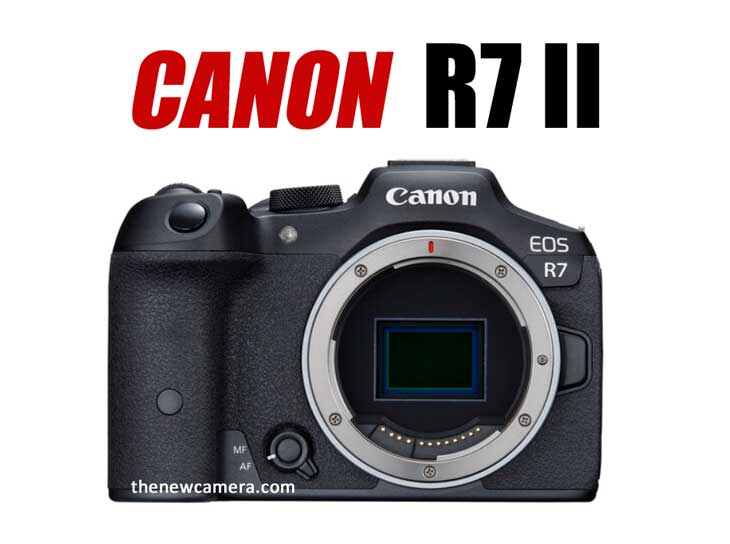
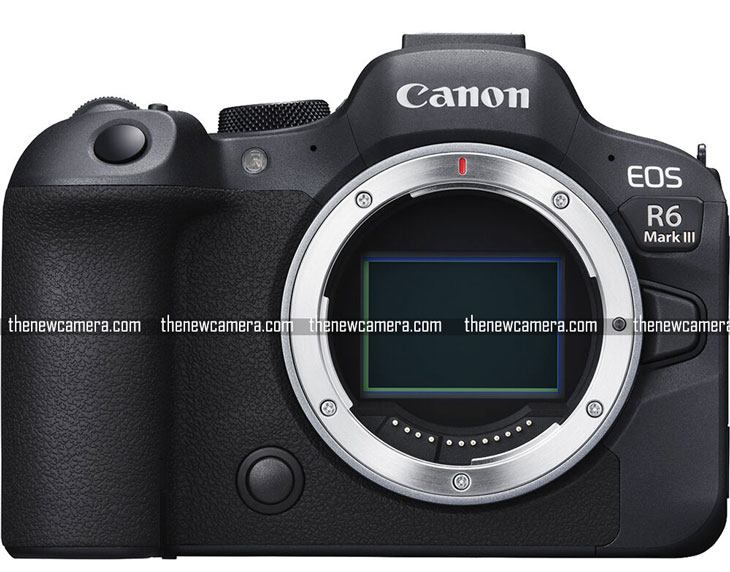
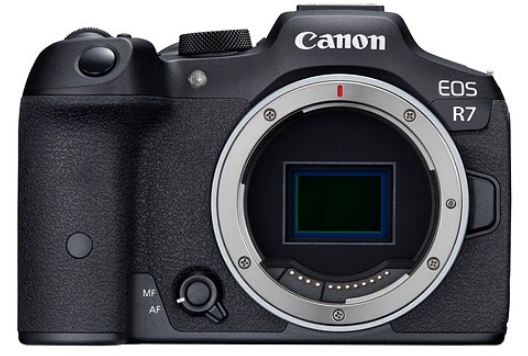
The Canon R7 Mark 2 and the Canon R6 Mark 3 are both the most anticipated Canon cameras of 2025. Photographers and videographers are waiting for the next generation of models, but the latest rumor suggests a potential delay in the announcement of both cameras. Although we have already published an article on July 31 2025, related to the delay in the announcement of the R7 Mark II camera as cited by Jan Wegener. This article explores the latest updates, rumored specifications, as well as an expected release timeline and Canon’s future plans, like Canon cameras and lens roadmap everything that you may need to know is available in this article, so let’s explore.
Why the Canon R7 Mark II and the Canon R6 Mark 3 are highly anticipated
The Canon R6 Mark II camera has already created a different space among photographers; many of the wedding photographers, as well as sports shooters, are using this camera as their primary camera. A lot of them are waiting for a proper upgrade. Very similarly, we have the Canon R7, the biggest issue of the exisiting Canon R7 using the same old sensor of Canon 90D camera, the Canon 90D was announced back on August 2019, and after that while using the same sensor the Canon R7 camera was announced on May 2022, so the 32.5 megapixel is approximately 6 year old.
So both the best selling Canon full frame camera as well as the Canon APS-C flagship are waiting for an update, we are expecting a major update in the core specification of both the Canon R6 Mark 3 as well as the Canon R7 Mark 2 camera, the recent report that we have published with the help of Jan Wegener suggest the Canon R7 Mark 2 camera announcement may slip in the later months of Q4 of 2025.
Understanding the announcement delay
Recently, on August 12, 2025, Canon Rumors reported that a dealer presentation was about to happen in late August, which is now postponed. No exact reason is known, why the presentation has been postponed.
Just after August, we have the IBC show in Amsterdam, which will happen in September 2025. The IBC show is a potential announcement platform for video-centric products, so expecting a major announcement, specifically in that show, from Canon is less likely.
Now we have already published back on July 30, 2025, that according to Jan Wegener, the Canon R7 Mark 2 announcement is not imminent, he said it clearly, which means the camera is not coming in August or September 2025. But, he also added that potentially the Canon R7 Mark II camera announcement has been further pushed to the late months of 2025. As we have also previously said Jan Wegener is very much known for his accurate predictions. He also predicted the Canon R6 Mark 3 camera sensor resolution, which is approximately 30+ megapixels and not a 24 MP sensor.
If we take note of the previous 5 years of Canon announcements, then August and September are the least favorable months for Canon product announcements, and they have avoided and didn’t make any single mirrorless camera announcement in the months of August and September over the past 5 years.
So we can expect the Canon R7 Mark II announcement between October to December 2025, from the initial set of information we have right now.
Canon R7 Mark II camera rumored specifications and features
Canon R7 Mark II is an upcoming Canon flagship APS-C camera, and in general whenever Canon announces a new flagship camera, we notice a major update starting from the image sensor to the image processor of the camera everything is changed. Canon R7 was announced back in 2022 with the same 32.5 MP sensor of the Canon 90D camera its overdue for an update.
Specification of the Canon R7 Mark II camera
33 megapixel APS-C stacked CMOS sensor – the resolution will remain approximately the same, but we will have a massive update in the readout speed of the sensor, reducing the rolling shutter effect to a maximum extent, it will become an ideal camera for excellent sports photography as well as for capturing high-speed videos.
Digic X image processor paired up with Digic Accelerator – handing up the latest image processor available in the arsenal as well as to upscale the AI autofocus algorithm they have to put a Digic Accelerator inside it, so the accelerator chip is actually Canon’s AI chip which soon will be added to almost all the Canon cameras in the mirrorless lineup.
8.5 stops of in-body stabilization – that nowadays has become a requirement, almost all cameras with higher-end specifications have a good IBIS unit inside them.
2.36 million-dot EVF – so I am expecting a bit higher resolution EVF in the camera, but even if it is coming with a 2.36 million-dot EVF, but it also supports the Advance EVF based Eye Tracking – AI autofocus feature directly from the Canon R3, R5 Mark II, and the Canon R1, then it’s a very welcome step.
40 FPS of electronic shutter – The 40 FPS electronic shutter will actually become usable when the camera has a stacked CMOS sensor.
Pre-continuous shooting – pre-shooting buffer of 1.5, 1, and 0.5 seconds will arrive in the Canon R7 Mark 2 camera, and we will also have the pre-shooting RAW / JPG both as an option.
In-camera resolution scaling – you already have in-camera upscaling in the Canon R5 Mark II, and the same we are expected in the Canon R7 Mark 2.
4K 120 FPS 10-bit with Canon Log – that’s really interesting Canon R7 Mark II camera will redefine cinematography in a different way, with an available option of recording 4K videos up to 120 fps.
Canon R7 Mark II price
The Canon R7 Mark II camera body price is expected to $1700 to $2000, which is up from the Canon R7 $1499.
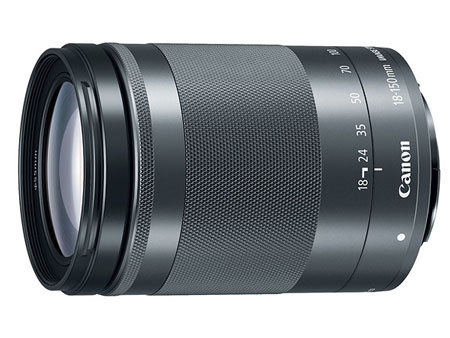
While pairing up with the kit lens, like 18 to 150 mm, the price can reach up to $2100 to $2500.
The Canon R7 camera is targeted at professional bird photographer as well as sports, or anybody who loves to have a flagship APS-C body in their hand. And this is the very right time to announce Canon R7 Mark 2 camera since third-party lens makers like Tamron and Sigma have already joined hands with Canon for producing more and more lenses for the Canon RF-S mount.
Not only the Canon R7 Mark 2 camera the Canon R6 Mark III is expected to arrive, and it is said to be a full-frame powerhouse from Canon, so let’s talk about the powerhouse right now.
Canon R6 Mark III camera and upcoming lenses
Professional photographers are waiting for the Canon R6 Mark III, beta testers are already using this camera in their hand and the performance of the R6 Mark 3 is phenomenal, as per one of the initial reports from the beta tester the Canon R6 Mark 3 camera carries a 30+ MP sensor now as usual we do know that a camera maker tests multiple prototypes of a single camera, and not always all the prototypes make a way to the production line. The selection of the production line camera depends on the marketing team and the feedback they get from the professional photographers during the Alpha or beta testing phase.
Not only the new camera, but new lenses are expected to arrive, so we will explore the list very soon, but before that,t let’s talk about the rumored core specification of the Canon R6 Mark 3 camera.
Rumored core specification for the Canon R6 Mark III
24 megapixel stacked / 30+ megapixel CMOS sensor – Canon rumor mill still sticks with 24 MP sensor resolution, yes we were getting 24 MP stacked CMOS sensor rumor earlier few months ago, but recently Jan Wegener has highlighted that there is a possibility of 30+ megapixel R6 Mark III camera also, so we are considering both possibilities parallelly until we get a clear information from a trusted source.
Faster read-out speed with minimum rolling shutter – Canon sensors, irrespective of their manufacturing type have the ability to read out data faster. The Canon R8 camera sensor, which is an entry-level camera and uses FSI CMOS sensor technology, despite that fact, the readout speed of the sensor is 14.5 milliseconds. As usual, a stacked CMOS sensor will definitely push the read-out speed even faster.
Introduction Digic X and Digic Accelerator – a new generation of image processor as well as AI processing unit very similar to the Canon R5 Mark II, Canon R3, and Canon R1 camera.
6K RAW video up to 60 frames per second and 4K up to 120 FPS – in terms of video resolution the Canon R6 Mark 3 camera is able to record 6K RAW videos up to 60 frames per second, although the existing R6 Mark II camera is also able to record 6K 60fps video via the HDMI port. The most important addition is 4K video recording at 120 frames per second but at the very same time, we are concerned about the amount of cropping we have to face while selecting the 120 frames per second speed, C-Log 2, and C-Log 3 with 10-bit internal recording and custom lookup table and a dedicated cinema menu for easy navigation.
So these are the initial set of information we do have related to the Canon R6 Mark 3 camera.
Canon R6 III Price
The R6 Mark III is expected to retail for $2,799-$3,199, up from the R6 Mark II’s $2,499. Announcements are likely in Q4 2025 (October to December).
Potential Lens Announcements
RF 300-600mm f/5.6 L IS USM: Super-telephoto zoom for wildlife and sports.
RF 50mm f/1.2 L and RF 35mm f/1.2 L: Ultra-fast primes for portraits and low-light.
RF-S Constant-Aperture Zooms: For APS-C bodies like the R7 Mark II.
RF 20mm f/1.4L VCM: Canon’s widest f/1.4 lens, announced in 2025.
Other Cameras in the Pipeline
EOS R3 Mark II: Updated flagship with enhanced autofocus.
EOS R10 Mark II: Entry-level APS-C with vlogging features.
Full-Frame V Camera: Vlogging-focused model.
Retro ILC: Vintage-style camera for the Canon AE-1’s 50th anniversary.
The Canon R7 Mark II camera is one of the most rumoured Canon cameras of 2025. Yes, as much as I am waiting for the Canon R6 Mark III, a lot of APS-C users love to get the R7 Mark II asap. However, we have to accept the fact that the R7 was overdue for an update. The original Canon R7 camera was announced back in 2022 — a prosumer-grade camera with high-end core specifications at that time. However, in 2025, the Canon R7 requires an urgent update as soon as possible. Let’s talk about the different sets of sources that are sharing information related to the Canon R7 Mark II camera’s arrival date.
Canon R7 Mark II Camera Arrival Date
Before we jump to conclusions and give you a time frame when the Canon R7 Mark II is actually coming, let’s discuss the most updated set of information we have related to the announcement date of the Canon R7 Mark II camera from the two most trusted sources.
Source 1 – Jan Wegener – As we have discussed in the previous article, the trusted source, Mr. Wegener, said – I’ve reached out to my sources again, but no one has really heard anything about the camera just yet. That doesn’t mean it’s not coming soon, but it makes it less likely that a release is imminent. Wegener’s use of “not imminent” clearly means not in the next one to two months—that is, August and September. However, “that doesn’t mean it’s not coming soon”. It certainly leaves room for a possible announcement in Q4 of 2025—that is, from October to December 2025.
Source 2 – According to CanonRumors – One of the most trusted names in the rumor industry, and their sources, the Canon R7 Mark II camera will arrive at the IBC trade show in September 2025. It’s a major product event, and historically, Canon has used the IBC platform to showcase video cameras and announce cinema-related products. BUT, the chances look less likely since the IBC trade show has always been a platform for video-centric and video-related announcements. Yes, Canon does showcase their cameras in their booth, but that’s not the standard platform for Canon Mirrorless cameras-related announcements. One more thing, if we look at the previous 5-year pattern, Canon generally avoids the August and September months of the year for their mirrorless camera-related announcements.
Between September to December 2025
If we create a timeline of possible arrival dates from all the latest sets of information we have – from CanonRumor to Jan Wegener – everyone is pointing out the announcement of the Canon R7 Mark II camera between September to December 2025. That indicates that the R7 Mark II camera is coming for sure in the next few months; it’s just a matter of time and information. We will soon get the exact date of its arrival.
Canon R7 Mark II Camera Price
The Canon R7 Mark II camera body is likely to cost around $1799 to $1999 USD
Paired with a kit lens (18–150mm), the price is expected to range somewhere around $2100 to $2500 USD
Two factors affect the price of the Canon R7 Mark II camera:
So the primary factor that will affect the Canon R7 Mark II camera price is the massive upgrade inside the body. Canon will surely bring a new sensor and image processor inside the R7 Mark II camera body. Rumours suggest the camera may potentially include a 33 to 40 megapixel sensor, which may have a stacked design integrated inside it to improve the overall performance. So it’s quite obvious to expect the price hike in the Canon R7 series camera body price if the R7 Mark II camera is coming with a massive update.
The second factor that potentially impacts the cost or the pricing of the Canon R7 Mark II camera is the tariff imposed by the USA on Japanese-manufactured products, including cameras. So historical trends suggest a possible price hike that we are expecting approximately somewhere in between 10 to 15% for the affected products. So that’s also a reason that will surely impact the Canon R7 Mark II camera price.
Considering these two basic factors, the price of the Canon R7 Mark II camera body and kit lens is expected to have a higher price tag compared to its predecessor.
Canon R7 Mark II Camera Core Specification
There’s a 75% or more chance that we will have a 33 MP stacked sensor. But at the very same time, as we have discussed, there have also been some rumors in the past related to a 40MP sensor. So we are considering both. Here is the rumored specification table of the Canon R7 Mark II camera:
Rumored Specification Table of Canon R7 Mark II Camera
The EOS R7 Mark II is rumored to feature significant upgrades, positioning it as a premium APS-C camera. Here are the key specifications based on recent leaks:
Feature
Details
Sensor
33MP to 40MP APS-C stacked CMOS sensor, offering faster readout and reduced rolling shutter.
Processor
DIGIC X with DIGIC Accelerator for enhanced autofocus and processing speed.
Stabilization
Up to 8.5 stops of in-body image stabilization (IBIS) for low-light and video.
Viewfinder
2.36M-dot OLED EVF, potentially with improved refresh rates.
Shutter
40 FPS electronic shutter, possibly no mechanical shutter.
Video
4K 120FPS with Canon Log 3, potential up to 6k 120FPS / 8K 60 FPS recording.
Form Factor
Larger body with EOS R5 Mark II-like ergonomics, improved grip, and AF joystick.
Memory Slots
Likely dual slots: CFexpress Type B and UHS-II SD.
Additional Features
Pre-continuous shooting, in-camera upscaling.
These specs suggest Canon is aiming for a flagship APS-C camera, potentially rivaling Fujifilm’s X-T5
Canon R7 Mark II: APS-C Powerhouse Like the Canon R1, Canon’s 7D series has always been called the Mini 1D / 1DX series in Canon. So, from that POV, we can say Canon R1 Mini is coming next. Canon always creates a big leap between the core specifications of two flagship cameras, so we are expecting a massive update over the specs of the existing Canon R7 Camera. Finally, even if it arrives at a higher price point with a major upgrade, photography professionals will feel it is reasonable to pay that price.
Track Canon R7 Mark II News on TheNewCamera.com
At TheNewCamera.com, we’re dedicated to keeping you informed about the latest camera news. The article “Canon R7 Mark II Camera Price, Release Date, and Specifications” was published on 1:34 pm, Monday, 4 August 2025, Greenwich Mean Time (GMT) by thenewcamera.com team | Follow us on our social pages FACEBOOK | TWITTER | INSTAGRAM to get live Camera News + Canon Rumors 24X7.
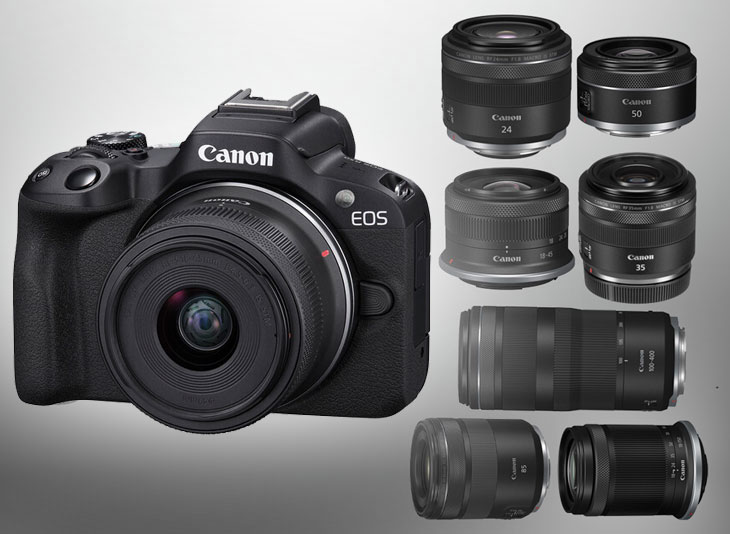
The best lenses for the Canon R50 Camera are here. We have selected some of the best available lenses for the Canon R50 camera. The article was updated in October 2025, and we have added all the latest Native as well as the best third-party lens option available for the Canon R50. One of the most updated and best guides where you will find the best available lenses for the Canon R50. The features excellent core specs and an advanced AF system similar to the Canon R10 camera. With the Canon R50 camera, you can shoot oversampled 4k videos up to 30fps (10 BIT HDRPQ also available), and when shooting still images, the Camera is able to capture a full-time burst speed of 15FPS with full-time AF/AF support. A total of 4,503 manually selectable AF points are also available for precise autofocusing. One of the best entry-level Mirrorless cameras ever made by Canon, with excellent internal still and video core specs.
In this post, we have selected some of the best lenses available for the Canon R50 camera. These lenses are best for Canon R50, as well as u can use these lenses for Canon R10, R50V, and R7. We have selected the native RF and RF-S Lenses for the Canon R10 camera. And at the end of the article, we have also added third-party lenses for the Canon R10 camera, with a focus on Sigma options. This guide covers the best zoom lenses, prime lenses, bird photography lenses, video lenses, and budget-friendly options, many of which are available at Amazon (www.Amazon.com). Whether you’re shooting landscapes, portraits, wildlife, or vlogs, this guide will help you find the perfect lens for your Canon EOS R50.
Table of Contents
Canon RF-S 18-45mm f/4.5-6.3 IS STM
Canon RF 18-150mm f/3.5-6.3 IS STM
Canon RF 16mm f/2.8 STM
Canon RF-S 10-18mm f/4.5-6.3 IS STM
Canon RF 24mm f/1.8 Macro IS STM
Canon RF 35mm f/1.8 Macro IS STM
Canon RF 50mm f/1.8 STM
Canon RF 85mm f/2 Macro IS STM
Canon RF 100-400mm f/5.6-8 USM
Lens Comparison Table
Third-Party Lenses for the Canon R50: Sigma and More
Canon R10 vs. Nikon Z50 and Sony A6400
Frequently Asked Questions (FAQs)
Conclusion
1. Canon RF-S 18-45mm f/4.5-6.3 IS STM – The Best Budget Zoom Lens
The body of the Canon R50 costs $799 with the 18-45mm kit lens, and without the lens, the cost of the camera body is $679. The actual cost of the lens is $269 when purchased separately from B&H. You are only paying $120 extra compared to $269 when u purchase it separately.
The 18-45mm IS STM Lens from Canon is versatile. The focal length you are getting is perfect for landscape, nature, and family-friends photography. The biggest advantage of the kit lens is the price factor and compactness. And at this price, ur also getting Image stabilization (OIS) and STM motors, which are useful for both photography and videography. You can also click some decent portraits at 50mm.
Image stabilization in the 18-45mm Lens works very effectively. As we know, the Canon R50 camera doesn’t have a built-in sensor-shift image stabilization system, so this lens will help you with its Optical Image stabilization feature. up to 4 stops of shake correction or up to 6 stops of Coordinated IS with a compatible camera body
The RF-S18-45mm f/4.5-6.3 IS STM has a Center Focus Macro function that captures close-up images with up to 0.26x magnification at 45mm (MF). Achieve up to 0.16x magnification at 45mm focal length with autofocus. When you are using the lens in Manual Focus mode at 35mm focal length, it gives a maximum magnification of 0.59x.
.The Lens also features Canon STM Motor, which is extremely helpful while shooting videos; the STM motors generate minimal noise.
Why Choose This Lens?
Budget-friendly at $269 (or $120 extra with the kit).
Compact and lightweight, ideal for travel and everyday use.
Versatile focal range for landscapes, portraits, and family photography.
Optical image stabilization (OIS) for steady shots in low light.
Silent STM motor, perfect for video recording.
Best For: Beginners, travel photographers, and budget-conscious users looking for a versatile all-purpose lens.
2. Canon RF 18-150mm f/3.5-6.3 IS STM – The Best All-in-One Zoom Lens
The Canon’s 8.3x APS-C zoom Lens for Canon R50 packs in a useful 29-240mm (35mm equiv.) focal length range. When you feel your kit lens has limited zoom and you need a more versatile lens, the 18-150mm lens is made for you.
This lens is an all-in-one lens for the Canon R10 camera. Perfect for those who don’t want to change the lens every time they need an all-in-one solution. The Lens also acts as a coverage lens when you are into wedding photography and helps you a lot when u are on travel, covers a wide range of 18mm to tele-end 150mm.
The lens features an STM motor, and stepping drive motors are as fast as well as as silent as autofocus work. Perfect for recording videos and shooting still images too. The OIS in this lens is highly effective and works up to 4.5 Stops, or up to 6.5 stops with Coordinated IS when paired with a compatible camera. Making it a perfect choice for shooting sharp images in low light.
The price of this lens is $499 (B&H Store and Amazon.com) You can use this lens as a default lens for your Canon R50 camera.
Canon RF-S18-150mm F3.5-6.3 IS STM SAMPLE IMAGE – credit – Chris metcalfe https://tinyurl.com/yvv7pnus
Why Choose This Lens?
Wide 29-240mm equivalent focal range for diverse shooting scenarios.
Ideal for weddings, travel, and event photography.
Fast and silent STM motor for smooth autofocus in video and stills.
Optical image stabilization for low-light performance.
A do-it-all zoom lens, available at Best Buy.
Best For: Photographers and videographers needing a single, versatile zoom lens for multiple scenarios.
3. Canon RF 16mm f/2.8 STM – The Best Wide-Angle Prime for Vlogging
The Lens is a 16mm F2.8 Prime Lens (25mm equivalent), The 16mm Lens is the most affordable Canon wide-angle prime lens for the Canon R50 camera with a bright F2.8 aperture and STM motor. The Lens is very compact as well as fast, a perfect lens for everyday use.
Perfect Lens for Handheld Vlogging: If you want to create handheld content, consider using a Canon R50 camera. The RF 16mm F2.8 STM is highly recommended. The Auto Focus of the lens and very smooth and fast, at the same time the F2.8 aperture helps you to create subject separation while filming, and it also helps to capture perfect vlogs even in uncontrolled light conditions. Overall, the RF 16mm F2.8 STM is highly recommended for content creators.
If you want to extract, maximum sharpness you have to stop down to f/5.6, which will give you sharpness in the extreme edges and corners of the image frame. Highly essential while shooting Landscapes, architecture, or interiors with the Canon RF 16mm Prime Lens. The chromatic aberration is also very well controlled, even with automatic in-camera correction switched off. Vignetting is quite noticeable at f/2.8 but in-camera correction is also available for this. Once active, the in-camera correction, then the RF16mm F2.8 Lens becomes a perfect lens without any issues.
The lens is priced at $279 (B&H Store and Amazon.com), the most affordable wide-angle prime lens in Canon RF-Mount, and must have lens for hand-held content creators.
Why Choose This Lens?
Affordable at $279, available at Best Buy.
Bright f/2.8 aperture for low-light shooting and subject separation.
Compact and lightweight (165g), ideal for handheld vlogging.
Fast and silent STM motor for smooth autofocus.
Excellent for vlogging, landscapes, and architecture photography.
Best For: Vloggers, content creators, and photographers shooting wide-angle scenes.
4. Best Ultra-Wide Zoom Lens: Canon RF-S 10-18mm f/4.5-6.3 IS STM
The Canon RF-S 10-18mm f/4.5-6.3 IS STM is an affordable ultra-wide zoom designed specifically for APS-C cameras like the R50. The full-frame equivalent focal length we are getting from the lens is 16-29mm, which is highly suitable for content creation and vlogs. When should you prefer the 10-18mm over the Canon RF 16mm F2.8 Lens?, the Canon RF 16mm F2.8 doesnt give you ultrawide coverage like the 10-18mm Lens, it gived more depth and getter for low-light, if ur into solo content creation for daily lifestyle vlog and most of the shoot is about to happen in-door then get the RF 16mm F2.8, otherwise the 10-18mm Lens will rock for Travel vloggging and Lifetysle or Street food vlogs. Also, keep in mind the Canon RF 16mm F2.8 is a Canon full-frame lens, and the 10-18mm is made for APS-C Cameras.
The Canon RF-S 10-18mm f/4.5-6.3 IS STM was released in late 2023. And features built-in stabilization up to 4 stops, Optical Image Stabilization (OIS), or 6 stops when paired with a + Hybrid IBIS sensor like the Canon R7, ensuring sharp handheld images in low light. For Vloggers and content creators, the built-in STM motor provides smooth video recording capabilities inside as well as Rack-Focusing with quiet autofocus. The minimal distortion is due to the Canon Digic X processor in-camera or post-processing / Lens correction. Close-focusing capabilities allow for creative foreground elements in wide shots. Priced at $329,
Optical image stabilization, perfect for travel vlogs
Silent STM motor and Rack Focusing for Video
Best For: Landscape photographers, real estate shooters, vloggers, and anyone needing broader coverage than the standard 18-45mm kit lens
5. Canon RF 24mm f/1.8 Macro IS STM – Versatile Prime for Street and Macro
If you own a Canon R50 camera, then for sure the most usable prime lens for you is the 24mm F1.8 Macro STM lens, the RF 24mm F1.8 Macro IS STM Lens equivalent focal length of this lens is 38mm which is near the standard focal length of 35mm. A perfect focal length for shooting landscape and street photography. This 24mm lens can be used for shooting family and friends’ portraits in a home in a low-light environment. Also perfect for capturing macro images due to its 1:2 magnification ratio and close-up shooting distance of 5.5 inches.
Perfect lens for YouTubers: The 24mm lens is a perfect tool for creating office and room vlogs, and also perfect for food photography and close-ups of your fav dish. You have to just maintain a 3 to 5 feet distance from your camera/rest your camera on a tripod, and start making your online content with excellent sharpness and creamy bokeh in the background.
The 24mm Lens is loaded with optical image stabilization. For the first time, I have seen Canon giving us OIS features in Prime lenses like 24mm. The OIS is effective up to 5 stops, or 6.5 stops with coordinated IS, to better enable working handheld in low-light conditions and with slower shutter speeds. Whether you are creating videos with the lens or shooting still images the OIS helps all the time. We also have a full-time manual control option with the Configurable Control Ring of the lens, which can be used to adjust a variety of exposure settings, including aperture, ISO, and exposure compensation.
The lens is available at $499 (B&H Store and Amazon.com) You will feel the price is high. But also think twice that it’s a fullframe lens and will remain compatible with your camera even if you upgrade your camera to full frame. And despite being a 24mm Prime lens, the lens also features OIS and macro Capability, none of such features are available even in competitors’ prime lenses.
Versatile 38mm equivalent focal length for street, landscape, and portraits.
Bright f/1.8 aperture for low-light performance and creamy bokeh.
Optical image stabilization for handheld shooting.
Macro capability with 1:2 magnification for close-up photography.
Full-frame compatibility, available at Best Buy.
Best For: YouTubers, street photographers, and those needing a versatile prime lens with macro capabilities.
6. Canon RF 35mm f/1.8 Macro IS STM – The Best Prime for Professional Portraits
Perfect for professional-quality portraits with a Canon R50 camera. The Canon RF 35mm F1.8, when paired with the Canon R50, gives you an equivalent focal length of 50mm Lens in full-frame format (due to Canon APS-C 1.6x crop factor) So it actually will act as a 50mm F1.8 with optical image stabilization and macro capability. A perfect lens for wedding pros, models & fashion photographers.
The size of this lens is slightly larger than the 24mm F1.8. It measures 74.4 x 62.8 mm and weighs 305g. However, this is still relatively light and compact, and very easy to carry for the shoot. The lens pairs very comfortably with the Canon R50 camera and has a sleek look and feel. There is a focus switch on the side of the lens; the lens does support full-time manual focus. That is, you can manually focus the lens by adjusting the focus ring even when the camera is set to autofocus.
With the Canon RF35mm F1.8 lens, you get an aperture range of f/1.8 – f/22. When the Max aperture when used helps to isolate the image from the environment with creamy background blur, it all helps you to generate a perfect cinematic output. With the additional Macro capability of the lens, you get tack-sharp images. The lens features Super Spectra coating that has been applied to individual elements to reduce the ghosting and flare for greater contrast and color neutrality when working in strong lighting conditions.
$499 (Amazon.com | B&H Store) is the price of a 35mm F1.8 IS STM Macro lens, this is a very reasonable price lens if you look at its features. The lens is a full-frame lens and features Macro capability as well as optical image stabilization. We highly recommend this lens for the Canon R50 camera.
Canon RF 35mm f/1.8 Macro IS STM
Why Choose This Lens?
50mm equivalent focal length, ideal for professional portraits.
Bright f/1.8 aperture for cinematic bokeh and low-light performance.
Optical image stabilization for steady handheld shots.
Macro capability for detailed close-ups.
Full-frame compatibility, available at Best Buy.
Best For: Wedding photographers, portrait photographers, and those seeking a professional-grade prime lens.
7. Canon RF 50mm f/1.8 STM – The Best Budget Prime Lens
Best budget lens for photographers, if you want to shoot portraits with your camera a want a budget prime lens, then the nifty-fifty Canon RF50mm F1.8 Lens is best for you. The RF 50mm lens is equivalent to 85mm when paired with a Crop sensor camera like the Canon R50.
The telephoto prime lens measures 69 x 40 mm and weighs 160 g. This makes it the lightest lens on our list of prime lenses, balancing well with the weight of the camera. To suppress spherical aberrations, Canon has introduced one precision-molded (PMo) aspherical element inside this lens, it also upscales the sharpness and accurate subject rendering. Very light to carry around and excellent for beginners, great view and clear pictures!
The overall image quality is fantastic. You’ll love how easy it is to snap incredibly sharp, beautiful photos using this lens, and your subjects will love it even more. Although the lens has a limited Macro capability of 50cm, so if you want a better macro-performing lens you have to buy the other two primes (24mm and 35mm) mentioned above in the list.
With a price tag of $199 (B&H Store | amazon.com) Canon RF 50mm, F1.8 STM Lens is the most affordable prime lens in the RF lineup. The reason behind that is the lens doesn’t have the OIS like the other prime lenses as well as macro capability.
85mm equivalent focal length for stunning portraits.
Lightweight and compact, ideal for beginners.
Bright f/1.8 aperture for excellent low-light performance and bokeh.
High image quality with minimal aberrations.
Best For: Beginner photographers and those focused on portrait photography on a budget.
8. Canon RF 85mm f/2 Macro IS STM – The Best Prime for Portraits
The ultimate portrait lens for professionals, Canon 85mm F2 Macro Lens features optical image stabilization, Macro capability as well as a stepping drive motor for smooth yet fast focusing transitions. The equivalent focal length of an 85mm lens on the Canon R50 body will be 136mm. It reminds me of Canon’s popular 100mm F2.8 Macro Lens. The lens can be used effectively when you want to capture wildlife’s beauty without disturbing them. 85mm (136mm on R50) will allow you to work from a distance and also 5 stops of Optical Image stabilization within. So, you can also take some amazing macro shots or portraits of models handheld.
The tele–prime lens measures 78 x 90.5 mm and weighs 500 g. This makes it the largest and the heaviest lens on our list. The Configurable Control Ring can be used to adjust a variety of exposure settings, including aperture, ISO, and exposure compensation. The rounded nine-blade diaphragm contributes to a pleasing bokeh quality.
The lens creates creamy bokeh at F2 and is perfect for portraits, I have used this lens with a Canon R5 camera, and at F3.5 to 5.6 the lens produces razor-sharp images with an exceptional amount of details resolved through the sensor. With its macro capability, the lens is able to do 1:2 maximum magnification along with a minimum focusing distance of 1.15. And the Configurable Control Ring on this lens can be used to adjust a variety of exposure settings, including aperture, ISO, and exposure compensation.
The price tag $549 (B&H Store | amazon.com) makes this lens one of the most costly prime lenses on our list. Although with Optical image stabilization, Macro capability, a Steeping drive motor, and a rounded nine-blade diaphragm make this lens the perfect choice for professional photographers.
Why Choose This Lens?
136mm equivalent focal length for professional portraits with super background blur.
Optical image stabilization for handheld shooting.
Macro capability with 1:2 magnification for detailed close-ups.
Creamy bokeh and sharp images at f/3.5-5.6.
Configurable Control Ring, available at Amazon.com
Best For: Professional photographers shooting portraits, birds, and macro photography.
9. Canon RF 100-400mm f/5.6-8 USM – The Best Zoom for Bird and Wildlife Photography
Prime lenses do give the best quality possible since they have minimal moving lens elements inside them, optimized for the best performance. However, zoom lenses like the 100-400 are also a worthwhile investment.
With prime lenses, if you want to have an optical crop, you have to physically move toward your subject. This isn’t always possible, depending on what or where you’re shooting. So, we have lenses like the 100-400mm (equivalent focal length 160mm – 640mm).
The resolving power of this lens is just amazing even when paired with the Canon R5 camera, lens features Max magnification up to .41X @ 400mm. So, it’s worthwhile to say the lens also has macro capability. To reduce the chromatic aberrations and color fringing throughout the zoom range, the lens has one Ultra-Low Dispersion element. The lens features a built-in optical image stabilization system effective up to 4 stops when used with R10, and up to 6 stops of camera shake and Nano USM AF to promote faster focusing performance.
You have to pay $599 (B&H Store | Amazon.com) to get this lens. It may look pricy to you. But the sharpness, OIS, Bokeh, and AF performance are highly impressive. Equivalent to equivalent focal length 160mm – 640mm when used with an APS-C body and 100-400 mm when used with a full-frame body.
100-400mm Lens @ 400mm F9 – Credit John Sim
Why Choose This Lens?
Massive 160-640mm equivalent focal range, ideal for bird and wildlife photography.
Optical image stabilization for steady shots.
Macro capability with 0.41x magnification at 400mm.
Fast and accurate Nano USM autofocus.
High resolving power, available at Best Buy.
Best For: Wildlife and bird photographers needing a versatile telephoto zoom lens.
Canon R10 vs. Nikon Z50 and Sony A6400: Lens Ecosystem and Camera Comparison
We have also made some comparison which includes Canon R50 vs Nikon Z50 and Canon R50 vs Sony A6400. Compared to the Nikon Z50, the R50 offers a higher number of AF points (4,503 vs. 209) and slightly better video capabilities with 10-bit HDRPQ. Against the Sony A6400, the R50’s oversampled 4K and faster burst speed (15FPS vs. 11FPS) give it an edge for hybrid shooters.
Lens Ecosystem Comparison:
Canon RF/RF-S: Canon’s RF-mount ecosystem is growing, with versatile options like the RF 16mm f/2.8 STM and RF 100-400mm f/5.6-8 USM. RF-S lenses are designed for APS-C cameras like the R50, offering compact and affordable options. Sigma and Tamron now provide RF-S lenses, enhancing choices.
Nikon Z (DX): Nikon’s Z-mount DX lenses are limited, with options like the Nikkor Z DX 16-50mm f/3.5-6.3 VR. The selection is smaller than Canon’s RF lineup.
Sony E (APS-C): Sony’s E-mount has a robust APS-C lens lineup, including the Sony E 16-55mm f/2.8 G. However, Canon’s RF lenses often provide better stabilization and macro capabilities.
Frequently Asked Questions (FAQs)
Q: Where can I buy the best lenses for the Canon EOS R50? A: Many of the recommended lenses, such as the Canon RF-S 18-45mm, RF 16mm f/2.8, RF 50mm f/1.8, and RF 100-400mm, are available at Best Buy. You can also check B&H Photo and Amazon.com for competitive pricing and availability.
Q: What are the best zoom lenses for the Canon R50? A: The Canon RF-S 18-45mm f/4.5-6.3 IS STM ($269) is the best budget zoom for everyday use, while the Canon RF 18-150mm f/3.5-6.3 IS STM ($499) offers a wider 29-240mm range for travel and weddings. For bird and wildlife photography, the Canon RF 100-400mm f/5.6-8 USM ($599) provides a 160-640mm reach. The Sigma 18-50mm f/2.8 DC DN Contemporary ($549) is a top third-party zoom with a bright aperture for video and low-light shooting.
Q: What are the best prime lenses for the Canon R50? A: The Canon RF 50mm f/1.8 STM ($199) is the best budget prime for portraits, offering an 85mm equivalent focal length. The Canon RF 35mm f/1.8 Macro IS STM ($499) is ideal for professional portraits and macro, with a 50mm equivalent. The Canon RF 16mm f/2.8 STM ($279) excels for vlogging and landscapes. The Sigma 56mm f/1.4 DC DN Contemporary ($429) is a fantastic third-party prime for portraits and low-light video.
Q: What are the best lenses for bird photography with the Canon R50? A: The Canon RF 100-400mm f/5.6-8 USM ($599) is the top choice for bird photography, offering a 160-640mm equivalent focal length and OIS. The Canon RF 85mm f/2 Macro IS STM ($549) is a prime option for closer bird shots with a 136mm equivalent. For budget-conscious shooters, the Canon EF 75-300mm f/4-5.6 III ($199) with an EF-EOS R adapter is a viable option, though less sharp.
Q: What are the best video lenses for the Canon R50? A: The Canon RF 16mm f/2.8 STM ($279) is the best for vlogging due to its wide 25mm equivalent and fast aperture. The Canon RF 24mm f/1.8 Macro IS STM ($499) is great for YouTube and cinematic shots with OIS. The Sigma 18-50mm f/2.8 DC DN Contemporary ($549) offers a versatile zoom range and bright aperture for professional video. The Canon RF 35mm f/1.8 Macro IS STM ($499) is also excellent for video with its stabilization and cinematic bokeh.
Q: What are the best Sigma lenses for the Canon R50? A: The Sigma 18-50mm f/2.8 DC DN Contemporary ($549) is a versatile zoom lens with a constant f/2.8 aperture, ideal for video and low-light photography. The Sigma 56mm f/1.4 DC DN Contemporary ($429) is a top prime lens for portraits and low-light video, offering a 90mm equivalent focal length. Sigma’s RF-S lenses are optimized for the R50’s APS-C sensor.
Q: What are the best cheap lenses for the Canon R50? A: The Canon RF 50mm f/1.8 STM ($199) is the most affordable prime for portraits. The Canon RF-S 18-45mm f/4.5-6.3 IS STM ($269 or $120 with kit) is a budget-friendly zoom. The Canon RF 16mm f/2.8 STM ($279) is a cost-effective wide-angle prime for vlogging. For adapted lenses, the Canon EF 75-300mm f/4-5.6 III ($199) with an EF-EOS R adapter is a cheap telephoto option.
Q: Can I use EF lenses with the Canon R50? A: Yes, Canon EF and EF-S lenses are compatible with the Canon R50 using the Canon EF-EOS R Mount Adapter ($99). This expands budget options, such as the Canon EF 75-300mm f/4-5.6 III for bird photography.
The Canon R50 is one of the best entry-level mirrorless cameras ever made by Canon with excellent internal still and video core specs. Whether you’re a beginner, a vlogger, or a wildlife enthusiast, there’s a lens on this list to suit your needs. For budget-conscious users, the Canon RF-S 18-45mm f/4.5-6.3 IS STM ($269) and Canon RF 50mm f/1.8 STM ($199) offer incredible value. For versatile zoom, the Canon RF 18-150mm f/3.5-6.3 IS STM ($499) is ideal. Vloggers will love the Canon RF 16mm f/2.8 STM ($279), while professionals can rely on the Canon RF 35mm f/1.8 Macro IS STM ($499), Canon RF 85mm f/2 Macro IS STM ($549), and Canon RF 100-400mm f/5.6-8 USM ($599) for top-tier performance. Sigma lenses like the 18-50mm f/2.8 DC DN Contemporary ($549) and 56mm f/1.4 DC DN Contemporary ($429) provide excellent third-party options for video and portraits. For bird photography, the RF 100-400mm and RF 85mm f/2 are standout choices.
What’s Your Favorite Canon R50 Lens? Let us know in the comments which lens you’re using or planning to buy for your Canon R50. Share this guide with fellow photographers and check out our other Canon R50 tips and reviews!
Post Update Log:
This post was last updated on October 7, 2025, at 4:23 PM GMT (2025-10-07T16:23:00Z).
Canon’s latest financial report is out, and yes, it is very exciting. But the most important thing that has been revealed in the report is the increase in the demand for compact cameras. The compact camera is now facing skyrocketing demand from the public, specifically models like the Canon SX740 HS, the Canon PowerShot G7 X Mark III, and the PowerShot V1. These are in very high demand. Although the SX740 HS is now out of production, its available units are selling at a higher MSRP price tag.
Canon PowerShot Boom: Canon G7 X and V1 Lead 2025 Trends
The compact camera demand has made a massive comeback, specifically among content creators—those who love to create reels or capture high-quality images and content for their vlogs are seeking high-quality compact camera alternatives to their smartphones.
Canon’s recent report confirms that Canon plans to increase the production of conventional compact cameras to address the supply shortages. Specific models are not very clearly named in the report, but the Canon G7 X Mark III, G7 X Mark II, and the Canon SX740 HS are almost out of stock all the time on Canon USA’s website, and they are among the top priorities for worldwide users.
For compact cameras, we will expand sales of the new PowerShot V series model and will also increase production of conventional models where supply is not keeping up with demand,” Canon stated.
The company also highlighted the growing popularity of their Canon R50 V camera, signaling a broader push to video-centric cameras shortly—and yes, that means we will have more V-series mirrorless models in the future.
The Compact Camera World Is Changing Dramatically – For example, the G7 X Mark III camera has a retail price of $849, but it’s rarely available at that price. On Amazon USA, sometimes it’s available at a $1,000 price tag or even more. So the demand is very high, and that’s reflected in the cost of the camera.
Why Compact Cameras Are Trending in 2025
Portability – One of the most important factors is portability. If you have the G7 X Mark III camera, you can capture high-quality vlogs with a 1-inch sensor-based compact. At the same time, if you love to have a pocketable zoom camera, then the SX70 HS is able to zoom up to 40x and it can easily fit in your pocket. These compacts have some extended capabilities that even today’s iPhones fail to deliver.
Superior Image Quality – Obviously, with the high-quality optical zoom lens that can easily fit in your pocket, the SX70 HS has now become one of the most popular choices among new-age content creators.
Social Media Aesthetics – Nowadays, people love to have a kind of retro-looking camera with them, especially content creators.
US Tariffs 2025: Canon Camera Price Hikes Explained
Canon’s report also warns of price increases, and it’s all due to the 15% tariff imposed on Japanese camera imports. Canon estimates the tariff will raise costs by 41.3 billion yen, with 35.2 billion yen offset through price hikes. Potentially, it will also reduce sales volume by 18.7 billion yen.
“We expect tariffs to increase costs by 41.3 billion yen, which we will address through selling price increases totaling 35.2 billion yen,” Canon noted.
Due to the recent tariff imposed on Japanese-imported camera bodies like the Canon R1, prices rose by approximately 7.9%. Canon is also investing 20 billion yen to optimize production sites—they are basically trying to manufacture or assemble their content within the USA.
Canon SX750 HS and G7 X Mark IV – 2026 Expected Release
Latest rumors suggest that Canon may revive its compact series again. Apart from the V series, which is already active, they will put their focus on one of the most popular compacts of all time—the SX740 HS and G7 X Mark III. The successors are expected to arrive between March and September 2026.
Canon SX750 HS – is expected to arrive next year—that is, in 2026. You’d like to see an improved sensor, core specifications, as well as a more powerful zoom lens added to the camera.We are expecting a major update in the core specs,
Canon PowerShot G7 X Mark IV – The Canon G7 X Mark III is undoubtedly one of the most popular compact cameras from Canon. Even after the arrival of the Canon V1, the demand for the G7 X series remains constant, and people are buying the G7 X Mark II and Mark III models at higher price tags. Stock shortages, worldwide high demand—this all makes Canon reactivate the series once again.
Specification-wise, we obviously expect a 1-inch sensor inside the G7 X Mark IV compact camera. But this time, you’d love to see Dual Pixel CMOS autofocus for faster focusing and 4K recording up to 60FPS.
So, these are the latest updates related to Canon’s upcoming compacts. Stay tuned, more updates are coming.
ABout the author: The article “Canon SX750 HS and G7X Mark IV in Announcement Pipeline – Canon Ramps Up Compact Camera Production ” written and updated by thenewcamera.com team on 6:17 pm, Saturday, 2 August 2025, Greenwich Mean Time (GMT) | Follow us for more updates and Get LIVE RUMORS –> FACEBOOK | TWITTER | INSTAGRAM to get live Camera News + Canon Rumors 24X7.
The Canon R7 camera was launched in 2022, and users are eagerly awaiting an update. If you look at the set of rumours we received a few months ago, all point towards the announcement of the Canon R7 Mark II camera in late 2025.
Even in our previous post, Canon Next Announcement, we clearly stated that the announcement is expected to occur between August and November 2025.
Now let’s talk about Jan Wegener. His lots of his previous information was correct, and recently he also told us that the Canon R6 Mark III camera is coming with a 30-plus megapixel sensor. (Canon R6 Mark III specification)
Now, today he updated again, and according to him:
On the topic of new cameras and lenses, I’ve also been asked by so many of you guys, what about the R7 Mark II? and I’ve reached out to my sources again, but no one has really heard anything about the camera just yet. That doesn’t mean it’s not coming soon, but it makes it less likely that a release is imminent.
A Short Analysis of Information
Wegener’s use of “not imminent” clearly means not in the next one to two months—that is, August and September. However, “that doesn’t mean it’s not coming soon”. It certainly leaves room for a possible announcement in Q4 of 2025—that is, from October to December.
So don’t lose hope, since he also said that the announcement is not very close to us—that doesn’t mean his sources completely ruled out the possibility of the Canon R7 Mark II camera announcement in the year 2025. We can expect its arrival in the later months.
If you look at Canon’s past 5 years of announcements, they haven’t announced a single mirrorless camera in August or September. So, possibly Q4 of 2025 looks plausible.
Stay updated with the trusted source TheNewCamera.com for live news and rumours.
At TheNewCamera.com, we’re dedicated to keeping you informed about the latest camera news. The article “Canon R7 Mark II Announcement Delayed? Jan Wegener Hints” was published on 6:56 pm, Wednesday, 30 July 2025, Greenwich Mean Time (GMT) by thenewcamera.com team | Follow us on our social pages FACEBOOK | TWITTER | INSTAGRAM to get live Camera News + Canon Rumors 24X7.
Canon R6 Mark II versus the Nikon Z5 II — selecting the best camera for your requirements is quite a challenging task, as both are very rich in features. And as we all know, the Nikon Z5 II is an incredible camera, and it was announced in April 2025. On the other side, we have the Canon R6 II, which is a Mid-range Mirrorless camera that was launched back in November 2022. It is a very high-performing hybrid camera. So, in this particular specification comparison, we are going to compare the major specifications of both the cameras — so let’s dive in.
Both of the camera bodies are made from aluminium alloy, and both of them are weather-sealed cameras. So you can use them in rain/dust environments — don’t have to worry. But yeah, you have to choose weather-sealed lenses too.
The noticeable difference in both of these cameras is the Nikon Z5 II body is slightly heavier and you are getting a 3.2-inch large display screen with a higher-resolution display. Other than that, both of them are professionally built for pro users.
Photography Specifications
Specification
Canon EOS R6 Mark II
Nikon Z5 II
Sensor Resolution
Actual: 25.6 MP
Effective: 24.2 MP (6000 x 4000)
Actual: 25.28 MP
Effective: 24.5 MP (6048 x 4032)
Image Sensor
35.9 x 23.9 mm (Full-Frame) CMOS
35.9 x 23.9 mm (Full-Frame) CMOS
Sensor Crop
Crop Factor: 1x
Additional Modes: 1.6x
Crop Factor: 1x
Image Stabilization
Sensor-Shift, 5-Axis
Sensor-Shift, 5-Axis
TYPE
FSI
BSI
Capture Type
Stills & Video
Stills & Video
Shutter Type
Mechanical Focal Plane Shutter and Electronic Rolling Shutter
Mechanical Focal Plane Shutter and Electronic Rolling Shutter
Shutter Speed
Electronic: 1/16000 to 30 Seconds
Mechanical: 1/8000 to 30 Seconds
1/8000 to 30 Seconds
Bulb/Time Mode
Bulb Mode
Bulb & Time Mode
ISO Sensitivity
Native: 100 to 102,400 (50 to 204,800 Extended)
Photo Native: 100 to 64,000 (50 to 204,800 Extended)
Presets: Auto, Cloudy, Color Temperature, Direct Sunlight, Flash, Fluorescent, Incandescent, Preset Manual, Shade
Continuous Shooting
Up to 40 fps (75 Raw / 190 JPEG)
Up to 30 fps
Interval Recording
Yes
Yes
Self-Timer
2/10-Second Delay
2/5/10/20-Second Delay
Aspect Ratio
1:1, 3:2, 4:3, 16:9
1:1, 3:2, 16:9
Image File Format
C-RAW, HEIF, JPEG
HEIF, JPEG, Raw
Bit Depth
14-Bit
14-Bit
Focus Type
Auto and Manual Focus
Auto and Manual Focus
Focus Mode
Continuous-Servo AF, Manual Focus, Single-Servo AF
Continuous-Servo AF, Full-Time Servo, Manual Focus, Single-Servo AF
Autofocus Points
Contrast Detection, Phase Detection: 1053 AF Zones
Phase Detection: 273
Autofocus Sensitivity
-6.5 to +21 EV
-10 to +19 EV
Built-In Flash/Light
No
No
Maximum Sync Speed
1/250 Second
1/200 Second
Flash Compensation
-3 to +3 EV (1/3, 1/2 EV Steps)
-3 to +1 EV (1/3, 1/2 EV Steps)
Dedicated Flash System
eTTL
iTTL
External Flash Connection
Shoe Mount
Shoe Mount
Image Quality Comparison
Both of these cameras feature 24MP full-frame CMOS sensors, but we do have technological differences between them. The Canon R6 Mark II camera features an FSI CMOS sensor and the Nikon Z5 Mark II uses a BSI CMOS sensor. Now, if you are going to compare both of them side by side, even in the base ISO range, you will clearly notice the Nikon Z5 Mark II can capture more details in the images, and here is the reason:
First Image Compared at the base ISO 100, in RAW mode. The pencil sketches in the Nikon Z5 II image file is clearly visible
2nd Image Compared at the base ISO 100, in JPEG mode. The pencil sketches in the Nikon Z5 II image file is clearly visible
The Nikon Z5 II does not have an optical low-pass filter, and the camera maker has done very well in controlling the moiré pattern. So the MORE details that you are getting from the Nikon Z5 II at base ISO range are really very noticeable. On the other side, we have the Canon R6 Mark II with an optical low-pass filter over the sensor. Maybe the reason Canon is not able to manage the moiré patterns at the base level, so they use a strong low-pass filter to avoid that, and due to the presence of a strong OPLF (optical low pass filter), the details get lost.
The Nikon Z5 II camera, equipped with BSI technology, can capture clearer images at higher ISO settings. For example, suppose you compare the two cameras at ISO 51200. What we will notice is that the Nikon Z5 II sensor preserves a bit more colour compared to the Canon R6 II, where the colour lines and boundaries merge into each other.
If you are going to compare the image quality of both the cameras, then the Nikon Z5 Mark II is a clear winner since the camera is using a BSI CMOS sensor with a good sensitivity range. At the very same time, due to the absence of optical low-pass filter, the camera can capture a bit more detail at the base ISO range.
Autofocus Performance Comparison
The Nikon Z5 Mark II camera uses a hybrid-style focus sensor manufactured by Sony, designed by Nikon engineers. In the sensor, we have 273 hybrid autofocus points fabricated. With the help of these 273 autofocus points, the camera acquires and tracks its subject.
The Canon R6 Mark II camera sensor uses Dual Pixel CMOS autofocus sensor technology. In Canon’s 24MP sensor, we have 1053 AF zones, which can be divided further into points, and the number of DPAF points you can say is more than 4000.
So even if we technically compare the two cameras, then the Canon R6 Mark II does have an upper hand with the number of autofocusing points. And at the very same time, Canon and Sony are the market leaders in terms of autofocusing performance, but Nikon is not far behind. The new generation Nikon EXPEED 7 image processor helps them to acquire the same AI AF as the Nikon Z8 camera.
So now the Nikon Z5 Mark II camera has a dedicated product review mode just like Sony’s product showcase mode, and at the very same time, we have 9 different types of automatic subject detection modes inside the camera that automatically track subjects.
Autofocus sensitivity — due to the presence of a better low-light handling BSI CMOS sensor, the Nikon Z5 Mark II camera can track subjects up to -10 EV autofocus sensitivity, whereas Canon can detect subjects up to -6.5 EV sensitivity.
The autofocus performance doesn’t end here. The continuous shooting speed of both cameras, the Canon can push its boundaries up to 40 frames per second, whereas the Nikon Z5 II camera remains limited to 30 frames per second in JPEG easy mode. At the very same time, while you are tracking and shooting, Canon’s large number of autofocusing points will surely help you a lot more.
Due to the number of autofocusing points and AF zones, the tracking performance of the Canon R6 Mark II camera will remain better compared to the Nikon Z5 Mark II. But if you are shooting in low-light scenarios without the help of any external light, then the autofocus sensitivity of the Nikon Z5 Mark II will be more helpful to you.
So, if you are more into sports and wildlife photography, then having the Canon R6 Mark II will be more helpful to you.
Video Specifications Comparison
Specification
Canon EOS R6 Mark II
Nikon Z5 II
Capture Type
Video
Video
Internal Recording
H.264/H.265/MPEG-4 4:2:2 10-Bit
UHD 4K (3840 x 2160) at 23.98/25/29.97/50/59.94 fps [60 to 340 Mb/s]
1920 x 1080 at 23.98/25/29.97/50/59.94/100/150 fps [12 to 270 Mb/s]
H.264/MOV/MP4
UHD 4K (3840 x 2160) at 23.98/25/29.97/50/59.94 fps
1920 x 1080p at 23.98/25/29.97/50/59.94/100/120 fps
Video Output
Raw via HDMI
6144 x 4032 up to 59.94 fps
8-Bit via HDMI
UHD 4K (3840 x 2160) up to 29.97 fps
Fast-/Slow-Motion Support
Slow-Motion Only
No
Gamma Curve
Canon Log 3, HDR-PQ
NLog, RED Luts
Recording Limit
No
2-Hour 5-Minute Maximum
IP Streaming
No
No
Built-In Microphone
Stereo
Stereo
Audio Recording
LPCM Audio 24 Bit
AAC Audio
MOV, Raw: 24-Bit 48 kHz AAC Audio
MP4: 16-Bit 48 kHz LPCM Audio
Video Performance of the Camera
For the video part, we have to prefer Canon R6 Mark II — and the reason is very simple: we are getting uncropped 4K 60 FPS footage from the camera. And the maximum resolution of the Canon R6 Mark II camera goes up to 6K 60 frames per second.
The Nikon Z5 II, being an entry-level camera, remains limited to uncropped 4K 30 FPS recording. And while you are recording 4K 60 FPS videos with the Z5 II, you have to face a 1.5x crop — the DX crop.
Both of the cameras are able to record 10-bit 4K videos, and with Nikon, you’re also getting N-RAW support available at 4K.
So, overall, for high-quality video work, you can prefer the R6 Mark II camera with higher frame rates and resolution.
Price Comparison
If you compare the price of both the cameras, then Canon R6 Mark II camera comes at approx. $2000, and the Nikon Z5 II is approximately available at $1700 with offers. At the very same time, the lenses of both the cameras are a little different, and with the Nikon Z5 II, we get a lot of third-party lens makers. But unfortunately, the R6 Mark II camera (or any other Canon full-frame) third-party lensesn’t have that…
Nikon Z5 II vs Canon R6 II – Pros and Cons
Canon EOS R6 Mark II
Pros:
Faster continuous shooting (40 fps vs. 30 fps) with larger burst buffers.
Superior autofocus system with 1053 AF Zones
No video recording time limit and supports 10-bit 4:2:2 internal recording.
6K raw video output via HDMI and advanced gamma curves (Canon Log 3, HDR-PQ).
Lighter body (588 g vs. 700 g)
Faster USB-C data transfer (USB 3.2 Gen 2).
Cons:
FSI Sensor, limited dynamic range, and ISO performance
Smaller monitor (3.0″ vs. 3.2″) with lower resolution (1.62M vs. 2.1M dots).
Less flexible exposure compensation (±3 EV vs. ±5 EV).
Weaker autofocus sensitivity in low light (-6.5 EV vs. -10 EV).
Slightly lower viewfinder magnification (0.76x vs. 0.8x).
Nikon Z5 II
Pros:
BSI sensor with improved DR range
Larger, higher-resolution monitor (3.2″, 2.1M dots) with 3-way tilting LCD.
Better low-light autofocus sensitivity (-10 EV vs. -6.5 EV).
More flexible exposure compensation (±5 EV vs. ±3 EV).
Higher viewfinder magnification (0.8x vs. 0.76x).
Additional metering mode (Highlight Weighted) and more self-timer options.
Slightly smaller and lighter packaging.
Cons:
Slower continuous shooting (30 fps vs. 40 fps) with unspecified burst buffers.
Fewer autofocus points (273 vs. 1053).
Limited video capabilities (8-bit HDMI, 2-hour 5-minute recording limit, no slow-motion).
Shorter battery life (380 shots vs. 760 shots).
Slower USB-C data transfer (USB 3.2 Gen 1)
Verdict:
Canon R6 Mark II is superior in video core specification and autofocusing performance, but comes at a price. Nikon Z5 II features a subtle core specification with superior image quality, and the lens ecosystem is more affordable than of Canon RF Fullframe.
Choose the Canon R6 Mark II if you need top-tier video features, fast autofocus, and extended battery life.
Choose the Nikon Z5 II if you’re on a budget and prioritize stills with solid low-light autofocus and Image Quality
Canon has introduced their 410-megapixel ( LI8030SA) sensor, a kind of groundbreaking technology in terms of full-frame sensors, since no one has ever introduced that much resolution ever in a 35mm format. The sensor was exhibited at the Shanghai International Photography, Cricket, and Digital Imaging Exhibition from July 16 to 18. The most notable feature of this sensor is its high resolution. With the help of 410 megapixels, the sensor creates an image resolution of 24,592 × 16,704 pixels, which is somehow equivalent to 24K resolution. Practically, it is 198 times sharper than Full HD, and if you put more calculation into it, it is 12 times more intense and clear than existing 8K cameras.
Capabilities of Canon 410 Megapixel Full Frame Sensor
The 410 Mp LI8030SA sensor comes in two variations — Available in RGB (LI8030SAC) and monochrome (LI8030SAM), In simple words, one is the colour and the other is black and white. Both of the sensors are designed with the help of BSI CMOS technology, which helps them perform better in low-light scenarios. With such high-resolution pixels onboard, the biggest challenge is the readout speed, which is 3,280 megapixels per second, equivalent to 8 frames per second while maintaining the full resolution of the sensor.
The monochrome version (LI8030SAM), or better to say the black and white version, also allows the pixel binning feature that scales down the sensor resolution to 100Mp megapixels with improved dynamic range and low-light performance. With the 410-megapixel sensor, you can also record 100-megapixel videos at 24 frames per second.
Canon 410 Megapixel Sensor Area of Application
At this very moment, with this set of technologies we have, the sensor has a very limited area of application.
Industrial Inspection: Identifies microscopic defects in semiconductor wafers
Aerial Mapping: ultra-detailed maps for urban planning
Medical Imaging: high-resolution scans
Scientific Research: Supports microscopy, astronomy, and material science
Surveillance and Security: Use in Intelligent Traffic Systems
Technical Strengths and Challenges of the 410 Megapixel Sensor
The biggest problem faced by Canon itself while testing the prototypes of the 410-megapixel sensor is that they had to use lenses with apertures wider than f/2.2 to avoid the diffraction generated by the sensor. While using the sensor, they concluded that no lens is able to resolve the sensor’s resolution when having an aperture narrower than f/2.2.
The other biggest challenge faced by Canon’s research and development team is data handling. Once the image is clicked, the sensor generates 717 MB of data in a single shot, which roughly generates or requires a 5.74 Gbps high-speed data transfer interface.
Why the 410-Megapixel Sensor Isn’t for Consumer Cameras but Could Shape the Canon R5 Mark III
The sensor itself is not made for consumer-level cameras, specifically if we think about the Canon R5 series, which is a perfect balance of speed, versatility, and resolution made for professional photographers and videographers. Even if they want to use it in a consumer-level camera, they have to overcome data overload, lens limitations, as well as cost and practicality.
But at the very same time, be assured — the 410-megapixel sensor will go on to save Canon’s future consumer-grade sensors, specifically, we are talking about the Canon R5 series, which is now using a 45-megapixel stacked CMOS sensor.
The 410-megapixel sensor’s pixel miniaturisation technique will help higher-resolution cameras potentially achieve resolutions up to 60 to 80 megapixels easily, while maintaining manageable data size, improving moire reduction, as well as low-light performance and dynamic range.
As well as the efficient data readout methods that have been discovered to overcome the challenges faced by the 410-megapixel sensor will help consumer-level Canon R5 Mark III cameras to capture 8K video resolution at higher frame rates.
As we all know, the Canon super-resolution sensor is too extreme or difficult for consumer-level use, but its technology will surely help to innovate new features inside the upcoming Canon R5 Mark III camera.
Canon’s 410 megapixel sensor technology is a big jump in terms of technical achievement for Canon itself. It not only pushes technological boundaries of sensor development, it will help to save the future full-frame imaging division of consumer release-grade cameras. Technological advancement achieved by Canon by developing this sensor, such as pixel miniaturization, readout speed improvement, as well as low light performance, will potentially help the development of upcoming Canon R5 Mark 3 camera with more higher resolution sensor and upscaled core specification.
Stay Updated with TheNewCamera.com
At TheNewCamera.com, we’re dedicated to keeping you informed about the latest camera news. The article “Canon 410MP Sensor to Power R5 Mark III Tech?” by thenewcamera.com team on 6:41 pm, Sunday, 20 July 2025, Greenwich Mean Time (GMT) | Follow us on our social pages FACEBOOK | TWITTER | INSTAGRAM to get live Camera News + Canon Rumors 24X7.
Buy Canon Lenses, Buy Music CD or Digital Camera at amazon it helps this site, and you do not pay anything extra, it is just a way to help support this site.
New Camera Website, we list all type of new camera information, price review and all type camera rumors, subscribe us or follow us via twitter or facebook.
Disclaimer: We have attempted to select useful information to include on New Camera, and to ensure that the resources we have included on the site -- as well as the way we have described them -- are accurate, fair, and balanced. However, we make no claims, warranties, or other representations concerning the accuracy, completeness, or utility of the information provided, or concerning the abilities or performance of the organizations, agencies, companies, and other resources presented through New Camera