Join More Than 50,000+ Subscribers and get latest camera news and rumors
NEW CAMERA VIDEOS ON YOUTUBE
|
By admin, on November 26th, 2024
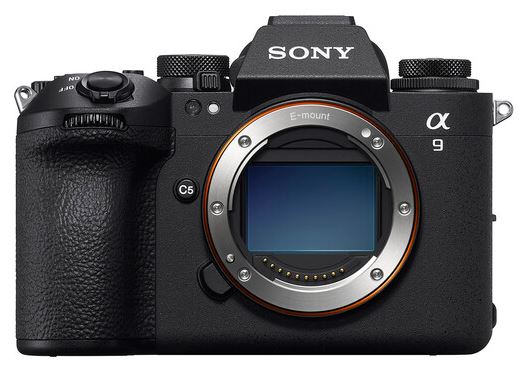
We are all aware that not very long ago, all third-party Sony lenses were limited to 15 frames per second burst speed or continuous speed. Beyond that, they were not allowed to do continuous autofocus in every frame. But from the past year, Sony has changed its policy, and all the new third-party lenses coming from Tamron and Sigma support higher frame rates burst cycles with continuous autofocus support. Additionally, the older lenses are also getting continuous updates from the lens makers to make them compatible with cameras like the Sony A9 Mark III.
TAMRON Lens Firmware Update
Enhances AF Performance
During Zooming and Supports Continuous Shooting with Sony α9 III
For 70-180mm F/2.8 Di III VC VXD G2 (Model A065)
Commack, NY, November 25, 2024 – TAMRON announces a new firmware update scheduled for release on November 25, 2024, at 11PM ET for the TAMRON 70-180mm F/2.8 Di III VC VXD G2 (Model A065) for Sony E-mount.
With this new firmware update, AF performance during zooming is improved when shooting videos and still images in AF-C mode. Additionally, with the Sony α9 III, when the focus mode is set to AF-S, DMF, or MF, the lens will support continuous shooting at up to approximately 120 frames per second.
Users can update to the latest firmware by visiting the TAMRON Lens Utility Download Page on TAMRON’s global website.
Sony A9 III Sensor TEST Score – DXO Mark LAB
Follow us on our social pages FACEBOOK | TWITTER | INSTAGRAM, If you have time –>see more Sony Alpha Rumor
By admin, on November 26th, 2024
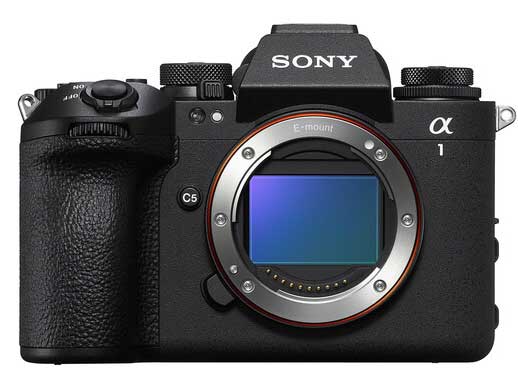
The Sony Alpha A1 Mark II camera is in very high demand, as we can see in B&H and sister stores. Just after its announcement, it has become one of the top-selling cameras, despite its high price. Many photographers are interested in this camera and are purchasing it. Due to the worldwide high demand for this model, Sony Japan has issued a statement announcing a reserve supply shortage related to the Alpha A1 Mark II camera. Users may face delays caused by supply chain issues.
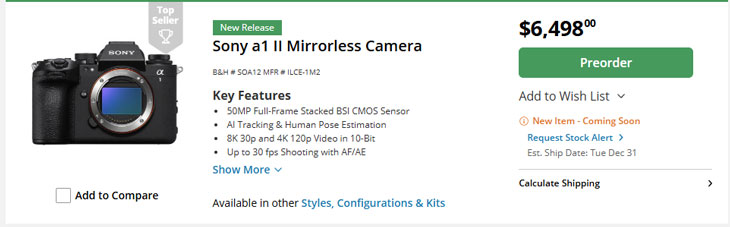
Thank you for your continued patronage of Sony products.
We started accepting orders for the full-frame mirrorless single-lens camera “α1 II” (ILCE-1M2) on Tuesday, November 26, 2024. We have received many more orders than we expected, so it may take some time for your product to be delivered.
We are currently doing our best to meet your requests as much as possible, so we ask that you please wait a little longer.
This is completely unexpected to me, as I thought that, given its high price—approximately $6000—it wouldn’t achieve such a spot. How could it reach the best-selling position in B&H stores? Yet, it has managed to do so, which is truly a big surprise. The number of orders Sony is receiving for the Alpha A1 Mark II camera is unbelievable, and that’s a fact for sure.
Sony A1 vs A1 Mark II: 15 Major Upgrades You Need to Know
Support us – Use or affiliate link Amazon.com | B&H Store for the next purchase u make – it helps us 🙂
Follow us on our social pages FACEBOOK | TWITTER | INSTAGRAM to get live Camera News + Sony Alpha Rumor
By admin, on November 23rd, 2024
Sony A1 Mark II camera has been updated, and many new features have been added to it. In this particular article, we are going to discuss the set of updated features one by one. The total number of updates we have in the newest version of this camera is 15. So, let’s start with a comparison table that will let you know the type of updates and the differences we have between the first and second generation of this camera. Later on, we will discuss it briefly so you can understand it properly.
Comparison Table: Sony A1 vs. Sony A1 II
| Feature |
Sony A1 |
Sony A1 II |
| Processor |
Dual BIONZ XR |
Dual BIONZ XR + Dedicated AI Chip |
| Autofocus System |
Real-Time Tracking (Human, Animal, Bird) |
Advanced AI AF (Human, Animal, Bird + Insects) |
| Continuous Shooting |
30 FPS with compressed RAW |
120 FPS JPEG (crop mode), 30 FPS full-res RAW |
| Sensor |
50.1 MP Stacked CMOS |
50.1 MP Updated Stacked CMOS |
| Image Stabilization (IBIS) |
5.5 stops |
8 stops |
| Video Capabilities |
8K 30p, 4K 120p |
8K 30p, 4K 120p, [Better heat sink] |
| Dynamic Range |
15 stops |
15+ stops |
| LCD Display |
Tilting 3.0″ LCD (1.44M dots) |
4-axis Multi-Angle 3.2″ LCD (2.1M dots) |
| EVF Resolution |
9.44M dots, 240Hz refresh rate |
9.44M dots, 240Hz with improved optics |
| Ports |
USB-C 3.2 Gen 1, HDMI Type-A |
USB-C 3.2 Gen 2, HDMI Type-A (Full-Size) |
| Memory Card Slots |
Dual CFexpress Type A/SD |
Dual CFexpress Type A/SD |
| Subject Recognition |
Eye AF (Human, Animal, Bird) |
AUTO AF + Car, Motorcycle, Insect, Drone |
| Battery Life |
~530 shots (CIPA) |
~670 shots (CIPA) |
| Body Design |
Magnesium alloy |
Magnesium alloy with improved ergonomics |
| Price |
Approx. $5,498 B&H Store |
Approx. $6,498 B&H Store |
1. Sony A1 Mark II: AI Chip Upgrade
Sony has added the AI chip inside the Sony Alpha A1 Mark II camera, which Sony missed at the time of the original announcement. Not just that, the Sony FX3 Mark II also doesn’t have the AI chip, and the Sony A7 IV update is still due with any AI chip integration. All these cameras are the ones that need AI chip integration to enhance their performance. Fortunately, the Alpha A1 Mark II camera now has it, and it upscales the overall performance of the camera. The design has been inspired by the A9 III, which we will talk about in detail.
2. New Heat-Sink Unit
The design has been inspired by the Sony A9 Mark III camera. It has been said very clearly during the press that the heat sink mechanism of the camera has been improved in a way that ensures while shooting 8K video even in uncontrolled weather environments, it wouldn’t have any problem. As well as You will also get extended periods of high-quality 4K 120 FPS Recording.
3. Sony A1 Mark II AI-Powered Burst Mode
We now have an Enhanced 120 FPS AF/AE refresh cycle even when the camera is shooting at 30FPS RAW mode. in the A1 Mark II camera.
4. Sony also UPSCALED buffer memory up to 2X.
With this, you can now capture up to 240 RAW files at 30 frames per second and 400 frames of JPEGs. Earlier, RAW was limited to 155 frames, and JPEGs were limited to 165 frames in the Alpha A1 camera.
4. Sony A1 Mark II Image Stabilization Upgrade
The image stabilization hardware has also been improved compared to the Sony Alpha A1. Earlier, it was limited to 5.5 stops; now, the hardware has been upscaled to an 8.5-stop rating. It’s the maximum physical limit available in any camera out there, so now you have a significant improvement compared to the original A1 camera.
5. Video – AI Chip and New Design, Bring a lot of improvement
The resolution and frame rates remain the same as those of the Sony A1, the predecessor. Still, there are many other noticeable improvements in the camera’s video core specification, Thanks to the new AI chip and improved body design.
Major advantages include a 20% improvement in the dynamic active image stabilization mode due to 8.5 Stops of IBIS, so we all know that Sony’s dynamic active image stabilization mode works flawlessly, which means it will stabilize footage, with the help of improved Active IS and Gyro now you can get gimbal-like footage from your hand. The AUTO-FOCUS improvement is not just limited to still mode. Even in video, you have automatic subject detection and algorithms active (Sony A1 doesn’t have that), Auto subject detection works wonderfully in video mode and now it can detect on-the-fly running wildlife animals and even birds more perfectly and accurately based on the advanced AI-based tracking mechanism. Most importantly, the eye autofocus tracking performance has been improved by 30%, as well as the human pose estimation tracking is also improved by the same ratio. Now you also have a NEW framing stabilizer (ensure that your frame maintains the same composition as much as possible when shooting handheld) as well as improved focus breathing compensation. Now you can shoot 4k 120fps and 8K 30fps for an extended period thanks to the new heatsink unit of A9 III.
6. Now you have 15+ plus stops of dynamic range
It’s a matter of tests. When independent agencies like Photons to Photos or DxOMark test the sensor, we will find out. That’s the only way we have right now. Sony claims that with the introduction of the new AI chip and improved image recording algorithm implemented in the Mark II camera body, the dynamic range of the camera has improved, and it’s now more than 15 plus stops, which is really amazing. The 3.2-type touchscreen is slighter higher resolution (2.1 million dots versus 1.44 million dots)
7. Content creator-friendly
The Sony A1 Mark II camera has now become content creator-friendly and adopts a kind of multi-aspect display screen, which is even more perfect than a vari-angle display. It was first seen in the Sony A7R V camera, and the same screen has been adapted for the A1 Mark II. Now photographers have more compositional freedom, and professional content creators can use this camera to create content for their channels.
8. The electronic viewfinder has been redefined.
The electronic viewfinder has been redefined. All the hardware remains the same, but with the help of the AI chip, the refresh rate can be tested up to 240 Hz with a loss in quality. Sony says you can now run in 120fps mode with display quality set to ‘high,’ though you will still see a drop in resolution if you go up to 240fps.
9. Expanded subject recognition
Sony promises to bring more updates in the future regarding the autofocus performance of the camera, and the continuous shooting speed could reach 120 frames per second in future updates, as per the rumors related to the A1 Mark II camera. However, at the same time, Sony has added cars, motorcycles, and drones mode to the camera, which was absent in the Sony Alpha A1. Most importantly, the camera now automatically selects subjects while shooting stills or video. You no longer need to select animal, bird, or human modes manually—the camera does it for you. With this, autofocus performance is much improved and is expected to improve even more in future updates.
10. New Noise Reduction Composite RAW Mode as well as in JPEG
A new noise reduction composite RAW mode has been introduced. It’s an expansion of the Sony Alpha A1 Pixel Multi-Shift mode. Now, with the addition of this noise reduction mode, the camera stacks between 4 to 32 RAW images and creates a composite together using the help of a desktop computer and the company-provided free software Imaging Edge. So with the help of the free software and multiple composites, you can generate very neat and clean images captured in extremely dark environments.
Cameras are using noise reduction algorithms from ages, but for the first time, they have introduced enhanced noise reduction with the help of AI algorithms limited to JPEGs only, and this will enhance image quality to a next level with next-generation firmware updates.
11. Introduction of 16 Custom LUTs for S-Log
Initially, in the Alpha A1 Mark II camera, Sony has provided 16 custom LUTs that you can use to preview what your log footage will look like when it’s graded. So you can use these LUTs alongside while recording with your camera to view the final look easily. There are 16 LUTs available, and in the future, more LUTs will become available to you through Sony’s customer download library.
12. Pre-Capture Mode Added
Pre-Capture functionality has been added to the Sony Alpha A1 Mark II camera, which was completely absent in the Sony Alpha A1. With a time frame of 0.03 seconds, 0.05 seconds, and 1 second, you can record up to 30 JPEGs in a row before you press the shutter.
13. Redesigned Menu System
Sony has also updated the menu system of the camera. They have also updated the button layout for more user-friendly controls, but at the very same time, along with it, they have also updated the menu and navigation inside the camera, which is now inspired by Sony cinema cameras like the FX3 and FX6. The interface has become much easier compared to the previous generation of Sony cameras when we compare it with the Sony A1.
14. Hand Grip Design Similar to A9 Mark III Body
Along with the updated menu design, the hand grip of the camera also has been redesigned. It has been made deeper, which is exactly the same as we have in the A9 Mark III camera, to hold out more heavier lenses easily. The photographers who have used this camera were very happy with the design improvement that they have experienced.
15. Focus bracketing
which was completely absent in the first generation of the Alpha A1 camera, has now been introduced in the Sony Alpha A1 Mark II. And what exactly is that? The camera captures multiple shots with incremental focus adjustments one after another, and it’s saved in a separate folder. Later on, you can merge them together or choose your focus point as per your wish or requirement in the Imaging Edge software.
Ethernet port speed has been upscaled to 2500 Mbps, enabling faster transfer of files through the Ethernet port. So now, it makes studio setups more fast and reliable.
Support us – Use or affiliate link Amazon.com | B&H Store for the next purchase u make – it helps us 🙂
Follow us on our social pages FACEBOOK | TWITTER | INSTAGRAM to get live Camera News + Sony Alpha Rumor
By admin, on November 21st, 2024
By admin, on November 13th, 2024

Take a look at the recent ongoing deal on Sony digital cameras. Not only Sony, but we also have exclusive deals running on Apple products at the B&H Store. The link is below. Unfortunately, when I am creating this article, Canon and Nikon are silent on pre-black Friday deals or holiday deals. As soon as they start any offers, I will be posting Canon and Nikon deals too.
Trending Links
Holiday BIG SAVINGS 2024
Apple B&H Exclusive Deals
EDU Special Deals for students and teachers
The B&H Super Deal Zone – Save up to 80%
Special Sony Deals – Exclusive THE BASIC BUNDLE @ $0 [ +1 Extra Battery + Bag + Memory Card]
Sony a6700 Mirrorless Camera with Basic Bundle
Sony a7 IV Mirrorless Camera with Basic Bundle
Sony a7R V Mirrorless Camera with Basic Bundle
Sony A7S III also available with a basic bundle deal

Black Friday Deals on Vlogging Cameras 2024
| Camera Name |
Current Price |
MSRP |
Purchase Link |
| Sony ZV-1 Digital Camera |
$678.00 |
$748.99 |
B&H |
| Sony ZV-1F Vlog Camera |
$397.99 |
$499.99 |
B&H |
| Sony ZV-E10 Mirrorless Camera |
$698.99 |
$799.99 |
B&H |
| Sony ZV-E1 Full-Frame Mirrorless Camera |
$2,198.00 |
$2,198.00 |
B&H |
Here is a list of current Sony cameras, along with their current prices, manufacturer’s suggested retail prices (MSRP) and Deals price mentioned in the table
| Camera Name |
Deal Price |
MSRP |
Purchase Link |
| Sony a7 IV Mirrorless Camera |
$2,098.00 |
$2,498.00 |
B&H |
| Sony a7R IVA Mirrorless Camera |
$2,998.00 |
$3,198.00 |
B&H |
| Sony a7R V Mirrorless Camera |
$3,498.00 |
$3,898.00 |
B&H |
| Sony a9 III Mirrorless Camera |
|
$5,998.00 |
B&H |
| Sony Cyber-shot DSC-RX1R II Digital Camera |
|
$3,298.00 |
B&H |
| Sony a7R IIIA Mirrorless Camera |
$1,998.00 |
$2,198.00 |
B&H |
| Sony a9 II Mirrorless Camera |
|
$4,498.00 |
B&H |
Please note that prices are subject to change. For the most current information, visit the provided links.

By admin, on November 12th, 2024
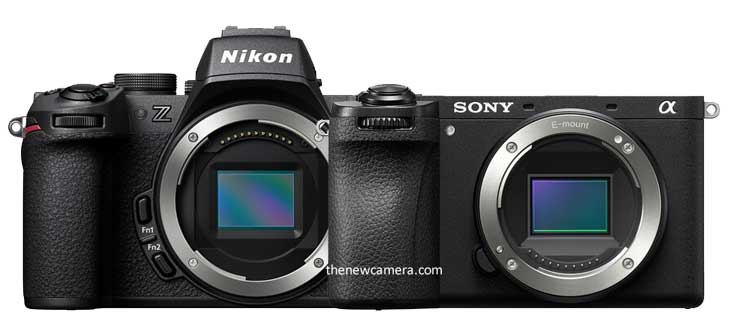
Which camera is better for capturing images or recording content, the Nikon Z50 II or the Sony A6700? In this specification comparison, we will focus on the major differences between these two cameras. Besides the key feature differences, these cameras also vary in price, so when selecting your camera, consider all these factors before making a purchase.
Initially, in the design part, one thing I like about the Sony A6700 camera is its larger battery life. The Sony A6700 uses an NP-FZ100 battery, so you get approximately 2x battery life compared to the Nikon Z50 Mark II camera. However, the Z50 II has an upgraded Bluetooth antenna, which allows for faster transfer speeds. Another good feature introduced in the Z50 II is the silent transfer mode, enabling you to use your camera for shooting or capturing video while it silently transfers your images or videos in the background to your smartphone or PC. Although there aren’t many differences in the design patterns, both cameras are highly usable for photographers and content creators in terms of design and build
Nikon Z50 II vs Canon R10
Table 1: Design Comparison
| Feature |
Nikon Z50 II |
Sony A6700 |
| Lens Mount |
Nikon Z |
Sony E |
| Body Dimensions (W x H x D) |
5 x 3.8 x 2.6 in (127 x 96.8 x 66.5 mm) |
4.8 x 2.7 x 3 in (122 x 69 x 75.1 mm) |
| Weight |
17.46 oz / 495 g (Body Only) |
1.1 lb / 493 g (With Battery, Recording Media) |
| Material |
Magnesium Alloy |
Magnesium Alloy |
| Battery Type |
EN-EL25a or EN-EL25 (Approx. 230 Shots) |
NP-FZ100 (Approx. 550 Shots) |
| Weather-Sealing |
Yes |
Yes |
| Operating Temperature |
32 to 104°F / 0 to 40°C |
32 to 104°F / 0 to 40°C |
| Connectivity Ports |
USB-C (Power/Data), Micro-HDMI, 3.5 mm Mic & Headphone Jacks |
USB-C (Power/Data), Micro-HDMI, 3.5 mm Mic & Headphone Jacks |
| Memory Card Slot |
Single SD/SDHC/SDXC (UHS-II) |
Single SD/SDHC/SDXC (UHS-II) |
| Wireless |
Wi-Fi 5, Bluetooth 5.0 |
Wi-Fi 5 (2.4/5 GHz), Bluetooth 4.2 |
| GPS |
Via Connected Smartphone |
Via Connected Smartphone |
In the imaging comparison, we have compared the two different sensors and their specs. The big advantage of the Nikon Z50 II camera’s sensor—and a major reason why Nikon continues using it in their mirrorless lineup—is its strong low-light performance. The sensor pixel area is larger than that of the A6700, so even without optical stabilization, it captures more detail in low-light environments. Additionally, the Z50 II has an expanded ISO range that offers one more stop than the A6700. With these core differences, it’s clear that the Nikon Z50 II will perform better in low-light or uncontrolled lighting environments compared to the A6700.
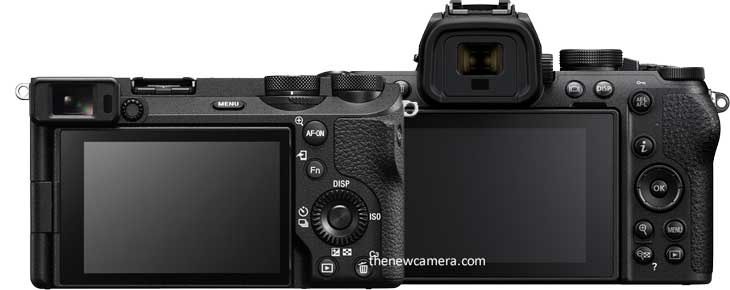
Resolution Advantage of Sony A6700:
Now, with the Sony A6700 camera, we are getting a resolution advantage, but will it work in actual conditions? We will test and find out that capturing images near the base ISO range will bring more details from Sony with OLPF or with a 20.9 MP sensor without OLPF (Optical low-pass filter).
Table 2: Imaging Comparison
| Feature |
Nikon Z50 II |
Sony A6700 |
| Sensor Resolution |
Actual: 21.51 MP, Effective: 20.9 MP (5568 x 3712) |
Actual: 27 MP, Effective: 26 MP (6192 x 4128) |
| Sensor Type |
APS-C CMOS, 23.5 x 15.7 mm |
APS-C CMOS, 23.3 x 15.5 mm |
Sensor Pixel Area
|
4.22µ |
3.76µ |
Low pass Fiter
|
No |
Yes |
| Sensor Crop Factor |
1.5x, 1.2x in some video modes |
1.5x, 1.6x in some video modes |
| Image Stabilization |
Digital (Video Only) |
Sensor-Shift, 5-Axis |
| ISO Range (Photo) |
100 to 51,200 (Expandable: 100 to 204,800) |
100 to 32,000 (Extended: 50 to 102,400) |
| ISO Range (Video) |
100 to 25,600 |
100 to 32,000 |
| Continuous Shooting Speed |
Up to 11 fps (Raw) / 30 fps (JPEG) |
Up to 11 fps (26 MP) |
Pre- burst
|
Yes |
No |
| White Balance Range |
2500 to 10,000K |
2500 to 9900K |
| Autofocus Points |
231 Phase & Contrast Detection |
759 Phase Detection (Photo), 495 (Video) |
| AF Sensitivity |
-9 to +19 EV |
-3 to +20 EV |
| Image File Format |
HEIF, JPEG, Raw |
HEIF, JPEG, Raw |
| Aspect Ratio Options |
3:2, 1:1, 16:9 |
3:2, 4:3, 16:9, 1:1 |
| Bit Depth |
14-Bit |
14-Bit |
Continuous Shooting Speed:
Another significant difference is continuous shooting speed. Both cameras feature up to 11 fps with their mechanical shutters, but Nikon allows up to 30 fps with its electronic shutter. And in A6700 we don’t have the support of an Electronic shutter in Brust mode, so the maximum speed we are getting in A6700 is 11 Fps.
Buffer Memory and Pre-Burst Capture Mode:
Comparing buffer memory, the Z50 II can store up to 200 RAW files in a single shot, whereas the A6700 can store approximately 50. Now with the help of Pre Brust capture mode feature in the Z50 II is that it engages its buffer memory before shooting starts. This means that when you capture an image, the camera saves a stack of images even before the shutter is pressed, ensuring you don’t miss key moments.
Low-Light Autofocus Sensitivity:
Another strength is the Z50 II’s low-light AF sensitivity, which reaches -9 EV, compared to -3 EV on the Sony A6700.

Autofocus System:
The Sony A6700 has 759 phase-detect AF points for autofocus, while the Z50 II is limited to 231 points. This gives the A6700 a more advanced autofocus system, but Nikon has closed the gap by introducing similar AF algorithms to those seen in the Nikon Z8. So, while Sony may still have the edge in AF, the Z50 II’s performance now comes very close.
Image Stabilization
Sony A6700 camera features sensor-shift Image stabilization as well as GYRO, so if you are shooting still images of video the Sony A6700 camera is more helpful to you compared to Nikon Z50 II without IBIS and normal E- VR mode.
Best Camera for Different Environments:
So, if you’re working in a controlled lighting environment, the Sony A6700 may be more useful. However, if you’re often in uncontrolled or outdoor environments—like wildlife photography where lighting and subject positions vary—then a camera that performs better in low-light conditions may be preferable, making the Z50 II a better choice.
Table 3: Video Comparison
| Feature |
Nikon Z50 II |
Sony A6700 |
| Internal Recording Modes |
H.264/H.265 8/10-Bit |
XAVC HS/S 4:2:2 10-Bit, XAVC S 8-Bit, XAVC S-I 10-Bit |
| Max Resolution & Frame Rate |
UHD 4K 30p Uncropped |
UHD 4K 30p Uncropped |
| |
UHD 4K 60p 1.5X Crop |
UHD 4K 60p 1.04X Crop |
| |
NA |
UHD 4k 120p 1.58x crop |
| High-Speed Recording |
1920 x 1080 up to 120 fps |
1080p up to 240 fps |
| External Recording |
HDMI 4K (Unspecified Frame Rate) |
HDMI 4K at up to 59.94 fps, HD up to 59.94 fps |
| Slow/Fast Motion |
Slow Motion Only |
Yes |
| Recording Limit |
Up to 125 Minutes |
Unlimited |
| Gamma Curve |
HDR-HLG, Nikon N-Log |
HDR-HLG, S Cinetone, S-Log 3 |
Waveform
|
Yes |
No |
Product showcase Mode
|
Yes |
Yes |
Auto Framing
|
No |
Yes |
| Built-In Microphone |
Stereo |
Stereo |
Image Stabilization
|
VR |
IBIS / GYRO |
| Audio Recording Format |
MOV: 24-Bit 48 kHz LPCM, MP4: 16-Bit 48 kHz AAC |
XAVC: 2-Channel 16-Bit 48 kHz LPCM |
| Headphone & Mic Jacks |
Yes (3.5 mm) |
Yes (3.5 mm) |
| Video I/O |
Micro-HDMI |
Micro-HDMI |
This side-by-side comparison should help you see each camera’s strengths and features in detail. Now its time for a recommendation
Sony A6700: Higher Frame Rates and Minimal Crop in 4K
In the video comparison tables above clearly shows that with the Sony A6700 camera, we are getting higher frame rates up to 120 fps in 4K. Although we have to face significant crop in that mode, at the same time, in the Nikon Z50 Mark II camera, even at 4K 60 fps, we have to face a 1.5X crop, whereas in the Sony A6700 camera, the crop at 4K 60p is minimal, at only 1.04x. So more or less, if we talk about the usability of frame rates, we are getting more advanced specifications in the Sony A6700 camera.
Sony A6700: Superior Gyro-Based Image Stabilization for On-the-Go Shooting
Another significant advantage of the Sony A6700 camera is the presence of a gyro-based image stabilization system, so if you are hand-holding the camera and creating content on the go, then the most suitable camera for you is again the Sony A6700 camera.

Sony A6700: High Frame Rate Options for Slow-Motion and Content Creation
Again, for dance videos or creating reels that need higher frame rates, the Sony A6700 camera allows you to capture full HD videos up to 240 fps for creating super slow-motion videos. So if you talk about frame rates or gyro-based image stabilization, you are getting all that in the Sony A6700 camera, which also supports 10-bit internal recording with S-Log2, S-Log3, and Hybrid Log Gamma, so you can extract as much detail as you require for a given scene.
Nikon Z50 II: Exceptional Low-Light Performance and Professional Cinematography Features
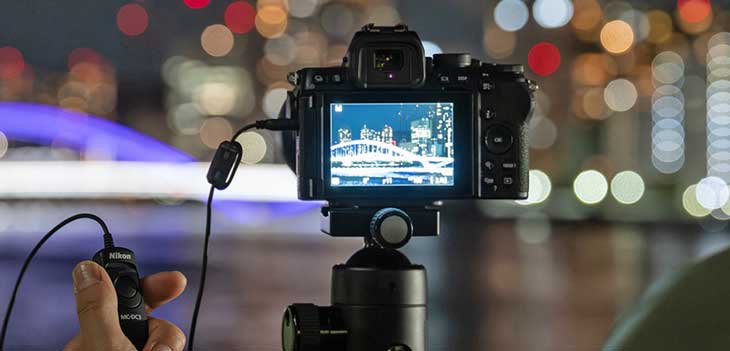
Now, when should you buy the Nikon Z50 Mark II camera? Since the Nikon Z50 II camera features an ultra-low-light-sensitive sensor, if you are a short filmmaker and need a camera that performs exceptionally well under uncontrolled lighting conditions along with support for professional cinematography using RAW LUTs that the camera includes, then new RAW LUTs with the Z50 II camera may be added with updates in the future. Above all, you are also getting waveform support that will help you precisely control exposure, allowing you to rearrange elements to achieve optimal exposure. So if you are professionally involved in creating short films under uncontrolled lighting conditions, then the most recommended camera is the Nikon Z50 II.
Get a Sony A6700 Camera from B&H Store and Amazon.com
Sony A6700 Recommended for:
- Portrait Photography
- Landscape Photography
- Street Photography
- Event Photography
- Sports Photography
- Vlogging
- YouTube Content Creation
- Product Photography
- Cinematic Videography (with high frame rates)
- Casual Travel Videography
- Action/Adventure Videography
Get a Nikon Z50 Mark II camera from the B&H Store | Amazon.com
Nikon Z50 II Recommended for:
- Low-Light Photography
- Wildlife Photography
- Documentary Videography
- Cinematic Filmmaking (low light)
Support us – Use or affiliate link Amazon.com | B&H Store for the next purchase u make – it helps us 🙂
Follow us on our social pages FACEBOOK | TWITTER | INSTAGRAM to get live Camera News +
By admin, on November 11th, 2024
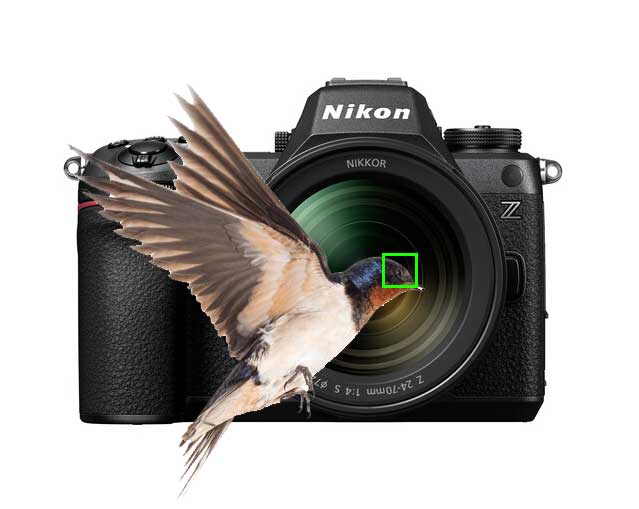
So in the latest update, we have that Nikon is currently working on the implementation of bird eye autofocus mode in the Nikon Z6 Mark III camera since the camera doesn’t have that particular mode, and many wildlife photographers are disappointed with this.
They have become more disappointed after the release of the Nikon Z50 II, which does have a birds-eye autofocus mode under the $1000 price range.
But not to worry, since, as per the latest information coming out from @Jan Wegener’s YT Channel, Nikon Japan is listening to us, and very soon in upcoming firmware updates, they will add the bird eye AF feature in the Z6 III camera.
Best Lenses for Nikon Z6 III
Follow us on our social pages FACEBOOK | TWITTER | INSTAGRAM to get live Camera News
|
KEEP THIS BLOG ALIVE - Support New Camera Buy Canon Lenses, Buy Music CD or Digital Camera at amazon it helps this site, and you do not pay anything extra, it is just a way to help support this site.

|