Join More Than 50,000+ Subscribers and get latest camera news and rumors
NEW CAMERA VIDEOS ON YOUTUBE
|
By admin, on June 6th, 2025 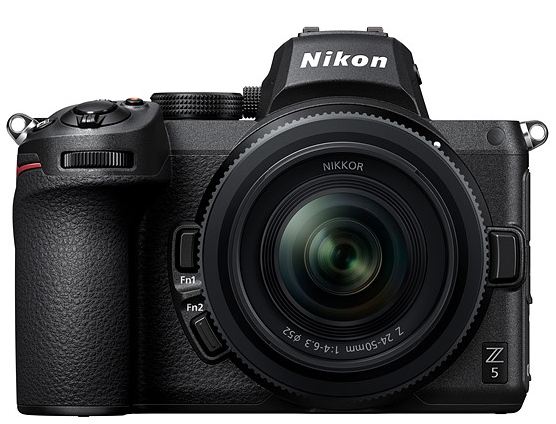
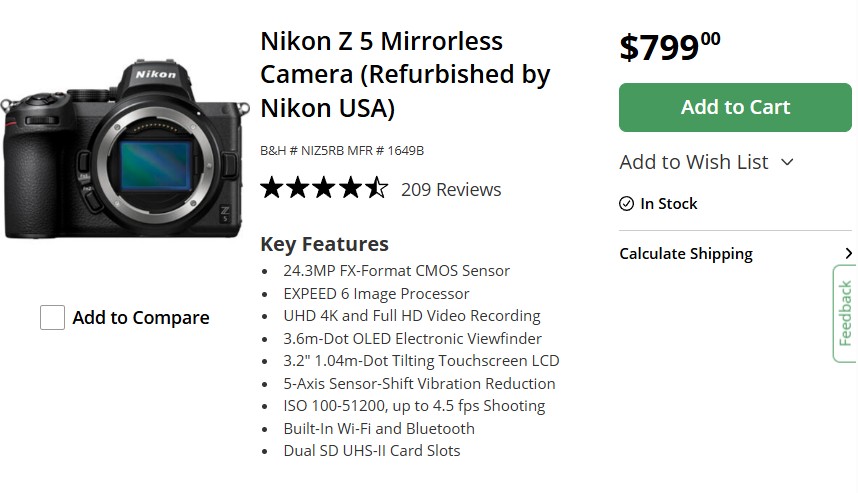
The Nikon Z5 mirrorless camera is available at $799 @B&H Store. The body is refurbished by Nikon USA itself, so it is like brand new and also comes with the warranty by the store.
So the Nikon Z5 camera is actually available at a price of an entry-level mirrorless camera or a compact camera. If you’re able to put a budget lens over it, like we have in Viltrox, the 35mm or the basic kit lens for a full-frame camera, it will help you to capture amazing pictures with a full-frame sensor.
But keep in mind Nikon Z5 is a first-generation Nikon full-frame mirrorless camera, so the autofocus tracking feature is not that great, means you are not able to track fast-moving subjects. Also, the autofocus lock speed is very fast and locks focus in no time.
Clicke here to explore the Nikon Z5 Deal at B&H Store
Pros and Cons of Nikon Z5
| Pros |
Cons |
| Affordable full-frame |
Slow 4.5fps burst rate |
| Excellent image quality |
Cropped 4K video |
| 5-axis stabilization |
Autofocus is less reliable in low light |
| Weather-sealed body |
|
| Dual SD card slots |
|
| Great ergonomics |
|
Nikon Z5: Who Should Buy and Who Should Not
| Who Should Buy |
Who Should Not Buy |
| Beginner full-frame photographers |
Action/sports photographers needing high burst rates |
| Budget-conscious enthusiasts |
Videographers requiring uncropped 4K video |
| Landscape/portrait shooters |
Low-light autofocus-dependent users |
| Those wanting weather-sealed gear |
Professionals needing advanced features |
Follow us for more updates and get LIVE RUMORS –> FACEBOOK | TWITTER | INSTAGRAM to get live news — > get live camera news + –> See More+ Explore more B&H Deals and Camera Deals USA
By admin, on June 5th, 2025 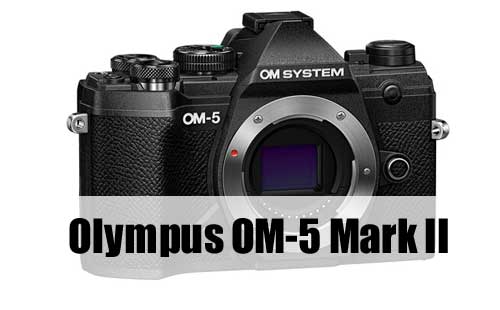
According to the latest rumors from the rumor mill, the Olympus OM-5 Mark II announcement is expected on June 17, 2025. The camera will feature the same sensor as we have seen in the OM-1 Mark II camera, the 20 MP Stacked M4/3 format sensor. If the rumored information is true, then the entire OM-5 Series will surely experience a Major update in the sensor technology, aligning it closely with OM System’s flagship model.
A nice bump in speed and image quality compared to the original OM-5 if the rumored information is true. A few subtle tweaks to the body design is also coming alongside the new sensor, though nobody’s shown us clear details yet (we are waiting for the leaked images/specs to confirm this). If we talk about the EXACT set of information from the sources of the rumor mill, they have mentioned “stacked sensor” without saying exactly which one, so. What we have concluded is that if a stacked CMOS sensor is used, then for sure Oly will use the 20MP stacked from the flagship model.
The combination of “conventional 20MP sensor + TruePic X” seems possible. However, rather than using the old sensor (which has been in use since 2016), it may be cheaper for the company to standardize on the stacked sensor.
Either way, we’ll likely find out on June 17th, Stay tuned more updates coming
Follow us for more updates and get LIVE RUMORS –> FACEBOOK | TWITTER | INSTAGRAM to get live news — > get live camera news + –> See More+ Olympus Rumors 24X7
Credit / courtesy of 43Rumors—
By admin, on June 5th, 2025 
The Fuji X-E5 official teaser video is now official, Fuji X-E5 is coming on June 12, 2025. We already have a bunch of leaks and specifications. The upcoming camera will feature a 40MP APS-C X-Trans CMOS 5 HR Sensor and In-Body Image Stabilization (IBIS), as you can only see a glimpse of the camera in the teaser.
There is another rangefinder-style series that is important in the history of the X series.
Stay tuned, more updates are coming
Follow us for more updates and get LIVE RUMORS –> FACEBOOK | TWITTER | INSTAGRAM to get live news — > get live camera news + –> See More Fuji Rumors
By admin, on June 1st, 2025 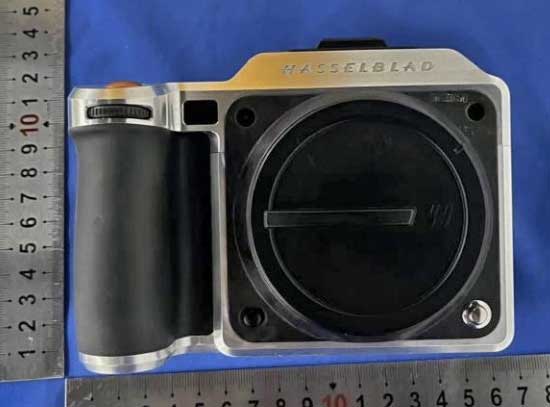
Hasselblad X2D Mark II images and major core specifications surface today. Since in our previous post we have clearly mentioned that the camera maker has 180 days of time to announce the camera, and since they have failed to do so, the FCC ID, according to their rules, has publicly released the major core specifications and images of the camera.
Exclusive insight from the registration details
The Hasselblad X2D II is Hasselblad’s next generation mirrorless medium format digital camera with a large 100-megapixel CMOS sensor
that boasts 16-bit colour depth and a dynamic range of 15 stops. The camera features a 5-axis 8-stop in-body image stabilization (IBIS) and face
detection. Hasselblad Natural Colour Solution (HNCS) technology is integrated into the camera’s system, delivering superb, true-to-life tones that
match what the human eye sees. The HB722 offers more storage with a built-in 1TB SSD and users can expand the capacity further with a
CFexpress Card Type B. With access to a vast range of high-quality lenses including XCD, HC, HCD, XPan, and V System, the creative possibilities with the HB722 are
endless.
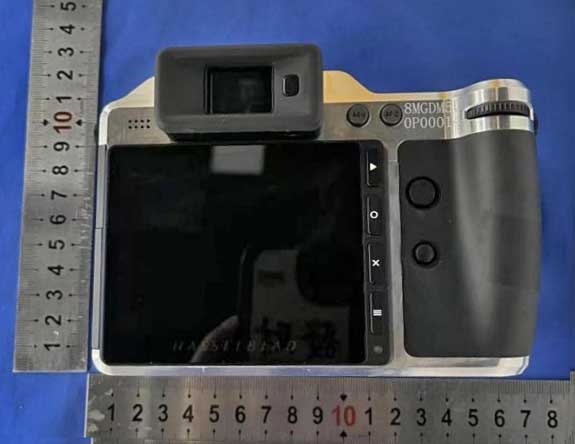
So now we have the official core specifications and real images of the camera. And now its up to hasselblad when they want to do an formal announcement for X2D II
Hasselblad X2D II Full Specification
- 100-Megapixel CMOS Sensor: A 100MP medium format sensor with 16-bit color depth and 15 stops of dynamic range for exceptional image quality.
- 8-Stop 5-Axis IBIS: Advanced in-body image stabilization for sharper handheld shots, even in low-light conditions.
- LiDAR Autofocus System: Cutting-edge LiDAR technology for fast and precise focusing, ideal for challenging lighting scenarios.
- Hasselblad Natural Colour Solution (HNCS): Delivers true-to-life colors that align with human vision.
- 1TB Internal SSD: Built-in storage with support for CFexpress Type B cards for high-speed, high-capacity workflows.
- Lens Compatibility: Supports XCD, HC, HCD, XPan, and V System lenses for versatile shooting options.
- Connectivity: Bluetooth and WiFi (2.4GHz) for seamless wireless integration with modern devices.
- Display: Top LCD screen for quick access to shooting parameters, enhancing the user experience.
- Body Design: Black aluminum alloy top plate, maintaining Hasselblad’s signature minimalist aesthetic.
What’s NEW inside the Hasselblad X2D II
The Hasselblad X2D Mark II features a 100MP new BSI CMOS Medium Format sensor, upgraded LiDAR autofocus, and enhanced sensor shift image stabilization, 8-stop IBIS, The camera is actually made for photographers. While video capabilities remain unconfirmed, earlier leaked information suggests that X2D II may include 4K recording,
Follow TheNewCamera.com for the latest updates, reviews, and camera rumors. Join our community on X for real-time news! Also Follow us on our social pages FACEBOOK | INSTAGRAM, If you have time –>see more+ Hasselblad rumors 24X7
Support us – Use our affiliate link Amazon.com | B&H Store | Adorama.com for the next purchase u make – it helps us 🙂
Disclaimer: This post contains affiliate links. As an Amazon Associate, we earn from qualifying purchases, which helps keep TheNewCamera.com running without additional cost to you.
sources HottoFLY Twitter | https://www.fccinsights.com/victor-hasselblad-ab/2AEFA-HB7220924
By admin, on May 30th, 2025 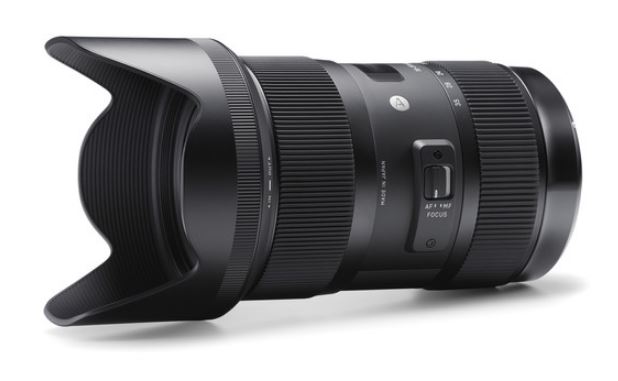 Image of Sigma 18-35mm F1.8 APS-C Lens According to the latest rumour coming from the rumour mill on June 17, 2025, Sigma is going to announce two new lenses for Canon APS-C mount cameras, that is the RF-S mount, and the two lenses are:
 Sample image of Sigma 18-35mm F1.8mm Lens Sigma 17-40mm F1.8 DC DN ART
Do you remember the 18-35mm F1.8 lens that was available in the DSLR time? Of course, I missed that lens very badly, and I wondered why Sigma isn’t announcing any alternative to that lens, which was popular among professional APS-C users then. Now, finally, we have a solution. We have a brand new RF-S lens with the same F1.8 constant aperture and a slightly broader focal length.
The lens has a 27-64mm (35mm equivalent) focal length, and without a doubt, it will deliver exceptional image quality to the users. Just imagine pairing the Sigma 17-40mm F1.8 lens with the recently announced Canon R50 V camera—for wedding cinematography or for professional content creation, it will deliver, as I have said, exceptional results to the user.
The expected price of the Sigma lens is somewhere around $1200—that is what I am expecting. I will update this post once the price information is available to us.
Now, the next lens, which is also coming for the RF-S mount:
Sigma 12mm F1.4 DC DN Contemporary lens
So this particular lens will become very popular among handheld content creators—those who love to have an ultra-wide lens with a bright maximum aperture to deliver the finest quality possible.
Stay tuned for more updates coming
The article “6:34 pm, Friday, 30 May 2025, Greenwich Mean Time (GMT)” was published at 4:24 pm, Tuesday, 27 May 2025, Greenwich Mean Time (GMT). By thenewcamera.com Team. You can Follow us on our social pages FACEBOOK | TWITTER | INSTAGRAM to get live Camera News + Canon Rumors 24X7.
Source – SAR website
By admin, on May 30th, 2025 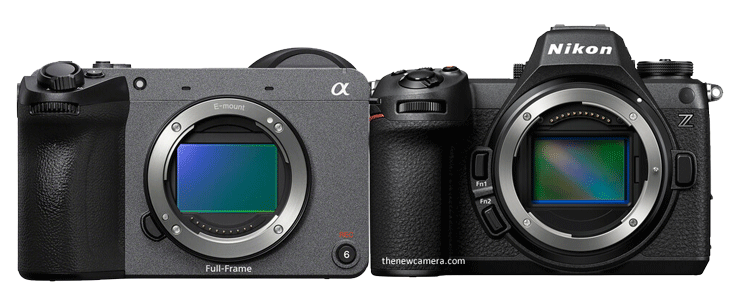
Sony FX2 versus the Nikon Z6 Mark III camera, let’s explore the differences between the two point by point
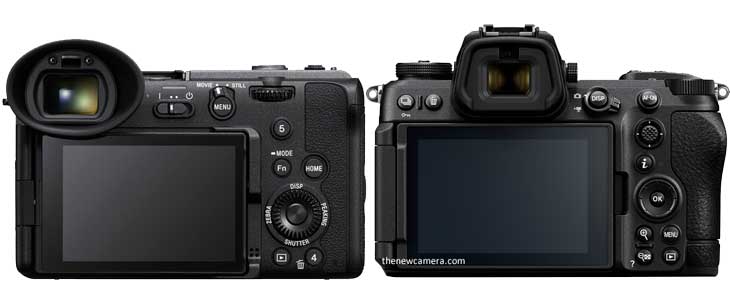
The Nikon Z6 Mark III camera is slightly larger, with a photography-friendly body and controls. The Sony FX2 does have a deep hand grip, but it has a somewhat boxy design. The thing that makes a big difference between the two, specifically in the design part, is that Sony is made for cinematography purposes and carries a lot of tripod threads all over the body to mount it perfectly in cinema rigs. The other advantage we have with the Sony FX2 camera is the moving viewfinder.
Nikon Z6 III and the Sony FX2 — both of them support dual card slots, one dedicated for CFexpress and one SD card slot. The Nikon Z6 Mark III monitor is slightly larger and of higher resolution, so users may experience better LCD quality with the Z6 Mark III camera. At the very same time, the electronic viewfinder is also a 5.76 million-dot unit compared to a 3.6 million-dot electronic viewfinder in Sony, but yeah, we are getting better display units in the Nikon Z6 Mark III.
The wireless functionality of the two is almost the same, but Nikon does have GPS support via smartphone to enable geotagging functionality for travel purposes, documentary work, or maybe for photojournalism purposes. The FX Mark 2 camera misses out. Although the humidity tolerance and the weatherproof criteria of both cameras match each other, so we literally do have almost the same build quality in both cameras.
Design Comparison
| Feature |
Sony FX2 |
Nikon Z6 III |
| Lens Mount |
Sony E |
Nikon Z |
| Material of Construction |
Magnesium Alloy |
Magnesium Alloy |
| Dimensions (W x H x D) |
5.1 x 4.1 x 3.1″ / 129.7 x 103.7 x 77.8 mm |
5.5 x 4 x 2.9″ / 138.5 x 101.5 x 74 mm |
| Weight |
1.3 lb / 594 g (Body Only), 1.5 lb / 679 g (With Battery, Recording Media) |
23.6 oz / 670 g (Body Only) |
| Shoe Mount |
1x Intelligent Hot Shoe |
1x Hot Shoe |
| Tripod Mounting Thread |
2x 1/4″-20 Female (Bottom) |
1x 1/4″-20 Female (Bottom) |
| Accessory Mounting Thread |
3x 1/4″-20 on Camera Body |
Not specified |
| Operating Conditions |
32 to 104°F / 0 to 40°C |
32 to 104°F / 0 to 40°C up to 85% Humidity |
| Media/Memory Card Slot |
Slot 1: CFexpress Type A / SD (UHS-II)
Slot 2: SD/SDHC/SDXC (UHS-II) |
Slot 1: CFexpress Type B / XQD
Slot 2: SD/SDHC/SDXC (UHS-II) |
| Wireless |
2.4 GHz Bluetooth 5.0, 2.4 / 5 GHz Wi-Fi (802.11a/b/g/n/ac) |
2.4 / 5 GHz Wi-Fi 5 (802.11ac), Bluetooth 5.0 |
| Mobile App Compatible |
Yes: Android & iOS (Sony |
Creators’ App |
| Global Positioning |
No |
GPS (via Connected Smartphone) |
| Monitor |
3″ Tilting Touchscreen LCD, 1,036,800 Dot |
3.2″ Articulating Touchscreen LCD, 2,100,000 Dot |
| Viewfinder |
Electronic (OLED), 3,686,400 Dot / Titling EVF |
Electronic, 5,760,000 Dot, 0.5″ |
Best Camera for Photographers
Sony FX2 camera offers higher resolution at 33 megapixels, but at the very same time, the Nikon Z6 Mark 3 camera offers 24.5 megapixel resolution, which is of course limited. But if you talk about sensor architecture, then the Nikon Z6 Mark 3 camera is using a partially stacked CMOS sensor.
Video Recording: Nikon Z6 III Excels
Of course, the Sony FX2 camera is able to create highly detailed 4K 30fps footage from a 7K oversampled file. At the very same time, when you are recording videos at 4K 60 frames per second or 4K 120 frames per second with the Nikon Z6 Mark 3 camera—and of course, to be noted—4K 120 FPS is not possible with the Sony FX2 despite being in a higher price range. Other than that, even when you are trying to record 4K @ 60 frames per second, at that time you have to face a 1.5x crop in the Sony FX2. So with the FX2, we have limitations attached in the higher frame rate, and 4K 120 is not possible.
Continuous Shooting Speed Comparison
The same advantage we also get in the continuous shooting speed of the camera, where we are able to get up to 20 FPS RAW, and up to 60 frames per second in full resolution, and up to 120 frames per second in the DX crop mode. Thankfully, the Sony FX2 camera is using a mechanical shutter, but despite that, the continuous shooting speed of the camera remains limited to 11 frames per second.
Autofocus: Sony FX2’s Precision
When you dive into autofocus performance, each system really brings something different to the table. Sony’s FX2 boasts a whopping 759 phase-detection points (compared with Nikon’s 299 “hybrid” points), which means it can lock onto—and keep track of—moving subjects across with Sony’s famous AI AF. That’s a huge advantage when you’re shooting fast-paced street scenes or busy event coverage.
Nikon Z6 III’s Low-Light Autofocus
On the other hand, Nikon’s autofocus shines in low-light situations. With a sensitivity down to –10 EV (versus Sony’s 4 EV), the Z6 III can find and focus on subjects in near-darkness—perfect for late-night cityscapes, dimly lit weddings, or cozy indoor gatherings.
Autofocus Tracking: Nikon Closing the Gap
Recent reviews peg the Z6 III’s subject recognition and tracking as nearly on par with Sony’s vaunted system, so you’re not really “giving up” much by choosing Nikon—especially if you need that extra push in challenging light. Still, many pros continue to call Sony the gold standard for sheer reliability, so it really comes down to what kind of shooting you do most often.
Image Stabilization: Nikon’s Edge
Sensor-shift image stabilization of the Nikon Z6 Mark 3 is more helpful, since you can link your autofocus point with the VR system of the camera, and you will be getting a true 7.5 stops of stabilization all the time, even if you are focusing in the corner of the frame. Sony’s Active Image Stabilization is highly effective in video mode, but when you are talking about stills, it’s the traditional-style IBIS system we are getting.
Why Choose Nikon Z6 III for Pros
Nikon Z6 Mark III camera, due to its partially stacked CMOS sensor and Expeed 7 image processor, the autofocus calculation is being done at the rate of 120 frames per second in-camera. So the autofocus and the auto exposure refresh rate is actually 120 FPS. And due to the introduction of a new artificially intelligent autofocus algorithm inside the camera, the overall photographic experience is now elevated to the next level.
So if you are a professional photographer, then the Nikon Z6 Mark 3 will be a perfect choice for your requirements.
Photographic Features Compared
| Feature |
Sony FX2 |
Nikon Z6 III |
| Sensor Resolution |
Actual: 34.1 MP, Effective: 33 MP |
Actual: 26.79 MP, Effective: 24.5 MP (6048 x 4032) |
| Image Sensor |
35.9 x 23.9 mm (Full-Frame) CMOS |
35.9 x 23.9 mm (Full-Frame) Partially Stacked CMOS |
| Image Stabilization |
Sensor-Shift, 5-Axis, Active IS |
Sensor-Shift, 5-Axis, AF points can be linked to VR |
| ISO Sensitivity |
Native 100-51,200 (50-204,800 Extended) |
Photo: Native 100-64,000 (50-204,800 Extended) |
| Shutter Type |
Mechanical Focal Plane and Electronic Rolling Shutter |
Mechanical Focal Plane and Electronic Rolling Shutter |
| Shutter Speed |
1/8000 to 30 Seconds (Photo) |
1/8000 to 15 Minutes (Mechanical), 1/16000 to 15 Minutes (Electronic) |
| Continuous Shooting |
Not specified in the provided data (10 fps per web sources) |
Up to 20 fps at Maximum Resolution |
| Autofocus Points |
Photo: Phase Detection: 759 |
Photo, Video: Contrast Detection, Phase Detection: 299 |
| Autofocus Sensitivity |
4 to +20 EV |
-10 to +18 EV |
| White Balance |
2500 to 9900K |
2500 to 10,000K, Presets: Auto, Cloudy, Color Temperature, Direct Sunlight, Flash, Fluorescent, Incandescent, Shade |
| Image File Format |
Not specified (JPEG, Raw per web sources) |
HEIF, JPEG, Raw |
| Bit Depth |
Not specified (14-bit per web sources) |
14-Bit |
Best Camera for Video
When it comes to video, the Z6 III feels like a powerhouse that’s ready to stretch your creativity. Imagine being able to capture in gorgeous ProRes RAW—right inside the camera—at up to 6K/60p. With the help of the stacked CMOS sensor, the camera can record 6K 60fps videos. Despite being a consumer hybrid mirrorless camera, the Nikon Z6 Mark III is able to deliver 6K resolution, that is really a big surprise.
That means you’ve got room to push and pull your colors, tweak contrast, and hold onto every bit of shadow and highlight detail without worrying about external recorders or cables.
Nikon Z6 Mark III Slow-Motion Capabilities
And if you need silky-smooth slow-mo or a little extra resolution, you can jump into uncropped 4K/120p or even 1080p/240p modes. While shooting 4K 120 frames per second, you have to face a 1.5x DX crop, and when you are shooting 4K @ 60 frames per second, there is a negligible amount of crop, which remains unnoticeable.
Sony FX2 Video Features
Sony’s FX2 isn’t slouching, though. It delivers clean, 10-bit H.264/H.265 internally and will give you oversampled 4K/30p for sharp, detailed footage. If you really need that ProRes RAW goodness, you can use an external recorder via HDMI—but that means more gear hanging off your rig. And when you want to push the frame rate higher in 4K—meaning if you want to record your 4K videos at 60 frames per second—you have to face a 1.5x crop, and there is no 120 frames per second option available in the Sony FX2 while recording 4K videos.
Sony FX2 Live-Streaming Advantages
Where Sony shines is in its live-streaming chops: built-in RTMP/RTMPS and SRT support make it a dream camera for one-person streaming setups, whereas the Z6 III leaves you hunting for a separate encoder. Both cameras give you flexible picture profiles—N-Log on Nikon holds up beautifully alongside Sony’s S-Log 3 and S-Cinetone—but in professional circles, S-Log and Cinetone have built a bit more of a buzz.
Audio and Rolling Shutter Comparison
Don’t forget audio: both record in 24-bit LPCM, but Sony’s extra channels give you more mics or ambient tracks to play with. And if rolling shutter is a worry, Nikon’s stacked sensor really pulls ahead—its readout is faster, so you’ll see far less “jello” when you whip the camera side-to-side at 4K/60p or 120p.
Nikon Z6 III vs. Sony FX2: Which to Choose?
In short, if you’re a solo shooter who loves to color-grade, chase cinematic slow-mo, and keep your rig light, the Z6 III’s internal RAW and high-speed modes deliver. If you’re streaming live, mixing multiple audio sources, or don’t mind an external recorder for 16-bit RAW, the FX2’s built-in streaming and flexible codecs have you covered.
Video Comparison
| Feature |
Sony FX2 |
Nikon Z6 III |
| RAW |
16 BIT via HDMI |
12 Bit internally |
| MAX RES. |
4K 60p |
6K 60p N-RAW, 6K 30p ProRes RAW |
| Internal Recording Modes |
H.264/H.265 8/10-Bit:
UHD 4K (3840 x 2160) at 23.98/25/29.97/50/59.94 fps
DCI 4K (4096 x 2160) at 23.98/24/25/29.97/50/59.94 fps
|
ProRes RAW/ProRes RAW HQ/Raw: 6048 x 3404 at 23.98/25/29.97/50/59.94 fps
4032 x 2268 at 23.98/25/29.97/50/59.94 fps 3984 x 2240 at 23.98/25/29.97/50/59.94/100/120 fps
UHD 4K (3840 x 2160) at 23.98/25/29.97/50/59.94/100/120 fps
|
| Format and codes |
16 Bit RAW, 10-Bit 4:2:2 XAVC S-I |
12 Bit RAW, |
| 4k 60 FPS |
Yes, 1.5X Crop |
Yes, No crop at 4k 60FPS |
| 4K 120 FPS |
No |
Yes, 1.5X Crop |
| External Recording Modes |
4:2:2 8/10-Bit via HDMI:
DCI 4K (4096 x 2160)
UHD 4K (3840 x 2160)
HD (1920 x 1080)
Raw 16-Bit: 4672 x 2628 |
HDMI: UHD 4K (3840 x 2160) |
Dual Native ISO
|
Dual Base 800/4000 |
Dual Native ISO 800 |
| Built-in Fan |
Yes |
No |
| Video IS |
Very effective / Active IS + Gyro |
Mechanical IBIS + EVR |
| Fast-/Slow-Motion Support |
Yes |
Slow-Motion Only |
| Gamma Curve |
HDR-HLG, Rec709, S Cinetone, Sony S-Log 3, Standard |
HDR-HLG, Nikon N-Log |
| Anomorphic Lenses support |
Yes |
No |
| Audio Recording |
2/4-Channel 24-Bit 48 kHz LPCM
2-Channel 16-Bit 48 kHz LPCM |
16-Bit 48 kHz AAC Audio
2-Channel 24-Bit 48 kHz LPCM Audio |
| IP Streaming |
RTMP, RTMPS, SRT: 1280 x 720 to 3840 x 2160 at 25p, 29.97p, 50p, 59.94p |
No |
Buy Nikon Z6 Mark III from Amazon.com | B&H Camera store
Buy Sony FX2 From B&H Store
also see
Which one is the Best Camera for Recording Video – Panasonic Lumix S1 II vs. Nikon Z6 III?
Best Lenses for Nikon Z6 III
By admin, on May 29th, 2025 
The Sony FX2 is an extended version of the Sony A7 IV, optimised for its maximum cinematography specifications. So hardware-wise, both the cameras are the same — is it true? NO, we do have some sort of advancement in the hardware part, and the advancement is the introduction of the AI chip, which was absent in the Sony A7 IV, as well as the very unique tiltable electronic viewfinder design. So let’s explore the differences between the two.
Design Comparison
| Feature |
Sony A7 IV |
Sony FX3 |
| Lens Mount |
Sony E |
Sony E |
| Material |
Magnesium Alloy |
Magnesium Alloy |
| Dimensions (W x H x D) |
5.2 x 3.8 x 3.1″ (131.3 x 96.4 x 79.8 mm) |
5.1 x 4.1 x 3.1″ (129.7 x 103.7 x 77.8 mm) |
| Weight |
1.4 lb (658 g, with battery and media) |
1.5 lb (679 g, with battery and media); 1.3 lb (594 g, body only) |
| Media Slots |
Slot 1: CFexpress Type A / SD (UHS-II); Slot 2: SD/SDHC/SDXC (UHS-II) |
Slot 1: CFexpress Type A / SD (UHS-II); Slot 2: SD/SDHC/SDXC (UHS-II) |
| Video I/O |
1x HDMI Output |
1x HDMI Output, 1x USB-C 3.0/3.1/3.2 Gen 1 Output / Lightspeed 10 Gbps |
| Audio I/O |
1x 3.5 mm TRS Stereo Mic Input, 1x 3.5 mm TRS Stereo Headphone Output |
1x 3.5 mm TRS Stereo Mic Input, 1x 3.5 mm TRS Stereo Headphone Output / XLR input |
| Other I/O |
1x Sony Multi/Micro-USB, 1x USB-C (USB 3.2 Gen 1) |
1x Micro-USB, 1x USB-C |
| Wireless |
Wi-Fi 4 (802.11n), Bluetooth 4.1 |
2.4/5 GHz Wi-Fi (802.11a/b/g/n/ac), Bluetooth 5.0 |
| Mobile App |
Creators’ App (Android/iOS) |
Sony Creators’ App (Android/iOS) |
| GPS |
Yes, via a connected smartphone |
No |
| Display |
3.0″ Free-Angle Tilting Touchscreen LCD, 1,036,800 Dot |
3.0″ 180° Tilting Touchscreen LCD, 1,036,800 Dot |
| Viewfinder |
Electronic (OLED), 0.5″, 3,680,000 dots, 0.78x magnification / Tiltable EVF |
Electronic (OLED), 3,686,400 Dot (no size/magnification specified) |
| Shoe Mount |
1x Intelligent Hot Shoe |
1x Intelligent Hot Shoe |
| Tripod Mount |
1x 1/4″-20 Female (Bottom) |
2x 1/4″-20 Female (Bottom), 3x 1/4″-20 on Camera Body |
| Battery |
NP-FZ100, ~520 shots |
NP-FZ100, power consumption ≤6.6 W |
| Operating Conditions |
32 to 104°F (0 to 40°C) |
32 to 104°F (0 to 40°C) |

What advantages do we have in the new Sony FX2 camera over the Sony A7 IV?
- It looks like a cinema camera, but it has a very deep hand grip and a very innovative tiltable electronic viewfinder.
- Additionally, we have an option in FX2 to use an XLR handle for the body part, and with that grip, we can add 32-bit audio to our videos.
- An option to record DCI 4K instead of UHD 4K in the new Sony FX2 camera with lots of custom LUTs as well as an option of extended dual native ISO range, resulting in 15 stops of DR performance.
- 30% increase in the AI autofocus performance of the new Sony FX2 camera compared to the Sony A7C Mark II or the A7 Mark IV camera.
- 16-bit RAW video recording is an option available via the HDMI port. Obviously, the Sony A7 Mark IV camera remains limited to 10-bit video.
- Introduction of active stabilisation mode as well as frame stabiliser — both of these are not in the way they should be in the Sony A7 Mark IV due to the absence of the dedicated AI chip inside the body.
- Support for anamorphic lenses and in-camera de-squeeze functionality for the recorded footage.
- Built-in internal fan to manage any sort of overheating issue if required.
Photography Comparison
| Feature |
Sony A7 IV |
Sony FX2 |
| Sensor Resolution |
Actual: 34.1 MP, Effective: 33 MP (7008 x 4672) |
Actual: 34.1 MP, Effective: 33 MP |
| Image Sensor |
35.9 x 23.9 mm Full-Frame CMOS |
35.9 x 23.9 mm Full-Frame CMOS |
| Image Stabilization |
Sensor-Shift, 5-Axis |
Sensor-Shift, 5-Axis |
| ISO Sensitivity |
Photo: 100-51,200 (50-204,800 Extended); Auto: 100-12,800 |
Photo: 100-51,200 (50-204,800 Extended), Dual Base: 800/4000 |
| Shutter Speed |
1/8000 to 30s, Bulb Mode |
1/8000 to 30s (Photo Mode) |
| Metering Method |
Center-Weighted, Highlight Weighted, Multi-Zone, Spot |
Center-Weighted, Highlight Weighted, Multi-Zone, Spot |
| Exposure Modes |
Aperture Priority, Auto, Manual, Program, Shutter Priority |
Aperture Priority, Auto, Manual, Program, Shutter Priority |
| White Balance |
2500-9900K, Multiple Presets |
2500-9900K, Multiple Presets |
| Continuous Shooting |
Up to 10 fps for 1000 frames (Raw, JPEG) |
Up to 10 fps for 1000 frames (Raw, JPEG) |
| Autofocus Points |
Phase Detection: 759, Contrast Detection: 425 |
Phase Detection: 759 (Photo), 627 (Video) |
| Autofocus Sensitivity |
-4 to +20 EV |
-4 to +20 EV |
Sony FX2: Built for Filmmakers
The Sony FX2 isn’t just another camera—it’s a Cinema Line powerhouse tailor-made for both aspiring cinematographers and seasoned content creators. Under the hood, it shares the same 33 MP sensor as the A7 IV, but in S-Log3 it unlocks up to 15 stops of dynamic range, giving you richer highlights and deeper shadows. Here are the standout video features you’ll love:
-
Tilting EVF: A 3.68 million-dot viewfinder that flips up 90°—perfect for shooting low or high without cramping your style.
-
Video-First Layout: Large, easy-to-find record button, full-size HDMI, plus intuitive shutter-angle control so you can dial in cinematic motion blur on the fly.
-
AI Power: Thanks to its onboard AI chip, autofocus is 30% snappier, and you get nifty tools like Auto-Framing and the Framing Stabilizer—ideal for run-and-gun solo shoots.
The one caveat? If you were hoping for full-frame 4K at 60 fps, you’ll find the FX2 capped at Super 35 crop at that frame rate—unlike its cousin, the FX3.
Sony A7 IV: The Hybrid Powerhouse
If you wear two hats—photographer by day, videographer by night—the A7 IV is your Swiss Army knife. Its 33 MP sensor churns out gorgeous JPEGs and HEIFs, and its video chops are nothing to sneeze at. Here’s why so many hybrid creators can’t put it down:
-
Stills & Motion: Capture high-res stills in Log, plus reliable autofocus that tracks fast-moving subjects with ease.
-
Flexible Design: Dual card slots and a fully articulating 1.03 million-dot touchscreen let you work confidently in any scenario.
-
Budget-Friendly: At $2,498, it undercuts the FX2 while still offering professional-level performance.
The trade-off? You don’t get the FX2’s video-optimized menus or dedicated cinema-grade controls like shutter-angle adjustment.
Video Comparison
| Feature |
Sony A7 IV |
Sony FX2 |
| Internal Recording Modes |
H.264/XAVC S-I 4:2:2 10-Bit: UHD 4K up to 60 fps [240-600 Mb/s]; H.265/XAVC HS 4:2:2/4:2:0 10-Bit: UHD 4K up to 60 fps [50-200 Mb/s]; 1080p up to 100 fps |
H.264/XAVC S-I 4:2:2 10-Bit: DCI 4K/UHD 4K up to 60 fps [240-600 Mb/s]; H.265/XAVC HS 4:2:2/4:2:0 8/10-Bit: UHD 4K up to 60 fps [30-200 Mb/s]; 1080p up to 120 fps |
| External Recording Modes |
4:2:2 10-Bit/4:2:0 8-Bit via HDMI: UHD 4K up to 60 fps, 1080p/i up to 60 fps |
4:2:2 8/10-Bit via HDMI: DCI 4K/UHD 4K up to 60 fps, 1080p up to 60 fps; Raw 16-Bit: 4672 x 2628 up to 60 fps |
| Gamma Curve |
HDR-HLG, Sony S-Log 2, Sony S-Log 3 |
HDR-HLG, Rec709, S-Cinetone, Sony S-Log 3, Standard |
| User |
|
|
| Dynamic Range |
Not specified |
15 Stops |
| Anomorphic lenses support |
No |
Yes |
| Fast-/Slow-Motion |
Yes |
Yes |
| Built in Fan |
No |
Yes |
| Overheating issues |
Yes, when used for a prolonged period in the summer season |
None |
| Recording Limit |
No |
No |
| IP Streaming |
No |
RTMP, RTMPS, SRT (720p to 4K at 25p-59.94p) |
| Audio Recording |
XAVC S: 2-Channel 16-Bit 48 kHz LPCM; MPEG4: 2-Channel AAC LC |
2/4-Channel 24-Bit 48 kHz LPCM; 2-Channel 16-Bit 48 kHz LPCM |
| Shutter Speed (Video) |
1/8000 to 1/4s |
1/8000 to 1s |
| Autofocus Points (Video) |
Phase Detection: 759, Contrast Detection: 425 |
Phase Detection: 759 / 30% More improved AF performance due to AI chip |
So these are the major differences we have between these two cameras. Yes, many minor differences also exist between the two. But without a doubt, if you are a cinematographer or a content creator who loves to have a dedicated professional cinematography camera in his or her hand, without a doubt, the new Sony FX2 is one of the best cameras.
|
KEEP THIS BLOG ALIVE - Support New Camera Buy Canon Lenses, Buy Music CD or Digital Camera at amazon it helps this site, and you do not pay anything extra, it is just a way to help support this site.

|