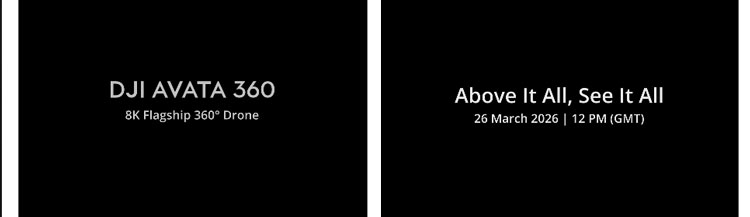
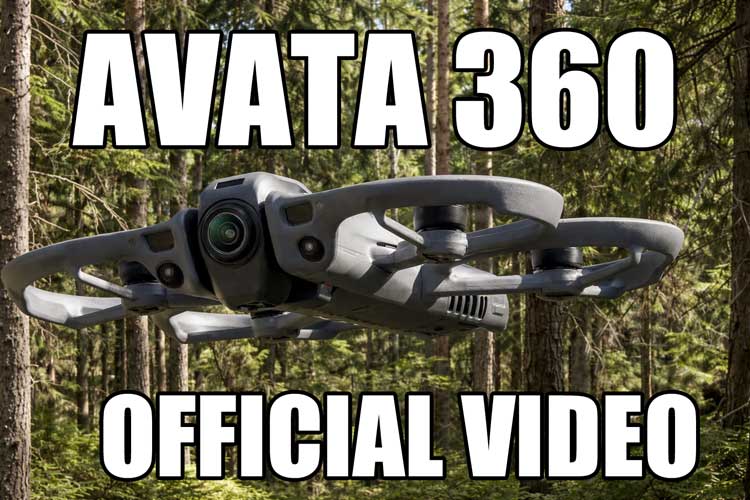
Finally, DJI has dropped the 2nd teaser for Avata 360, and in that teaser, we have the confirmed announcement date: March 26, 2026. We received this date earlier for the standard DJI Pocket camera, but it appears there was a misunderstanding on the source’s (@photorabz) end at that time. Right now, we have the confirmation. DJI Avata 360 is coming on March 26, and we still have to wait for the standard Pocket 4 camera announcement date. Obviously, it will not be called with the Avata 360.
On March 10, 2026, the official DJI Global account dropped a fresh teaser with the line “Above It All, See It All” and locked in the date: March 26, 2026, at 12 PM GMT.
The hashtag #DJIAvata360 says it all — this is the world’s first native 360° FPV cinewhoop from DJI. No more stitching clips in post. You’ll fly and capture full spherical 360° video in one go.
Already, we have all the details, the lead images, sample videos, and everything related to the same. The first teaser has already created a lot of buzz among drone users who are eagerly awaiting the Avata 360 announcement. The second teaser that arrived today has taken the hype to a completely next level, and now we are waiting for the official announcement on March 26. We already have all the details — the leaked images, sample videos, and everything.
The first teaser already had FPV fans losing their minds, and this new one looks even more cinematic. Let’s dig into what we know right now.
DJI Avata 360 Release Date Confirmed
Official launch event: March 26, 2026, 12 PM GMT
Pre-orders should go live right after the stream
The “Notify Me” button is already active on the DJI site
If you’ve been waiting for a proper 360° drone that actually flies like a real FPV machine, your wait is almost over.
DJI Avata 360 Release – Change in Pattern Detected
According to one of the most trusted and authentic sources, Jasper Allen, there is a slight change in the pattern that DJI used to follow in their announcements. Now we have a clear name for the upcoming product: the DJI Avata 360, which is really interesting since they revealed the name a bit earlier. Other than that, they are also confirming the video 8k recording capability in the teaser.
Generally, they have less than 12 days of gap between the second teaser and the product announcement date. With this teaser, published on March 10, 2026, the announcement date is March 26, so you can see there is a good gap between the announcement and the second drone teaser. That may also mean that we have more teasers on the way.
DJI Avata RC Live View Screen shot leaked
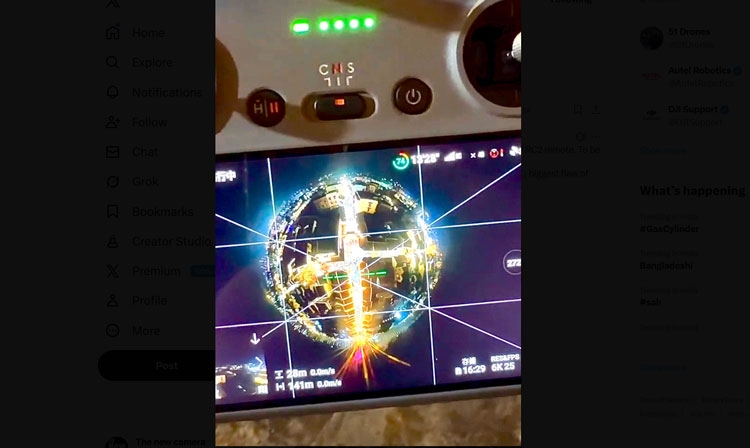
Just before the announcement of the second teaser of DJI, 360 on March 7, we have a live view image of the Earth remote control. The lead with a 360 drone, and this screenshot looks very interesting with a 360 view. Just before the announcement of the second teaser of the DJI Avata 360, on March 7, we had a live-view image of the RC remote controller linked with the 360 drone, and this looks really very interesting.
DJI Avata 360 Specs – What the Leaks Are Showing
Here’s the current picture based on the teaser, controller leaks, and trusted sources:
Feature
Details
Video Resolution
8K 360° spherical with HDR
FPV Camera
Tiltable module – flips between full 360° and normal forward FPV view
Transmission
Latest O4 system + possible 4G backup
Obstacle Avoidance
Upgraded LiDAR + full omnidirectional sensors
Design
Classic Avata cinewhoop with protective guards
Compatibility
Works with Goggles 3, RC 2, RC Motion 3
Extra Modes
6K single-view, 4K/120fps options
The big deal here is that tiltable camera. You get true 360° recording while still having a normal FPV view for precise flying. That’s never been done properly on a DJI drone before.
Full bundle with extra batteries is probably under $1,000
Exact pricing drops on March 26, but this looks like a very sweet spot compared to the Avata 2.
Final Thoughts
We were expecting a DJI teaser on March 12, but the DJI Avata 360 feels like the drone we’ve all been secretly hoping for. True 360° video while you fly – no compromises. March 26 can’t come soon enough.
The article “DJI Avata 360 Official Launch Set for March 26, 2026 – Everything We Know Right Now” was written by thenewcamera.com team on 12:07 pm, Saturday, 7 March 2026, Greenwich Mean Time (GMT). | You can also follow us on Our Official Social Media HandlesFACEBOOK | TWITTER | INSTAGRAM> get live news — > DJI Rumors
Is Nikon in revenge mode? Since a lot of unauthorised third-party lenses are just vanishing from the shelves of retail stores, and the online stocks of those lenses are also disappearing, and they’re not re-stocking again, and we are not able to realise why Nikon has suddenly started taking action against those who are not paying licensing for making Z-mount lenses. Although the situation is clear, and most of the affordable Chinese third-party lens makers for Z Mount are in panic mode, this is a different situation from two years ago when Nikon announced the Z Mount as an open mount like Sony E-Mount. A lot of third-party lens makers started making lenses for Nikon Z camerasThe Spark: Nikon’s Patent Lawsuit Against Viltrox Ignites the Fire
It all started in January 2026 when Nikon slapped Viltrox with a lawsuit in a Chinese court. Viltrox is one of the biggest third-party lens makers in China. Well, Viltrox is known for their aggressively priced prime lenses, which obviously turn down the sales of the native prime lenses. Viltrox is accused of reverse-engineering the Z-mount without a license—essentially cracking the code on Nikon’s innovations to flood the market with cheap alternatives.
Court proceedings officially launched on March 2, 2026, and Viltrox has vowed to fight back, claiming its roadmap remains unchanged. But Nikon’s not stopping there. Reports from industry insiders and Weibo leaks reveal the company issued stern warnings to all Chinese third-party lens manufacturers, demanding compliance or “compensatory remedies.” This isn’t just legalese – it’s a full-court press to enforce licensing and curb the “grey market” of unauthorised Z-mount optics.
There was a time when Nikon entered the market with the Z Mount and opened up the platform. The key word back then was specifically “open.” Just like Sony, it attracted a lot of consumers to Nikon. After Sony, Nikon was the only camera maker offering an open mount.
But Nikon has flipped its stance. From the beginning of 2026, the company has become very strict about third-party lenses. Literally, Nikon is no longer open with that mount unless a manufacturer has a license from Nikon and their lens aligns with the lenses Nikon already offers.
After paying the license fee and obeying the rules, they can produce the lens. But obviously, those heavy license fees paid to Nikon will affect the overall pricing—making the once super-affordable, budget-oriented lenses far less attractive for users specifically looking for budget solutions.
Key Allegations in the Nikon vs. Viltrox Battle
Autofocus Protocol Theft: Unauthorized use of Nikon’s electronic contacts for seamless AF and aperture control.
Mount Design Infringement: Reverse-engineering the physical and digital Z-mount specs without permission.
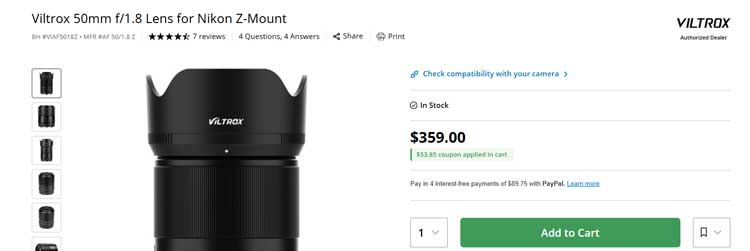
Market Harm: Undercutting Nikon’s premium lenses (e.g., NIKKOR Z 50mm f/1.8 S at $630) with Viltrox’s $400 equivalents, eroding brand value.
Viltrox isn’t alone in the crosshairs. The suit serves as a warning shot, echoing across the Chinese optics scene.
List of Third-Party Nikon Z-Mount Lenses Are in Trouble?
Now the real drama started when Sirui was forced to remove inventory from JD.com, Tmall, and physical distributors. Sirui, which is obviously one of the finest third-party lens makers specifically for cinematographers, On March 2, 2026, they officially stopped selling their lenses in mainland China.
Outside China? They are doing Business as usual—for now. US retailers like B&H Photo and Adorama still stock these gems, since they have to stop the production of Z Mount lenses from the beginning of March; all stock will be exhausted soon.
Here is the list of Third-Party Nikon Lens Makers in Trouble right now
Here’s the hit list of third-party Nikon Z-mount lenses facing immediate heat. Focus is on AF models, as manual-focus optics (which don’t tap into proprietary protocols) seem unscathed.
Brand
Status in China
Key Affected Lenses
Price Range (USD)
Sirui
Full halt; all AF stock removed (March 2, 2026)
– 27mm f/1.2 AF
– 50mm f/1.8 AF 1.8X
– 75mm f/1.8 AF
– Teleconverter AF adapters
$300–$500
Meike
Temporary sales freeze; relisting eyed for late March
– 85mm f/1.8 AF
– 50mm f/1.8 AF
– 35mm f/1.7 AF
– MK-Z-AF3A Speedbooster Adapter
$200–$400
Viltrox
No pulls; sales ongoing globally
– 20mm f/1.2 Pro AF
– 28mm f/1.4 AF
– 75mm f/1.2 AF
– Upcoming AF primes (e.g., 35mm f/1.4)
$350–$600
Brands on the Watchlist: Rumored Third-Party Nikon Z-Mount To be Banned soon?
Not every Chinese maker has blinked yet, but Nikon’s warnings have the whole sector sweating. These outfits, heavy on reverse-engineered AF tech, could be next:
7Artisans: AF standouts like the 35mm f/1.4 and 50mm f/1.8. No actions, but forum buzz suggests royalty talks.
TTArtisan: The 27mm f/1.2 AF and 56mm f/1.4 AF are fan favorites—monitoring for delistings.
Laowa (Venus Optics): Mostly manual, but any AF experiments (e.g., 100mm f/2.8 2X Macro APO) are at risk. Venus has a stronger IP track record, potentially sparing it.
Non-Chinese players? Safe harbor. Sigma, Tamron, and Tokina hold official Nikon licenses, so their Z-mount lenses (e.g., Sigma 24-70mm f/2.8 DG DN Art) sail on undisturbed.
Nikon’s Endgame: Building a Licensed Future for Z-Mount
Nikon isn’t anti-third-party—it’s anti-thief. In statements, the company has reiterated support for “authorised partners” to grow the Z-mount family. Rumours swirl of a fresh licensing deal with an unnamed Chinese firm, which could flood the market with compliant AF zooms and telephotos.
This lawsuit might just be the tough love the ecosystem needs. After all, a robust Z-mount lineup benefits everyone—from entry-level shooters to wedding pros chasing that creamy bokeh.
Expert Advice: Should You Panic-Buy Third-Party Nikon Lenses?
Nikon isn’t anti-third-party.. But should you buy third party lenses from Nikon in 2026?
Yes, if… You’re on a budget and need AF for video (e.g., Sirui’s cine primes).
No, if… You prioritize longevity—stick to Sigma or Tamron- Authorize third party lens makers and wait for settlements.
Do not: Update your Z-body firmware (if ur using un lisasenced third party lenses).
Stay tuned to The New Camera for live updates on the Nikon vs. Viltrox saga. Drop it in the comments
Stay tuned, browse more Nikon Rumors – We will post an update soon as we get it
The article “Nikon in Revenge Mode: Third-Party Z-Mount Lenses Vanish from Shelves” was written by thenewcamera.com team on 11:14 am, Sunday, 8 March 2026, Greenwich Mean Time (GMT) | You can also follow us on Our Official Social Media HandlesFACEBOOK | TWITTER | INSTAGRAM > get live news + Nikon Rumors 24X7
DJI Avata 360’s new updates are available. Recently, we have seen the 41 Second “New Dimension” teaser posted via DJI on March 3, 2026., The first teaser was really very impressive, and now we have the next teaser date for the upcoming drone, March 12, 2026. Thanks to @jasperellen for findingout the authentic news bytes. The next big thing is interchangeable-lens features coming to Avata 360. : Let’s dive into the details for more updates
1. Exclusive leak: The DJI Avata 360 Intelligent Flight Battery will cost only 70 euros / 81 dollars
Well, we already have the pricing information of the upcoming DJI Avata 360 drone, but this is a reconfirmation from other sources that the additional Intelligent Flight Battery costs approximately €70, which approximately converts to $81.
So, this is a kind of double confirmation over the price we have, and most probably what we know is that the DJI Avata 360 is the only drone that is capable of handling traditional FPV-style shooting as well as 360° capture, and it’s all available under budget. Which will be extremely competitive for the Antigravity A1 drone.
2. DJI Avata 360 will have REPLACEABLE LENSES.
DJI Avata 360 is coming with replaceable lenses. That would significantly improve maintenance and reduce the repair cost if the lens gets scratched or damaged. The antigravity A1 also features replaceable lenses, but DJI edges out with FPV & 360 switch option in shoot mode, intensive ECO system, and Budget. These factors do influence the market impact and consumer preferences.
3. DJI Avata 360 Next Teaser on March 12, 2026
The DJI Avata 360 teaser was posted on March 3, 2026, which we have also covered on our website. According to Jasper Ellens, one of the most trusted sources and a DJI tester, The Next Teaser is about to arrive on March 12, 2026. It would be really interesting to wait for the second teaser in March. And after that, as usual, we will have the official announcement and the Avata 360. (official announcement is expected a week after the 2nd teaser)
DJI Avata 360 Specscifications
Based on consolidated leaks, the DJI Avata 360 specs include top-tier features tailored for both beginners and pros. Here’s a breakdown in table form for easy reference:
Camera System: 8K/60fps HDR panorama video, tiltable module allowing single-lens FPV mode for forward-facing views similar to the Avata 2.
Propellers and Design: 4-blade propellers (up from 3 on the Avata 2),
cinewhoop-style frame with full spherical guards for safe indoor flying, and a grey body with DJI branding.
Obstacle Avoidance: 4-6 front sensors (no rear sensors confirmed), enhancing safety during dynamic flights.
Transmission and Compatibility: O4 system for stable, long-range signal; fully compatible with DJI Goggles N3, Motion Controllers, and the DJI RC 2 (introduced with the Air 3S and Mini 4 Pro)—no upgrade to OcuSync O5.
Battery and Flight Time: Upgraded battery life for extended sessions, though exact times remain unconfirmed.
Additional Modes: Smart features like obstacle sensing, follow-me tracking, and automated paths, making it accessible for beginners and pros alike.
The DJI Avata 360 is set to redefine FPV and 360-degree drones. Stay tuned to TheNewCamera.com for more updates as official announcements approach. If you’re in the market for a cutting-edge drone, this could be the one to watch—pre-orders may go live soon!
The article “DJI Avata 360 Next Teaser Drops March 12 – Swappable Lenses Confirmed!” was written by thenewcamera.com team on 12:07 pm, Saturday, 7 March 2026, Greenwich Mean Time (GMT). | You can also follow us on Our Official Social Media HandlesFACEBOOK | TWITTER | INSTAGRAM> get live news — > DJI Rumors
This March is really exciting, since just at the beginning we received information that the DJI Pocket 4 Standard Edition is coming on March 26, 2026. Although we are still not very much sure, yes, it’s almost confirmed, and we are waiting for further confirmation. But more importantly, the DJI Avata 360 teaser video has already been uploaded to the DJI official channel. So, for sure, these two products are about to arrive very soon, and in this article, we are going to discuss the updated information we have on them, as well as the other products that are about to arrive in the next month from DJI.
The Avata 360: From Leak to Tease – DJI’s FPV Game-Changer Lands in March
In February 2026, we were almost certain that the DJI Avata announcement was about to happen on March 20, 2026, and a 41-second clip recently sealed the deal. DJI has posted a video on its official X account with the tagline “an all-new dimension of aerial creativity.” The particular FPV drone clip style also includes a 360-degree view, which clearly indicates it’s a teaser video for the upcoming DJI Avata 360. We have already covered a vast amount of details related to Avata360 in our recent post published here DJI Avata 360 Official Teaser Video: Announcement Soon
DJI Latest Release Video Uploaded
Pricing rumours point to aggressive entry: $499 drone-only, $699 with RC 2, and $999 Fly More Combo—undercutting Insta360’s Sphere by a wide margin. Launch hits China first this month, with global (including US) eyed for early April, though ongoing regulatory scrutiny might delay stateside stock.
Bundle Type
Chinese Price (¥)
Estimated US Price ($)
Inclusions
Drone Only
2,988
499
Base drone
With DJI RC 2
3,988
699
Drone + RC 2 Controller
Fly More Combo (with RC 2)
5,688
999
Drone, RC 2, 3 Batteries, Charging Hub, Case
With Goggles N3 Combo
N/A
1,200
Drone, Goggles N3, Accessories
These are domestic Chinese prices; expect slight increases in the US/EU. Preorder listings from retailers like US Drone Supply have shown varying figures, but official DJI pricing will clarify upon release.
Osmo Pocket 4 Standard: March 26 Lock-In, With Accessories That Steal the Show
No March DJI roundup would be complete without the Osmo Pocket 4 Standard Edition. The pocket 4 Standard edition is rumoured to be announced on March 26, in China (Native announcement), as usual, the global availability (including the USA) is expected from Mid of April 2026. We have recently published the User manual guide book of the DJI Pocket Standard edition here [DJI Osmo Pocket 4 Leak: Exclusive Look at Quick Start Guide for Creator Combo]
The real-life footage of the DJI Pocket 4 camera with a magnetic flashlight setup was revealed. The leaker is an official DJI store in Kuala Lumpur, Malaysia. They had it with them and created a video, which they posted on their official Instagram handle. It’s actually a 33-second reel showing smooth 3-axis gimbal operation, flip-out 2-inch OLED screen, and new built-in front-facing LED fill light, as detailed in thenewcamera.com’s February 17, 2026 coverage. You can findout about it here
A quick recap of the rumoured specification, the Standard Pocket 4 Edition model features: a 1-inch CMOS sensor delivering 4K/120fps in 10-bit D-Log M, AI ActiveTrack 6.0 for effortless subject following, and 200+ minutes of battery life – 20% more than the Pocket 3. The Creator Combo bundles wireless mics, extra batteries, and wide-angle lenses for $649, while the base hits $499. Digital zoom (1x/2x/4x) and gesture controls round out the kit, making it a no-brainer for solo filmmakers.
Expected pricing of the DJI pocket edition
Bundle
Contents
Price (Est.)
Standard
Gimbal camera, battery, case
$499
Creator Combo
+ Wireless mics, extra batteries, wide lens, LED light
$649
Other Set of Products in the Announcement Pipeline: DJI Drops We’re Eyeing This Spring
Here is the list of DJI products in the announcement pipeline already cleared FCC listing
Product
Expected Reveal
Key Rumor
Pocket 4 Pro
May-June 2026
Dual camera system (wide + tele, similar to Air3S), model code PP-041
Lito X1
Q2-Q3 2026
Foldable lightweight drone (<250g, no registration needed), 360° obstacle avoidance, O5 transmission for 20km+ range, 30-50 min flight time, voice/motion controls
Lito 1
Q2-Q3 2026
Entry-level Mini successor, 22GB internal storage, wind resistance level 5, app-integrated smart features
Osmo 360 II
2026
Successor to Osmo 360 action cam, enhanced processor and wireless workflows for vlogging/VR, same sensor with upgraded functionality
Mic Mini 2S Transmitter
2026
Compact wireless mic update (model DMMT03), faster ecosystem integration for creators
Mavic 4 Pro
2026
1-inch sensor, LiDAR (unconfirmed in latest leaks)
Osmo Action 7
Late 2026
4K/240fps, $349 (unconfirmed in latest leaks)
Wrapping Up: DJI’s March Momentum – Ready to Rule?
Yes, we are super excited. Let’s hope this month we will see the DJI Avata 360 and the Pocket 4 Standard edition announcement. As we have mentioned earlier, all the products that appeared in the list already cleared the FCC registration. As soon as we get any update, we will post it here.
The article “March 2026 DJI Buzz: Avata 360 Teaser Ignites FPV Fever, Pocket 4 Standard Locks In Launch, and Beyond the Horizon” was written by thenewcamera.com team on 8:28 am, Friday, 6 March 2026, Greenwich Mean Time (GMT)| You can also follow us on Our Official Social Media HandlesFACEBOOK | TWITTER | INSTAGRAM to get live news — > DJI Rumors
We now have one of the clearest pictures of the DJI Osmo Pocket 4 Pro camera. Before that, we did have several leaks and a lot of pics that have surfaced over the internet in the past two months, but today one of the most trusted DJI leakers, Igor Bogdanov, has shared one of the clearest pics of the front side of the Pocket 4 Pro camera, where we can clearly see the dual camera setup, which does look quite different from what we have seen from the upcoming Insta360 Luna Dual camera setup and not exactly same as DJI Air 3S Drone Gimbal as rumored earlier
What the Latest DJI Osmo Pocket 4 Pro Leak Reveals
This is not the first time we have seen this dual-camera setup. Back on February 5, 2026, we published a post showing the same setup from an official source, but the image was not that clear at the time. Now, with AI enhancements, it seems clearer and more authentic.
So the latest set of the Pocket 4 Pro is being captured, and alongside the Pro, we have the standard DJI camera, which is about to arrive on March 26. On both sides, we have the iPhone 17 Pro.
It is very clear from the image that the upper camera module of the Pocket 4 Pro is a telephoto camera, and the bottom camera is the wide-angle one. So now we have the idea that we will have perfect lossless video coverage. The price is not yet known, but we expect the DJI Osmo Pocket 4 Pro gimbal to be around 6K.
Rumoured DJI Osmo Pocket 4 Pro Specs: A Creator’s Dream
Drawing from FCC filings, prototype sightings, and insider leaks, the DJI Osmo Pocket 4 Pro is rumored to pack flagship features in a sub-200g body. Here’s a breakdown of the expected specs:
1,545mAh battery (20% larger than Pocket 3); fast charging; slimmer profile
These upgrades address key pain points from the Osmo Pocket 3, such as limited zoom and battery life, making the Pro a must-have for YouTubers, influencers, and filmmakers. Early leaks also hint at enhanced modular integration, including remote grips and external lights for low-light vlogs.
DJI Osmo Pocket 4 Pro Coming to the USA – Confirmed
DJI Pocket 4 Pro is registered/granted FCC certification on December 22, 2025, the standard 180-day short-term confidentiality period (which often applies to exhibits like internal photos, block diagrams, schematics, and user manuals) would end on June 20, 2026 (a Saturday).
This means confidential details could become publicly visible shortly after that date, though DJI might request extensions in some cases. Launches frequently happen before the full 180 days expire, as the basic grant allows sales once approved.
Final Thoughts: Is the DJI Osmo Pocket 4 Pro Worth the Hype?
Obviously, it’s worth the wait since this leak confirms the cements the DJI Osmo Pocket 4 Pro as a vlogging revolution – Stay tuned to TheNewCamera.com for more updates on DJI Pocket 4 Pro specs, price, release date, and hands-on reviews. What do you think—will the dual lenses
The article “DJI Pocket 4 PRO Coming to USA: Pocket 4 PRO FCCID Leaks” was written by thenewcamera.com team on 4:50 pm, Thursday, 5 February 2026, Greenwich Mean Time (GMT)| You can also follow us on Our Official Social Media HandlesFACEBOOK | TWITTER | INSTAGRAM to get live news — > DJI Rumors
New updates on the upcoming DJI Avata 360 drone have emerged. A teaser video was uploaded to DJI’s official X account. That clearly means DJI has now started teasing the DJI Avata 360 via official channels, and the announcement is very near to us. Possibly within a week or two, we are going to have the official DJI Avata 360 announcement.
We have told you a while ago in our article that the DJI Avata 360 and Pocket 4 Standard Edition announcement is expected in March 2026
This post also includes close-up images of the 360-degree drone camera module. Other than that, we also have some authentic, real-world images and packaging box leaks, as well as Avata 360 Pricing and expected arrival time. In this article, we will cover everything.
If you are completely new here, let me tell you that the Avata 360 is DJI’s first 360-degree drone, coming to compete with the Insta360 Antigravity A1. However, the DJI Avata 360 features a rotatable camera gimbal, which makes it a traditional FPV drone like the earlier Avata series. But with a single click, the gimbal rotates and the dual-camera setup gets activated, making it a true two-in-one drone.
Now, let’s talk about the latest updates we have related to the 360 drone.
DJI AVATA 360 Sample Video: Official Announcement Soon
So this section of the page will be updated continuously with upcoming leaks and information. It is very much confirmed that the DJI Avata 360 announcement will happen in the month of March. Not only that, trusted sources like Jasper Ellens are continuously tracking last-minute leaks, so this page will be regularly updated with every possible piece of information we receive—not only from Jasper Ellens, but also from our own sources.
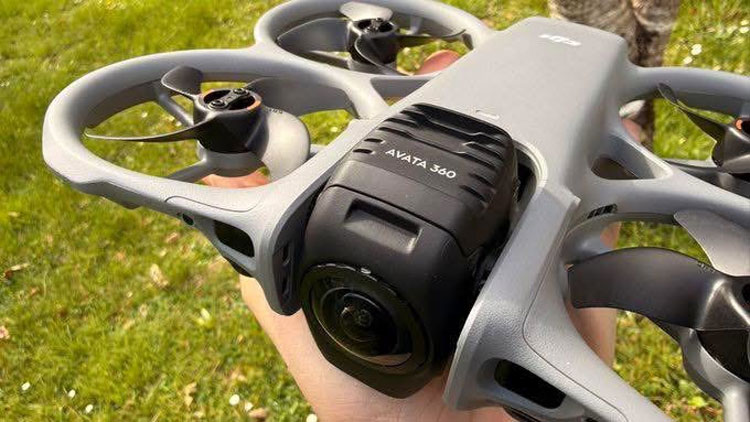
DJI Avata 360 Closeup Images: A Detailed Look at the Design
We are really very much surprised recently, since in the past few weeks we have witnessed a lot of content that is authentic and coming from trusted sources like @MauroTandoi, and all the images we have analysed with cross verification have proven to be 100% real. Starting from the close-up images of the DJI Avata 360 drone camera gimbal, they give us a clear basic view of the camera module.
In these images, you can clearly see the DJI Avata 360 branding alongside the lens placement. Everything is very clear in the close-up images.
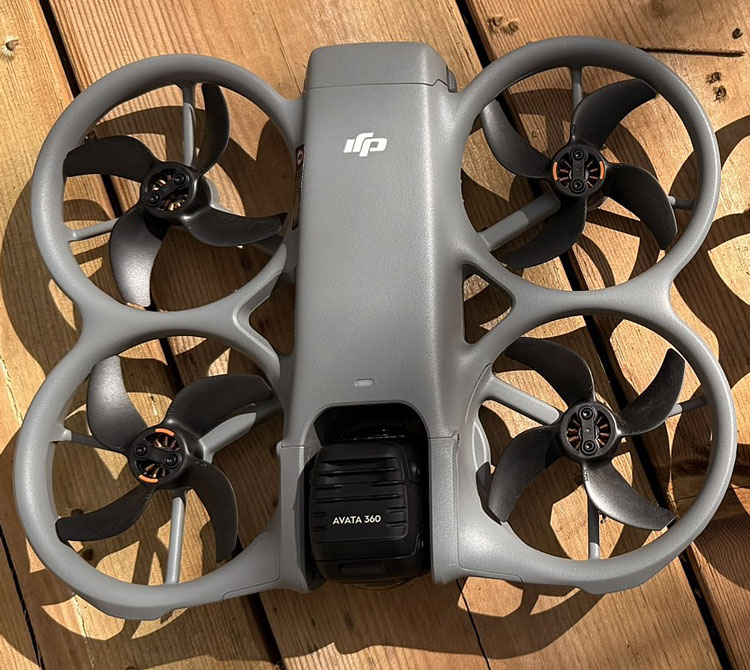
DJI Avata 360 drone, revealing a sleek, cinewhoop-style build that’s slightly larger than the DJI Avata 2 (weighing in at around 377 grams for the predecessor). These images highlight the drone’s dual-lens setup, borrowed from the DJI Osmo 360, which enables seamless switching between spherical 360-degree capture and single-lens FPV mode.
The front-facing camera module stands out with its tiltable housing, allowing for immersive 8K panorama video. Close-ups show integrated prop guards for safer indoor flights, omnidirectional sensors for obstacle avoidance, and a compact yet robust frame designed for wind resistance and agility.
All these leaks have given us an absolute idea of how the DJI Avata 360 looks. The best thing that happened recently, and which was also checked by NotebookCheck, is the DJI Avata 360 retail box leak.
This time again, it has been said that it looks 100% real, since the images are not only captured from the front of the box, but also from the side. So obviously, we can have a look at the listed details as well.
DJI Avata 360 Retail Box Leak: What’s Inside the Package?
Before we discuss the packaging box of the DJI Avata 360, a lot of leaked images were shared earlier. Many of those were absolutely fake, but this one seems to be highly legit.
That’s why here at TheNewCamera.com, we always try to share the best set of possible moments and the most accurate information available.
What we have actually seen in the packaging box of the DJI Avata 360, first of all, is very clearly visible that it is coming with a bundle option box. Inside, we obviously get the Avata 360 drone alongside the RC Motion controller and multiple batteries. It’s a complete package for any professional who is willing to buy a two-in-one Avata 360 / FPV drone.
One standout leak shows the “Fly More Combo (Three Batteries)” bundle, which includes the drone, a single battery in the standard kit, and extras like propellers and charging hubs. The design mirrors DJI’s minimalist aesthetic, with clear labelling for easy unboxing.
DJI Avata 360 Hands-On Footage and Early Impressions
Hands-on footage from beta testers has started appearing, including a 16-second instructional video extracted from DJI Goggles beta software. These clips demonstrate battery insertion, activation, and basic flight maneuvers, showcasing the drone’s low-latency O4/O5 transmission system for ranges over 20km. Screenshots from the footage reveal epic 360-degree views and smooth FPV transitions, perfect for creative content creators.
DJI Avata 360 Specs: What to Expect
Based on consolidated leaks, the DJI Avata 360 specs include top-tier features tailored for both beginners and pros. Here’s a breakdown in table form for easy reference:
Camera System: 8K/60fps HDR panorama video, tiltable module allowing single-lens FPV mode for forward-facing views similar to the Avata 2.
Propellers and Design: 4-blade propellers (up from 3 on the Avata 2),
cinewhoop-style frame with full spherical guards for safe indoor flying, and a grey body with DJI branding.
Obstacle Avoidance: 4-6 front sensors (no rear sensors confirmed), enhancing safety during dynamic flights.
Transmission and Compatibility: O4 system for stable, long-range signal; fully compatible with DJI Goggles N3, Motion Controllers, and the DJI RC 2 (introduced with the Air 3S and Mini 4 Pro)—no upgrade to OcuSync O5.
Battery and Flight Time: Upgraded battery life for extended sessions, though exact times remain unconfirmed.
Additional Modes: Smart features like obstacle sensing, follow-me tracking, and automated paths, making it accessible for beginners and pros alike.
These specs position the Avata 360 as a hybrid powerhouse, blending FPV agility with 360-degree capabilities.
DJI Avata 360 Release Date and Price: March 2026 Launch Confirmed
The DJI Avata 360 release date is now pegged for March 2026, starting in China before a global rollout in early April. Originally rumored for February, delays due to supply issues pushed it back, but FCC approval ensures compliance.
Pricing rumors for the DJI Avata 360 draw from Chinese leaks, with estimated global figures mirroring the Avata 2’s launch strategy. Here’s a breakdown:
Bundle Type
Chinese Price (¥)
Estimated US Price ($)
Inclusions
Drone Only
2,988
499
Base drone
With DJI RC 2
3,988
699
Drone + RC 2 Controller
Fly More Combo (with RC 2)
5,688
999
Drone, RC 2, 3 Batteries, Charging Hub, Case
With Goggles N3 Combo
N/A
1,200
Drone, Goggles N3, Accessories
These are domestic Chinese prices; expect slight increases in the US/EU. Preorder listings from retailers like US Drone Supply have shown varying figures, but official DJI pricing will clarify upon release. DJI Care is estimated at around $57.
Final Thoughts on the DJI Avata 360
With its innovative design, powerful specs, and imminent March 2026 release, the DJI Avata 360 is set to redefine FPV and 360-degree drones. Stay tuned to TheNewCamera.com for more updates as official announcements approach. If you’re in the market for a cutting-edge drone, this could be the one to watch—pre-orders may go live soon!
The article “DJI Avata 360 Official Teaser Video: Announcement Soon” was written by thenewcamera.com team on 7:54 pm, Tuesday, 3 March 2026, Greenwich Mean Time (GMT). | You can also follow us on Our Official Social Media HandlesFACEBOOK | TWITTER | INSTAGRAM> get live news — > DJI Rumors
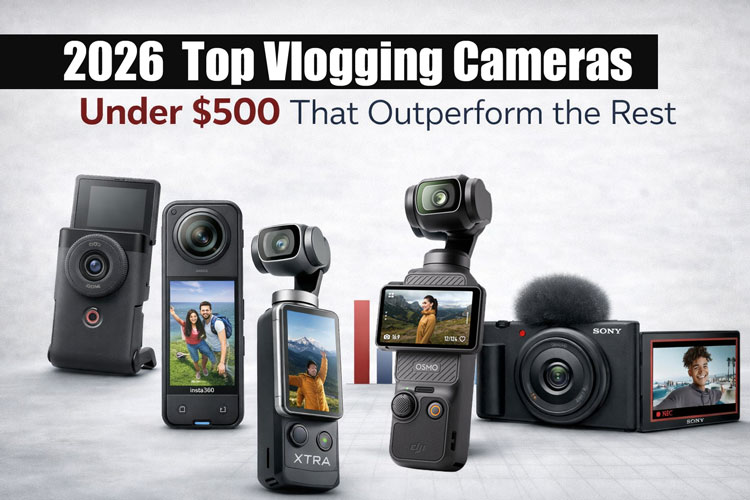
Let’s talk about the best vlogging cameras under $500. Starting from the most budget-friendly and ultra-popular camera of 2026, the DJI Osmo Pocket 3. And yes, we are waiting for the Pocket 4, but for now, if you are willing to buy a camera under a $500 budget, then this is the best option we have. The list include top 5 Best cameras that we have sorted out for vlogging and content creation in 2026.
Before we jump to the list of camera, have an quick features overview of the pocket 3 camera, which is obviously one of our fav camera in the list, The list of pocket 3 features includes 4K video recording capability up to 120 frames per second and support for the DJI ecosystem, which includes integration with the DJI wireless microphone system without the need to purchase any additional receiver. You can simply synchronise the camera with any DJI microphone transmitter. That obviously saves a lot of money. Other than that, reputed sources like PCMag and RTINGS have rated this camera as one of the best vlogging gear in their reviews. The pricing of the DJI Pocket 3 camera, as we have reported earlier in our post, dropped to $439, which makes it the best vlogging camera under the $500 category.
If you are specifically from the United States of America and worried about the DJI ban and related issues, then we do also have an excellent alternative to the Pocket 3 camera at an affordable price point, which is available at Amazon.com and also supports the DJI wireless microphone ecosystem.
Why Choose a Vlogging Camera Under $500 in 2026?
Over the past few months, the demand for affordable vlogging cameras has increased, specifically in 2025 and now in 2026. People are searching more for a budget-oriented, perfect vlogging camera for YouTube or Instagram—whether for creating Reels, producing content for their channels, or even using it for live streaming. They want a perfect all-in-one camera that makes content creation easy and possible.
If you are looking for a perfect smartphone alternative or a vlogging camera under $500, then obviously the DJI Osmo Pocket 3 delivers the best low-light performance with its large one-inch sensor and impressive battery life, making it ideal for extended shoots. At the same time, it is one of the only cameras in this segment (apart from its Xtramuse clone) that acts like an AI assistant for you, especially with its tracking capabilities.
Whenever you are sitting in your chair or moving around in your room, the framing automatically adjusts as you move. The ActiveTrack feature, whether you are creating content or doing a live stream, is one of the most eye-catching features of the camera. Other than that, handheld video creation has become much easier with its three-axis mechanical gimbal-based stabilisation feature, which creates smooth videos.
Recent price drops, such as the DJI Pocket 3 hitting $439 on Amazon, make premium features accessible. If you’re upgrading from a basic setup, focus on specs like 4K@120fps, 1-inch sensors, and active tracking to elevate your content. Our list emphasises real-world performance, drawing from 2026 reviews and leaks to help you find the best vlogging camera under $500 for your needs.
Top 5 Best Vlogging Cameras Under $500: Quick Comparison Table
Here’s a side-by-side look at our top recommendations for budget vlogging cameras in 2026. Prices are based on current Amazon and B&H listings, with deals often dipping below $500.
1-inch sensor, 4K@120fps, 3-axis gimbal stabilisation, active tracking, rotatable touchscreen, stereo mics, up to 166 min battery.
Unmatched mechanical gimbal for buttery-smooth footage in motion; superior low-light and dynamic range over Sony ZV-1F; ActiveTrack 6.0 beats eye AF in rivals; versatile for vertical social media vlogs.
The app can be finicky; bulkier than point-and-shoots.
Dual-lens 360 capture, 8K@30fps, FlowState stabilisation, AI editing, waterproof to 33ft.
Creative 360 reframing for immersive vlogs; rugged build.
Battery drains fast; steeper learning curve.
These top vlogging cameras under $500 cater to various styles—gimbal for action, compact for portability. For 2026 deals, check Amazon for bundles with mics or tripods.
1. DJI Osmo Pocket 3: The Best Overall Vlogging Camera Under $500 for 2026
To make it very clear, why are we placing the DJI Osmo Pocket 3 in the number one position instead of the others on the list, which include the Sony ZV-1F as well as the Canon PowerShot V10?
The reason is simple. If you are interested in creating dynamic content – meaning content created on the go, or even when you are sitting at a table but your chair is moving, or you are walking around the room – the difference becomes very clear. For example, even during a live stream, if you accidentally move out of frame, traditional static cameras like the Sony ZV-1F or the Canon PowerShot V10 will stop tracking you. They do not automatically follow your movement, but the Pocket 3 does, it does mechanical active tracking to keep you in frame wherever ur moving.
At the same time, if you are willing to create handheld content on the go, you are not getting any sort of mechanical image stabilisation inside them. The only camera in this price range that offers both ActiveTrack 6.0 and three-axis mechanical image stabilization is the DJI Osmo Pocket 3.Other than that, if ur craving for quality, then for sure D-Log M & 10-Bit Support is also there in pocket 3.
Although it looks a bit different from traditional cameras and is slightly more compact and convenient to hold, feature-wise, the DJI Osmo Pocket 3 clearly tops the list in terms of specifications and overall performance that it offers in this price category. Compared to the other contenders we have on the list, it stands out as the most complete option.
2. Xtra Muse: Affordable DJI Pocket 3 Clone with DJI Mic Support – A 2026 Steal
The next best thing after the DJI Osmo Pocket 3 camera is the Xtra Muse, the best cheap vlogging camera under $500, which is even more affordable than the Pocket 3. The Xtra Muse is available at $419. All we know is that yes, it is the rebranded DJI Pocket 3 camera, specifically made under a different brand name to bypass the import fees for US buyers. Since we know that DJI is facing some sort of ban issues in the United States of America, they have to keep their product line alive by different branding, and they are doing so. At the same time, in one of the recent updates, the Xtra Muse gimbal and all the other Xtra brand-related cameras now support the DJI ecosystem-based wireless microphone, which means you don’t have to buy an additional receiver for grabbing wireless sound. You just have to buy the transmitters, which are little and cheap. So owning high-quality content creation gear has become more and more affordable after the entry of the Xtra Muse.
Features the same 1-inch sensor and 3-axis gimbal, it mirrors the Pocket 3’s 4K@120fps and tracking prowess but adds DJI Mic compatibility via recent USB-C updates—addressing early gaps for pro audio in vlogs. Its textured grip improves handling over the original, with a 2-year warranty for peace of mind.
3. Sony ZV-1F: Solid Compact Choice for Static Vlogs in 2026
The Sony ZV-1F remains a fan-favorite vlogging camera under $500 at $498, nice, If you are more interested in having a traditional style blogging camera with flip out display screen and love to have a kind of pay camera in your hand, then obviously Soni ZV1F is made for you technically, as we have said multiple times in this video, the DJI pocket three as well as the extra use is more advanced than T Soni ZT, if you love to create talking videos with traditional style camera, then for sure, the ZV1 app is one of the best candidate to do that job
Thanks to its flip-out screen and directional mic for easy self-recording. Its 1-inch sensor and real-time eye AF shine in well-lit setups, making it great for talking-head videos. However, it falls short in active scenarios without a gimbal, unlike the DJI duo.
4. Canon PowerShot V10: Pocket-Friendly for Casual Vloggers
The Camera does feature a 20.9MP 1″ CMOS Sensor, ability to record 4k videos upto 30 FPS only and Full HD upto 60 FPS, so the processor used here is a bit slow and not able to match the speed of DJI pocket cams.
Again, if you are an indoor creator and don’t move much, and you don’t want a camera that tracks you in a room while you’re moving, then, aside from these features, yes, the Canon PowerShot V10 can be your choice. Built-in stand and vertical mode for quick setups. Its 1-inch sensor handles low light well, and yes, the flip screen helps you tune yourself while creating your content.
5. Insta360 X4: Versatile 360 Vlogging Camera for Creative Content
Closing our list, the Insta360 X4 at $499 brings 8K 360 capture and AI tools for reframing shots. Insta360, as per the introduction, belongs to a completely different league of cameras where you can capture 360 video in 8K resolution and later, in post, decide where you want to keep the frame. It is highly recommended for those who love to create content on the go, specifically for moto vlogging, as well as highly recommended for travel bloggers to capture everything in 360 and then decide later where they want to keep the priority frame.
Perfect for immersive vlogging cameras in 2026. Waterproof and rugged, it edges the Canon in adventures but drains battery faster than DJI options.
Why it’s unique: Invisible selfie stick mode for drone-like effects; great for creators blending action and vlogs.
Final Thoughts: Which Budget Vlogging Camera Should You Buy in 2026?
For most users, the DJI Osmo Pocket 3 is the best vlogging camera under $500, blending affordability with top-tier performance. If savings matter, grab the Xtra Muse. As 2026 unfolds, watch for leaks on successors like the DJI Pocket 4. Check Amazon for current deals and stay tuned to TheNewCamera.com for more camera rumors, reviews, and exclusive insights. Follow us on Facebook, Twitter, or Instagram for live updates—what’s your top pick? Drop a comment below!
The article “2026 Top Vlogging Cameras Under $500 That Outperform the Rest” was written by thenewcamera.com team on 11:56 am, Monday, 2 March 2026, Greenwich Mean Time (GMT). | You can also follow us on Our Official Social Media HandlesFACEBOOK | TWITTER | INSTAGRAM> get live news — > DJI Rumors
Buy Canon Lenses, Buy Music CD or Digital Camera at amazon it helps this site, and you do not pay anything extra, it is just a way to help support this site.
New Camera Website, we list all type of new camera information, price review and all type camera rumors, subscribe us or follow us via twitter or facebook.
Disclaimer: We have attempted to select useful information to include on New Camera, and to ensure that the resources we have included on the site -- as well as the way we have described them -- are accurate, fair, and balanced. However, we make no claims, warranties, or other representations concerning the accuracy, completeness, or utility of the information provided, or concerning the abilities or performance of the organizations, agencies, companies, and other resources presented through New Camera