Join More Than 50,000+ Subscribers and get latest camera news and rumors
NEW CAMERA VIDEOS ON YOUTUBE
|
By admin, on May 31st, 2026
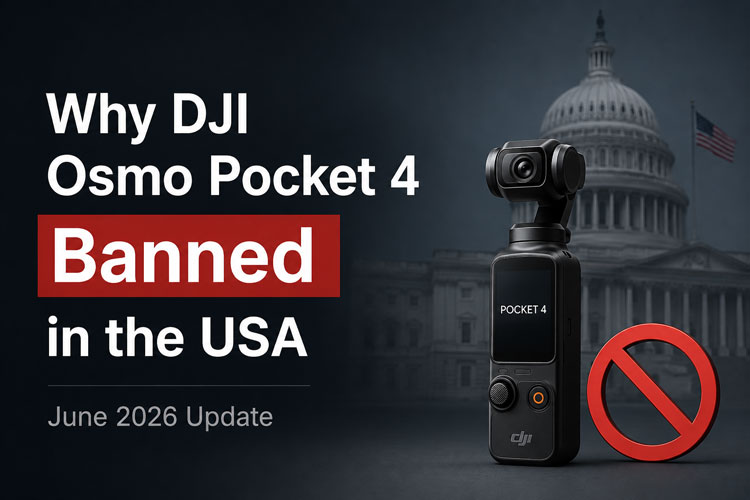
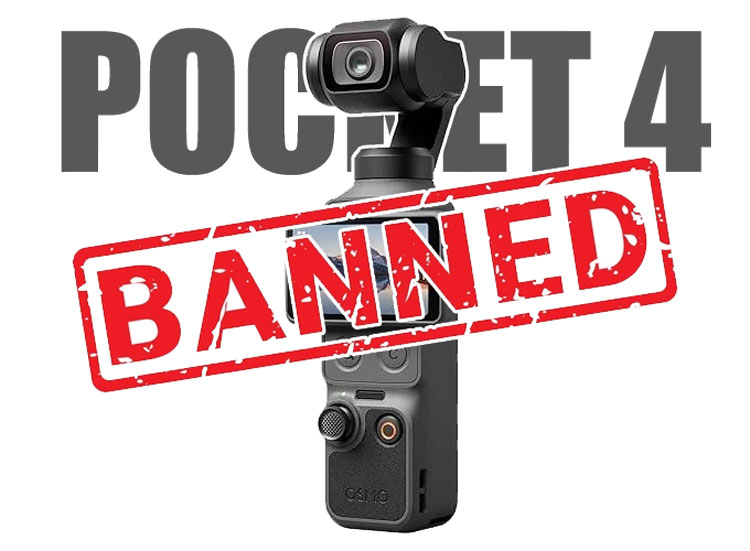
DJI Pocket 4 and Pocket 4 Pro have been announced, and, exceptionally, neither camera is available in the United States of America. Specifically, regarding availability in other countries of the world, the DJI Pocket 4 is now available, and people have started using it as well. But in the USA, there are no signs that the Pocket 4 will become available in the United States of America any time soon.
Here we are, having a full breakdown of the FCC Covered List and why exactly these non-drone products are still blocked and not allowed to be sold in the United States of America. The best alternatives available, and what recent developments have been made related to the DJI ban, and yes, we do have some probability left of having DJI products in the United States of America again after an independent audit of DJI drones.
We are going to cover all this information in this article, so let’s start with the current status of DJI and its products in the United States of America.
The DJI Osmo Pocket 4 and the Pocket 4 Pro (with 3x optical zoom) launched globally on April 16, 2026, but as of May 31, 2026, neither model is officially available for sale in the United States.
If you’ve been searching “DJI Pocket 4 banned USA” or “Pocket 4 Pro US release,” you’re not alone. Here’s the most up-to-date explanation, including the very latest development from May 30, 2026.
Current Status: Still Blocked in the USA
- No official U.S. sales on DJI’s website, Amazon, Best Buy, B&H Photo, Adorama, or any major retailer.
- DJI’s statement remains unchanged: “The Osmo Pocket 4 will not be available in the U.S. market at launch due to pending FCC authorisation.”
- Grey-market imports are appearing, but they carry risks (detailed below).
Why the Pocket 4 Series Is Banned (It’s Not Just Drones)
The restriction stems from the 2024/2025 National Defense Authorization Act (NDAA) and the FCC’s “Covered List.” Any DJI device with Wi-Fi/Bluetooth + a camera is classified as “communications or video surveillance equipment.” Even though the Pocket 4 and Pocket 4 Pro (with 3x optical zoom) are not drones, they fall under the same rule.
DJI’s official statement remains unchanged:
“The Osmo Pocket 4 will not be available in the U.S. market at launch due to pending FCC authorisation.” Early FCC filings existed, but they were moved to “pending” status after the December 2025 cutoff. Final approval was never granted

“But It Had FCC Filings…” – What Really Happened
Early FCC filings for the Pocket 4 series existed before the December 2025 cutoff, but they were placed in “pending” status after the Covered List decision. Final approval was never granted for U.S. sales.
Latest Development: Independent US Audit Clears DJI Drones (May 30, 2026)
On May 28, 2026, DJI released the results of an independent security audit conducted by the U.S. firm OnDefend. The audit examined two drone models (Air 3S and Matrice 4E) purchased from retail/dealer stock and found zero critical, high, or medium-risk security issues — no backdoors, no malware, no unauthorised data transmissions to China.
This is positive news for DJI overall and strengthens their ongoing petition and lawsuit against the FCC. However, the audit only tested drones and did not cover the Osmo Pocket 4 or Pocket 4 Pro. Therefore, it has no immediate effect on the pending FCC authorization for the Pocket series. The Covered List restriction for new non-drone products like the Pocket 4 remains fully in place.
(Full details: Independent US Audit Clears DJI Drones – 2026 Ban Update for Photographers)
Can You Still Buy or Use a Pocket 4 in the USA?
- Yes — personal imports or gray-market purchases are possible.
- Legal to own and use for personal purposes.
- Risks: Customs seizure, no U.S. warranty, potential firmware/activation issues.
Best Alternatives Available Right Now in the USA (2026)
We already have the Luna 360 Ultra and the Luna 360 Pro Pocket Gimbal cameras. Those will sooner or later become available for purchase in June 2026 after their shipments start. And if you want the Pocket 4 Pro in the United States of America, you can move towards eBay/gray market options, which is obviously not recommended by us.
At the very same time, you can wait for the Xtra U2 Pro Pocket Gimbal camera, which is very similar to the DJI Pocket 4 Pro gimbal camera and supports the DJI wireless mic ecosystem as well as FrameTap
Will the Ban Ever Be Lifted?
The OnDefend audit is genuinely positive news and strengthens DJI’s lawsuit, but the Covered List is still very much in force for new non-drone products. The new independent audit adds strong evidence that the restrictions may be more procedural than risk-based, but no timeline exists for a decision. Until the Covered List is reversed or an exception is granted, new post-2025 DJI wireless cameras and gimbals will remain blocked.
The article “Why DJI Pocket 4 & Pocket 4 Pro Are Still Banned in the USA – June 2026 Update” was written by thenewcamera.com team on 4:15 pm, Sunday, 31 May 2026, Greenwich Mean Time (GMT) | You can also follow us on Our Official Social Media Handles FACEBOOK | TWITTER | INSTAGRAM > get live news — > DJI Rumors
By admin, on May 30th, 2026
So finally, we have good news after a long gap, and specifically, if you are a DJI camera or drone user living in the United States of America. This is great news for you.
We have read a lot of content starting from before December 2024, when the DJI ban was actually implemented, and as we all know, DJI cleared several products just before the ban in the FCC, which includes the DJI Pocket 4 camera, the DJI Pocket 4 Pro, as well as the DJI LiDAR drones. All these products, and many more, were kept in pending mode and not allowed to be sold in the United States of America.
But let’s come back to the good news: on May 28, 2026, DJI released the results of an independent cybersecurity audit conducted by the U.S.-based firm OnDefend. The report – one of the most thorough ever performed on DJI hardware – examined two current models and found zero critical, high, or medium-risk security issues. No backdoors. No malware. No unauthorised data transmissions outside the United States.
What the OnDefend Audit Actually Found
OnDefend, a Jacksonville, Florida-based offensive security company that previously served as an Independent Security Inspector for TikTok’s U.S. data security program, (and now we know the ban from TikTok has been revoked from the USA). Now, they have put the DJI Air 3S (consumer) and Matrice 4E (enterprise) in an intensive testing environment, and all the test procedures took almost five months (October 2025–March 2026).
How did the Test process start? Transparency, they have mentioned below
Key highlights from the executive summary:
- OnDefend Team purchased DJI Drone Units independently – retail for the Air 3S, dealer stock for the Matrice 4E – to mirror what any American buyer would receive.
- Full-spectrum testing covered software, firmware, hardware, silicon-level analysis, and radio-frequency emissions.
- No evidence of hidden backdoors, data exfiltration to China, supply-chain tampering, or unexplained RF signals.
- Only 10 low-risk findings and 13 observations (mostly configuration tweaks) — none that pose realistic risk to users.
- All app connections resolved to U.S.-based infrastructure.
DJI’s Head of Global Policy, Adam Welsh, called it “the most comprehensive independent security assessment ever undertaken on our products.” The full 16-page executive report is publicly available here.
The Real Story Behind the “Ban”
Let’s cut through the noise. There is no outright ban on existing DJI drones in the United States.
Here’s what actually happened:
- On December 23, 2025, the FCC automatically added DJI (and other foreign-made drones) to its Covered List because no U.S. agency completed the congressionally mandated security review required by the FY2025 NDAA.
- Result: New DJI drone models and critical components can no longer receive FCC equipment authorization. That means manufacturers can’t legally import or sell brand-new, unreleased DJI products in the U.S.
- Existing approved models (anything that already had FCC approval before Dec 23, 2025) remain fully legal to buy, sell, own, fly, and service. The FCC has also extended waivers allowing firmware and software updates for these legacy products through at least January 2027 (with some reports pointing to 2029 in certain cases).
In short: Your current Mavic, Air, Mini, Avata, Inspire, or Osmo Pocket series is safe. The restriction only kicks in for future product launches.
Why This Matters to U.S. Drone Pilots and Photographers Right Now
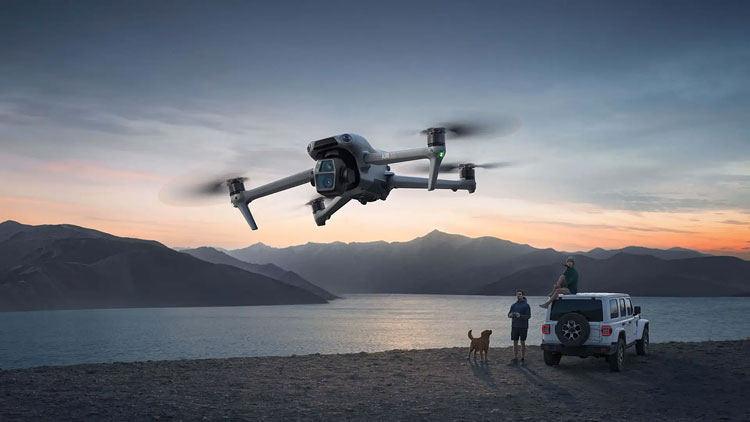
For working pros shooting real estate, weddings, events, commercial video, or landscape work, DJI still dominates the aerial photography ecosystem. The audit comes at a critical moment because:
- Public comments on DJI’s petition for reconsideration closed on May 11, 2026, with more than 3,000 submissions — roughly 10× the usual volume.
- DJI’s lawsuit against the FCC in the Ninth Circuit is ongoing.
- The new clean audit gives the FCC concrete technical evidence as it reviews the Covered List designation.
Many U.S. drone pilots and content creators have voiced concern that losing access to new DJI innovations will hurt creativity and competitiveness, especially when domestic alternatives like Skydio or Autel still lag in camera quality, flight time, or ecosystem polish for photography-specific use cases.
Bottom Line
The May 28 OnDefend audit doesn’t magically erase the FCC’s Covered List decision, but it does remove the primary technical justification that many assumed existed. For U.S. photographers who have built their businesses around DJI’s reliable, high-quality aerial tools, this is the strongest evidence yet that the restrictions may have been based more on process than proven risk.
We’ll continue tracking the FCC’s response to the petition and the court case. In the meantime, your current DJI drones are still fully operational – and the latest independent analysis says they’re also secure.
What do you think? Drop your thoughts in the comments — especially if you’re a working photographer relying on DJI in 2026. Have you started looking at alternatives, or are you riding with your current fleet?
Article written for TheNewCamera.com |
Sources include official OnDefend/DJI report, PetaPixel coverage (May 28, 2026), and FCC public records.
The article “Independent US Audit Clears DJI Drones – 2026 Ban Update for Photographers” was written by thenewcamera.com team on 5:24 pm, Saturday, 30 May 2026, Greenwich Mean Time (GMT) | You can also follow us on Our Official Social Media Handles FACEBOOK | TWITTER | INSTAGRAM > get live news — > DJI Rumors
By admin, on May 28th, 2026
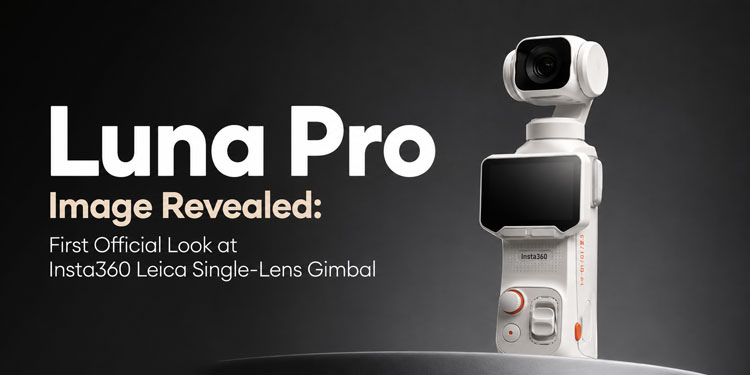
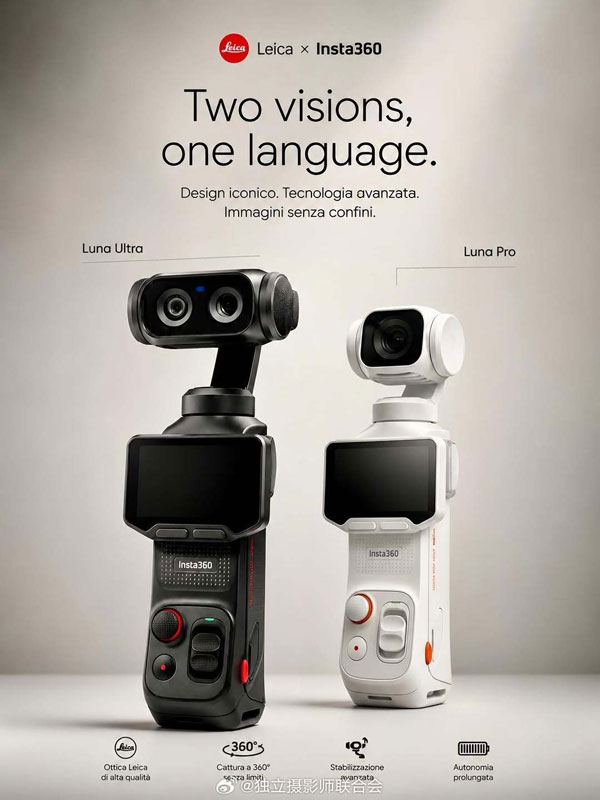
First official high-resolution image of the Insta360 Luna Pro (white, single-camera model on the right) alongside the Luna Ultra (black, dual-camera model on the left) – Leica × Insta360.
So finally, we have the first image of the upcoming Luna Pro camera. The camera uses a sleek, single-lens version and an ultra-compact body. The difference is very clearly visible from the Insta360 Luna Ultra, which has a dual-lens system. Both cameras stand out as strong competitors to the DJI Pocket 4 and the DJI Pocket 4P/Pro.
Insta360 Luna Pro: Leica Magic in a Single-Lens Pocket Gimbal
The Luna PRO is slightly more budget-oriented, a single-lens camera designed specifically for everyday creators, vloggers, and travel filmmakers.
The Luna PRO has been co-developed with Leica, bringing flagship-level specs to a compact, pocketable form factor, and is a perfect competitor of the Pocket 4. Take a look at the core specifications of the Luna PRO Model
Insta360 Luna Pro: Specification
- 1-inch CMOS sensor for superior low-light performance and beautiful depth of field
- The Leica Summicron f/1.8 lens delivers sharp, cinematic footage with that signature Leica colour science
- 10-bit iLog profile and up to 14 stops of dynamic range – perfect for professional colour grading
- Advanced 3-axis mechanical gimbal + FlowState stabilisation for buttery-smooth shots on the move
- Flip-out touchscreen and intuitive controls optimised for vertical video (Reels, Shorts, TikTok)
This is Insta360’s direct answer to the standard DJI Osmo Pocket 4, but with a bigger sensor, better optics, and true Leica character straight out of the camera.
Luna Pro vs Luna Ultra: Which One Is Right for You?
Insta360’s new naming strategy is crystal clear and highly competitive:
- Luna Pro (single-camera) → Targets general users and matches the DJI Osmo Pocket 4, those who actually didn’t care about having depth at the background, want to capture all scenarios when they are travelling and vlogging the Luna PRO is bets for them
- Luna Ultra (dual-camera) → Specifically Built for pros needing optical zoom and more depth in the background while vlogging, taking on the DJI Pocket 4 Pro.
The official image beautifully showcases both models side-by-side, highlighting the clean white finish of the Luna Pro and the bold black design of the more advanced Luna Ultra.
| Feature |
Insta360 Luna Pro |
Insta360 Luna Ultra |
| Camera Setup |
Single Leica wide-angle |
Dual (wide + telephoto) |
| Sensor |
1-inch CMOS |
1-inch (wide module) |
| Lens |
Leica f/1.8 |
Leica wide + tele |
| Zoom |
Digital/hybrid |
True optical + lossless hybrid |
| Log & Dynamic Range |
10-bit iLog + ~14 stops |
10-bit iLog + ~14 stops |
| Best For |
Everyday vlogging & travel |
Professional zoom & versatility |
For most creators, the Luna Pro hits the sweet spot — delivering pro-level footage in a simpler, more affordable package.
Who Should Buy the Insta360 Luna Pro?
- A slightly more budget-oriented camera.
- Always in Capture ALL Mode, best for those who love to capture themselves with all environments presence around them, not for those who love to have depth in their camera
- Travel creators who want lightweight gear with flagship image quality
- Anyone upgrading from older pocket gimbals
- Creators wanting Leica colours without jumping to the higher-priced Luna Ultra
If you need serious zoom reach for portraits or events, the Luna Ultra is worth the upgrade. But for 80-90% of shooting scenarios, the Luna Pro is the smart choice.
The competition between Insta360 (YingShi) and DJI is officially on fire — and users are the biggest winners.
Latest Price Info (as of May 28, 2026)
Official prices haven’t dropped on the Insta360 store yet, but we have very solid leaks + partial confirmation from Insta360’s CEO:
| Model |
Body Only (US/Intl) |
Full Creator Bundle/Kit |
Notes |
| Insta360 Luna Pro (single-lens) |
~$600–$720 (est.) |
~$850 (Europe leak) |
More affordable “standard” version |
| Insta360 Luna Ultra (dual-lens) |
~$780 |
~$900–$960 |
CEO-confirmed for US market |
Price Difference
≈ $150–250 USD (Luna Ultra is the more expensive one)
What do you think of the new Luna Pro design and specs? Drop your thoughts in the comments below: Team Luna Pro or waiting for the Ultra? Are you switching from DJI or staying loyal?
Stay tuned to TheNewCamera.com for the full hands-on review, sample footage, pricing details, and pre-order information as soon as they become available. This is shaping up to be one of the most exciting pocket gimbal releases of 2026.
The article “Luna Pro Image Revealed: First Official Look at Insta360 Leica Single-Lens Gimbal” was written by thenewcamera.com team on 10:55 am, Thursday, 28 May 2026, Greenwich Mean Time (GMT) | You can also follow us on Our Official Social Media Handles FACEBOOK | TWITTER | INSTAGRAM > get live news — > DJI Rumors
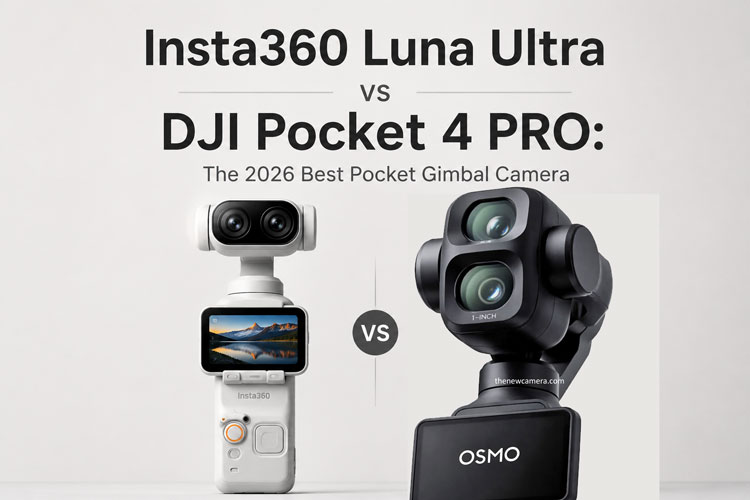
By admin, on May 27th, 2026
We have some good news related to the DJI drones. The software update support time is now being extended to 2029. That clearly means recently announced drones like Avata 360, or all the DJI drones that were announced before the December 2025 ban, are eligible to get software updates till January 2029, and yes, they are also fully eligible to be sold in the United States of America. Only the drones that were announced after December 2025, like the DJI Lito X1, and so on, are banned from being sold in the United States of America.
On May 8, 2026, the Federal Communications Commission’s Office of Engineering and Technology quietly released Public Notice DA 26-454. This notice extends the waiver that allows already-authorised foreign-made drones — including popular DJI and Autel models — to continue receiving critical firmware and software updates until at least January 1, 2029.
Here’s the full breakdown from a USA user perspective: what changed in the latest update of May 2026, what hasn’t, and exactly what this means for your drone flying future.
What the FCC DJI Extension Actually Does
The FCC’s decision does three key things:
- Extends the update window from the previous January 1, 2027 cutoff all the way to January 1, 2029.
- Expands the scope to include both routine Class I changes (security patches, bug fixes, compatibility updates) and more significant Class II permissive changes.
- Applies to any drone, UAS critical components, or consumer routers that were FCC-authorized before being placed on the Covered List.
In plain English: If you already own a DJI drone that was legally sold and authorized in the U.S., DJI can keep pushing out official firmware updates, security patches, and feature improvements for the next 2+ years.
This directly affects millions of American owners of:
- DJI Mini series
- Air series
- Mavic series
- Avata / FPV drones
- Enterprise models (Matrice, Matrice 300/350, etc.)
- Autel drones

Why the FCC Made This Move (And Why It Matters)
The agency openly acknowledged that suddenly cutting off security updates would create a bigger cybersecurity risk than the original national-security concerns the ban was meant to address.
Without patches, existing drones could become vulnerable to hacking, leave users exposed, and create safety issues in the national airspace. They do need the help of DJI to keep the drones safe, those are already in the hands of consumers, and that’s why they have extended the ban period., By extending the waiver, the FCC is prioritising real-world consumer protection while the drone industry transitions.
Important Clarification: The DJI Ban Is Still in Effect
This extension is not a rollback of the broader restrictions.
- New DJI drones cannot receive FCC equipment authorization and cannot be legally imported or sold as new products in the U.S.
- The Covered List rules (stemming from the 2025 NDAA and earlier FCC actions) remain fully in place.
- You still cannot buy the very latest unreleased DJI models through official U.S. channels.
In short: Your current fleet is supported longer — but the pipeline for brand-new DJI hardware is closed.
What This Means for Different Types of US Drone Users
Recreational Pilots
Your weekend flyer (Mini 4 Pro, Air 3S, etc.) will keep getting the latest features, bug fixes, and security updates through 2029. No sudden obsolescence. Resale value on the used market should remain strong for the next few years.
Part 107 Commercial Operators
This is huge for real estate photographers, inspectors, farmers, and infrastructure pros. You can confidently schedule jobs knowing your primary tools will stay current and secure. No need to panic-upgrade your entire fleet right now.
Enterprise & Government Users
The extra breathing room gives organizations time to evaluate Blue UAS–compliant alternatives or diversify their fleets without being forced into an immediate (and expensive) swap-out.
Everyone
You can keep using the DJI Fly / Pilot apps and official update channels without interruption.
The Bottom Line for American Drone Users
The FCC’s DA 26-454 extension is a smart, practical decision that protects millions of U.S. drone owners from sudden obsolescence and cybersecurity gaps.
It buys the entire industry valuable time to develop secure domestic alternatives while keeping your current DJI investment safe and supported through at least 2029.
Official Source:
Public Notice DA 26-454 (PDF)
If you own a DJI drone in the United States, this is genuinely good news. Your current fleet just got a multi-year lease on life.
What do you think — will you keep flying DJI through 2029, or are you already testing alternatives? Drop your thoughts in the comments below.
Share this article with fellow drone pilots and operators who need to know the real story behind the headlines.
The article “Xtra Muse 2 Pro and Muse 2 Get Dual-Side Flip Touchscreen” was written by thenewcamera.com team on 7:50 pm, Saturday, 23 May 2026, Greenwich Mean Time (GMT)
| You can also follow us on Our Official Social Media Handles FACEBOOK | TWITTER | INSTAGRAM > get live news — > DJI Rumors

By admin, on May 26th, 2026
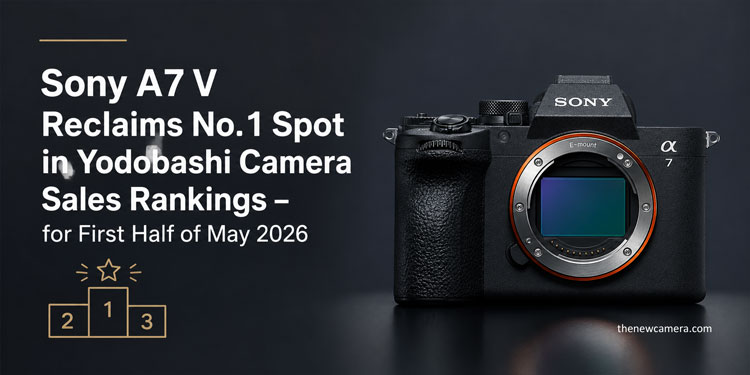
The Sony A7 five-camera is stopped in users’ chats. According to the sales data released by CAPA CAMERA WEB, the Sony α7 V Body has reclaimed the number one position in Yodobashi Camera’s best-selling interchangeable-lens camera rankings for the first half of May 2026 (May 1–15).
This clearly indicates that, in mid-full-frame, people prefer the Sony A7 V over the others, possibly due to the introduction of a partially stacked 33-megapixel sensor.
And this is not the first time the Sony A7 V camera is at the top of the sales chart. It has done it before — the winning streak of the Sony A7 V camera started after the latter half of January 2026. It was interrupted in the previous period, but as of now, the top two spots have been fixed, and Sony is dominating the market once again.
Complete Top 10 Best-Selling Interchangeable-Lens Cameras at Yodobashi (May 1–15, 2026)
Here’s the official ranking from CAPA CAMERA WEB:
| Rank |
Model |
Key Highlights |
| 1 |
Sony α7 V Body |
Full-frame hybrid flagship with 33MP partially stacked sensor, 30fps blackout-free shooting, advanced AI AF |
| 2 |
Sony α7C II Zoom Lens Kit |
Compact full-frame body + versatile zoom kit – perfect for travel and street |
| 3 |
Canon EOS R50 Double Zoom Kit |
Entry-level APS-C mirrorless making its first top-3 appearance in nearly 2 years |
| 4 |
Sony VLOGCAM ZV-E10 II Double Zoom Lens Kit |
Vlogging favorite with creator-focused features |
| 5 |
Fujifilm X-T30 III XC13-33mm Lens Kit |
Retro-styled APS-C with film simulation magic |
| 6 |
Fujifilm X-M5 XC15-45mm Lens Kit |
Compact, affordable Fuji for beginners |
| 7 |
Sony α7C II Body |
Compact full-frame body-only option |
| 8 |
Canon EOS R10 RF-S18-150 IS STM Lens Kit |
Versatile APS-C zoom kit for all-rounders |
| 9 |
Nikon Z50II Double Zoom Kit |
Nikon’s refreshed APS-C mirrorless |
| 10 |
Canon EOS R5 Mark II Body |
High-resolution pro full-frame still going strong |
As we can clearly see, Sony dominates with 4 entries in the top 10, including the top two spots. Canon secures three places (notably the surprise podium finish for the R50), while Fujifilm and Nikon round out the list with strong APS-C offerings.
Why the Sony α7 V Is Dominating Sales Again in May 2026
Sony A7 has been dominating the market since 2018, with their A7 III model, and now it’s time for Sony A7V, and Sony is again in the headlines with the Sony A7V Model.
- Blackout-free continuous shooting at up to 30 fps with AF/AE tracking
- Advanced AI subject recognition for humans, animals, birds, insects, cars, and more
- Impressive 4K video up to 60p (7K oversampled) and 120p in crop mode
- 7.5-stop IBIS and dual USB-C ports for extended power/data workflows
Buyers love the body-only version because it pairs perfectly with their existing E-mount lenses – from affordable primes to pro zooms. Its return to #1 after a one-period dip shows sustained demand among serious enthusiasts who want flagship performance without the premium price of the α1 or α9 series.
Runner-up Sony α7C II Zoom Lens Kit continues to appeal to travellers and content creators who prioritise compactness without sacrificing full-frame image quality.
The Canon R50, still one of the fav cameras in Japan, specifically in terms of entry-level users. Canon EOS R50 Double Zoom Kit is climbing to 3rd place — its first appearance in the top three since the second half of May 2024 (almost exactly two years ago).
This affordable APS-C mirrorless kit (RF-S18-45mm + RF-S55-210mm) remains a favorite for beginners and vloggers thanks to:
- 24.2MP sensor with Dual Pixel CMOS AF II
- 4K 30p video (6K oversampled)
- Intuitive touchscreen interface and lightweight design
The strong performance of Canon’s entry-level kit alongside the more advanced EOS R10 and R5 Mark II shows balanced demand across price segments.
Should You Buy the Sony α7 V or One of the Other Top Sellers?
- Choose the α7 V if you want pro-level stills + video in one rugged body and already own Sony glass.
- Go for the α7C II Kit for a more compact full-frame travel camera.
- Consider the Canon EOS R50 Double Zoom Kit if you’re a beginner or vlogger on a budget — its return to the podium proves it’s still one of the best value mirrorless options in 2026.
Yodobashi Camera rankings like this are updated every two weeks, so we’ll be watching closely for the second half of May results. Will the α7 V extend its reign, or will Canon or Fujifilm shake things up?
What’s your take? Are you team Sony full-frame or prefer the lighter APS-C options? Drop your thoughts in the comments below!
Stay tuned to TheNewCamera.com for the latest camera news, reviews, and sales rankings from Japan and around the world.
Data source: CAPA CAMERA WEB / Yodobashi Camera (May 1–15, 2026)
About the author

By admin, on May 23rd, 2026
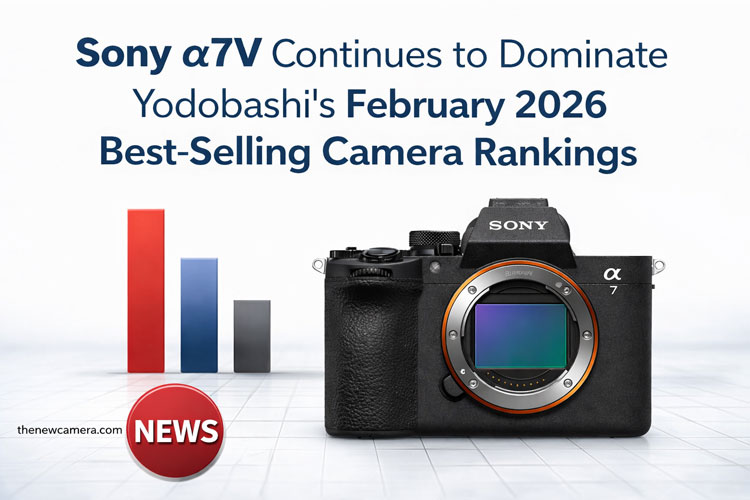
So we have the two NEW PRO pocket gimbal cameras, which are coming straightaway in the next few weeks, and specifically, the users are very much excited about the DJI Pocket 4 PRO as well as they are for the Luna Ultra camera.
If you feel or are thinking it’s really hard to decide which camera you should buy, then we have created a specification comparison where you can get a very clear idea, depending upon the pricing, as well as the core specifications of both the handheld gimbal pocket cameras, to find the best camera for you.
The most important factor, if you are living in the United States of America, then obviously there is a very hard chance for the DJI Pocket 4 Pro camera to appear in online or offline stores across the United States of America. For that, we have to wait for Xtra Muse Pro2. They set the features and all the goodness of the Pocket 4 Pro camera inside it, with some additional twist in the display screen design of the camera.
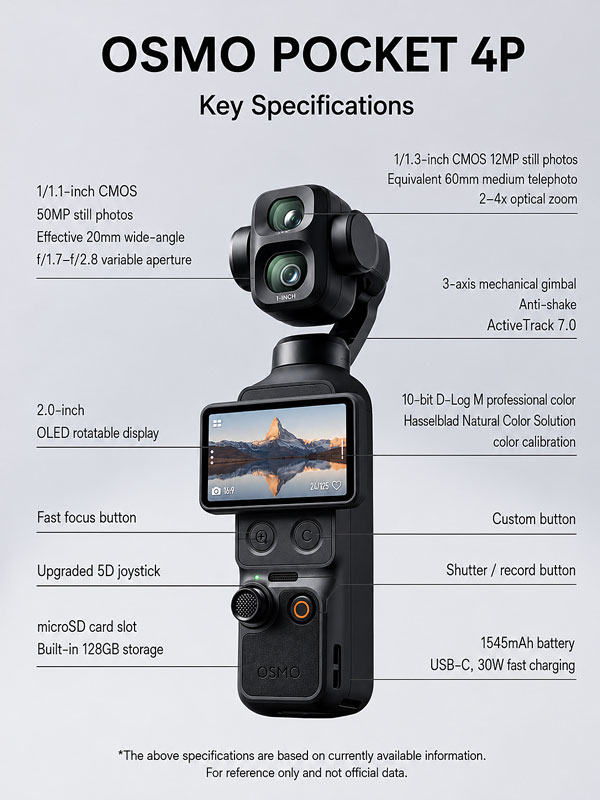
We’re using the exact spec sheets you’ve probably already seen (the clean infographics floating around since NAB and Cannes) — they’re remarkably accurate based on hands-on prototypes and early official leaks. Here’s the no-BS, side-by-side breakdown.
Highly Detailed Specs Comparison Table
| Feature |
Insta360 Luna Ultra |
DJI Osmo Pocket 4P |
| Main (Wide) Sensor |
1-inch CMOS, 50MP, ~18mm equiv |
1-inch / 1.1-inch CMOS, 50MP, ~20mm equiv |
| Main Aperture |
Fixed f/2.0 (leaks say f/1.8) |
Variable f/1.7–f/2.8 |
| Telephoto Sensor |
1/1.3-inch CMOS, 12MP, ~70mm f/2.8 |
1/1.3-inch class, ~60mm |
| Zoom |
~3.9–6x optical/lossless, up to 12x hybrid |
2–4x optical (mostly 3x confirmed) |
| Dynamic Range |
14 stops, 10-bit iLog (Leica Summilux calibrated) |
14 stops (some claims 17), 10-bit D-Log M (Hasselblad) |
| Max Video |
4K/240fps (8K claims in some prototypes) |
4K/240fps |
| Stabilization |
3-axis mechanical gimbal + FlowState (±5° claimed) |
3-axis mechanical + ActiveTrack 7.0 |
| Modularity |
Detachable lens & gimbal – future lenses possible |
Fixed dual-lens design |
| Screen |
2-inch OLED, 1000 nits |
2-inch rotatable OLED |
| Controls |
5D joystick, fast zoom rocker, customizable button |
Upgraded 5D joystick, fast focus button |
| Storage |
128GB internal, expandable to 2TB |
128GB built-in + microSD |
| Battery |
1500mAh, 30W USB-C |
1545mAh, 30W USB-C |
| US Price (body) |
~$780 |
~$730–750 (estimated) |
| US Availability |
Fully available – Amazon, B&H, Adorama, Insta360.com |
Grey market only (FCC Covered List issues) |
we tried to keep the differences as clean as possible, and we have done multiple verifications while creating this table, and if you find any errors, kindly report in the comment section. We will fix it as soon as possible
Key Differences Explained
- Zoom Reach – Insta360 Wins by a Mile
The Luna Ultra’s longer ~70mm tele + true 6x lossless zoom is the killer feature. DJI’s 3x optical on the Pocket 4P feels limiting the moment you step back for a clean portrait or compressed background. If you shoot travel vlogs, street, or events where you can’t always get close, the Insta360 is noticeably more versatile right now.
- Creative Control – DJI’s Variable Aperture is a Pro Move
DJI gives you real aperture blades (f/1.7–f/2.8). That means shallow depth-of-field without ND filters and better exposure flexibility in changing light. Insta360’s fixed bright aperture is great for low light but less flexible for cinematic work. US hybrid shooters who grade in DaVinci or Premiere will appreciate the extra control.
- Color Science & Look
Leica tuning on the Luna Ultra = punchy, filmic, high-contrast look straight out of camera.
Hasselblad Natural Color on the Pocket 4P = more accurate skin tones and realistic rendition (DJI’s long-time strength).
Both do excellent 10-bit log. Real tests will decide, but neither is “bad.”
- Modularity & Future-Proofing
Insta360’s detachable lens/gimbal head is genuinely new for this category. You can use the handle as a wireless remote or swap lenses later. DJI is the more “finished” product today, but Insta360 feels like the one that will evolve.
- The Giant USA Elephant in the Room: Availability & Warranty
This is the biggest practical difference for American buyers.
- Insta360 Luna Ultra → Ships worldwide, full US warranty, easy returns on Amazon/B&H.
- DJI Osmo Pocket 4P → Standard Pocket 4 is available, but the Pro (4P) dual-lens version has serious FCC/Covered List complications. Many US buyers are stuck with grey-market imports that void warranty and have no official support. If you value peace of mind and easy returns, the Luna Ultra is the safer (and currently more available) choice.
Who Should Buy Which?
Buy the Insta360 Luna Ultra if you:
- Want maximum optical zoom reach
- Love the idea of a modular system that could grow with you
- Shoot a lot of travel, events, or portraits where compression matters
- Want immediate US availability and full warranty
- Prefer Leica’s cinematic look
Buy the DJI Osmo Pocket 4P if you:
- Prioritize variable aperture and creative exposure control
- Already live in the DJI ecosystem (Mavic, Ronin, etc.)
- Value ActiveTrack 7.0 for run-and-gun subject following
- Are okay hunting grey-market deals or waiting for possible official channels
- Love Hasselblad’s more neutral color science
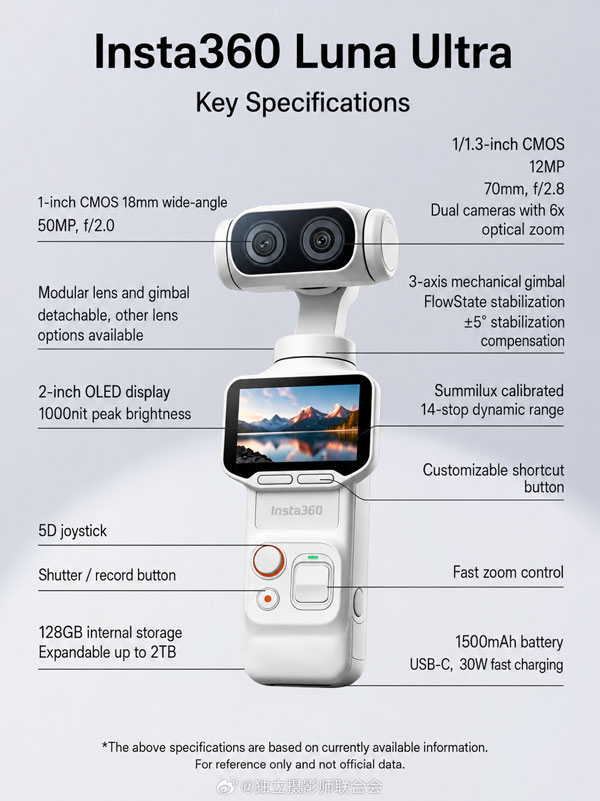
Our Verdict – The Best Camera for You
Right now, as we all know, if you are living in the United States of America, the only option you have is the Insta360 Luna Ultra. But if you’re not in the United States of America and already part of the DJI ecosystem, the Pocket 4 Pro is obviously the best choice for you.
But again, if you are completely new and looking for a gimbal camera, then obviously the Insta360 Luna Ultra gives you more freedom with a remote control and attachable display screen, for which you have to pay extra in the DJI Pocket 4 Pro gimbal camera. Specifically, I am talking about the additional frame and tap remote controller.
Both cameras are massive leaps over the single-lens pockets of the past. The dual-lens era is finally here, and Insta360 just delivered the version that feels more future-proof for US buyers.
What do you think? Drop your choice in the comments — Luna Ultra or Pocket 4P? We’ll update this article with full side-by-side footage tests the moment both are in our hands.
Specs based on official early materials and trusted leaks as of May 23, 2026. Real-world image quality tests coming soon.
The article “Xtra Muse 2 Pro and Muse 2 Get Dual-Side Flip Touchscreen” was written by thenewcamera.com team on 7:50 pm, Saturday, 23 May 2026, Greenwich Mean Time (GMT)
| You can also follow us on Our Official Social Media Handles FACEBOOK | TWITTER | INSTAGRAM > get live news — > DJI Rumors

By admin, on May 23rd, 2026
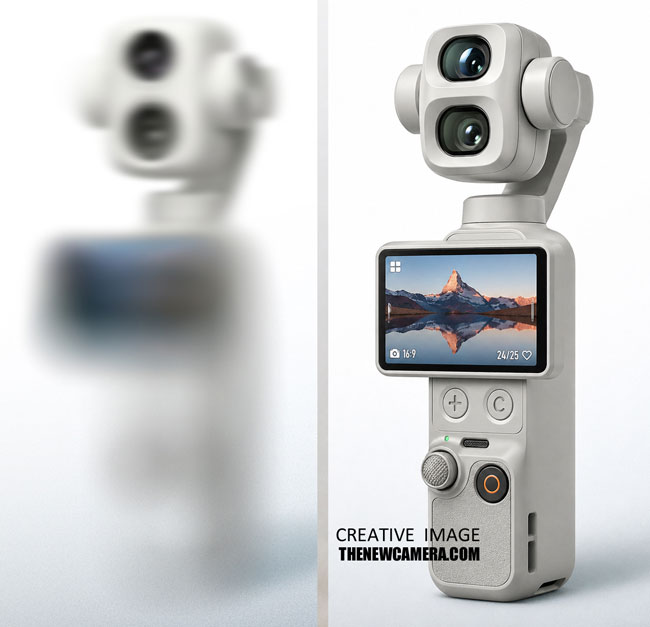
Xtra Muse 2 and Xtra Muse 2 Pro are coming with a slightly different design than what we have seen in the DJI 4 or the 4 Pro camera, and the main difference is visible in the display screen of the camera, which can be shifted to the extreme left or to the extreme right side of the camera as per the user’s requirement.
This detail about the new kind of display screen was revealed by the Xtra Camera official page an hour ago.
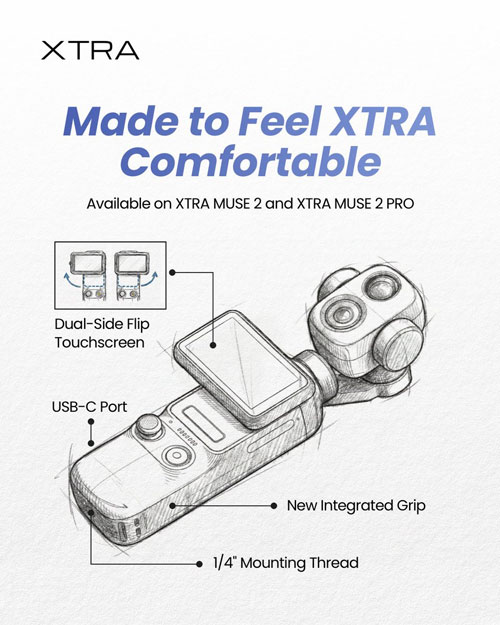
Official teaser sketch showing the new dual-sided flip screen and integrated grip on the Xtra Muse 2 series. Credit: @xtracameras
What’s New on the Xtra Muse 2 & 2 Pro
Well, if we look at the text of the Xtra written in their Xtra official handle, it calls the refresh “Made to Feel XTRA Comfortable” and it focuses on two practical improvements creators have been asking for:
- Dual-Side Flip Touchscreen: The articulating screen features a very unique design-wise flip-out display, accessible from either side of the camera. Whether you’re shooting traditional vlogs selfie-style or framing from the rear (great for run-and-gun or third-person shots), you get instant, accurate framing without awkward angles while using sing hand, Well, that’s a perfect companion for pros who do daily life vlogs.
- Integrated Ergonomic Grip. Instead of an add-on accessory, the new built-in grip is molded directly into the body. This gives the Xtra Muse 2 series a cleaner, more premium look while delivering significantly better handheld comfort for long shooting sessions.
The official post also gives a shoutout to designer @createbeyondboundarie for helping perfect the naming and overall feel.
Why These Changes Matter for Creators
Yes, pls keep in mind while reading this port, these aren’t flashy spec bumps – they’re the kind of thoughtful aka design upgrade and refinements already DONE in their upcoming camera, that make a pocket camera actually enjoyable to use all day.
- Faster framing in any orientation
- More stable and comfortable grip (less fatigue during travel vlogs, events, or street shooting)
- Cleaner design with fewer loose accessories
This update builds directly on the earlier teasers that already promised a 2-way/bi-directional screen. Today’s reveal confirms the final execution and shows Xtra is listening closely to real-world feedback.
(Full detailed specs and pricing from our earlier report → Xtra Muse 2 Pro: Specifications, Pricing, and U.S. Arrival Date)
How Does It Compare to DJI Osmo Pocket Series?
With the new dual-side screen and built-in grip, the Xtra Muse 2 series is closing the comfort gap even further against the current DJI Pocket lineup. Many U.S. creators are already eyeing the Muse 2 Pro as the most practical “DJI Pocket 4 Pro alternative” available stateside this summer.
Bottom line: If you already own DJI ECO system-based mics etc, and are waiting for the next big pocket vlogging camera that’s actually comfortable to shoot with for hours, today’s update makes the Xtra Muse 2 / 2 Pro even more compelling.
We’ll update this page the moment Xtra drops full specs, pricing, or pre-order details. Expected U.S. launch remains June–July 2026.
What do you think? Is the dual-side flip screen and built-in grip enough to make you choose the Xtra Muse 2 over the competition? Drop your thoughts in the comments below!
The article “Xtra Muse 2 Pro and Muse 2 Get Dual-Side Flip Touchscreen” was written by thenewcamera.com team on 5:37 am, Saturday, 23 May 2026, Greenwich Mean Time (GMT)
| You can also follow us on Our Official Social Media Handles FACEBOOK | TWITTER | INSTAGRAM > get live news — > DJI Rumors
|
KEEP THIS BLOG ALIVE - Support New Camera Buy Canon Lenses, Buy Music CD or Digital Camera at amazon it helps this site, and you do not pay anything extra, it is just a way to help support this site.

|