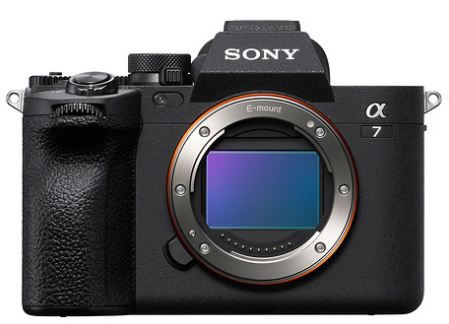
Sony A7 IV vs Sony A7R III – We are comparing these two cameras since the price factor of both is up to some extent. So, let’s talk about the Major core differences between the two.
Keep in mind the specification we are using here is of the latest Sony A7R IIIA Camera.
Compared to its predecessor the a7R III, the most significant improvement of the a7R IIIA is the rear LCD resolution, which jumps from 1,440,000 to 2,359,296 dots. The USB port has also been upgraded from a USB 3.1 Gen 1 Type-C Port to a faster USB 3.2 Gen 1 Type-C Port. Beside these two improvements, the a7R III and a7R IIIA are equal in specifications and performance.
Sony A7 IV
Sony A7R III
Lens Mount
Sony E
Sony E
Sensor Type
35.9 x 23.9 mm (Full-Frame) CMOS
35.9 x 24 mm (Full-Frame) CMOS
Sensor Resolution
Actual: 34.1 Megapixel
Effective: 33 Megapixel
Actual: 43.6 Megapixel
Effective: 42.4 Megapixel (7952 x 5304)
Crop Factor
None
None
Aspect Ratio
1:1, 3:2, 4:3, 16:9
3:2, 16:9
Image File Format
JPEG, Raw, HEIF
JPEG, Raw
Bit Depth
14-Bit
14-Bit
Image Stabilization
Sensor-Shift, 5-Axis + Gyro Based IS
Sensor-Shift, 5-Axis
Image Quality:
Sony A7R III Features a BSI 42.4-megapixel Exmor R CMOS sensor that works with the BIONZ X image processor to offer high-resolution stills and video while minimizing noise and improving speed.
The newly developed 33MP Exmor R full-frame sensor features a back-illuminated design that promotes high clarity, low noise, and vivid color rendering. Paired up with a more advanced BIONZ XR Image processor.
ISO Rating
100 to 51200 (Extended: 50 to 204800
100 to 32000 (Extended: 50 to 102400)
Sony A7R III additional advantage: Pixel Shift Multi Shooting, this mode shifts the sensor while making four consecutive exposures in order to acquire approximately 169.6MP
Verdict (Image Processor): For Studio Shooters: Sony A7R III – features a super high-resolution sensor, but needs more light to deliver ultimate details compared to A7 IV. If you are a wedding photographer, casual style shooter or Hybrid shooter the Sony A7 IV is made for you.
Sony A7 IV
Sony A7R III
ISO Sensitivity
Auto, 100 to 51200 (Extended: 50 to 204800)
Auto, 100 to 32000 (Extended: 50 to 102400)
Shutter Speed
1/8000 to 30 Second
Bulb Mode
1/8000 to 30 Seconds
1/8000 to 1/4 Second in Movie Mode
Bulb Mode
Up to 10 fps at 33 MP for up to 828 Frames (Raw) / Unlimited Frames (JPEG)
Up to 10 fps at 42.4 MP for up to 76 Frames (Raw) / 76 Frames (JPEG)
Up to 8 fps at 42.4 MP for up to 76 Frames (Raw) / 76 Frames (JPEG)
Up to 6 fps at 42.4 MP for up to 76 Frames (Raw) / 76 Frames (JPEG)
Up to 3 fps at 42.4 MP for up to 76 Frames (Raw) / 76 Frames (JPEG)
Interval Recording
Yes
2/5/10-Second Delay
Self-Timer
2/5/10-Second Delay
Autofocus
The New BIKONZ XR image processor features a new AF Algo for advanced tracking system. Let’s have a look at the screen coverage and number of AF points we are getting in both camera.
Sony A7 IV @ 10 FPS (33 MP) JPGs or Lossy Compressed RAW.
Sony A7R III @ 10 FPS (42 MP) JPG or Uncompressed RAW
Buffer Size
Sony A7 IV Can Record up to 1,000 files (JPGs, or lossless compressed RAW).
Sony A7 III Can Record up to 76 JPGs, 76 RAW (compressed) or 30 RAW (uncompressed).
Sony A7 IV
Sony A7R III
Focus Type
Auto and Manual Focus
Auto and Manual Focus
Focus Mode
Continuous-Servo AF (C), Direct Manual Focus (DMF), Manual Focus (M), Single-Servo AF (S)
Automatic (A), Continuous-Servo AF (C), Direct Manual Focus (DMF), Manual Focus (M), Single-Servo AF (S)
Autofocus Points
Phase Detection: 759 Contrast Detection: 425
Phase Detection: 399
Contrast Detection: 425
Autofocus Sensitivity
-4 to +20 EV
-2 to +20 EV
Verdict (Autofocus): Sony A7 IV features a more advanced tracking system than the Sony A7R III camera. As well as more buffer, the best camera in-between these two is for sure the Sony A7 IV.
Faster Image Processor and Slower Speed, Why Sony?
Sony A7R III uses an older image processor Bionz X, despite that the A7R III camera is able to process a 42MP Sensor @ 10 FPS Uncompressed RAW. But, at the same time, the Sony A7 IV Camera uses a Bionz XR image processor with faster processing speed but the A7 IV speed is limited to 10FPS with lossless compressed RAW.
Sony A7 IV
Sony A7R III
Recording Modes
H.265/XAVC HS 4:2:2 10-Bit
UHD 4K (3840 x 2160) at 23.976p/50p/59.94p [50 to 200 Mb/s] H.265/XAVC HS 4:2:0 10-Bit
UHD 4K (3840 x 2160) at 23.976p/50p/59.94p [30 to 150 Mb/s] H.264/XAVC S-I 4:2:2 10-Bit
UHD 4K (3840 x 2160) at 23.976p/25p/29.97p/50p/59.94p [240 to 600 Mb/s]
Full HD (1920 x 1080) at 23.976p/25p/29.97p/50p/59.94p [89 to 222 Mb/s] XAVC S 4:2:2 10-Bit
UHD 4K (3840 x 2160) at 23.976p/25p/29.97p/50p/59.94p [100 to 200 Mb/s]
Full HD (1920 x 1080) at 23.976p/25p/29.97p/50p/59.94p [50 Mb/s] XAVC S 4:2:0 8-Bit
UHD 4K (3840 x 2160) at 23.976p/25p/29.97p/50p/59.94p [60 to 150 Mb/s]
Full HD (1920 x 1080) at 23.976p/25p/29.97p/50p/59.94p/100p/119.88p [16 to 100 Mb/s]
XAVC S
UHD 4K (3840 x 2160) at 23.976p/25p/29.97p [60 to 100 Mb/s]
Full HD (1920 x 1080) at 23.976p/25p/29.97p/50p/59.94p/100p/119.88p [100 Mb/s]
HD (1280 x 720) at 100p/119.88p [50 Mb/s] AVCHD
Full HD (1920 x 1080) at 50p/59.94p [28 Mb/s]
Full HD (1920 x 1080) at 23.976p/25p/50i/59.94i [17 to 24 Mb/s] MP4
Full HD (1920 x 1080) at 50p/59.94p [28 Mb/s]
Full HD (1920 x 1080) at 25p/29.97p [16 Mb/s]
HD (1280 x 720) at 25p/29.97p [6 Mb/s]
External Recording Modes
4:2:2 10-Bit
UHD 4K (3840 x 2160) at 23.976p/25p/29.97p/50p/59.94p
Full HD (1920 x 1080) at 23.976p/50p/59.94p
Full HD (1920 x 1080) at 50i/59.94i 4:2:0 8-Bit
UHD 4K (3840 x 2160) at 23.976p/25p/29.97p/50p/59.94p
Full HD (1920 x 1080) at 23.976p/50p/59.94p
Full HD (1920 x 1080) at 50i/59.94i
4:2:2 8-Bit
UHD 4K (3840 x 2160) at 24.00p/25p/29.97p
Full HD (1920 x 1080) at 24.00p/50i/50p/59.94i/59.94p
The A7 IV can record 4K up to 30p with no sensor crop and full pixel readout (7K Downsampled to create standard 4K 30p, 24p Video) without pixel binning (in other words, at the best quality possible).
Cropping at 4k 60p Sony A7 IV, when you will use the 50 and 60p mode in the Sony A7 IV camera, you have to face a 1.5x crop on the sensor (aka Super35/APS-C mode)
S-Cinetone can be used to deliver distinct colors and healthy-looking skin tone rendering that matches the FX9 and FX6 cameras, along with the a1 and a7S III, and is based on technology from the professional Cinema Line cameras, such as the VENICE. This color profile offers natural mid-tones, soft colors, and especially well-controlled highlights.
Gryo Based IBIS in Sony A7 IV – the A7 IV has gyro stabilization and would store metadata for the gyro which can be edited later.
Enhanced Vlogging AF Modes – Sony also added the product focusing mode, face exposure to upscale your full-frame Vlogging experience.
Sony A7R III 4k Full Sensor readout uses Pixel Binning / Lime Skipping
In full-frame mode, while recording 4k Videos at 24p and 30p, the Sony A7R III camera does line-skipping due to limited processing power. You also have a crop mode in 4K standard Video recording mode to get more details.
10 Bit Internal
You Can also record 1 hour in 4K 60p with 10-bit 4:2:2 with Sony A7 IV
No such option hin Sony A7R III
Verdict Video: Sony A7R III look weak in Video core specification and settings.
Sony A7 IV
Sony A7R III
Viewfinder Type
Electronic (OLED)
Electronic
Viewfinder Size
0.5″
0.5″
Viewfinder Resolution
3,680,000 Dot
3,686,400 Dot
Viewfinder Eye Point
23 mm
23 mm
Viewfinder Coverage
100%
100%
Viewfinder Magnification
Approx. 0.78x
Approx. 0.78x
Diopter Adjustment
-4 to +3
-4 to +3
The various-angle display screen is really very impressive and makes it a perfect camera for vloggers.
Full-size HDMI A port and multi-interface hot-shoe in Sony A7 IV offers a more reliable connection when working with external recorders and sony’s own accessories.
Sony A7 IV
Sony A7R III
Media/Memory Card Slot
Slot 1: CFexpress Type A / SD (UHS-II)
Slot 2: SD/SDHC/SDXC (UHS-II)
HDMI A (Full Size), USB Type-C (USB 3.2 Gen 2), USB Micro-B (USB 2.0), 3.5mm Microphone, 3.5mm Headphone
3.5mm Headphone, 3.5mm Microphone, HDMI D (Micro), USB Type-C (USB 3.0), USB Micro-B (USB 2.0)
Wireless
Wi-Fi
Bluetooth
Wi-Fi
Bluetooth
GPS
No
No
Size and weight
Sony A7 IV
Sony A7R III
Battery
1 x NP-FZ100 Rechargeable Lithium-Ion, 7.2 VDC, 2280 mAh (Approx. 520 Shots)
1 x NP-FZ100 Rechargeable Lithium-Ion, 7.2 VDC, 2280 mAh (Approx. 530 Shots)
Dimensions (W x H x D)
5.2 x 3.8 x 3.1″ / 131.3 x 96.4 x 79.8 mm
5 x 3.76 x 2.9″ / 126.9 x 95.6 x 73.7 mm
Weight
1.4 lb / 658 g (Body with Battery and Memory)
1.45 lb / 657 g
Final Verdict: Sony A7 IV Camera is very impressive with its core specification and is recommended for Hybrid shooters of all type, if you work in a studio only and does product and model photography then A7R III is more recommended to you.
According to latest rumors coming from Rumor mills after the announcement of Nikon Z9 as well as Sony Alpha A1 camera. Canon will also announce their flagship fullframe Mirrorless camera, the Canon EOS R1. Possible set of specification we may see in the upcoming Canon EOS R5 camera
Canon EOS R1 expectation
Newly developed 45-50MP Stacked CMOS Sensor
Both Global and Mech. Shutter
Advance heat sink unit
30 FPS RAW / JPEG
80 @ 60 FPS
8 Stops of IBIS
We these are the set of possible specs we are expecting from the upcoming Canon EOS R1. Camera, let’s hope and expect we will its development announcement soon.
Nikon today finally announced the Nikon Z9 camera. . The latest Nikon flagship camera features a Nikon-developed 45.7 megapixel stacked CMOS sensor and next generation EXPEED 7 image processing engine, the camera is also capable to record in-camera 8K video recordings for extended periods along with a future promise that upcoming Nikon Z9 firmware updates will allow this camera to record 12-bit Raw 8K/60 capture. The world’s longest record time 7 at 8K UHD 30p for more than 2 hours.
493-Point Phase-Detection AF with Intelligent Subject Detection
20 fps Shooting in Raw, 30 fps Shooting in JPEG, 120 fps Shooting at 11MP
Up to 8K30p and 4K120p Video Recording
Internal 10-Bit Recording, ProRes 422 HQ and H.265 Support
New High-Efficiency Raw File Format
Blackout-Free EVF and Four-Axis Tilting LCD Touchscreen
Integrated Vertical Grip, Dual CFexpress Type B Card Slots
Built-In 5 GHz Wi-Fi, Bluetooth, and GNSS
The Z9 gains two new Raw options: HE* and HE, which are ‘high efficiency’ lossy compression formats that are around 1/2 and 1/3rd the size of the uncompressed data, respectively. For extreme speed, High Speed Frame Capture enables up to 120 fps with full AF/AE at a very manageable file size of 11 megapixels, freezing a moment that cannot even be seen with the naked eye (higher resolution than 4K video).
Vibration Reduction image stabilization has been enhanced with new Synchro VR to achieve up to 6 stops of compensation with compatible lenses.. Although the resolution is low (3.68MP) but we will be getting a truly blackout-free Real-Live visibility in the viewfinder and a sensor scan rate so fast.
The Nikon Z9 will be available by the end of 2021 at a recommended price of $5,499 USD.
NIKKOR Z 100-400mm f/4.5-5.6 VR S Lens B&H Store Offering super-telephoto reach in a portable design, the NIKKOR Z 100-400mm f/4.5-5.6 VR S, from Nikon, is a versatile zoom well-suited for sports and wildlife applications.
NIKKOR Z 24-120mm f/4 S Lens NIKKOR Z 24-120mm f/4 S, from Nikon, is a wide-angle to short-telephoto zoom lens. Features F4 maximum aperture offers consistent performance throughout the zoom range and the lens features an advanced optical design for high sharpness and clarity
Nikon FTZ II the same functionality as the original FTZ but with a sleeker design to suit its use on cameras featuring a battery grip. This adapter removes the tripod mount and has a reduced overall size for more comfort when shooting with cameras with a built-in or attached grip or wireless transmitter.
Nikon Z9 Press Release
THE NIKON Z 9: UNSTOPPABLE PERFORMANCE, REVOLUTIONARY INNOVATION
Nikon’s First Mirrorless Flagship Defies Conventional, Debuts with a Series of Industry-Firsts for Still & Video Creators
MELVILLE, NY (October 28, 2021) – Today, Nikon announced the Z 9, the most advanced Z series mirrorless camera to date. Powered by a completely new, Nikon-developed 45.7 megapixel stacked CMOS sensor and next generation EXPEED 7 image processing engine, the full-frame Z 9 renders ultra-high resolution images and offers unparalleled AF performance using a revolutionary new scene detection system built on deep learning technology. Additionally, the camera is capable of sustained fast continuous shooting bursts, in-camera 8K video recordings for extended periods, truly blackout-free Real-Live visibility in the viewfinder and a sensor scan rate so fast that it completely eliminates the need for a traditional mechanical shutter.
“The Z 9 is the complete package, offering an unprecedented balance of speed, resolution, reliability and performance that will exceed expectations for any type of shoot, including fast action sports, commercial fashion, low light, landscapes and more,” said Jay Vannatter, Executive Vice President, Nikon Inc. “The Z 9 looks to the future, with innovations and features that give all types of imaging professionals and content creators the advantage when it matters most and the confidence to create in nearly any conditions.”
A New Kind of Pro Mirrorless
At the core of the Z 9 is the Nikon-developed 45.7MP BSI stacked CMOS sensor, coupled with the new EXPEED 7, Nikon’s most powerful engine yet, which is approximately 10x faster than the Z 7II. This combination brings significant increases in AF speed, burst rate, buffer capacity, video resolution and so much more. The Z 9 is the camera that can be trusted on the sidelines, in the field or in the studio, with the high-speed capture capability needed for the fastest action and the immense resolution to reveal the most subtle details.
With the world’s fastest1 image scan rate, the Z 9 achieves the world’s smallest2 rolling shutter distortion, equaling that of a mechanical shutter. This means actions like a fast-moving golf swing that would typically distort the club can be captured confidently with the electronic shutter, even at 1/32,000 second. It also allows users to shoot massive quantities of silent frames without worrying about shutter wear or breakdown.
The Z 9 achieves fast and accurate AF calculations at up to 120 cycles per second, even between frames during continuous shooting.
Beyond the benefits of high-speed performance, the high resolution 45.7-megapixel sensor delivers immense resolution with exquisite colors, broad dynamic range and stellar low light performance, with a native ISO Range from 64-25,600 (Expandable from 32 to 102,400 ISO).
Rely on the Fastest, Most Intelligent AF System Yet
The Z 9 features Nikon’s fastest, most sophisticated and reliable AF tracking performance ever, utilizing a new Subject Detection algorithm developed with deep learning technology, as well as 3D-tracking.
The camera’s Subject Detection capability detects the world’s largest range1 of nine subject types including humans, pets, birds, airplanes, trains, cars, motorbikes and bicycles. When in Auto-Area AF, any of these subjects will automatically be detected and focused on, without the need to change settings.
With Eye-Detection AF, the camera can detect and focus on a subject’s eye more effectively than ever, even when eyes are smaller or further away. Additionally, a custom function will now also let users change the color of the focus point to green to confirm focus.
The highly praised 3D-tracking mode from Nikon DSLRs debuts for the first time in a mirrorless camera. It is now coupled with subject detection to track fast and erratically moving subjects such as a racing car that approaches close and then moves away quickly, or a swiftly moving athlete.
The Z 9 also brings more flexibility by offering three Dynamic-area AF modes with a new range of focus-area sizes (S/M/L) for capturing a wider variety of moving subjects throughout the frame.
The AF system is faster than ever, taking advantage of the Z mount’s high-speed communication capabilities with frame-by-frame sharing of distance information.
Unstoppable Performance and Speed
This is the fastest, most powerful Nikon flagship ever. Users can capture amazing images at unbelievably fast burst speeds, all with full AF/AE performance. Whether shooting full-resolution fashion or delivering a sports sequence when a split-second matters, the Z 9 is the versatile solution.
For the ultimate combination of speed and intense image quality, photographers can shoot 20-fps RAW images with an unprecedented 1000+ image buffer.3
When a balance of quality and burst rate is needed, never miss a vital moment with 30 fps full resolution JPEG capture.
For extreme speed, High Speed Frame Capture+4 enables up to 120 fps with full AF/AE at a very manageable file size of 11 megapixels, freezing a moment that cannot even be seen with the naked eye (higher resolution than 4K video).
Truly blackout-free shooting is possible thanks to Dual-Stream technology which simultaneously feeds information to the Real-Live viewfinder/LCD and memory card, resulting in reliable confirmation of a subject’s movement without skipping or repeating frames in the viewfinder5.
The Z 9 introduces High Efficiency RAW, which retains the same level of high image quality as the conventional uncompressed RAW in an approximately 1/3 smaller6 file size, making RAW files easier to handle than ever.
Speeds of up to 1/32,000 are possible with the electronic shutter, expanding the opportunities to use fast lenses, letting photographers shoot wide open in brighter light, even at f/0.95.
Nikon’s Most Capable 8K UHD Video Camera
The Z 9 offers an extensive suite of advanced video features to elevate any kind of production. Combined with the astonishing resolving power of NIKKOR Z S-Line lenses, video is rendered with absolute clarity and sharpness from edge to edge.
Supports a variety of frame rates and resolutions, including in-camera recording at 8K UHD 24p/30p and 4K UHD 24p/30p/60p/120p (FX-format).
The world’s longest record time 7 at 8K UHD 30p for more than 2 hours consecutively (up to approximately 125 minutes)8.
For more latitude when color grading in post, tone mode profile options are available in-camera, including 10-bit N-Log and HLG (Hybrid Log-Gamma9), as well as the Flat color profile.
Supports multiple codecs including H.265 (HEVC), ProRes 422 HQ10, H.264/MPEG-4 AVC for a variety of production workflows.
Users can create 33MP/8MP frame grabs in camera from 8K /4K videos.
Full-size HDMI connection, with output latency significantly reduced.
High-resolution 24-bit linear PCM audio allows for cleaner sound quality with greater range.
A free firmware upgrade in 2022 will enable internal 8K 60p capture in the new 12-bit N-RAW high efficiency video format, 12-bit ProRes RAW and other pro level video features.
Built for the Toughest Assignments
The rugged body of the Z 9 is optimized for a professional workflow, thoughtfully engineered for a superb balance of reliability and usability. The body features an integrated vertical grip and controls, while the durable magnesium alloy chassis has drip and dust-resistance equivalent to the D6, yet is 20% smaller than its DSLR counterpart.
The new four-axis 2” touchscreen LCD frees the monitor to tilt both horizontally and vertically for shooting at any angle in any orientation. The interface will also adjust automatically to the appropriate orientation while shooting stills.
For better visibility through the viewfinder in bright sunlight, the Z 9 is equipped with the world’s brightest Quad-VGA panel adjustable to 3000cd/m2 (nits)1, revealing the most subtle details in the shadows.
Vibration Reduction image stabilization has been enhanced with new Synchro VR to achieve up to 6 stops of compensation with compatible lenses. 11
For powerful dust prevention, the Z 9 includes the world’s first1 dual coating on the optical filter with an electro-conductive coating and fluorine coating to repel dust in front of the sensor, in addition to a sensor shield that protects the sensor when changing lenses.
VR safety lock protects the sensor from the risk of damage caused by unintentional movement when the camera’s power is off while in a bag or during bumpy off-road travel.
For work in low light, the new “starlight” mode enhances the camera’s ability to focus down to a faint -8.5 EV, while illuminated buttons help astrophotographers and event or concert photographers change settings in the dark.
Adjustable shutter release volume, which can be totally silent in sensitive situations or serve as an audible cue for a subject.
New network options are organized under a new menu tab for fast access and include; in-camera Bluetooth and WiFi (2.4/5Ghz), 1000BASE-T wired LAN connection, direct transfer to FTP without the need for a wireless accessory, multiple camera sync and built-in GNSS GPS for precise location data.
New Nikon Software
The Ecosystem for the Nikon Z series continues to expand. Nikon has also released two new software solutions for professional image capture and workflow.
NX Mobile Air
NX Mobile Air is a smart device app for managing and transferring images when working in the field. The new app will be compatible with many of the most current Nikon cameras, and will allow users to have a wired connection to their phone or device from the camera for fast wireless image transfer to an FTP server over a 5G cellular signal. Additionally, the app will support the transmission of IPTC, voice memos and more. The app will be available either as a free version or as a subscription for $5/month with enhanced capabilities. For additional details and device compatibility please visit https://www.nikonusa.com/en/Nikon-Products/Imaging-Software/nx-mobileair.page.
NX Tether
Nikon NX Tether is free software to enable tethering of Nikon cameras to instantly display captured content on a computer monitor. This software is an easy way for commercial, food or studio photographers to visualize their output for client review in real time. The software will work via USB or wirelessly, and will collaborate seamlessly with the current suite of Nikon software including NX Studio. For more information, please visit https://www.nikonusa.com/en/Nikon-Products/Imaging-Software/nx-tether.page.
Pricing and Availability
The new Nikon Z 9 full-frame mirrorless camera will be available within this year (US) for a suggested retail price (SRP) of $5499.95*. For more information about the latest Nikon products, including the new Z 9, NIKKOR Z lenses and the entire collection of Nikon Z series cameras, please visit nikonusa.com.
Up to 10 fps at 33 MP for up to 828 Frames (Raw) / Unlimited Frames (JPEG)
Mechanical Shutter
Up to 12 fps at 20 MP for up to 1000 Frames (JPEG) / 240 Frames (Raw) Electronic Shutter
Up to 20 fps at 20 MP for up to 1000 Frames (JPEG) / 240 Frames (Raw)
Interval Recording
Yes
Yes
Self-Timer
2/5/10-Second Delay
2/10-Second Delay
Video modes of both the camera
Sony A7 IV
Canon EOS R6
Recording Modes
H.265/XAVC HS 4:2:2 10-Bit
UHD 4K (3840 x 2160) at 23.976p/50p/59.94p [50 to 200 Mb/s] H.265/XAVC HS 4:2:0 10-Bit
UHD 4K (3840 x 2160) at 23.976p/50p/59.94p [30 to 150 Mb/s] H.264/XAVC S-I 4:2:2 10-Bit
UHD 4K (3840 x 2160) at 23.976p/25p/29.97p/50p/59.94p [240 to 600 Mb/s]
Full HD (1920 x 1080) at 23.976p/25p/29.97p/50p/59.94p [89 to 222 Mb/s] XAVC S 4:2:2 10-Bit
UHD 4K (3840 x 2160) at 23.976p/25p/29.97p/50p/59.94p [100 to 200 Mb/s]
Full HD (1920 x 1080) at 23.976p/25p/29.97p/50p/59.94p [50 Mb/s] XAVC S 4:2:0 8-Bit
UHD 4K (3840 x 2160) at 23.976p/25p/29.97p/50p/59.94p [60 to 150 Mb/s]
Full HD (1920 x 1080) at 23.976p/25p/29.97p/50p/59.94p/100p/119.88p [16 to 100 Mb/s]
H.265 4:2:2 10-Bit
UHD 4K (3840 x 2160) at 23.976p/29.97p/59.94p [170 to 340 Mb/s]
Full HD (1920 x 1080) at 23.976p/29.97p/59.94p/119.88p [28 to 180 Mb/s] H.264 4:2:0 8-Bit
UHD 4K (3840 x 2160) at 23.976p/29.97p/59.94p [120 to 230 Mb/s]
Full HD (1920 x 1080) at 23.976p/29.97p/59.94p/119.88p [12 to 120 Mb/s]
External Recording Modes
4:2:2 10-Bit
UHD 4K (3840 x 2160) at 23.976p/25p/29.97p/50p/59.94p
Full HD (1920 x 1080) at 23.976p/50p/59.94p
Full HD (1920 x 1080) at 50i/59.94i 4:2:0 8-Bit
UHD 4K (3840 x 2160) at 23.976p/25p/29.97p/50p/59.94p
Full HD (1920 x 1080) at 23.976p/50p/59.94p
Full HD (1920 x 1080) at 50i/59.94i
Sony finally announced the new Sony A7 IV camera today. the camera features a newly developed 33 MP Exmor R BSI CMOS Sensor. Optimized video, optimized sensitivity, optimized speed, the Sony Alpha a7 IV raises the bar for what a full-frame mirrorless camera is capable of. The new A7 IV uses a BIONZ XR processor, the same image processor we have seen in the Sony in the A7S III camera, which offers a whopping 15+ stops of dynamic range as well as the new A7 IV processor is 8x more processing power than the BIONZ X processor found in the A7 III.
Both cameras feature the same High ISO range up to 204800, but due to the new image processor with a new image decoding algorithm as well as a new higher-resolution sensor on the board we will get more details with less noise in the new Sony A7 IV camera compared to the Sony A7 III.
10 Bit internal recording is one of the key eye-catching features of the new Sony A7 IV camera, and that is why it becomes a perfect companion for a filmmaker too looking for a perfect Mid-range Mirrorless camera. 4K/30p video is oversampled from 7K, but unfortunately 4K/60p is oversampled from 4.8K in the APS-C Super 35 mode. So when shooting in 4K at 30p, the camera utilizes the full width of the image sensor to oversample from 7K’s worth of data, but at 60p, a 1.5x crop is applied.
Sony has done a lot of work in improving the AF mechanism of the camera, although the number of Hybrid AF points is slightly improved but we do have a major change in Sony A7 IV It also has the recent focusing algorithm that’s the same as the one used by the recently released A7S III, we also have a major upgrade in the buffer memory of the Sony A7 IV camera when shooting Raw files, being able to shoot at 10fps for up to 830 JPG+RAW images in one high-speed burst.
The Sony A7 IV is a very impressive camera and we do hope and expect it will create a major impact on the Fullframe mirrorless market.
Press Release Sony A7 IV
Sony Electronics’ Alpha 7 IV Goes Beyond ‘Basic’ with 33-Megapixel Full-frame Image Sensor and Outstanding Photo and Video Operability
Sony Also Announces Two New Flashes to Evolve the Powerful Alpha Lighting System
San Diego, CA – October 21, 2021 – Sony Electronics Inc. today announced three new additions to its imaging line-up: the Alpha 7 IV interchangeable-lens camera (model ILCE-7M4) with a newly developed 33-megapixel (approx.,effective) full-frame image sensor, as well as two new flashes – the HVL-F60RM2 and HVL-F46RM.
The Alpha 7 IV takes “basic” to the next level for full-frame cameras with excellent image quality and performance, redefining the lofty standards set by the acclaimed Alpha 7 III. The new model features many of Sony’s most advanced imaging technologies, including the latest BIONZ XR™ processing engine and advanced AF (autofocus) capabilities from the flagship Alpha 1 combined with streamlined operability and enhanced reliability for photos and movies, making it the perfect all-around camera for today’s imaging enthusiasts and professionals. The Alpha 7 IV also boasts a 33MP (approx., effective) image resolution, rich movie expression and various features to support the growing demand for remote communication, bringing new meaning to what a “basic” camera can accomplish.
“Since its introduction over three years ago, the Alpha 7 III has made tremendous impact in our industry, completely redefining the expectations for what can be accomplished with a ‘basic’, or entry-level full-frame camera,” said Yang Cheng, Vice President, Imaging Solutions, Sony Electronics Inc. “Now, it’s time to break through all existing boundaries again. The Alpha 7 IV brings together the best of Sony imaging technologies in both photo and video to deliver a high-end experience to a wider range of customers. This gives today’s creators a new level of freedom to capture, create and share in ways that they’ve never been able to before, no matter the situation in which they find themselves.”
Alpha 7 IV: Innovation Never Ends
The new Alpha 7 IV is an exceptional hybrid camera packed with outstanding still image quality and evolved video technology with advanced autofocus, enhanced operability and improved workflow capability. The model was developed with the environment in mind by using Sony’s original recycled plastic SORPLAS™ for the camera body and packaging with recyclable materials and less plastic.
Outstanding Image Quality
Thanks to a newly developed 33MP (approx., effective) full-frame back-illuminated Exmor R™ CMOS image sensor, superior image quality and Wide ISO sensitivity range expandable to ISO 50 – 204,800 is achieved. The high resolution enables the Alpha 7 IV to express smooth gradation, fine details and textures of the subject while reducing noise, and its 15-stop dynamic range allows a wide expressive range while Creative Look settings can help create original looks effortlessly for both stills and video.
Next-Level AF performance
The latest BIONZ XR™ processing engine is the same that is used in Sony’s flagship Alpha 1, delivering high-speed AF, uninterrupted continuous shooting up to 10fpswith AF/AE tracking and a large buffer for a prolonged shooting experience. The Alpha 7 IV tracks subjects with tenacious Real-time Tracking and 759 phase-detection AF points in a high-density focal plane phase-detection AF system that covers approximately 94% of the image area. Additionally, for the first time, Real-time Eye AF can now track birds’ and animals’ eye for both still images and movies, in addition to humans. The Alpha 7 IV also has face and eye detection accuracy for humans that is improved by approximately 30% compared to the Alpha 7 III.
Evolved Movie Technology
The Alpha 7 IV inherits technology taken from real-world movie production, including the S-Cinetone™ picture profile adopted from Sony’s highly regarded Cinema Line cameras. This delivers a rich, cinematic look that has become popularized by a broad range of cinematographers and filmmakers who are shooting on Sony. High quality movie is achieved with 4K 60p recording in Super 35mm mode and up to 4K 30p recording with 7K oversampling is available in full-frame mode. The new camera also features 10-bit depth 4:2:2 color sampling to enable natural gradation, XAVC S-I™ intra-frame encoding for more efficient editing workflows and XAVC HS™ H.265 long-GOP for doubled compression efficiency.
To meet the growing need for precise autofocus performance when shooting videos, unique AF features are achieved when using the Alpha 7 IV with a Sony E-mount lens, including AF Assistthat supports focus transitions when using AF, and Focus Map that visualizes depth of field. For the first time in the Alpha series, the new camera features Breathing Compensationto combat focus breathing and maintain a consistent angle of view throughout focus changes and can be switched on or off.
Advanced Operability as a Genuine Hybrid Model
The Alpha 7 IV is a hybrid still and video camera with outstanding operability and reliability that easily allows the user to switch from photo to video and back at their convenience. New to Sony’s lineup of Alpha cameras is a dual-layer mode dial, with a lower layer for selecting Still/Movie/S&Q and a top layer for Auto/P/A/S/M and MR (Memory Recall), enabling users to quickly select and switch between the dedicated settings. It also has 5-axis optical in-body image stabilization for a 5.5-step[v] shutter speed advantage, an improved grip for greater comfort, and a CFexpress Type A compatible media slot to support media with faster writing and clearance. Additionally, the 3.68 million-dot (approx.) OLED Quad-VGA viewfinder is 1.6 times the resolution of the Alpha 7 III viewfinder, benefiting users with an upgraded live-view image quality that minimizes false color and increases resolution.
Videographers can record 4K 60p 10-bit 4:2:2 video continuously for more than an hour thanks to the camera’s heat-dissipating structure. Optical ‘Active Modeimage stabilization further stabilizes movie shooting. They can also benefit from the 3-inch (3.0-type) 1.03 million-dot (approx.) side-opening vari-angle touch-panel rear LCD monitor, top-panel REC button and high-capacity Z-series battery.
The Alpha 7 IV body is built with magnesium alloy to achieve a robustness while minimizing its weight. In addition, the redesigned structure and lens lock button contribute to enhanced dust and moisture resistance.
Enhanced Workflow Capabilities
By offering a variety of connectivity options, the Alpha 7 IV enables on-the-spot streaming and sharing of high-quality content to meet the growing need for remote communication in real-time without sacrificing excellent image and sound quality. The connection between the camera and Imaging EdgeMobile™ application[viii] is simplified via Bluetooth, and fast data transfer is possible by 5GHz/2.4.GHz Wi-Fi.
The camera also has a new feature called “Shot Mark” to enable easy access to the marked scenes in a video clip, within camera and on Sony’s Catalyst Browse/Prepare applications.[ix]
Moreover, the camera has a range of new features to support live streaming and remote communication without needing dedicated software. UVC (USB Video Class) and UAC (USB Audio Class) turn the Alpha 7 IV into a high-performance live streaming camera when connected to a computer or smartphone[x]. High image quality such as 4K 15p and 1080 FHD 60p deliver realistic video for remote sharing and the Alpha 7 IV’s digital audio interface can be paired with a range of mics and accessories to deliver high quality sound.
Finally, Sony plans to offer a new cloud service next year, “AI Video Editing Studio”, for automated editing with AI technology. To allow creators to focus on more creative tasks, “AI Video Editing Studio” automatically performs initial editing in the cloud, using AI technology. Sony will continue to strive to offer a wide variety of imaging experiences and services through the active integration and advancement of cameras, cloud and AI.
Designed with the Environment in Mind
In line with Sony’s environmental efforts based on the “Road to Zero” initiative, environment was an important factor in the development of the Alpha 7 IV’s design, production and packaging. The camera uses recycled plastic, SORPLAS™, which does not depend on non-renewable resources and is produced at the sites by using renewable energy such as solar power generation. The product packaging also adopts recyclable plastic-reduced materials.
HVL-F60RM2 and HVL-F46RM: Powerful Flashes to Evolve Alpha Lighting System
The HVL-F60RM2 with GN 60 and 20-200mmcoverage and HVL-F46RM with GN 46 and 24-105mm are powerful wireless flashes to offer precise control, enhanced high-speed and intuitive operability. They are designed to meet the needs of both professional and advanced content creators when shooting with a Sony Alpha camera, including the Alpha 7 IV, to offer the ultimate Alpha Lighting System by the detailed communication between cameras and external flash.
Both flashes have upgraded continuous shooting flash performance, up to 200 consecutive flashes at 10 frames per second for the HVL-F60RM2 and 60 times for the HVL-F46RM. The optimized flash algorithm ensures both flashes are overheat-resistant, and a set of four Ni-MH (Nickel-metal hydride) batteries can power up to 240 flashes with a 1.7 second recycle time for the HVL-F60RM2 and up to 320 flashes with a 2.0 second recycle time for the HVL-F46RM.
When used in combination with an Alpha camera, they allow users to experience the unique communication and system benefits of the Alpha Lighting System that sets a new standard for mirrorless camera lighting systems. For example, with the Alpha 7 IV, P-TTL flash control metering for every frame in Mid, and Hi continuous mode has become possible in addition to Lo continuous mode. The flash release time lag is also shortened to capture momentary facial expressions and movements of the subject.
With the Alpha 1, the HVL-F60RM2 achieves a phenomenal up to 20fps of continuous shootingand approximately 20 flashes per second can be produced for more than 10 seconds with the external flash battery adapter FA-EBA1 (sold separately). When the Alpha 1 is used with Sony’s flashes, including HVL-F60RM2 and HVL-F46RM, users can sync up to 1/400 second shutter speed to expand expressive capabilities when shooting in full-frame mode. In addition, with the silent electronic shutter of the camera, silent flash shooting is possible when absolute silence is required.
Other system benefits of HVL-F60RM2 and HVL-F46RM with an Alpha camera include:
Flash parameters controlled directly from the menu of a compatible camera
Flash control linked to camera face detectionxv
Automatic correction of white balance based on the color temperature information from the flash
Both flashes also feature improved robustness and operability. The Multi Interface shoe with Sony’s unique metal shoe foot with rugged side frame significantly increases strength and reliability. Shoe sealing helps the flashes to be more dust and moisture resistant[xvi]. The HVL-F60RM2’s original rotating head mechanism, “Quick Shift Bounce,” that enables flexible positioning and optimum lighting control has also been improved to prevent unintended change in the bounce angle.
They support wireless radio communication and can control up to 15 flashes and/or receiver units in 5 groups via wireless radio communication for enhanced lighting control versatility.
Visual Story is now Supported on Android
“Visual Story” is a mobile application for professional event photographers and video creators to enable immediate and automatic delivery of photos and movies to their clients after an event through gallery creation, utilize AI (artificial intelligence) assistance for easy image selection, upload assets online and more. While the Visual Story app is already available to iOS users, Android user can now also take advantage of the benefits Visual Story provides to professional photographers and videographers.
When using the Alpha 7 IV, “Shot Mark” is also supported by Visual Story on iOS Version 2.1.
Pricing and Availability
The new Alpha 7 IV will be available in December 2021 for approximately $2,500.00 USD and $3,200.00 CAD. It will be sold at a variety of Sony’s authorized dealers throughout North America. The PCK-LG2 Screen Protect Glass Sheet accessory for the Alpha 7 IV will be available at the same time.
A kit version with Sony’s FE 28-70mm F3.5-5.6 OSS zoom lens will also be available for approximately $2,700.00 USD and $3,400.00 CAD.
The new HVL-F46RM will be available in November 2021 for approximately $400.00 USD and $550.00 CAD. It will be sold at a variety of Sony’s authorized dealers throughout North America.
The new HVL-F60RM2 will be available in November 2021 for approximately $550.00 USD and $750.00 CAD. It will be sold at a variety of Sony’s authorized dealers throughout North America.
Nikon Z9 3rd Teaser Video – This shows us the AF capability of the camera. I really like how smooth the eye AF / subject tracking is done in the Nikon Z9 camera.
Buy Canon Lenses, Buy Music CD or Digital Camera at amazon it helps this site, and you do not pay anything extra, it is just a way to help support this site.
New Camera Website, we list all type of new camera information, price review and all type camera rumors, subscribe us or follow us via twitter or facebook.
Disclaimer: We have attempted to select useful information to include on New Camera, and to ensure that the resources we have included on the site -- as well as the way we have described them -- are accurate, fair, and balanced. However, we make no claims, warranties, or other representations concerning the accuracy, completeness, or utility of the information provided, or concerning the abilities or performance of the organizations, agencies, companies, and other resources presented through New Camera