After the latest firmware update of the FX3 camera, users could not find the old Slog2 option in the menu. But, why this happened? The reason is very simple, the Slog 2 is limited to 8bit and Sony is no more interested in keeping the old recording 8bity format inside their camera.
Sony Slog 2 vs Slog 3
See, we have to understand this, S-LOG2 and S-LOG3 are both color spaces developed by Sony for use in their camera systems. But, S-LOG2 is the previous generation of the color profile and has some limitations,
One of the main differences is the dynamic range that each color space can capture. S-LOG3 has a dynamic range of approximately 14 stops, which is wider than S-LOG2 which has a dynamic range of approximately 12 stops. This wider dynamic range allows for greater flexibility when grading and editing footage. Additionally, S-LOG3 has improved color accuracy and less noise in the shadows, which makes it a better option for professional videographers and photographers looking for the highest image quality.
Another Major difference between the two is the bit depth. S-LOG2 is an 8-bit color space, while S-LOG3 is a 10-bit color space.
S-LOG2 also has a gamma curve of 2.4, while S-LOG3 has a gamma curve of 2.8. A higher gamma curve like 2.8 of S-LOG3 allows for more room to work with in the highlights and shadows, less chance of clipping, more tonal gradations and subtle color variations, more precise representation of the scene’s brightness, and more control over the final look of the image or footage.
Latest Genrations of Slog 3
The first Sony camera to feature S-LOG3 was the Sony Alpha 7S II. It was announced in September 2015, but you also have to note that the Sony A7S II was using the first generation of Slog3, after that, we have two major updates over the original one and those are S-LOG3C, and S-LOG3G.
So, the S-LOG3C (sometimes written as SG3C ) is an updated version of S-LOG3, it’s a color space that is used in consumer cameras, a wider color gamut than S-LOG3 and it also includes a color matrix that is optimized for consumer cameras. The S-LOG3G is the latest version of S-LOG3, it’s a color space that is used in professional cameras and it’s been optimized for 8k resolution and high-frame-rate recording.
Sony FX3 Latest Fimrware Update
Before installing the update, please note and check the following:
Precautions when updating from Ver. 2.00 and Ver. 2.01 Updating to version 2.02 will delete the LUT (Look-Up Table) settings in the camera. Re-register the LUT settings after the update is complete.
Precautions when updating from Ver. 1.01 or earlier
After updating to Ver. 2.00 or later, the camera settings will be reset to the default values. Note: Since this update adds functions and makes major specification changes, the camera settings will be initialized as part of the update process. It is recommended that you make note of all the camera settings before proceeding. Even if you have saved the settings using the various save features available (such as Save/Load Settings and Save/Load FTP Settings) the settings before Ver. 1.01 cannot be read by the camera after the upgrade to Ver. 2.00 or later.
With the addition of the log shooting mode, the picture profiles were reviewed and the gamma setting S-Log2 is no longer included. After the update, you will need to use the gamma setting S-Log3.
You will be able to connect to the Imaging Edge Mobile app more easily. After pairing the app with the camera, you can transfer images and shoot remotely just by operating the app. Refer to Pairing the camera with a smartphone (Smartphone Regist.) in the Help Guide for detail. Along with this, the NFC one-touch connection function used up to Ver. 1.01 of the camera will no longer be available. Note: You will also need to update the Imaging Edge Mobile app to Ver. 7.7 or later, and register as a new camera after the update.
The Sony G Master series lenses are known for their sharpness due to the advanced optical design and construction of the lenses, but at the same time, they are costly also that’s why people prefer more third-party lenses instead of the Sony G series. But, Sony has announced an affordable (better to say reasonably ) G Master series lens with the most demanding focal length of 20-70 with a constant F4 aperture. It also features a dust and moisture-resistant design, an internal focusing mechanism, and optical image stabilization. The lens is also relatively lightweight, making it easy to carry around. This lens will be a good option for photographers looking for a versatile and affordable lens for general photography, landscapes, portraits, and videography.
Sony Electronics Introduces New Standard Zoom with Launch of the Ultra-Wide FE 20-70mm F4 G Lens New Addition to Sony’s E-mount G Lens Line-Up Offers Versatile Zoom Range, Outstanding Image Quality, and Supreme Autofocus Performance
SAN DIEGO, CA – Jan. 17, 2023 –Sony Electronics is redefining its standard zoom category of lenses with the introduction of the full-frame E-mount 20-70mm F4 G (model: SEL2070G) that boasts a versatile zoom range, a remarkably compact and lightweight form-factor, and a constant F4 aperture throughout the zoom range. With impressive Sony G LensTM image quality, high speed accuracy and tracking autofocus (AF), and a smart design for maximum mobility and operability, this new lens is designed for a wide range of creators. The FE 20-70mm F4 G is the perfect choice for a variety of content capturing scenarios including vlogging, video production, portraits, and landscapes.
“The FE 20-70mm F4 G is our 71st E-mount lens and is redefining the standard zoom in our G Lens category to meet the needs to today’s content creators,” said Yang Cheng, Vice President, Imaging Solutions, Sony Electronics Inc. “Having tools that creators can utilize to create both still and video content is ever more important. The FE 20-70mm F4 G ranges from 20mm to 70mm in a compact form-factor – this is an excellent lens option for hybrid content creators and those seeking versatility in a standard zoom.”
Compact with a Standard Zoom Range Ideal for Hybrid Creation
With an unprecedentedly¹ wide 20mm to 70mm zoom range and constant F4 aperture, the FE 20-70mm F4 G offers outstanding optical performance in a compact and lightweight form-factor. Combined with a compact Sony AlphaTM brand mirrorless body, this lens can deliver superb image quality in just about any situation at all focal lengths. The versatility of this lens makes it an ideal selection for still, video, and hybrid content creation.
A key benefit of a zoom lens that includes a 20mm offering is its ability to maintain a wide-angle-of-view when shooting video with a 16:9 or 2.35:1 aspect ratio. This allows content creators to capture more within a single frame, which is critical when vlogging or selfie-style shooting. The wide-angle also provides content creators with additional flexibility to crop their frames in the post-production process to increase the effectiveness of image stabilization. This is an increasingly popular editing technique that benefits creators who are filming without the stabilization support of a gimbal.
Image Quality Consistent with the G Lens Line-Up
With Sony’s latest technology, the new lens boasts unique G Lens image quality in a surprisingly compact and lightweight package. With two AA (advanced aspherical) elements, one aspherical element, three ED (Extra-low Dispersion) glass elements, and one ED aspherical element, this lens simultaneously corrects chromatic and spherical aberration for extremely high optical performance across the whole zoom range. Optimized coatings add high flare and ghost resistance for extraordinary contrast and clarity.
Beautiful bokeh is achieved with full-frame image sensors and is further enhanced by a 9-blade circular aperture and optimally controlled spherical aberration. This combination supports the naturally rendered bokeh, offering impressive, memorable imagery.
The FE 20-70mm F4 G has a minimum focus distance of up to 11.8” (30 cm) at the wide end and up to 9.8” (25 cm) at the telephoto end of the zoom range when using AF², making it easy to maneuver around subjects to find the ideal angle.
Maximizes Camera AF Performance for Stills and Video
The lens’s focus group is driven by two of Sony’s latest XD (extreme dynamic) linear motors, providing a fast, quiet, low-vibration focus drive. Thrust efficiency has been significantly improved over previous models³, resulting in up to a 60% increase in AF speed4. Because tracking performance has been improved by about two times compared to previous models5, moving subjects are tracked with consistent reliability and precision. Reliable tracking is achieved when shooting continuous stills of fast-moving subjects at up to 30 frames per second with the Alpha 1 camera6 and can smoothly record when shooting video at a high frame rate.
Video Performance Designed for Refined Imagery
The FE 20-70mm F4 G features the latest lens technology to reduce focus breathing, as well as focus and axial shift when zooming. This lens has also been carefully designed for quiet operation when shooting movies, with advanced XD linear motors and a newly developed aperture unit that dramatically reduces noise and vibration.
The Alpha brand series cameras’ Active Mode7 image stabilization is highly effective at the wide 20mm end of the FE 20-70mm F4 G zoom range. This can be particularly useful for shooting smooth, stable handheld footage while walking.
Focus is especially critical when shooting high-resolution 4K or 8K movies. The FE 20-70mm F4 G’s compact design and XD linear motors work with Alpha series camera bodies to easily acquire accurate focus and smoothly track fast-moving subjects. The ability to leave focusing to the camera when solo shooting can be a huge advantage.
In addition, the Linear Response MF8 ensures that the focus ring responds directly and linearly to subtle control when focusing manually and an independent aperture ring offers direct, intuitive aperture control.
High-Level Operability and Reliability for Any Environment
The new FE 20-70mm F4 G’s independent focus, zoom, and aperture rings feature optimized diameter, width, and positioning for full control when shooting stills as well as maximum versatility when recording video.
Customizable focus hold buttons are provided in two locations for easy access and convenient control. A focus mode switch on the side of the lens makes it possible to switch between autofocus and manual focus to quickly adapt to changing shooting conditions. To offer additional creative control, the FE 20-70mm F4 G is compatible with circular polarizing filters despite being a wide-angle zoom lens. It also includes an Iris Lock switch to prevent unwanted changes while shooting.
Lastly, the FE 20-70mm F4 G has a dust and moisture resistant design9 and the front lens element features a fluorine coating that repels fingerprints, dust, water, oil, and other contaminants10.
Pricing and Availability
The new FE 20-70mm F4 G will be available in March 2023 for approximately $1,099 USD and $1,499 CAD. It will be sold at a variety of Sony’s authorized dealers throughout North America.
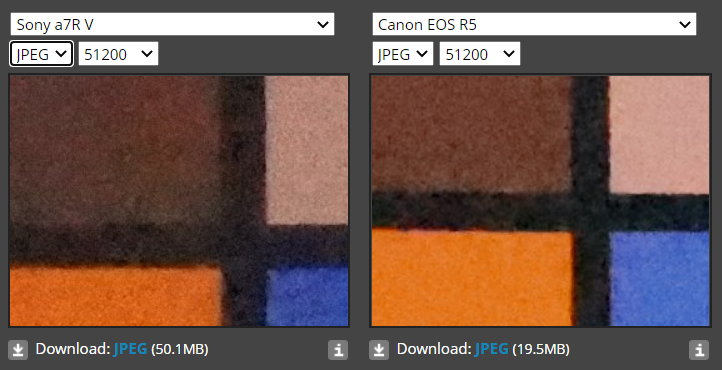
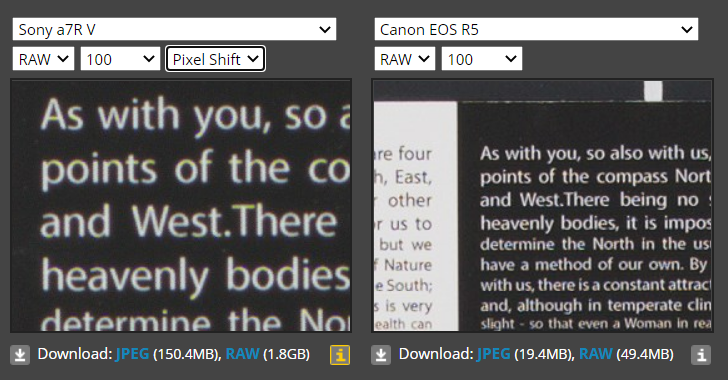
Sony A7R V camera image quality compared to Canon R5. Take a look at the image quality test between both cameras. Let’s do two HIGH ISO tests first then we will compare the details-capturing ability, its clearly visible that the Canon R5 is able to preserve more details compares to the Sony A7R V. We know that a professional will never use ISO 51200 in their camera. We are using such a high ISO range to show up the difference between the two.
So, from an initial set of comparison of the images of the two we can say that the Canon R5 camera is more recommended for uncontrolled light environments.
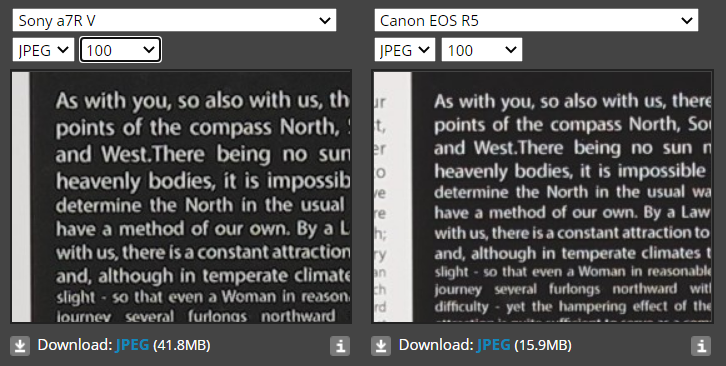
Sony A7R V is able to grab more details at base ISO, but the difference is only visible when viewed at 100%. The difference is quite logical since the Canon R5 camera features a 45MP Full-Frame CMOS Sensor and the Sony A7R 5 camera uses 61MP Full-Frame Exmor R BSI CMOS Sensor. So, here we are witnessing the difference in the details capturing ability of both cameras.
Sony A7R V Pixel shift mode 240.8MP
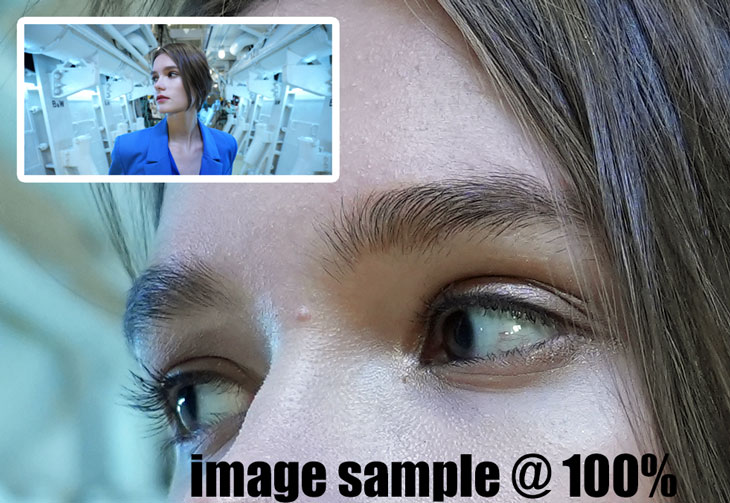
When you will use the Pixel shift mode 240.8MP, of ur Sony A7R V camera, you get an enormous amount of details . As you can see in the image below. The file size is also incredible jpeg is approx 150MB and the RAW is approx 1 GB.
Who Will use this mode?
If you are a studiographer or working with lights, then undoubtedly the Sony A7 R V is an amazing option for you.
Best Camera for Photographers
If you are into Wildlife and sports then you should get the Canon R5 Camera. Since as you know the Sony A7R V is limited to 10FPS mode at the same time the Sony third-party lenses are also limited to a 15FPS limit. So, if you are into sports and wildlife then the only option is Canon R5 (yes Canon RF mount is locked, but the Canon old L Series DSLR lenses support burst speed up to 30 to 4 Fps.)
Feeling of ecstasy with A7R V possible
If you are not connected to Sports and Wildlife. The most recommended camera will satisfy pixel craving and if you use the pixel shift mode then the result will give you goosebumps and u will feel a state of complete ecstasy within yourself. That’s the most perfect camera sony ever created for pixel peepers like us.
We have created a list of possible Sony Upcoming Cameras 2023. The list is based on the scheduled announcement timeline of the cameras as well as the latest rumors we have on the web.
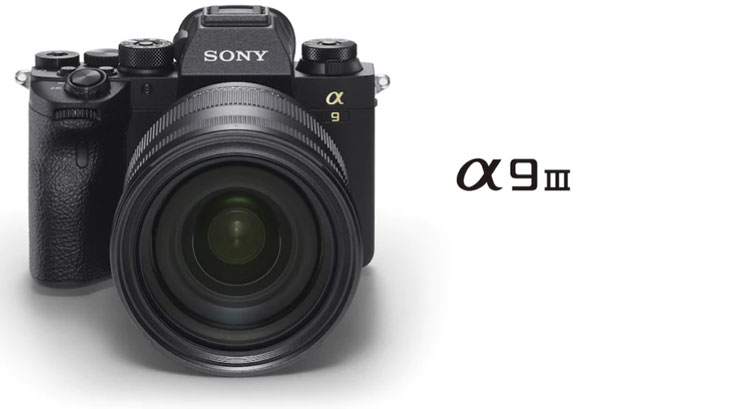
Sony A9 III was scheduled to arrive in Q3 of 2021, but the camera was delayed due to a chip shortage. Even in 2022, the A9 III was not able to make its space on Sony’s list. And now its announcement is overdue, and we are expecting that Sony A9 III camera is expected to arrive in Q2/Q3 of 2023.
As usual, the name of the camera isn’t that confirmed but we are expecting the arrival of the Sony A6600 successor.
Sony A7000 Rumored Specification
26.1MP APS-C BSI CMOS Sensor
BIONZ XR & AI Processing Unit
AI-Based Real-Time Tracking AF System
UHD 4K up to 60p (uncropped)
S-Cinetone
S-Log3, 4:2:2 10 Bit internal
8-Stop 5-Axis Image Stabilization
updated Quad-VGA OLED Tru-Finder EVF 3.69m-dot resolution for bright, clear viewing in high detail
3. Sony A6400 Sucessor
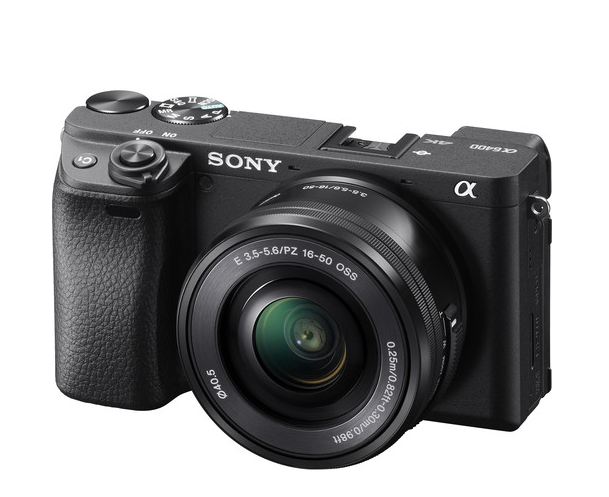
The Sony A6400 camera was announced back on Jan 2019, almost +2 years and we are expecting an update from Sony. Although we have received the Sony A6400 successor’s rumored specs in the past, as usual, take it with a grain of salt
Just like the Sony A7 IV, we will have the same 33MP Sensor inside the Sony A7 C mark II camera, but unfortunately just like the Sony A7 IV the Sony A7C Mark II camera will arrive at a higher price tag.
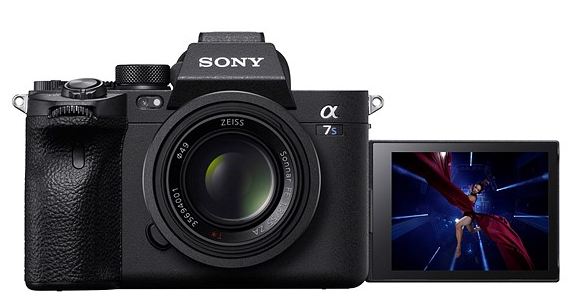
As per the latest rumors we have the Sony A7S IV Camera will arrive in Q4 of 2023. Based on the rumored specs we have we can expect a introduction of a 24.2 MP CMOS Sensor with enhanced video core specification.
Sony A7S IV Rumored Specification
24.2 MP Full-Frame Exmor CMOS Sensor
BIONZ XR & AI Processing Unit
Dual Gain ISO / Timecode Support
Internal UHD 4K60 & 1080p 240 Recording
S-Log4 Gamma and Display Assist Function
5-Axis SteadyShot INSIDE Stabilization
3.68m-Dot EVF with 120 fps Refresh Rate
3.0″ 1,228,800-Dot Tilting LCD Monitor
Up to 10 fps Shooting, ISO 100 – 204800 [with firmware 0.0]
Built-In Wi-Fi with NFC
Dual UHS-II SD Card Slots
These are the set of Mirrorless cameras expected to arrive in the year of 2023. We will update this list regularly as per the set of information we get via online websites or sources of rumor mills.
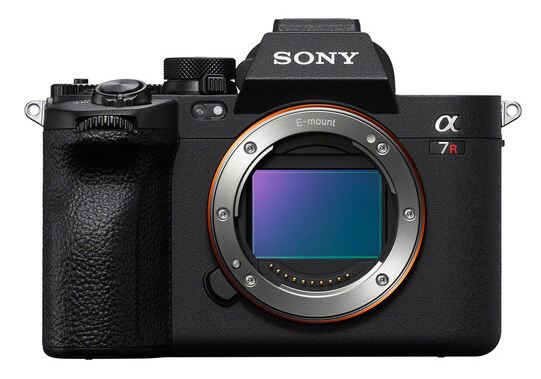
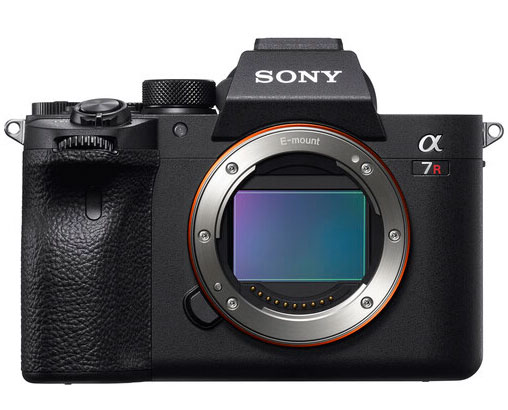
Sony A7R V Teaser – Finally we have the Sony A7R V teaser. The official announcement is expected on October 26, 2022.
Sony A7R V Rumored Specification
Same 61MP sensor because all the power goes to the new processor.
TOTALLY New Autofocus system with AI deep learning
8k 24p (cropped)
4k60p 4k24p (full readout)
heat sink design of the Sony A7sIII (up to 30min 8K recording without overheating)
S cinetone is available
8 stop IBIS
Fully articulating LCD screen
The body looks like a mix between the Sony A7sIII and Sony A7IV.
Announcement October 26
First, we will see the 8k video recording capability in the A7R series camera. And not only that the camera also features a newly developed mechanical Image stabilization unit that compensates for camera shakes up to 8 Stops.
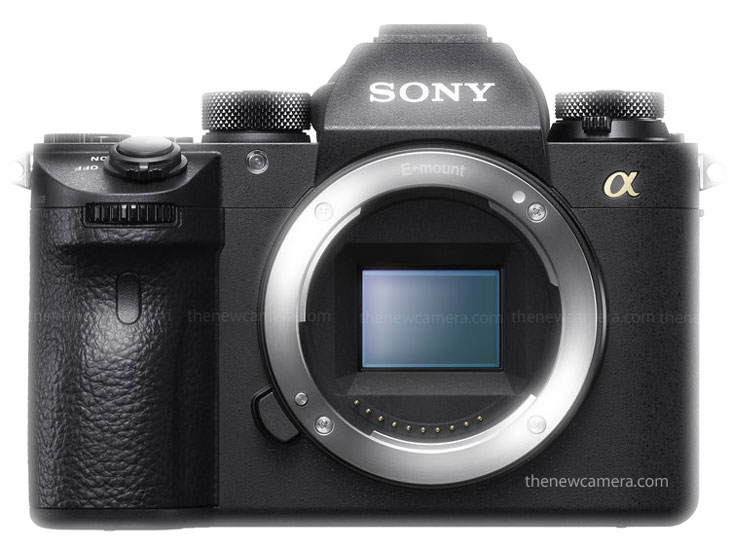
According to the latest rumors we have Sony A7R V is rumored to arrive on Oct 26, 2022. The sensor is said to be the same sensor as we have seen in the Sony A7R IV camera.
Sony A7R V Rumored Specification
Same 61MP sensor because all the power goes to the new processor.
TOTALLY New Autofocus system with AI deep learning
8k 24p (cropped)
4k60p 4k24p (full readout)
heat sink design of the Sony A7sIII (up to 30min 8K recording without overheating)
S cinetone is available
8 stop IBIS
Fully articulating LCD screen
Body looks like a mix between the Sony A7sIII and Sony A7IV.
Announcement October 26
First, we will see the 8k video recording capability in the A7R series camera. And not only that the camera also features a newly developed mechanical Image stabilization unit that compensates for camera shakes up to 8 Stops.
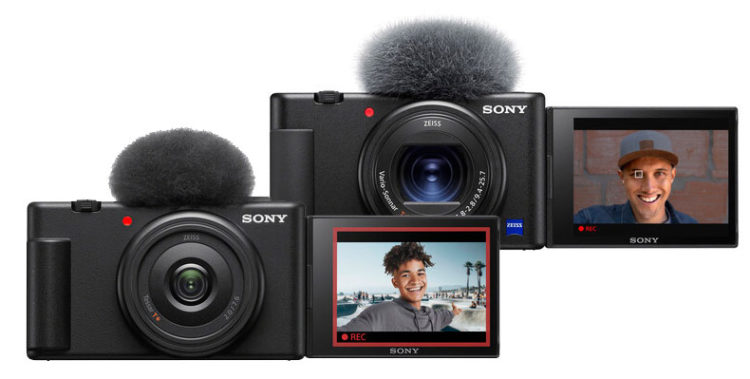
Sony ZV-1F vs Sony ZV1 – The Sony ZV1F camera is $250 cheaper than the Sony ZV1. The biggest noticeable difference is the lens of the and the HYBRID AF SENSOR inside the ZV1 camera. With the Sony ZV1F, we are getting a 20mm prime lens and with the Sony ZV1, we are getting a 24-70 eg zoom lens. So, of course, you will lose some flexibility u have in the Sony ZV1 camera, but at the same time, you will gain a little bit more wide-angle coverage which is highly important when you are creating content with the camera, for which it is made. For the first time in a Sony vlogging camera, we are about to witness a cold shoe, it can only act as an external mic holder but it doesn’t have any active contacts inside it.
1. Sensor Details
Sony ZV-1F
Sony ZV1
Sensor Resolution
Effective: 20.1 Megapixel (5472 x 3648)
Effective: 20.1 Megapixel (5472 x 3648)
Aspect Ratio
1:1, 3:2, 4:3, 16:9
1:1, 3:2, 4:3, 16:9
Sensor Type
13.2 x 8.6 mm (1″-Type) CMOS
1″-Type CMOS
Image File Format
JPEG
JPEG, Raw
Image Stabilization
Digital
Digital, Optical
we have two different variations of Sony’s 1-inch sensor being used in Sony ZV-series compact cameras, the first one of the CDAF sensor being used in the ZV-1F camera, and the other variation of Sony compact the ZV-1, which uses HYBRID CMOS AF sensor, comes at a higher price.
Recommendation
So, the autofocusing performance of the camera upscales the video recording performance to the next level, so if ur able to upscale your budget and get the Sony ZV1 camera you must get that.
Yes, we do have all the fancy Auto Focus modes we have witnessed in the ZV1. But as usual, the hardware is missing (no active Hybrid AF points). Despite all the -ve things, we do have some good news in the AF department. At least the Eye AF mode of the camera works well and tracks AF all the time.
2. Optical Zoom / Prime Lens
Sony ZV-1F
Sony ZV1
Focal Length
7.6mm (35mm Equivalent Focal Length: 20mm)
9.4 to 25.7mm (35mm Equivalent Focal Length: 24 to 70mm)
Digital Zoom
4x Maximum digital
2.7x (16.3x digital)
Maximum Aperture
f/2
f/1.8 to 2.8
Minimum Aperture
f/8
f/11
Focus Range
2″ to Infinity / 5 cm to Infinity
f/11
Optical Design
6 Elements in 6 Groups
10 Elements in 9 Groups
3. Missing Mechanical Image Stabilization
Sony ZV1-F camera doesn’t have any kind of Mechanical IS, which includes Sensor shift IS and OSS [Lens based]. Not only that Gyro IS is also missing, but the good news is we are getting at least EIS [electronic Image stabilization] from the camera. And when you implement it you have to face a 1.25X crop which turns your 20mm lens into a 25mm lens. That’s the only major positive thing I like inside ZV1-F is even after implementing EIS feature the widest coverage is similar to the ZV1 24mm focal length.
4. Exposure Control
Sony ZV-1F
Sony ZV1
ISO Sensitivity
Auto, 125 to 12800 (Extended: 80 to 12800)
Auto, 100 to 12800 (Extended: 64 to 25600)
Shutter Speed
Electronic Shutter
32,000 to 1/4 Seconds in Program Mode
32,000 to 1/4 Seconds in Manual Mode
32,000 to 1/4 Seconds in Aperture Priority Mode
32,000 to 1/4 Seconds in Shutter Priority Mode
Mechanical Shutter
1/2000 to 30 Seconds
1/2000 to 30 Seconds in Bulb Mode
1/2000 to 4 Seconds in Auto Mode Electronic Shutter
1/32000 to 30 Seconds
1/32000 to 4 Seconds in Auto Mode
As you can see the Sony ZV1-F camera is limited to 29 Min recording timeline and the frame rates are also limited, it a clear indication that Sony not only wants to increase its consumer base they also want to save the ZV1 sales, by cutting down some basic features from the camera.
Sony ZV-1F
Sony ZV1
Recording Modes
XAVC
UHD 4K (3840 x 2160) at 24.00p/25p/29.97p/50p/59.94p [60 to 100 MB/s]
Full HD (1920 x 1080) at 24.00p/25p/29.97p/50p/59.94p/100p/119.88p [16 to 100 MB/s]
MP4/XAVC S
UHD 4K (3840 x 2160) at 23.98p/25p/29.97p [60 to 100 Mb/s]
Full HD (1920 x 1080) at 23.98p/25p/29.97p/50p/59.94p/100p/119.88p [16 to 100 Mb/s] AVCHD/MP4
Full HD (1920 x 1080) at 50i/59.94i [17 to 24 Mb/s]
Buy Canon Lenses, Buy Music CD or Digital Camera at amazon it helps this site, and you do not pay anything extra, it is just a way to help support this site.
New Camera Website, we list all type of new camera information, price review and all type camera rumors, subscribe us or follow us via twitter or facebook.
Disclaimer: We have attempted to select useful information to include on New Camera, and to ensure that the resources we have included on the site -- as well as the way we have described them -- are accurate, fair, and balanced. However, we make no claims, warranties, or other representations concerning the accuracy, completeness, or utility of the information provided, or concerning the abilities or performance of the organizations, agencies, companies, and other resources presented through New Camera