Canon finally announced the Canon R50V camera. The camera is composed of almost the same core specifications that we have seen in the Canon R50 camera, but it is more focused on content creators. It is a direct competitor to the Sony ZV-E10 camera, so it carries all the possible goodness that we have already seen in the Sony ZV-E10 as well as the Canon R50 camera.
The camera features a 24-megapixel CMOS Dual Pixel autofocus sensor with a DIGIC X image processor. The camera is able to record 4K 30 FPS uncropped videos and Full HD videos up to 120 frames per second. You can also record 4K videos up to 60 frames per second with a 1.5x crop. 10-bit recording is available but limited to HDR PQ mode. A headphone port is also available in this camera to monitor your audio recording, along with an upgraded microphone for better audio capture.
The camera will be priced at $649 for the body only, or $849 for the kit with the RF-S15-30mm, and will start shipping in April 2025.
Canon RV Camera available at B&H Store | Adorama.com | amazon.com
For All Creators: Canon’s New PowerShot V1 and EOS R50 V Expand EOS/PowerShot V Series
MELVILLE, N.Y., – March 26, 2025 — Canon U.S.A., Inc., a leader in digital imaging solutions, answers the needs of video creators with the new PowerShot V1 and EOS R50 V. Both cameras are part of Canon’s growing EOS/PowerShot V Series which seeks to help all creators, including cinema, livestreaming, vlogging, and VR, heighten their visual story telling.
Canon Reinvigorates Point-and-Shoot
If you’re a creator, you want the ability to pursue your own visual expression without compromising quality. Something lightweight and compact that can be used anytime or anywhere to lift your vision forward—a camera that works with you. Designed with a smart and modern concept, the PowerShot V1 is a reliable partner boasting key features including:
A newly designed grip created for both normal and selfie shooting.
Ultra wide-angle zoom lens—approximately 17-52mm for movie recording and 16-50mm/F2.8-4.5 for still imagery.
New 1.4 type sensor with approximately 22.3 megapixels for stills.
Dual Pixel CMOS AF II for PowerShot for improved AF speed and subject detection tracking performance when compared to the PowerShot G7 X Mark III.
A cooling fan inside the body to help enable longer video recording.
A still image/movie shooting switch for quick and easy transition—the first in a PowerShot camera.
Continuous still shooting at up to approximately 30 frames per second, a mechanical shutter with a maximum speed of 1/2000 seconds, and an electronic shutter with a maximum shutter speed of 1/16,000 seconds.
The Canon PowerShot V1 is also designed with workflow top of mind. Creators can leverage high quality video calls and livestream on a PC with a single USB cable, and the camera works intelligently with smartphones—both wired and wirelessly—via the Canon Camera Connect app.
Cinema Quality in the Palm of Your Hand
A movie-focused, high-performance camera that can fit in the palm of your hand? Yes—it does exist, with the EOS R50 V. The legacy of Cinema EOS technologies is splashed throughout, making EOS R50 V one for all creators who have high artistic ambitions to take to the next level. Key features include:
Video-focused design elements such as a livestream button, movie recording button in the front of the camera, and a tripod screw hole for vertical shooting.
Dual Pixel CMOS AF II for quiet and smooth AF.
Ability to shoot 4K crop at 60fps and YCC 422 10bit.
Compatibility with the newly launched RF-S14-30mm F4-6.3 IS STM PZ, the first RF-S lens with built-in power zoom.
Four different methods of livestreaming: UVC/UAC, HDMI, Camera Connect, and Live Switcher Mobile multi-camera.
APS-C sensor and DIGIC X image processor for rich bokeh.
Image creation consistent with Cinema EOS with five presets for editing, such as Canon Log 3.
Creators are not one-size-fits-all, and EOS R50 V was built through creator feedback to make content creation easier. With modern design elements, customization options, and a new lens bundled together, the EOS R50 V is destined to be in your gear bag.
Pricing and Availability
The Canon PowerShot V1 is scheduled to be available in April 2025 for an estimated retail price of $899.99.* The Canon EOS R50 V is scheduled to be available in April 2025 for an estimated retail price of $649.99* for the body only and $849.99* with the RF-S14-30mm F4-6.3 IS STM PZ. For additional information, please visit usa.canon.com.
Sony has finally announced the VENICE Extension System Mini. The main highlight is its form factor—as usual, it is very portable and able to record 8K videos, weighs approximately 0.54 kg, and is very easy to carry for some special kinds of shoots where portability is the main factor.
This system Mini is compatible with VENICE 2 6K and 8K models, and most importantly, the VENICE 2 6K model is now able to capture 8K resolution with this system, although it will require a system software update.
The improvement that has been made in the System Mini is that you are now getting approximately 4.5m (14 feet) of cable, allowing you to move a greater distance while keeping the head unit of the camera along with the lens only.
The System Mini is based on E-mount, and you can easily use E-mount lenses. It also supports hybrid autofocus with Eye AF tracking. Additionally, you can use PL-mount lenses with the help of an adapter, which in turn also transfers the lens metadata through the input port.
The VENICE 2 System Mini will be showcased at the upcoming NAB 2025 show in Las Vegas, beginning on April 6, 2025. The camera is now available for pre-order at B&H stores.
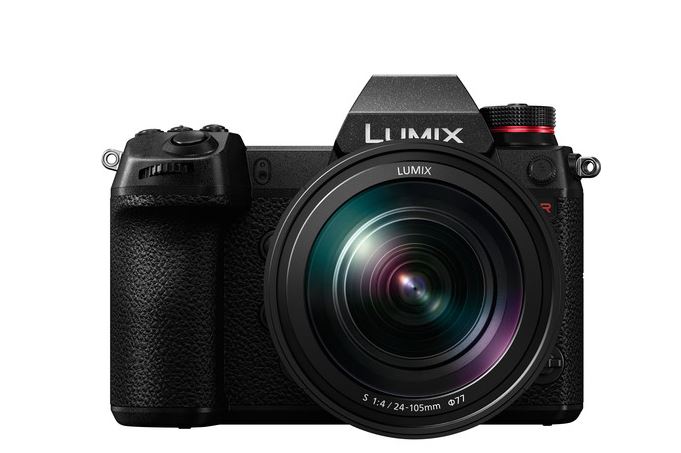
The LUMIX DC-S1R Mark II is a mirrorless camera from the LUMIX S series, announced at the end of February 2025. It is equipped with a newly developed 44MP BSI sensor and a processor that supports high-speed processing using L2 technology. It supports 40 frames per second continuous shooting and 8K 30p video recording. As an alternative to expensive stacked CMOS sensors, it has high-speed performance.
At the same time, it is significantly smaller and lighter than the previous model, and the selling price, at least in North America, is cheaper. Furthermore, it has a high-resolution EVF and a tilt + vari-angle monitor, but the body size is close to that of the S5II.
Key points of Panasonic S1R II Test Results
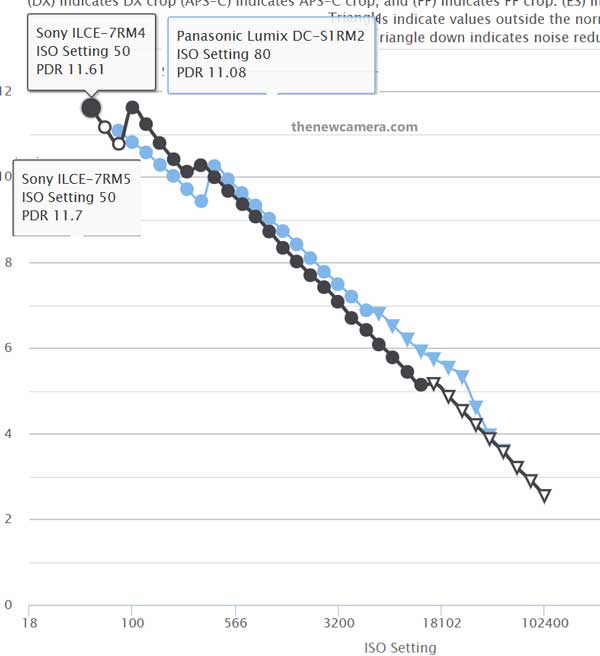
According to the Photons to Photos test results, NOISE REDUCTION is applied to RAW from ISO 6400 onwards, which results in higher test scores, but caution is advised if you value detail over noise. The results are very similar to DPReview’s studio scene test.
On the other hand, unlike the previous model, which applied noise reduction even at base ISO, it seems that the noise reduction process is not applied at low ISOs. If you are shooting stars, etc., it seems that there will be no problem if you keep the ISO up to around 5000.
While the peak values are lower than other high-resolution sensors, the difference in performance is not surprising, and in comparison, the results are better from ISO 6400 onwards (thanks to noise reduction).
Maximum PDR
Low Light ISO
Low Light EV
S1RII
11.08
8139
11.35
S1R
11.37
4522
10.50
α7R V
11.70
5244
10.71
α1 II
11.61
5768
10.85
α1
11.36
5215
10.70
R5 II
11.45
4846
10.60
R5 II ES
10.92
4392
10.46
Z 7II
11.60
4157
10.38
Z9
11.30
4144
10.37
Please note that the DC-S1R only performs better where the noise reduction is performed on the RAW data.
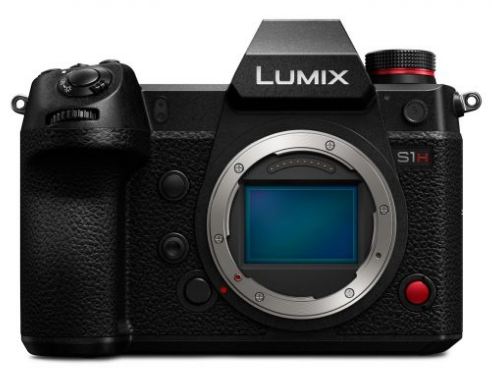
Panasonic S1H camera gets a firmware update, the main update is minor, the camera adds a popup message when using a Panasonic collapsible lens to alert users, and improves the overall stability of the response speed of the camera.
One of the best budget cameras to record 6K open-gate recording, earlier or when it was announced, there was a 4K 15-minute recording limit in the camera, and for which it was criticized at the time of announcement. But Panasonic listened to us, and on October 9, 2024, they released their first firmware update, version 1.1, and they removed the recording limit. Now, it does not have any recording limit in 4K 30fps mode or even in open-gate recording as long as your memory card isn’t full or the camera doesn’t face any kind of overheating issues.
But again, practically, the overheating performance of this camera is very good, and users are quite happy with the usage of this camera. Just keep in mind the camera is using the first generation of hybrid autofocus similar to what was used with the Panasonic S5, S5II, and S5IIX, so autofocus tracking is not on par with Canon and Sony cameras.
In the latest firmware update, version 1.3, they have again tried to optimize the overall operational speed of the camera. Additionally, they fixed a problem where when connecting to a Wi-Fi network, the password was always required. Now, it has become a one-time entry, so overall connectivity performance has been improved along with the operational speed of the camera.
– When directly connecting the camera and smartphone via Wi-Fi, the connection has been changed to always require password authentication. (The [Wi-Fi Password] menu has been removed.)
– The [TKIP] encryption method is no longer supported when connecting to Wi-Fi via an access point.
– The [No Encryption] option in network authentication is no longer supported when connecting to Wi-Fi via an access point.
– The image transfer feature to PC via Wi-Fi has been removed. (Only European/Ukrainian models)
Other improvements
– The startup speed when powering on has been improved.
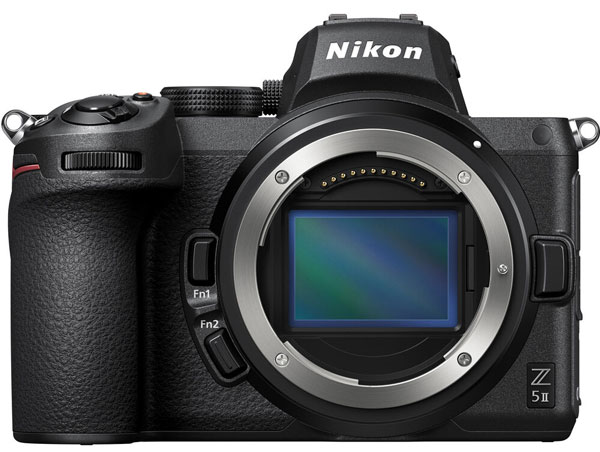
The Nikon Z5 II announcement will be next week, as per our latest set of rumors. It is described as a Mini Z63 by those who have used this camera. As of now, we all know that the Nikon Z52 camera comes with a 24-megapixel BSI CMOS sensor, as seen in the Nikon ZF camera, with improved sensor-shift image stabilization as well as the Expeed 7 image processor.
Finally, we have the Fuji X-E5 camera from Fuji on summer, now we have a bunch of more Fuji cameras waiting to be announced next, let’s explore the list of the upcoming Fuji Cameras.
Upcoming Half-Frame Camera with a 1-Inch Sensor
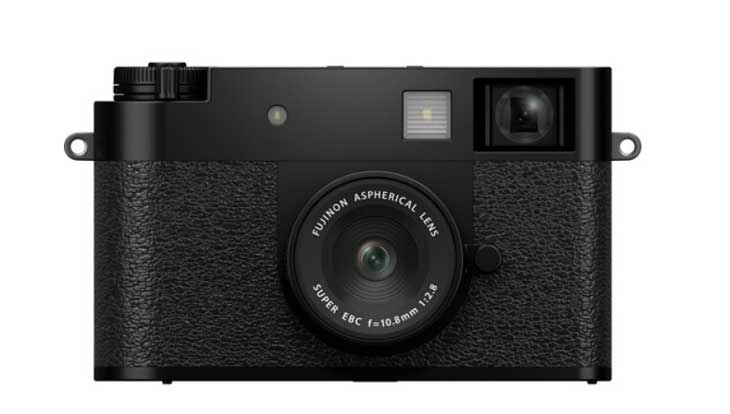
Just before the Fuji X-E5 in 2025, the X-Half camera also becomes official, now let’s explore in the table below the list of cameras announced and expected to arrive in 2025.
Wrap-Up of 2025 – 2026 Announcements
So now, that wraps up the 2025 announcements, and now we will move forward and talk about the possibilities of 2026.
elow is the corrected table, organized by year, showing announced and expected Fujifilm cameras based on historical patterns and current information.
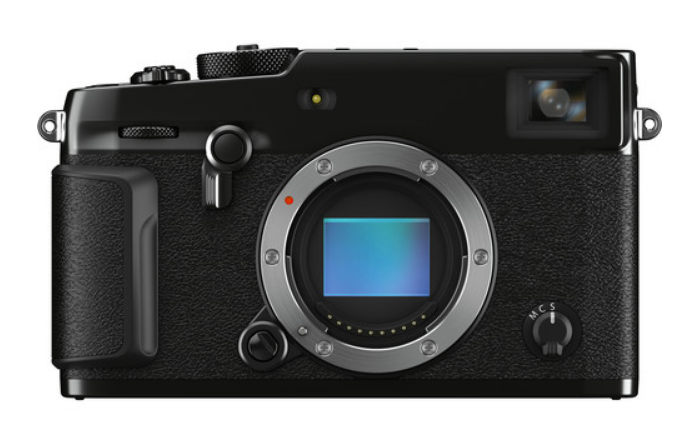
Previous reports suggest that the upcoming X-Pro series camera will be called X-Pro 6 since Fuji will sync the name of the X-Pro series camera with others in 2026. It has been almost six years since the Fuji X-Pro 3 was released. The camera was announced in October 2019, and now it feels too old. Fuji has taken too much time, considering that even flagship cameras from other brands receive regular updates every four to five years. However, we have been waiting for more than six years now. Read full article here
We got confirmation from the general manager of Fuji Film Professional Imaging Group that the Fuji X-Pro 4 is under development. In a recent interview with PetaPixel, he clearly stated that.
In the recent interview, the general manager has said, “Of course, we can put the X-Processor 5 and the new X-Trans sensor in an X-Pro3 and call it X-Pro4, but that’s boring,” Igarashi says.
That clearly indicates they are either planning a brand new sensor for the new X-Pro series. Since it’s a flagship series, it may introduce a new X-Trans 6 sensor or X-Processor 6 in the upcoming X-Pro 6 camera.
And if this happens, then Fuji will allow the Fuji X-Pro 6 camera to gain as much market share as possible, and in that time span, they will not announce another camera with the same sensor in a lower price range (peak sales period of a camera is generally considered for 6 to 7 months).
So, if Fuji X-Pro 6 arrives with a new X-Trans VI sensor, then for sure Fuji X-T6 scheduled announcement plan will get delayed.
Fuji X-T6 to be Delayed
The Fuji X-T5 camera was announced in November 2022. Based on the online pattern of the X-T series camera, which has been quite consistent for the past 6 to 7 years, the next X-T series camera, the Fuji X-T6, will be announced in late 2025 or early 2026.
Yes, there is a high possibility that we may have the Fuji X-T6 camera next, if Fuji goes as per schedule. But, chances are low, since they have to protect the sales of the recently announced X-E5 camera, and on the other hand, do they have to keep new pieces of technologies like a new sensor and image processor ready for X-PRO and X-H series announcement in 2026. So, even if X-T6 arrives in 2025, it will be a subtle update. Otherwise, the best thing for Fuji is to break the announcement pattern or update cycle of 33 months and announce it sometime in Q4 of 2026 or Q1 of 2027 with a major update.
Fuji X-E5 has been announced recently, which falls almost in the same price range X-T series camera (+ $200 for body), Fuji will never allow itself to cannibalize the sales of other models by announcing the X-T6 with enhanced core specification, which almost matches the X-H2 under budget.
Recent GFX Camera Announcements
Recently, we witnessed the announcement of the GFX 100 RF camera as well as GFX Eterna, the medium-format cinema camera. So now, Fuji has introduced both a compact camera with a 28mm F4 fixed lens for photographers and a cinema camera. Both of them use the102-megapixel medium-format sensor.
No Further 102MP GFX Announcements for 2026
That means there will be a pause in further GFX series announcements for7 to 8 months. So, for next year, we are certain that no further 102-megapixel medium-format camera is coming.
Before We Move Forward to 2026, let understand the development and announcement pattern of X-Trans CMOS sensors
If we look at historical trends, Fuji uses flagship models to introduce new new sensor generations, like the X-H or X-Pro series, such as X-Trans V with X-H2S and X-H2. Thus, it’s plausible that X-Trans VI could appear in a new X-Pro 6 or X-H3 or X-T6, expected in early 2026
Generation
Introduction Date
First Camera
X-Trans I
January 9, 2012
X-Pro1
X-Trans II
January 7, 2013
X100S
X-Trans III
January 15, 2016
X-Pro2
X-Trans IV
September 6, 2018
X-T3
X-Trans V HS
May 31, 2022
X-H2S
X-Trans V HR
September 8, 2022
X-H2
X-Trans VI
Predicted: Late 2025 – Early 2026
Fuji will use Flasghip models like X-Pro6, X-T6 or X-H3
HS for speed and HR for resolution
Research suggests that Fujifilm’s X-Trans VI sensor is likely to arrive in late 2025 to early 2026, based on historical intervals of 2.5 to 3 years between generations and the introduction of X-Trans V in 2022
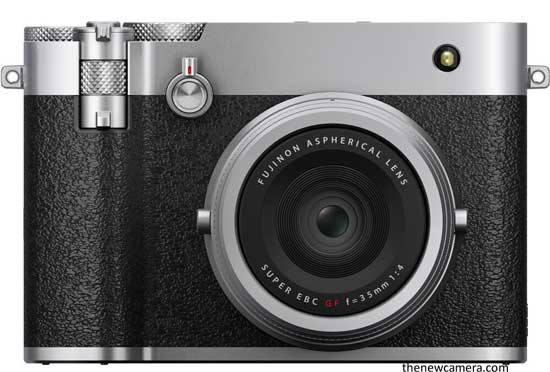
Fuji Fullframe Compact Camera Fuji FX 100 with 40mm F2 Lens – A Leica Q3 Compatitor
Back in June 2025, Japanese website ASOBINET spotted something intriguing in Fujifilm’s patent filings: alongside new GF 20mm f/2.8 and XF 15mm f/2.8 designs, there was a 40mm f/2 lens specifically laid out for a full-frame sensor. That little detail is probably the strongest hint yet that Fuji is toying with the idea of a full-frame compact. A 40 mm normal-view optic makes perfect sense here—it’s roughly the classic field of view you’d get with Leica’s Q3 at 43 mm f/2.
As recently as 2023, during INTERVIEWS, they have CLEARLY SAID that they have no plans to enter the crowded full-frame interchangeable-lens mirrorless market dominated by Canon, Nikon, and Sony. Their reasoning is clear: APS-C (X Series) offers a compact, cost-effective alternative, while medium format (GFX Series) provides superior resolution and dynamic range for professionals. Building a FULLFRAME interchangeable LENS system from scratch means designing new mounts and glass, then convincing photographers to invest in yet another lineup, possibly at the expense of their current X and GFX customers. It’s a risky move that could or may end up cannibalising their lineup of GFX and Z series cameras.
That said, Fujifilm isn’t ruling out playing in the full-frame sandbox entirely—a fixed-lens full-frame compact camera, as we have discussed above the Fiji FX100, would not contradict Fujifilm’s stance. It would be a distinct product category, akin to the Leica Q3 (60MP full-frame sensor, 28mm or 43mm f/1.7-2 lenses) or Sony RX1R II (42MP full-frame, 35mm f/2 lens): FX100 will let them dip a toe into full-frame territory without overhauling their entire lens portfolio
Buy Canon Lenses, Buy Music CD or Digital Camera at amazon it helps this site, and you do not pay anything extra, it is just a way to help support this site.
New Camera Website, we list all type of new camera information, price review and all type camera rumors, subscribe us or follow us via twitter or facebook.
Disclaimer: We have attempted to select useful information to include on New Camera, and to ensure that the resources we have included on the site -- as well as the way we have described them -- are accurate, fair, and balanced. However, we make no claims, warranties, or other representations concerning the accuracy, completeness, or utility of the information provided, or concerning the abilities or performance of the organizations, agencies, companies, and other resources presented through New Camera