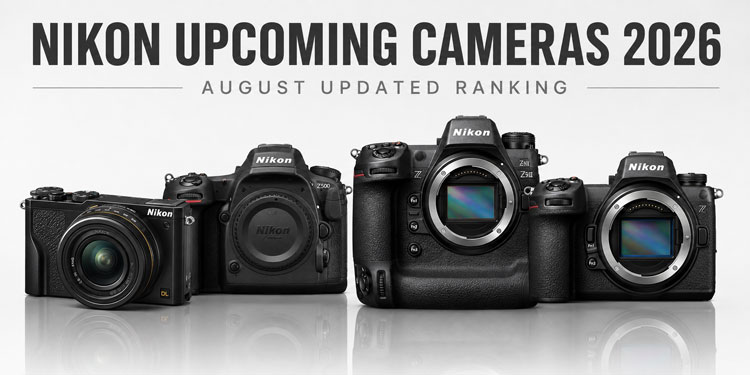
Nikon has kept relatively quiet in the first half of 2026. We have already witnessed the announcement of one of the most popular models, the Nikon Z5 II, along with the Nikon Z50 II and the Nikon ZR. All these models were announced back in 2025, and the company has also focused more on lenses, firmware updates, as well as the growth and development of its Z Cinema ecosystem. At the same time, many photographers who have been connected with Nikon for a very long time are asking the same question: What comes next?
Instead of chasing every rumour, this article examines three clearer signals:
- Historical refresh cycles of existing Z-series lines
- Competitive pressure from Canon and Sony
- Internal product strategy constraints (especially cannibalisation risk)
Taken together, these factors point to a more logical ranking of Nikon’s near-term priorities than pure speculation alone.
1. The Refresh Cycle Reality
That’s the most important part: the refresh cycle. We have to understand that all these camera makers refresh their products based on a refresh cycle. At the very same time, not only is the refresh cycle important, but the market response to a specific model also decides the lifespan of a particular camera series.
We all know the Nikon Z7 II is the only high-resolution model in Nikon’s lineup competing with the Sony A7R series as well as the Canon R5 series. Despite that fact, the Nikon Z7’s sensor resolution has now been surpassed by other cameras from the same brand, like the Nikon Z9 and Nikon Z8, while competitors are now using much more advanced higher-resolution sensors.
So, the Nikon Z7 II is outdated, despite Nikon’s typical refresh cycle of 3.5 to 4 years. It has now been approximately 5 years and 10 months since its announcement, and we are still waiting for an update. So, the Nikon Z7 is one of the strongest contenders for Nikon’s 2026 camera lineup, based on the company’s refresh cycle.
Here is the current status of the major lines as of August 2026:
| Camera Line | Previous Model | Announcement Date | Time Elapsed (as of Aug 2026) | Status |
| High-resolution (Z7) | Z7 II | October 2020 | 5 years 10 months | Most overdue |
| Flagship (Z9) | Z9 | October 2021 | 4 years 9 months | Approaching upper limit |
| Entry APS-C (Z30) | Z30 | June 2022 | 4 years 1 month | Entering normal window |
| Compact Pro (Z8) | Z8 | May 2023 | 3 years 3 months | Still normal |
| Retro Full-Frame (Zf) | Zf | September 2023 | 2 years 10 months | Early |
| Entry Full-Frame (Z5) | Z5 II | April 2025 | Already refreshed | Completed |
| Upper APS-C (Z50) | Z50 II | November 2024 | Already refreshed | Completed |
The standout figure is the Z7 line. At nearly six years without a successor, it is the longest-running gap in the current Z system. By pure cycle analysis, it is the most overdue body.
The above list that you have seen is based on the camera refresh cycle. At the same time, we also have to discuss the possibility of the arrival of other models due to the competitive pressure in the market, as well as the overall market trends.
2. Competitive Pressure Is Building in Specific Segments
Market forces are not evenly distributed. Three areas currently stand out:
High-resolution full-frame
Sony continues to push the high-resolution segment hard. A new a7R-class body is widely expected in the competitive landscape. This creates natural pressure on Nikon to respond with a modern high-resolution body rather than leave the Z7 II as its only option in that category for another year.
APS-C performance
Canon’s R7 successor has faced delays and now appears more likely in Q4 of 2026 or in Q1 of 2026. This gives Nikon a potential window, but not necessarily an urgent one. A high-end DX body (often discussed as a Z500-style camera) remains strategically useful, yet the competitive heat is currently lower than in the high-resolution full-frame segment.
Premium compact / fixed-lens cameras
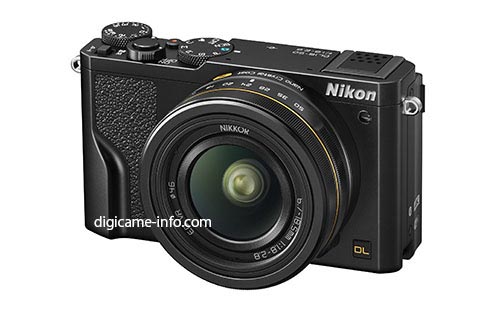
Canon is actively refreshing its PowerShot line in 2026. The broader compact camera market has shown renewed interest after several quiet years. Nikon has remained largely absent from this category since the cancelled DL series. A fixed-lens or compact full-frame model would face less internal conflict with existing ILC bodies and could address a clear market gap.
3. Product Strategy Constraints Matter
Even when a line is overdue, Nikon still has to consider internal sales dynamics.
A Z8 II arriving in 2026 would sit uncomfortably close to a future Z9 II, especially if the flagship carries significant RED-derived technology and a higher price point. Launching the more affordable high-end body first risks pulling sales away from the more profitable flagship. This makes a Z8 II in calendar 2026 unlikely from a pure business perspective.
The Z9 II itself remains a high priority, but the integration of RED technology appears to have lengthened its development timeline. A full announcement in 2026 is possible but less probable than a 2027 release, with a development teaser more likely in the second half of this year if anything happens.
In contrast, a Z7 III creates almost no cannibalisation risk with either the Z8 or Z9 lines. It targets a different buyer — resolution-focused photographers rather than speed or video-first users — and fills the longest-standing gap in the lineup.
4. Updated List of Upcoming Cameras 2026 – 2027
Putting the three factors together produces a clearer shortlist:

Z7 III (Strongest current case)
Longest overdue cycle + rising high-resolution competition + minimal internal conflict. This is currently the most logical candidate for a late 2026 or early 2027 announcement. As per the latest rumors, Nikon will bring a higher resolution sensor the the Z7 III series, probably a 61 MP sensor from Sony or a 67MP sensor from Towerjazz, Nikon has been working with 67Mp sensor Prototypes for more than 2 -3 years.
Nikon Z7 III Expected Specification
- 61 + MP FX-Format BSI CMOS Sensor
- Expeed 8
- 8K30p and 4K60p Video, 10-bit Internal, ProRes RAW
- Up to 20 fps Max Shooting
- 493-Point AF
- AI-Based Subject Detection
- 3.2″ 4-Axis Tilting Touchscreen LCD
- Dual UHS-II SD Slots
- 5 GHz Wi-Fi and Bluetooth

High-end APS-C body (Z500-style)
Clear product gap and strong user demand, especially among wildlife and sports shooters who want native DX reach. Timing is more flexible and may slip toward the end of 2026 or into 2027 depending on Canon’s moves.
Compact or fixed-lens camera
Competitive activity from Canon and a general revival of interest in premium compacts make this more plausible than it has been for years. Lower development risk and no conflict with existing interchangeable-lens models.

Z9 II
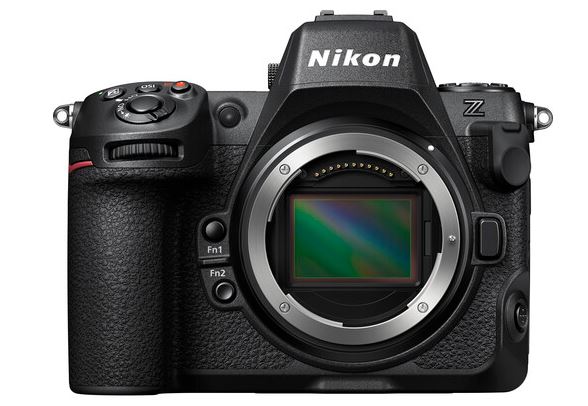
Still a major priority, but more weighted toward 2027. Development announcements remain possible in late 2026. Nikon Z9 II will get the Expeed 8 image processor, image processor will remain the same. That means we will get a massive update in the processing power of the existing Z9 camera, which will directly affect the autofocusing algorithms, specifically 3D object tracking, continuous shooting speed, video recording resolution, and frame rate. So for sure, we will have a massive update in the camera’s core specifications.
Nikon Z9 II Expected Specification
- 45.7MP Full-Frame Stacked CMOS Sensor
- EXPEED 8 Image Processor
- 8K 60p Video, 12-bit Internal, N-RAW, ProRes RAW
- Up to 30 fps Continuous Shooting (Electronic Shutter)
- 493-Point AF with Advanced AI Subject Detection
- 5-Axis In-Body Image Stabilization
- 3.2″ 4-Axis Tilting Touchscreen LCD
- Dual CFexpress Type B Slots
- 5 GHz Wi-Fi, Bluetooth, and Ethernet Port
- ISO 64-25600 (Expandable)
Z8 II
Low probability in 2026 due to clear cannibalisation risk with the flagship.
At the end
Refresh cycles, competitor pressure and product strategy do not guarantee any specific announcement date. Nikon has shown it can delay or accelerate bodies when technology or market conditions require it. However, when these three lenses are applied together, the Z7 III currently emerges as the strongest logical candidate for Nikon’s next major stills-oriented camera.
The second half of 2026 will be worth watching closely. Any development announcement, FCC filings, or unusual retailer activity around high-resolution full-frame bodies would quickly shift the probability further in that direction.
As always, official confirmation is the only definitive signal. Until then, the patterns remain the most reliable guide we have.
The article “Nikon Upcoming Cameras 2026: August Updated Ranking” was written by thenewcamera.com team at 5:52 pm, Saturday, 1 August 2026, Greenwich Mean Time (GMT)
| You can also follow us on Our Official Social Media Handles FACEBOOK | TWITTER | INSTAGRAM > get live news + Nikon Rumors 24X7
How to Buy the DJI Osmo Pocket 4P in the USA (2026 Guide)

Canon Upcoming Cameras 2026 – July Update