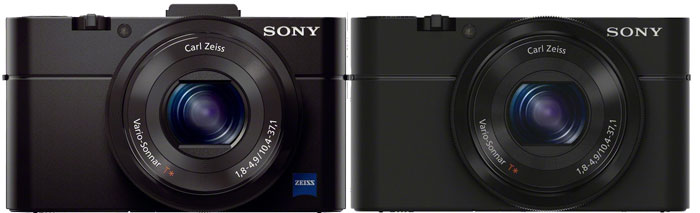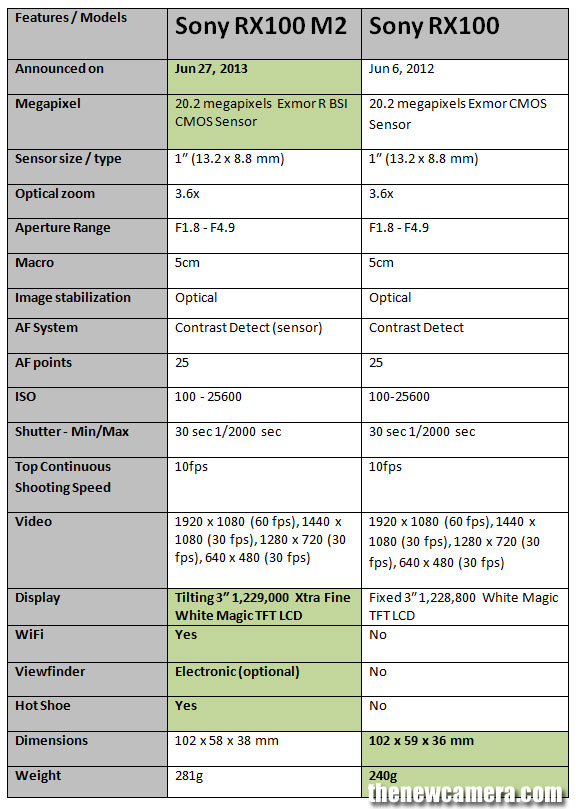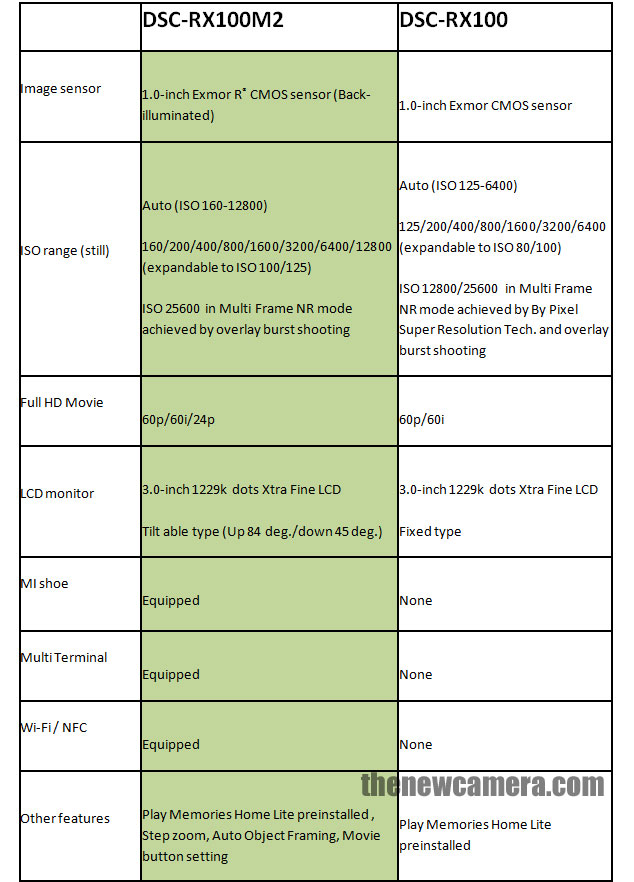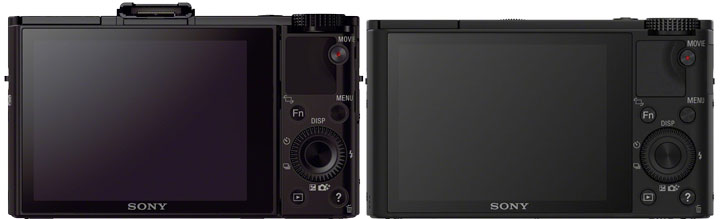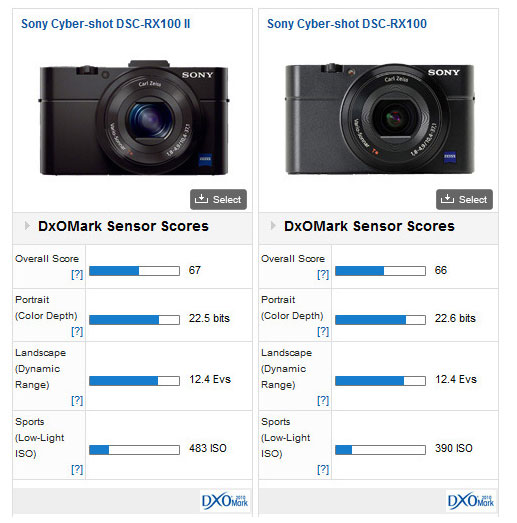
Sony claims that new BSI CMOS Sensor of Sony RX100M2 will show 40% improvement in low-light performance compared to RX100, the RX100M2 have number of improvements over the old RX100, take a look below.
Specification Comparison (Sony RX100 MII vs Sony RX100)
Major Difference Between both the models
You get tilt-able display with RX100 M2
Sony RX100 M2 show better low-light performance compared to RX100 (according to DxOMark Lab)
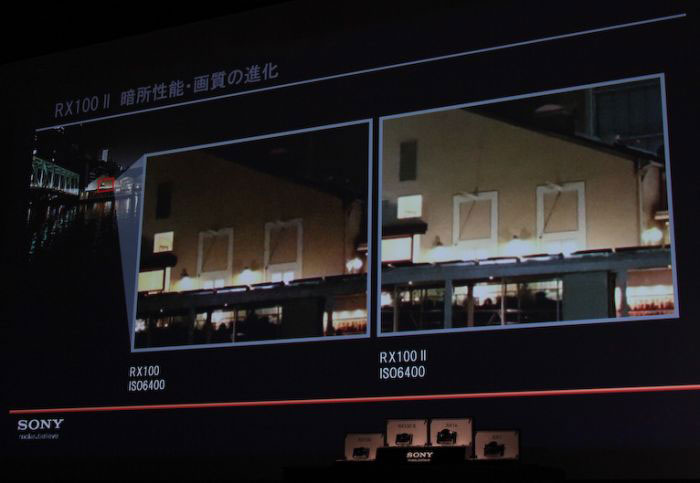
Take a look at the first High ISO test of Sony RX100M2 vs Sony RX100
image credit dcwatch
Verdict: Sony done a lot of hard work to improve its RX100 camera, With the new RX100M2 you get new sensor, improved ISO range, better video mode, Hot-shoe and WiFi. We recommend you to buy Sony RX100M2 Camera.
Buy Canon Lenses, Buy Music CD or Digital Camera at amazon it helps this site, and you do not pay anything extra, it is just a way to help support this site.
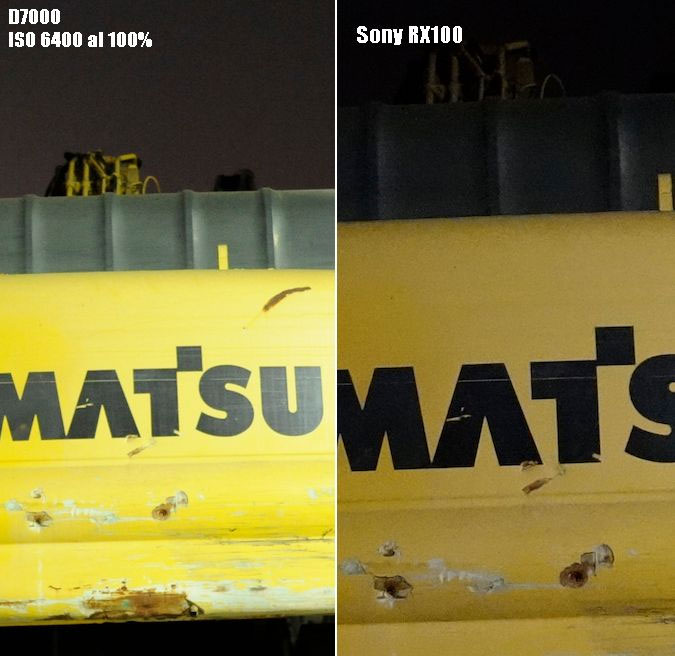
As the time changes the technology become more advance and accurate, during the Sony RX100 review thephoblographer compared Nikon D700 with RX100 at different ISO levels, the noise performance of RX100 really amazing compared to a full-frame sensor.
The Sony RX 100 features 20 Mp 1″ CMOS sensor and Nikon D700 have 12.1MP Full frame sensor.
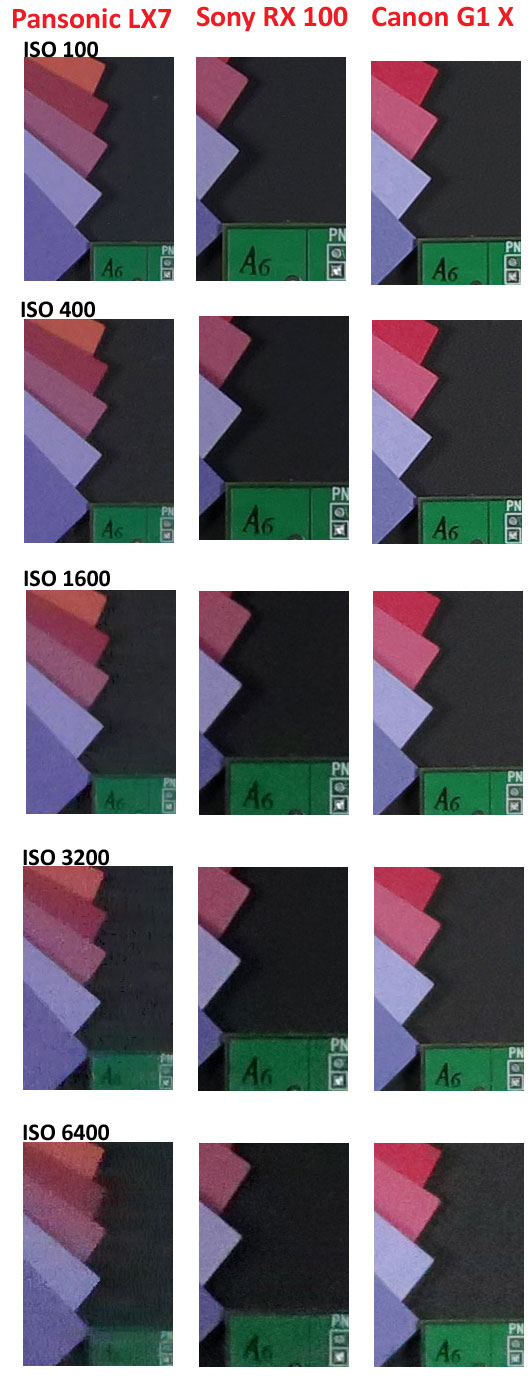
Panasonic LX7 test is done at french website focus Numerique (computer translated), we have selected three camera Panasonic LX7, Sony RX100 and Canon G1 X for comparison review.
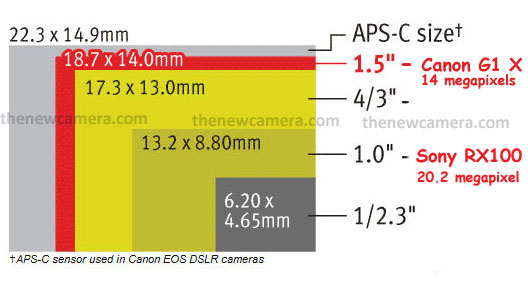
The Canon G1 X have the biggest 1.5″ (18.7 x 14 mm) sensor, after that Sony RX 100 with 1″ (13.2 x 8.8 mm) and finally Panasonic Lumix with 1/1.7″ (7.44 x 5.58 mm) sensor.
The Panasonic LX7 comes at $150 less than Sony RX 100 and approx $199 less than Canon G1 X, so we have to keep the sensor size and price difference in our mind before we see the test result.
As today many big sensor camera show overheating heating problem, the RX 100 is showing amazing performance with its 1 inch sensor, the video below shows that it records for the full 30min in 31 C and direct sunlight, most larger sensor cameras would struggle to do that.
Sony RX100 outdoor test
RX100 capturing video: 1080p60, 31 Celsius, direct sunlight, metal patio table. The overheating light came up at around 4 minutes, but, it never shut down. The camera was very hot afterwards!
Both camera are made for pro shooters, see the specification comparison review of both the compact camera below and share your though with us,
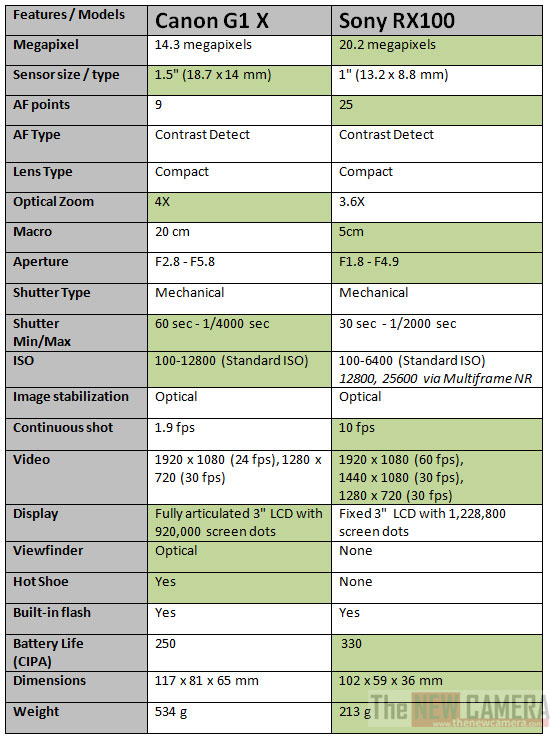
Sensor and image processor: Canon G1 X features 14 Megapixel 1.5 inch CMOS sensor and DIGIC V image processor, with the big sensor and advance image processor you get better ISO range and less noise in your images. Sony RX 100 features 20 Megapixel 1 inch sensor and latest generation of Bionz image processor, but Sony RX100 sensor is small compared to Canon G1 X.
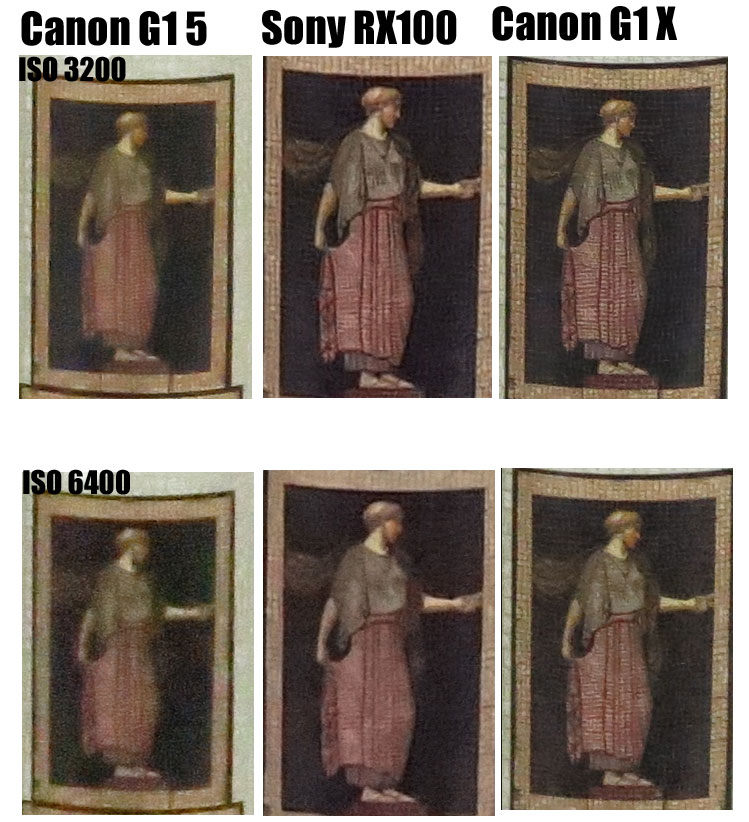
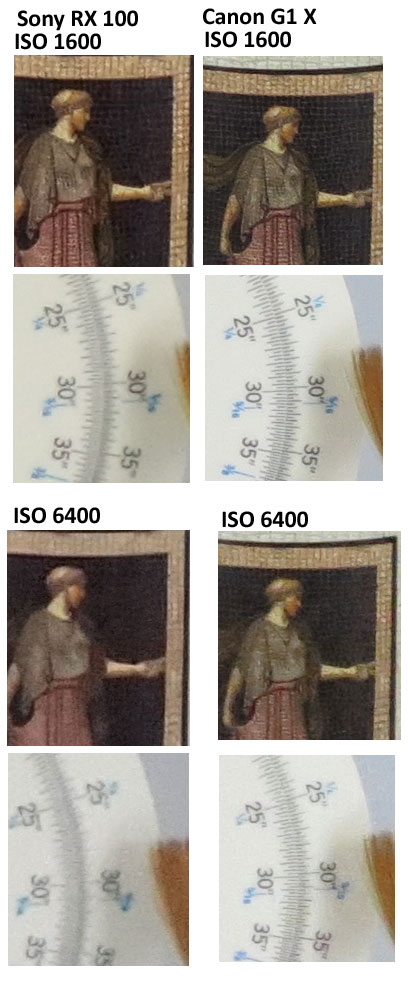
Noise Levels & Dynamic Range: Large sensors with larger pixels produce low noise, more details and higher dynamic range, See the High ISO image comparison between Canon G1 X and Sony RX 100.
The ISO: The standard ISO range of Sony RX100 is limited to 6400, after that you have to use Multi Frame NR, 12800 and 25600 settings are achieved through combining Multi Frame Noise Reduction. In Canon G1 X you get standard ISO range from 100 to 12800.
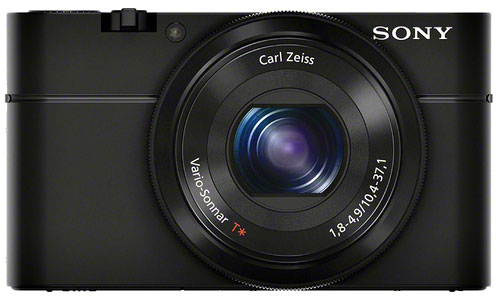
Lens: Sony RX 100 features bright F1.8 Carl Zeiss Vario-Sonnar T lens with 3.6x zoom optical zoom and better macro mode, canon features bit bigger 4x Optical Zoom.
Shutter – The Canon G1 X offers more wide shutter range compared to Sony Rx100,
Shutter Type
Continuous shooting
Shutter
Min
Max
Sony RX 100
Mechanical
2.5, 10 fps
30 sec
1/2000 sec
Canon GX 1
Mechanical
1.9 fps
60 sec
1/4000 sec
Video – Both the camera offers Full HD video recording, Canon G1 X Full HD video recording is limited to 30 fps only and Sony RX 100 supports 60fps at Full HD.
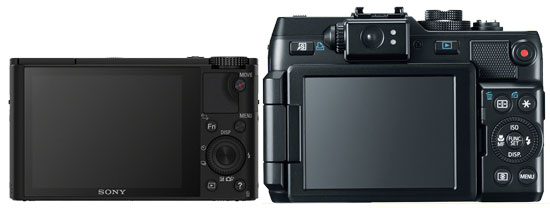
Display – The Canon G1 X comes with Fully articulated 3″ Color LCD with 920,000 screen dots, The Sony RX 100 features with Fixed 3″ Color LCD with 1,228,800 screen dots.
View finder – Canon G1X features Optical viewfinder, No viewfinder available in Sony RX 100.
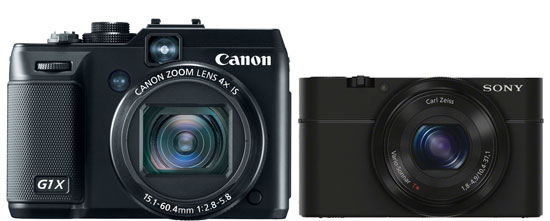
Pocketable – Sony RX 100 easily fits in jeans pocket but Canon G1 X need a Jacket pocket, Sony Cyber-shot DSC-RX100 is approx 13% (15.1 mm) narrower, 45% (28.8 mm) thinner and 28% (22.4 mm) shorter than Canon PowerShot G1 X.

Sony Rx 100 is fast compared to G1 X: Sony RX 100 has high-speed autofocus that locks onto a subject in as quickly as 0.13 seconds, The shot to shot time of RX 100 is approx 0.36 second only whereas the shot to shot time of Canon G1 X is approx 2.67 seconds.


Overall conclusion: With Canon G1 X you get vari-angle display, optical view-finder and more standard ISO range / better low-light performance with Sony RX 100 you get Fast AF performance, more resolution, better video & macro mode in a ultra compact size body.
Buy Canon G1 X at Amazon Buy Sony RX 100 at Amazon
Sony RX 100 comes with 1 inch, 20.2 MP Exmor CMOS sensor and Canon G1 X comes with 1.5-inch, 14.3 MP CMOS sensor, the resolution on Sony RX 100 is more where as Canon G1 X have large sensor & big photodiodes (due to low resolution) and we know that BIG photodiodes creates LESS NOISE and capture more details,
image credit imaging–resource.com
The Canon G1 X ISO standard ISO range is 100-12800, Sony RX 100 standard ISO 100-6400, ISO 12800 and higher settings are achieved through combining Superimposing technology and By Pixel Super Resolution technology. Canon G1 X images showing bit more details in the test. Specification comparison review of both the camera is coming soon.
Buy Canon G1 X at Amazon
Buy Sony RX 100 at Amazon
Buy Canon Lenses, Buy Music CD or Digital Camera at amazon it helps this site, and you do not pay anything extra, it is just a way to help support this site.
New Camera Website, we list all type of new camera information, price review and all type camera rumors, subscribe us or follow us via twitter or facebook.
Disclaimer: We have attempted to select useful information to include on New Camera, and to ensure that the resources we have included on the site -- as well as the way we have described them -- are accurate, fair, and balanced. However, we make no claims, warranties, or other representations concerning the accuracy, completeness, or utility of the information provided, or concerning the abilities or performance of the organizations, agencies, companies, and other resources presented through New Camera