The DJI Inspire 3 is 20% more aerodynamic friendly than the DJI Inspire 2. The Inspire 8K X9 Gimbal camera is specifically designed for the Inspire 3 drones. But, if we talk about flexibility then inspire two does have the feature to swap the camera of your choice from X7, X5s, and X4s.
The Dji X7 was the best option available for the Inspire 2 drones. But, at the same time, the X9 model has far better specs than the old X7.
The Camera 8K vs 6K
DJI Inspire 3 is made for professional cinematographers. The Drone features 8k video recording upto
75 FPS @ Apple pro res mode and 25 fps in cinema dng codec. and timecode/time sync functionality to sync your workflow with other professional cameras of the set.
The New DJI Inspire Features Dual Native ISO, and with the full frame 44.5 Mp sensor, you can extract the maximum details possible.
Dual Native ISO at full-frame 30 fps and below
EI 800/4000 at 24 fps for film production
EI 320/1600 above 30 fps for commercial and TV production
You get 14 Stops of Dynamic range while when you are using your cameras at 30fps in any resolution and someone switches 30fps + frame rates like 60 or 10 fps the DR performance of the camera degrades up to 13 fps.
The DJI was limited to 6K @ 30 fps in Apple PRO Res mode or Cinema DNG. So, if we compare the two we have a massive upgrade in the camera.
THE SECONDARY FPV CAMERA
DJI Inspire 3 has a more advanced Secondary FPV camera compared to the DJI Inspire 2, the new camera has better DOF and updated lens design for more clear input, At the same time the camera also has NIGH VISION capability so you can easily tack and track your subject.
DJI Inspire 3
DJI Inspire 2
Sensor Type
Full Frame CMOS Sensor
4/3″-Type CMOS Sensor
Sensor Resolution
44.5 MP Sensor
21 MP Sensor
ISO Sensitivity
Photo
100 to 25,600 Video
200 to 6400
Photo
100 to 25,600 Video
100 to 6400
Shutter Speed
Electronic Shutter
1/8000 to 8 Seconds
Electronic Shutter 1/8000 to 8 Seconds
Video Format
8192 x 5456p (MOV) (Apple Pro Res)
5280 x 2972p at 23.98/24/25/29.97 fps (MOV/MP4) (Apple Pro Res)
AI Tracking Modes
Both of the DJI drones feature AI tracking modes for Ariel content creation. The common AI modes of both drones are Spotlight PRO, tab fly, and Active tracking mode. But, in the new DJI Inspire 3, we also get, WAYPOINT PRO, REPEATABLE ROUTES, and DOLLY are the new integration in the DJI Inspire 2 drone.
Not only these the DJI Inspire 3 moves a step ahead and allows its users to plan the shot in Waypoint PRO mode and predefine the path of shooting.
The spotlight pro mode of the drone is also upscaled to the next level. The drone now can self-recognize the type of subject and nature of its movement in a more accurate way compared to the previous version of the INSPIRE 2 drone. These are the two new mode added in the Spotlight pro
Follow Mode: In this mode, the drone and gimbal lock onto a subject and orient toward it in the same direction, allowing for easier circling shots
Free Mode: Taking advantage of the gimbal’s 360° pan ability, the gimbal can stay locked onto a subject while the pilot uses the FPV camera to check the surroundings and control the flight route.
So, the DJI 3 Three not only has an advanced camera, the AI tracking modes of the Drone upscaled to a new level. Now lets, explore more differences between the two
Inspire 3
Inspire 2
Gimbal Camera
Full-frame sensor, Dual- Native EI 800/4000 or EI 200- 4600
Super 35 or M43 Sensor, EI 100 -1600 (X7 camera)
Maximum Video Specs
8K/75p ProRes RAW 8K/25p CinemaDNG
6K/30p ProRes RAW, 6K/30p CinemaDNG
Maximum Gimbal Tilt
+100º (+80º obstruction- free tilt at 50mm, 75º at 35mm, 70º at 24mm, 65º at 18mm)
+40º
FPV Camera
Type 1/1.8 CMOS sensor 161º FOV
Type 1/7.5 CMOS sensor 84º FOV
Positioning Accuracy
Centimeter level (RTK on)
Meter level (RTK not supported)
Sensing System
Nine sensors with six-direction obstacle sensing, customizable avoidance range
Tri-directional obstacle sensing
Flight Time
Up to 28 minutes
Up to 23-27 minutes
Intelligent Flight Modes
Waypoint Pro: Repeatable Routes, Waypoint Pro: 3D Dolly, Spotlight Pro
TapFly, ActiveTrack, Spotlight
Video Transmission and Maximum Range
O3 Pro at approx. 15km
Lightbridge at approx. 7km
Storage
PRO SSD 1TB (included)
CINESSD 120/240/480/960GB (sold separately)
Cinema grade Transmission system – O3 Pro is a generational leap in distance, video latency, and stability compared to the Inspire 2. Using the DJI O3 Pro video transmission and control system, pilots of the Inspire 3 can enjoy a maximum control distance of 15 km in single-control mode or up to 12 Km in dual-control mode. If we compare it with the DJI inspire 2, the MAX transmission range was limited to 7 Km. Both the 8K gimbal and FPV can provide live feeds of 1080p90 at a low 90 ms latency, and for the first time, filmmakers can have live feeds at 4K30 or 1080p60 at up to 5 K, which was not possible with the Inspire 2 in any way.
For the first time in an Inspire series drone, we have Centimeter-Level RTK Positioning
Number of Axes
3-Axis (Pitch (Tilt), Roll, Yaw (Pan))
3-Axis (Pitch (Tilt), Roll, Yaw (Pan))
Rotation Range
Mechanical Range
Pitch (Tilt): -148 to 110°
Roll: -90 to 230°
Yaw (Pan): -330 to 330° Controllable Range
Pitch (Tilt): -140 to 100°
Roll: -20 to 20°
Yaw (Pan): -300 to 300°
Pitch: 180°/s
Roll: 180°/s
Yaw: 270°/s
With RTK antennas built into the Inspire 3’s airframe, pilots can take advantage of centimeter-level accuracy normally utilized in architecture and surveying to use DJI Waypoint Pro to confidently fly complex routes over and over. The RTK antennas work in conjunction with three types of GNSS (GPS, BeiDou, and Galileo) and dual-frequency positioning. Pilots can choose to activate an RTK Network, using the internet connection of the RC Plus to connect to an NTRIP server or set up an optional D-RTK 2 Mobile Station without needing to install additional modules.
Advancement in safety and stability of the new INSPIRE 3 Drone features omnidirectional obstacle sensors, also a new mode to disable horizontal and vertical sensing as per user request. Also, the Inspire Three has 4 fisheye cameras in each of its legs to protect the drone during horizontal flight. The most advanced obstacle sensing and protection system in any DJI drone to date.
Price difference. We do have a very good price difference between the two, But at the same time if we look at the set of features DJI offers in DJI Inspire 3, the price looks feasible to me
Conclusion: As from the comparison it’s very clear that in each and every aspect the DJI Inspire 3 has improved and become far better than the DJI Inspire 2 drones.
So, I highly recommend that if you are able to afford that NEW Dji, you should buy the Inspire 3.
A new tool for cinematographers, The DJI Inspire 3 arrived with ground-breaking tech, first for DJI, it can record in Apple ProRes RAW format, 8K at 75fps. DJI’s smaller pro-video drone, the Mavic 3 Cine, supports only ProRes 422 LT — Priced at $4,999.
The main cinema camera for the Inspire 3 is one of the drone’s biggest upgrades. DJI says the camera, known as the Zenmuse X9-8K Air, is its lightest ever full-frame system. It uses CineCore 3.0 — DJI’s new image processing system — and supports 8K CinemaDNG video recording at 25fps.
The DJI Inspire 3 is also capable of recording 4K at 120fps in ProRes RAW, and it won’t require cropping to work. The unit delivers dual native ISO: 800 / 4000 for 30fps and below, and 320 / 1600 for higher frame rates. Plus, it has more than 14 stops of dynamic range to really fine tune shots in all horizon lighting situations. The gimbal enables the camera to have 80 degrees tilting and full 360 degrees of rotation — with no sight obstructions.
DJI INSPIRE 3 Press Release
The DJI Inspire 3. The Inspire 3 is a successor of the Inspire 2, which was last released back in 2016. The Inspire 3 is set to become the new benchmark drone for filmmakers and cinematographers alike.
If we look at the camera, it’s the same Zenmuse X9 camera that is featured on the Ronin 4D; this camera also offers 8K video, and dual-native ISO to capture crystal clear images, regardless of bright or low light conditions.
With more dance AI RTK functionality, the Inspire 3 allows pilots to plan more precise flights. It can fly through industrial areas with high concentrations of metal, concrete, or magnetic interference thanks to the built-in dual antennas. With centimeter-grade positioning capabilities, pilots can preplan the flight to capture the same shot with minimal variance. The RTK is supported through both base station and network connection, which also aids in capturing high-precision, repeatable routes for a seamless transition between day and night shots.
The New Inspire 3 also has omnidirectional sensing capabilities, with a fisheye lens (front, rear, up down, left, and right), two wide-angle lenses, and a TOF (time of frame) downward sensor with infrared to measure the distance between lower obstacles. The upgraded FPV camera has a 1/1.8 in. sensor and 3 MP view allowing pilots to see footage in real-time.
The Inspire 3 has better video transmission and stronger anti-interference capability. The O3 Pro allows the pilot and gimbal flight operator to be far apart during filming. Additionally, the Inspire 3 has a great safety backup as the control relay allows the gimbal operator to take over should the pilot lose connection.
According to the latest rumors that surfaced over the rumor mills, we can expect an announcement from Nikon in Eary May 2023. That’s the only piece of information we have from the sources of the rumor mill.
Now, the big question is what comes next? We have rumors about the Nikon Z8 camera, lenses, and much more.
We also know that Nikon Never does a direct announcement of their PRO Series camera bodies, and similar cameras like Nikon Z8 should have a development announcement first, and after a month of a gap we have its full announcement.
We have had rumors in past related to Nikon DX 12-28mm Lens and 200-600mm Lenses. We will post an update soon as we get it.
PENTAX K-3 Mark III B&W ONLY digital SLR aka Monochrome means the camera features a customer-developed sensor without any color filter array, so its a sensor without demosaicing algorithm, now every color sensor-based camera has the demosaicing algorithm, it is used to process the images, to reconstruct a full-color image from the incomplete color samples output from an image sensor. So, if you are a B&W photography lover and want to extract exceptional details from a given seen that a color filter-based Bayer sensor is unable to do then the PENTAX K-3 Mark III Monochrome is made for you.
Ricoh announces PENTAX K-3 Mark III Monochrome digital SLR camera
PENTAX K-3 Mark III Press Release
DSLR with exclusively-designed image sensor delivers the ultimate in black-and-white photography
PARSIPPANY, NJ, April 12, 2023 — Ricoh Imaging Americas Corporation today announced the PENTAX K-3 Mark III Monochrome camera, exclusively designed to capture black-and-white images. The only monochrome-specific digital SLR camera currently on the market, it captures high-resolution images rich in gradation, enabling users to express a distinct view of the color-rich world in high-quality black-and-white images.
“The concept of a monochrome-specific digital SLR camera attracted a great deal of attention and interest from photographers who participated in an online fan event held in November 2021,” said Ken Curry, president, Ricoh Imaging Americas. “PENTAX has since conducted extensive research on the development of a commercial product based on this concept and we’re excited to announce it today.”
The new model’s design is based on the PENTAX K-3 Mark III — the flagship model of PENTAX’s APS-C-format series that integrates remarkable imaging performance and a host of advanced features in a compact, durable body — while totally redesigning and optimizing the imaging characteristics by adding a new, monochrome-specific image sensor with approximately 25.73 effective megapixels. A typical color image sensor composes a black-and-white image by converting the color data to monochrome. This new custom sensor does not have to convert the any data because it can reflect the brightness obtained by each pixel in the image, thus producing extra-fine sharpness in images that only the monochrome-specific sensor can deliver.
The PENTAX K-3 Mark III Monochrome features three Custom Image modes exclusively designed for black-and-white photography to provide distinctive finishing touches. In addition to Standard mode, it offers Hard mode to produce high-contrast images and Soft mode to create high-key, low- contrast images. Each mode allows minute adjustment of parameters such as tone, key, contrast and sharpness so that users can personalize their images with the desired finishing touch.
The exterior design of the camera has also been customized to reflect its monochrome capabilities. Design features include white backlight illumination on the LCD data panel, “Monochrome” lettering printed on the upper-left shoulder of the back panel, a menu screen featuring a black-and-white visual scheme as default, and icons printed on buttons and switches across the camera’s exterior finished in three shades of gray.
1The PENTAX K-3 Mark III Monochrome camera body will be available late April at www.us.ricoh-imaging.com as well as at Ricoh Imaging-authorized retail outlets for the manufacturer’s suggested retail price of $2,199.95.
| Main features of the PENTAX K-3 Mark III Monochrome |
Monochrome-specific CMOS image sensor
To optimize the quality of monochromatic images, the camera incorporates a monochrome- specific, APS-C-format CMOS image sensor free of an AA (anti-aliasing) filter with approximately 25.73 effective megapixels. Typical color image sensors are designed to receive light passing through red (R), green (G) and blue (B) color filters, so each pixel detects only one color-data component. To compose a monochrome image, color sensors must convert color data into monochromatic data by interpolating the color data they collect. The new monochrome-specific image sensor, however, can faithfully reflect the brightness data obtained by each pixel in the image — without the interpolation process — to produce extra-fine monochromatic expression, in images high in resolution and rich in gradation.
Image quality exclusively designed for monochrome photography
The image quality produced by the original PENTAX K-3 Mark III was thoroughly re- evaluated and totally redesigned to optimize the imaging characteristics of the new monochrome-specific image sensor. The result is highly sensitive expression with a natural bokeh (defocus) effect, rich gradation and extra-fine sharpness — an image only the monochrome-specific image sensor can deliver.
A selection of monochrome-specific finishing touches
The PENTAX K-3 Mark III Monochrome provides three Custom Image modes exclusively designed for monochrome photography to provide distinctive finishing touches. In addition to Standard mode, it also provides Hard mode to produce high-contrast images, and Soft mode to create high-key, low-contrast images. Each mode provides minute adjustment of parameters such as tone, key, contrast and sharpness. This allows the photographer to personalize their images with the desired finishing touch.
Exterior design reflecting the monochrome photography concept
The PENTAX K-3 Mark III Monochrome provides white backlight illumination on the LCD data panel positioned on its upper panel, while featuring “Monochrome” lettering printed on the upper-left shoulder of the back panel. Its menu screen features a black-and-white visual scheme as default, while the SR (Shake Reduction) badge is finished in silver. The icons printed on buttons and switches across the camera’s exterior are finished in three shades of gray to assist the users with their camera operation. All in all, the concept of monochrome photography is evident throughout the camera body.
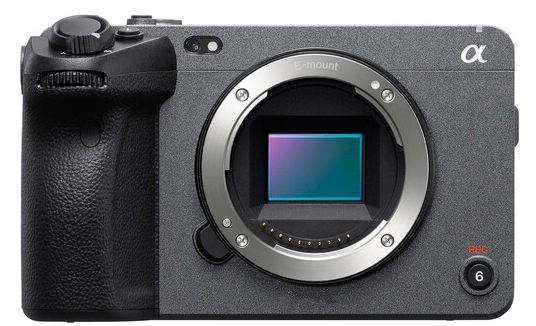
Let’s compare the Sony FX 30 camera against the recently announced Sony ZV E1. Sony FX 30 camera has a bit more compact body and let’s discuss the features that we exclusively have in the FX 30
1. Sony ZV-E1 Full Frame Sensor: The biggest advantage you have with the Sony ZV-E1 camera is Sony’s A7 S III 12mp ultra-low light-sensitive sensor that produces exceptional video quality even when used in extremely low light conditions. Having a Full-frame CMOS sensor of 12MP doesn’t allow the camera to move into the oversampling mode, resulting in NO Rolling shutter effect even when uses at higher shutter speed or MAX frame rates.
2. ISO up to 409600 vs 102400: On the other side, we have the Sony FX30 camera that uses Sony’s 26-megapixel APS-C CMOS sensor which is quite useful when you are working in a controlled light environment. Now, being a pro cinema camera for beginners the camera also features dual native ISO but despite having all the technological advancement in FX30, have in this camera you cannot fight with the hardware (or the very physical nature of the sensor being used inside this camera), it allows capturing method details for better details, so low light performance wise ZV-E1 is a clear winner.
In the test above we have selected the Sony A7S III camera, as we know the Sony ZV-E1 camera uses the same sensor as we have seen on the Sony A7S III. And since we don’t have the test data of the Sony FX30 camera. so I have picked up a 26MP X-Trans BSI CMOS Sensor of the X-T5 to get a good idea of what the test will look like. Be assured we will update this test once the Sony FX30 data becomes available
3. Sony ZV-E1 Dynamic Range: The other biggest advantage that we get apart from low light performance is its dynamic range. With the Sony Z1 camera, you can extract 15 plus stops of dynamic range from your camera so it’s a perfect camera for shooting uncontrol light environment. And when you want to extract the maximum dynamic range from a given scene.
4. The artificial intelligent chip inside the camera: Human poses estimation using a skeleton-based model: With its innovative AI processing unit, the ZV-E1 uses subject form data to accurately recognize movement, providing an improvement of approx. 60% in human eye recognition14. Human pose estimation technology recognizes body and head position, so you can even track a subject facing away from the camera or wearing a mask.
5. A compact, 5-axis stabilization unit and gyro sensors with optimized algorithms achieve up to 5.0-step stabilization. The in-body image stabilization of the camera provides effective stabilization with a wide range of lenses, including E-mount lenses that do not include their stabilization. Dynamic active Mode stabilization is approximately 30% more effective than what Active Mode provides. This makes it easier than ever to shoot smooth, stable footage while moving around for bold, dynamic expression.
6. The ZV-E1 also boasts a Framing Stabilizer that uses advanced AI-based subject recognition in conjunction with the camera’s Dynamic active mode image stabilization to automatically keep the subject’s position in the frame constant.
7. With the Multiple Face Recognition setting, the camera can automatically track multiple subjects within the frame. This feature helps to stabilize the framing and ensure that the subject remains in the frame. The AI processing unit can even differentiate between multiple subjects having different postures and recognition of individual faces so that tracking reliability is achieved in challenging situations such as when a subject’s face is tilted, in shadow, or backlit
8. The Product Showcase Setting includes an AF tracking switch that allows for consistent bokeh levels between the product and the subject, even when switching between different subjects.
9. The Intelligent 3 Capsule Microphone captures clear audio, including the voice of your main subject. Depending on your shoot, you can set the microphone’s directivity to Front, Rear, All Directions, or Auto18. The camera also includes a Multi-Interface (MI) shoe with a digital audio interface and mic and headphone jacks offer expanded audio capabilities.
2. Sony FX30 advantages over ZV-E10
10. Devil lies in details:Why sometimes having a higher resolution APS-C sensor, is better than a lower resolution Full frame sensor. Sony FX30 does 26 MP Oversampling to produce exceptional 4k in details, so you have to understand this the Sony FX30 camera uses 26MP resolution to generate 4K files and the Sony ZV-E1 uses a 12MP sensor to generate 4K files, now if you are working in the controlled light environment the Sony FX30 4k (file will showoff more details of a given scene compared to Sony ZV-E1 12MP 4k files. But that also depends on several factors like the type of lenses used and the light environment.
Sony FX30 camera is built for professionals, in the ZV-E1 camera u do get excellent hardware inside, but the controls are simplified for beginners and you will miss a lot of features, that were maybe essential for your workflow.
11 . TIME CODE: We have TIME CODE in the Sony fx30 camera, a time code functionality that is highly important for the synchronization of multiple cameras during a professional shoot. Time code is like a special signal generated along with the video reels that help find a specific moment or two to sync two or more two different videos seamlessly without any error.. It’s called SMPTE because the Society of Motion Picture and Television Engineers made it.
11. You get 16 BIT RAW via Full-Size HDMI: The second thing and of course the most important is 16-bit RAW output which is not possible with the Sony ZV E1 camera which is made for content creators
12. No Overheating in Sony FX30: The next BIG thing that you may miss in ZV-E1, is the external fan. The Sony FX 30 camera features an external fan so you don’t have any overheating issues. The biggest problem is Sony has trimmed down the cooling system of the Sony A7 S3 camera and we have a very weak heat sink unit in the new ZV E1 camera so if you are living near the equator or in Asian countries with variable weather conditions summers are very hot temperature raises to 40-degree centigrade so in that situation if you shoot outdoors like you are a travel blogger or you are a wedding cinematographer like to use your camera mostly outdoor then you have to be very careful before buying the Sony zv E1 camera
CROPS
The much more significant crop comes in 120p mode, where the camera crops in to a 3840 x 2160 region of the sensor, giving a 1.62x crop.
While using 4k UHD @ 120fps in ZV-E1 you have to face 10% crop
3. Sony ZV-E1 vs Sony FX30 – The Main Differences
Sony ZV-E1
Sony FX30
Lens Mount
Sony E
Sony E
Sensor Resolution
Effective: 12.9 Megapixel (4240 x 2832)
Yes, with Autofocus Support
Sensor Type
35.6 x 23.8 mm (Full-Frame) CMOS
Actual: 27 Megapixel
Effective: 26 Megapixel (6192 x 4128)
Image Stabilization
Digital, 5-Axis
23.3 x 15.5 mm (APS-C) CMOS
Built-In ND Filter
None
None
1. Exposure Control
Sony ZV-E1
Sony FX30
Shutter Type
Electronic Shutter
Electronic Shutter
Shutter Speed
1/8000 to 30 Second
1/8000 to 1 Second in Movie Mode
1/8000 to 30 Seconds in Photo Mode
1/8000 to 1/4 Second in Video Mode
ISO Sensitivity
Photo
80 to 102,400 (Extended: 80 to 409,600)
100 to 32,000 (Extended: 50 to 102,400)
Metering Method
14+ Stops
14 Stops
Video Mode | Frame Rates | Recording options
Sony ZV-E1
Sony FX30
Internal Recording Modes
RawXAVC HS 4:2:0 10-Bit
UHD 4K (3840 x 2160) at 50/59.94 fps [45 to 150 Mb/s]
UHD 4K (3840 x 2160) at 23.98 fps [30 to 100 Mb/s] RawXAVC HS 4:2:2 10-Bit
3840 x 2160 at 50/59.94 fps [100 to 200 Mb/s] RawXAVC S 4:2:2 8-Bit
UHD 4K (3840 x 2160) at 50/59.94 fps [100 to 200 Mb/s]
UHD 4K (3840 x 2160) at 25/29.97 fps [140 Mb/s] RawXAVC S 8-Bit
1920 x 1080p at 100/120 fps [60 to 100 Mb/s]
1920 x 1080p at 50/59.94 fps [25 to 50 Mb/s] RawXAVC S 10-Bit
1920 x 1080p at 23.98/25/29.97/50/59.94 fps [50 Mb/s] RawXAVC S-I 10-Bit
3840 x 2160 at 59.94 fps [600 Mb/s]
1920 x 1080p at 59.94 fps [222 Mb/s]
XAVC HS 4:2:2 10-Bit
UHD 4K (3840 x 2160) XAVC S-I 4:2:2 10-Bit
UHD 4K (3840 x 2160)
1920 x 1080p from 1 to 240 fps XAVC S
UHD 4K (3840 x 2160)
1920 x 1080p from 1 to 240 fps XAVC Proxy
1920 x 1080
1280 x 720
External Recording Modes
None
4:2:2 10-Bit via HDMI
UHD 4K (3840 x 2160) at 23.98/25/29.97/50/59.94 fps ProResRAW 16-Bit via HDMI
4672 x 2628 at 23.98/25/29.97/50/59.94 fps
1 x 1/8″ / 3.5 mm TRS Stereo Microphone Input 1 x 1/8″ / 3.5 mm TRS Stereo Headphone Output
2 x XLR / 1/4″ TRS Combo Microphone (+48 V Phantom Power) Input on Included Handle 1 x 1/8″ / 3.5 mm TRS Stereo Microphone Input on Camera Body 1 x 1/8″ / 3.5 mm TRS Stereo Headphone Output on Camera Body
Power I/O
1 x USB-C Input
1 x USB-C Input
Other I/O
1 x USB-C (USB 3.2 / 3.1 Gen 1) Data Input/Output (Shared with Power Input) 1 x Sony Multi/Micro-USB Control
1 x Sony Multi/Micro-USB (Timecode) 1 x USB-C (USB 3.2 / 3.1 Gen 2)
Wireless
Wi-Fi, Bluetooth
2.4 / 5 GHz Wi-Fi 5 (802.11ac) Control
Bluetooth
Mobile App Compatible
Yes *As of March, 2023: Check with manufacturer for the most up-to-date compatibility
No *As of February, 2023: Check with manufacturer for the most up-to-date compatibility
Global Positioning (GPS, GLONASS, etc.)
None
None
3. Focus
Sony ZV-E1
Sony FX30
Focus Type
Auto and Manual Focus
Auto and Manual Focus
Focus Mode
Automatic, Direct Manual Focus, Manual Focus
Automatic, Continuous-Servo AF, Direct Manual Focus, Manual Focus, Single-Servo AF, Touch AF & Shutter
Autofocus Points
Photo
Phase Detection: 759 Video
Phase Detection: 627
Video
Phase Detection: 495
Autofocus Sensitivity
6 to +20 EV
-3 to +20 EV
Verdict: Sony ZV-E1 camera and FX30 orientation are completely different, If you create a vlog or shoot solo content then undoubtedly the best camera is Sony ZV-E1. But, at the same time, u have to deal with overheating issues if ur using your camera outside overheats quickly as per the latest reports we have from its reviewers. Sony FX30 is made for professionals under budget, if ur thinking about starting your carrier in cinematography, or short films, then with FX30, u will have the basic training high to handle cinema cameras.
Canon EOS R5 C is now approved for Netflix productions, joining a long list of Canon EOS cameras approved for the streamer. A new firmware update enhances operation and image quality.
Canon EOS R5 C Now Approved for Netflix Productions
New Firmware Update Enhances Operation & Image Quality of the Hybrid Full-Frame Mirrorless Camera
Canon’s EOS R5 C has been added to Netflix’s list of approved cameras. This allows filmmakers to use Canon’s full-featured, hybrid full-frame mirrorless camera for Netflix productions.
Version 1.0.3.1 firmware elevates the overall image quality and camera operability for content captured by filmmakers and creators using the EOS R5C.
The EOS R5 C approval brings the number of Canon Cinema EOS camera models approved for use on Netflix productions to eight.
Canon Cinema EOS camera models on the Netflix approved camera list include:
Canon EOS R5 C
Canon EOS C500 Mark II
Canon EOS C300 Mark III
Canon EOS C70
Canon EOS C300 Mark II
Canon EOS C700 FF
Canon EOS C700
Canon EOS C500
The new firmware update strengthens Canon’s commitment to the filmmaking and content creation market.
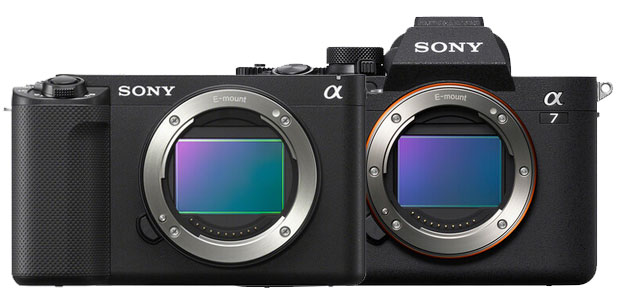
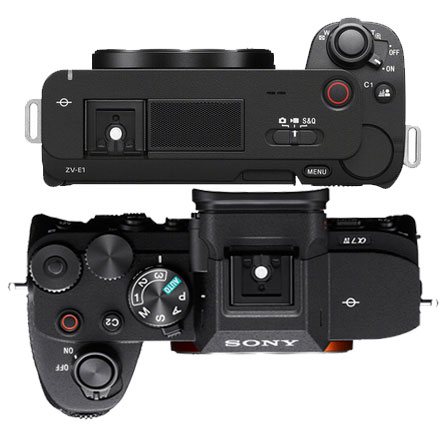
Sony ZV-E1 vs Sony A74 – let’s have a deeper drive and find out which camera is best for you. The biggest advantage associated with the Sony 74 camera is its body design.
If you are a photographer and doing a long photography assignment that will take approx 3 to 4 hours or maybe you are a kind of wedding photographer or event shooter in those specific scenarios you need to have a camera that perfectly fits in your hand and you feel very comfortable to hold. In those specific situations when you have to work for a very long period Sony A74 camera body design is super perfect without a single doubt. When u have an extra slim camera in ur hand u have to balance it always feels like ur losing the grip. So, for photographers, it’s very important to select a camera with the perfect body design.
Sony ZV-E1 camera is more compact, has a sleek body without any electronic viewfinder, and also the grip is very similar to the entry-level APS-C bodies. So, it is made like to be placed in a gimbal or a selfie stick to record the videos perfectly. The Intention of the design is not favorable for photographers, there yes you can click some occasional pics but it is not made for that.
MORE RESOLUTION = MORE DETAILS
Another Major advantage associated with the Sony A74 camera is the higher resolution 33-megapixel full-frame CMOS sensor. If you are a photographer you feel very limited while using a 12-megapixel full-frame sensor and snapping pics. if you have to do a digital crop the 12-megapixel image will not allow you to do that.
The Biggest advantage that I feel in using a higher resolution camera is that you get more and more details while zooming ( @100 % scale) if you are a pixel-peeper. if you like to see more details in a given frame of a scene, it’s highly recommended that photographers use your higher resolution sensor instead of having a lower resolution as we have in the Sony ZE-V1 camera
BEST CAMERA FOR PHOTOGRAPHERS
Design-wise and based on the type of sensor being used inside both the camera it’s highly recommended that if you are a photographer you should go with a Sony A74 camera at the same time if you are more into videography if you are more into content creation and you shoot occasionally few pics you can use the Sony ZV-E1 camera. Yes, you can use your A74 camera as a backup camera for shooting your pics. but it cannot be used as a primary photographic tool if you are into professional work out there.
BEST CAMERA FOR RECORDING VIDEO
In the video part without having a single doubt in your head you should pick Sony’s latest ZV-E1 camera.
The reason behind that the camera can shoot for case 60 frames per second without any crop whereas we all know with the Sony is A74 camera, we have to face APS-C crop, or if you say with some butter that we are shooting in a super 35 mm format while using A74 in 4k 60p mode,
With Sony ZV- E1 camera we do not have any of such used even the camera allows you to suit 4K 120 FPS maybe the firmware update which is about to arrive in June 2023 the cost you a bit that’s another matter but you can suit 4K 120 happiest with only 10% crop which is not similar to the A7 4K 60p super 35 mm all that crop.
now the other biggest advantage that you will enjoy in Sony’s latest ZV-E1 camera is the introduction of a dedicated artificial intelligence chip that was the first scene in Sony’s A7 are 5 camera announcement now the chip has been improved to perform better functionality at the same time new features also being introduced inside this camera.
Overall if you are into content creation videography cinematography in any way you are associated with a video you must buy the latest Sony Z1 camera instead of the Sony is 74
Sony ZV-E1 vs. Sony A7 IV – Best Vlogging Camera for 2023
Video Details – Comparison of Resolution and frame rates
Internal Recording Modes
RawXAVC HS 4:2:0 10-Bit
UHD 4K (3840 x 2160) at 50/59.94 fps [45 to 150 Mb/s]
UHD 4K (3840 x 2160) at 23.98 fps [30 to 100 Mb/s] RawXAVC HS 4:2:2 10-Bit
3840 x 2160 at 50/59.94 fps [100 to 200 Mb/s]
3840 x 2160 at 23.98 fps [50 to 100 Mb/s] RawXAVC S 4:2:2 8-Bit
UHD 4K (3840 x 2160) at 50/59.94 fps [100 to 200 Mb/s]
UHD 4K (3840 x 2160) at 25/29.97 fps [140 Mb/s] RawXAVC S 8-Bit
1920 x 1080p at 100/120 fps [60 to 100 Mb/s]
1920 x 1080p at 50/59.94 fps [25 to 50 Mb/s] RawXAVC S 10-Bit
1920 x 1080p at 23.98/25/29.97/50/59.94 fps [50 Mb/s] RawXAVC S-I 10-Bit
3840 x 2160 at 59.94 fps [600 Mb/s]
3840 x 2160 at 50 fps [500 Mb/s]
3840 x 2160 at 29.97 fps [300 Mb/s]
3840 x 2160 at 25 fps [250 Mb/s]
3840 x 2160 at 23.98 fps [50 Mb/s]
1920 x 1080p at 59.94 fps [222 Mb/s]
1920 x 1080p at 50 fps [185 Mb/s]
1920 x 1080p at 29.97 fps [111 Mb/s]
1920 x 1080p at 25 fps [93 Mb/s]
1920 x 1080p at 23.98 fps [89 Mb/s]
H.265/XAVC HS 4:2:2 10-Bit
UHD 4K (3840 x 2160) at 23.98/50/59.94 fps [50 to 200 Mb/s] H.265/XAVC HS 4:2:0 10-Bit
UHD 4K (3840 x 2160) at 23.98/50/59.94 fps [30 to 150 Mb/s] H.264/XAVC S-I 4:2:2 10-Bit
UHD 4K (3840 x 2160) at 23.98/25/29.97/50/59.94 fps [240 to 600 Mb/s]
1920 x 1080p at 23.98/25/29.97/50/59.94 fps [89 to 222 Mb/s] XAVC S 4:2:2 10-Bit
UHD 4K (3840 x 2160) at 23.98/25/29.97/50/59.94 fps [100 to 200 Mb/s]
1920 x 1080p at 23.98/25/29.97/50/59.94 fps [50 Mb/s] XAVC S 4:2:0 8-Bit
UHD 4K (3840 x 2160) at 23.98/25/29.97/50/59.94 fps [60 to 150 Mb/s]
1920 x 1080p at 23.98/25/29.97/50/59.94/100 fps [16 to 100 Mb/s]
Interface
Media/Memory Card Slot
Slot 1: CFexpress Type A / SD (UHS-II)
Slot 2: SD/SDHC/SDXC (UHS-II)
Single Slot: SD/SDHC/SDXC (UHS-II)
Video I/O
1 x HDMI Output
1X HDMI
Audio I/O
1 x 1/8″ / 3.5 mm TRS Stereo Headphone Output 1 x 1/8″ / 3.5 mm TRS Stereo Microphone Input
1 x 1/8″ / 3.5 mm TRS Stereo Microphone Input 1 x 1/8″ / 3.5 mm TRS Stereo Headphone Output
Power I/O
1 x USB-C Input/Output
1 x USB-C Input
Other I/O
1 x Sony Multi/Micro-USB Input/Output (Shared with Remote Input) 1 x USB-C (USB 3.2 / 3.1 Gen 2) Input/Output (Shared with Power Input)
1 x USB-C (USB 3.2 / 3.1 Gen 1) Data Input/Output (Shared with Power Input) 1 x Sony Multi/Micro-USB Control
Wireless
Wi-Fi, Bluetooth
Wi-Fi, Bluetooth
Mobile App Compatible
No *As of October, 2021: Check with manufacturer for the most up-to-date compatibility
Yes *As of March, 2023: Check with manufacturer for the most up-to-date compatibility
Buy Canon Lenses, Buy Music CD or Digital Camera at amazon it helps this site, and you do not pay anything extra, it is just a way to help support this site.
New Camera Website, we list all type of new camera information, price review and all type camera rumors, subscribe us or follow us via twitter or facebook.
Disclaimer: We have attempted to select useful information to include on New Camera, and to ensure that the resources we have included on the site -- as well as the way we have described them -- are accurate, fair, and balanced. However, we make no claims, warranties, or other representations concerning the accuracy, completeness, or utility of the information provided, or concerning the abilities or performance of the organizations, agencies, companies, and other resources presented through New Camera