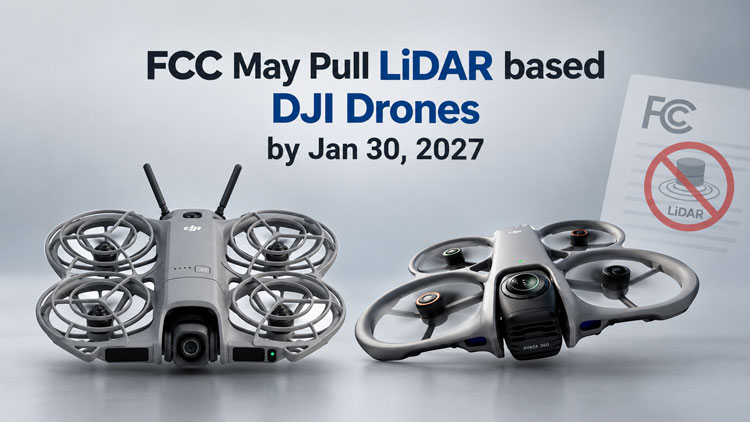
The FCC may pull LiDAR DJI drones from US shelves around January 30, 2027. That ban is not signed. The Neo 2 and Avata 360 are the two models buyers are pricing right now. They are not the whole list.
The list includes all possible sets of drones that carry LiDAR sensors inside, since, as we all know, the FCC now considers any drone with a LiDAR sensor a military drone. Now they plan to stop the supply of already approved FCC DJI drones, including the recently announced DJI Neo 2, DJI Avata 360, and other older models.
But the most important part is why Jan 30, 2027 will be one of the most important dates for Drone buyers, explained later in the article.
Stores can still sell an authorised unit. A drone already in hand still flies. The open question is the next import, not the aircraft in the bag.
The models that actually carry LiDAR
On July 21, 2026, the FCC’s Public Safety and Homeland Security Bureau and Office of Engineering and Technology released DA 26-758 in PS Docket No. 26-189. The notice sets seven military-grade categories for foreign-produced drones already on the Covered List. Category 4 is any aircraft that contains or integrates a LiDAR sensor. Use does not matter. A crash-avoidance laser counts.
We have already covered the update in a very detailed way here “DJI vs FCC: Big Ban Risk on Already Approved Models – August 2026 Update”
We have also added DJI Response to this issue
DJI has publicly characterized the move as a “total reversal” of the FCC’s previous position. In its ViewPoints response, the company stated:
“Although the proposal is framed as targeting ‘military-grade’ drones, the FCC’s definition could include drones with thermal imaging or LiDAR capabilities… It could even include consumer models used by hobbyists simply because they use LiDAR to improve positioning and obstacle avoidance – a safety feature, not a military capability.”
These five are the consumer DJI models with forward-facing LiDAR that still turn up in US listings. Stock is reseller-heavy. A listing today is not a promise of stock next month.
| Model | What DJI says is on the aircraft |
| Neo 2 | Forward-facing solid-state LiDAR, 0.3–8 m, 60° by 60°. FCC ID SS3-DEN225, granted July 16, 2025. |
| Avata 360 | Omnidirectional vision, supplemented with forward-facing LiDAR and a bottom infrared sensor. FCC ID SS3-DVN3NT, granted November 19, 2025. |
| Air 3S | Omnidirectional binocular vision, forward-facing LiDAR, bottom infrared. Night LiDAR range 0.5–25 m at reflectivity over 10%, 60° by 60°. |
| Mini 5 Pro | Omnidirectional vision plus forward-facing LiDAR. |
| Mavic 4 Pro | Omnidirectional binocular vision, forward-facing LiDAR, bottom infrared. Night LiDAR range 0.5–25 m at reflectivity over 10%. |
Not this fight: Mini 4K, Mini 4 Pro, original Neo, Avata 2. Those use vision or infrared, not LiDAR. Enterprise aircraft such as the Matrice 4 series and Matrice 400 also carry LiDAR. They are a different buyer and a different shelf.
Lito X1 has forward LiDAR, and UAV Coach lists an FCC grant before the cutoff. It is not a current US-shelf drone.
Where January 30 comes from
DA 26-758 says importation and marketing would stop 180 days after Federal Register publication, if the prohibition is adopted. The notice was published August 3, 2026, at 91 FR 48870. August 3 plus 180 days is January 30, 2027.
That is a count, not an order. As of October 4, 2026, PS Docket No. 26-189 has no adopting order. A final notice could also start the 180 days from its own publication date. “Around January 30” holds only if the bureaus adopt the July text as written and keep the August 3 clock.
Comments closed September 2. DroneXL’s tally of the docket was about 3,770 opposed and 16 in favor. That is a filing count, not an FCC score. DJI’s September 2 comment, signed by counsel at Cooley, asked the bureaus to rescind the notice and said the seven categories were not in the national-security determination. The notice had already tentatively concluded that a sales stop serves the public interest. Prior Covered List actions were not stopped by industry filings.
What a buyer can still do
Buy on the rule in force. An authorized DJI LiDAR is still legal to sell. DA 26-758 does not ground aircraft already purchased, and it does nothing until it is adopted.
Avata 360 and Air 3S are the cleaner retail cases, because each has a pre-cutoff grant and US listings. Neo 2, Mini 5 Pro, and Mavic 4 Pro are mostly reseller stock, so the seller and the warranty matter as much as the docket. If the ban lands, new imports and new marketing of these LiDAR models are what stop.
October 13 is a different rule. FCC 26-50 refuses new equipment authorizations for devices that contain a DJI or Autel logic-bearing part. It does not pull a Neo 2 or an Air 3S off a shelf.
This is not a use ban. The notice says continued operation of equipment already in users’ hands would stay authorized.
This is not a Mini 4K deadline. That model is not in the LiDAR table.
A US buyer looking at a DJI Neo 2, Avata 360, Air 3S, Mini 5 Pro, or Mavic 4 Pro is looking at a forward-LiDAR drone. The FCC may stop sales of that class around January 30, 2027. The order has not been issued. The sensor label is already written.
The article “FCC May Pull LiDAR DJI Neo 2, Avata 360 by Jan 30, 2027” was written by thenewcamera.com team at 6:50 pm, Sunday, 4 October 2026, Greenwich Mean Time | You can also follow us on Our Official Social Media Handles FACEBOOK | TWITTER | INSTAGRAM > get live news — > DJI Rumors | Insta360 News
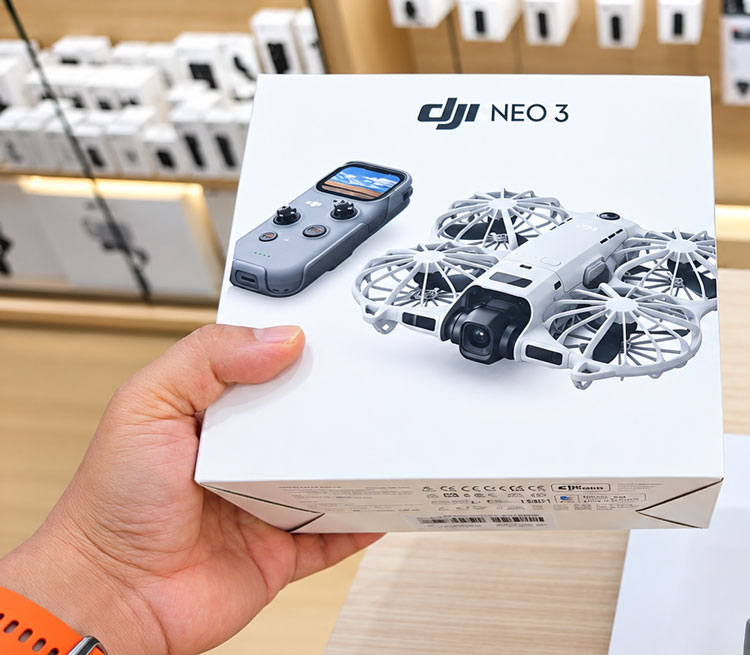
DJI Neo 3 Promises a Bigger Sensor: Full Specification Leaked
Huawei just built the camera Sony QX lenses failed to be