
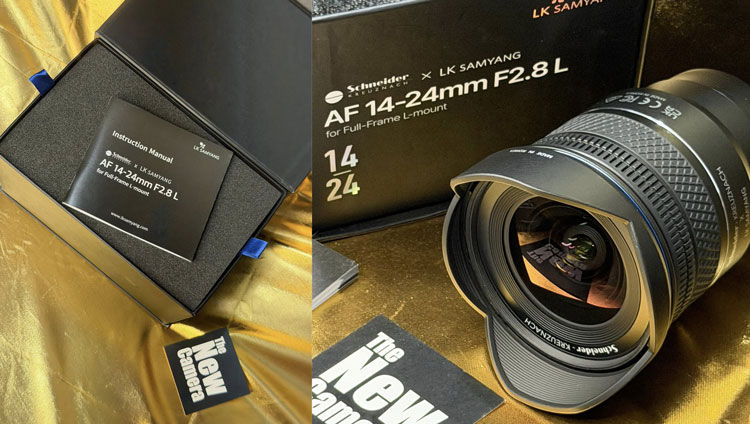
For L-mount shooters who regularly shoot night streets and urban landscapes, the lens options have always felt like a compromise. You could carry the excellent but heavy Sigma 14-24mm f/2.8 DG DN Art, or spend Leica money for the 14-24mm f/2.8 ASPH. The LK Samyang AF 14-24mm F2.8 L, developed in collaboration with Schneider-Kreuznach, is the first lens that genuinely feels like it was designed with real-world night and urban shooters in mind.
I spent several nights testing this lens on my Panasonic Lumix S5 II, walking city streets after dark, chasing light trails, and working with reflections on wet pavement. What surprised me most was how often I reached for it instead of my usual primes. Sample images from these sessions will be updated on this page later this week.
Key Specifications
| Parameter | Details |
| Focal Length | 14-24mm |
| Aperture | f/2.8 constant – f/22 |
| Optical Construction | 15 elements in 11 groups (3 ASP, 5 HR, 3 ED) |
| Coating | UMC |
| Minimum Focus | 0.18m |
| Max. Magnification | 0.17× (14mm) / 0.26× (24mm) |
| Aperture Blades | 9 (rounded) |
| Filter Thread | 77mm (front) |
| Dimensions | 84mm diameter × 86.8–96.6mm length |
| Weight | 441g |
| Weather Sealing | Yes |
| AF Motor | Linear STM |
| Mount | Leica L |
| Angle of View (FF) | 114.2° – 84.1° |
continue
US Pricing (June 2026): Approximately $1,199 street price. Available at B&H Photo, Adorama, and major US retailers.
Build, Handling & Real-World Usability
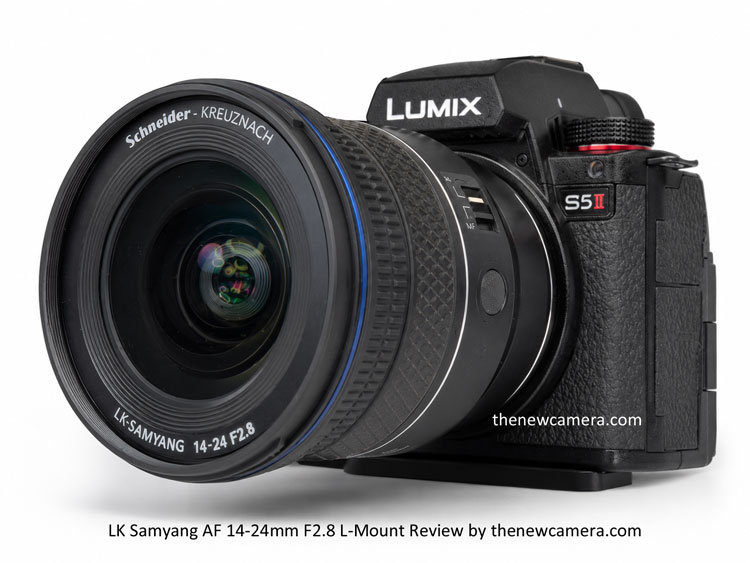
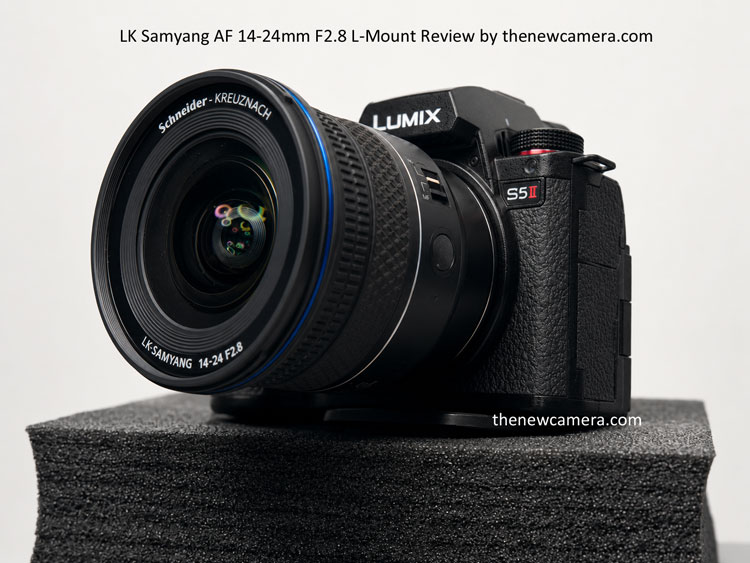
At just 441g, this is dramatically lighter than the Sigma 14-24mm f/2.8 Art. On the S5 II, the combination feels almost like a large prime rather than a zoom. After a full night of walking and shooting, my shoulder and wrist were noticeably less fatigued than with heavier glass.
The 77mm front filter thread is the feature that will matter most to night and urban photographers. While Sigma and Leica force you into rear gelatin filters or no filters at all, the Samyang lets you mount regular NDs for long-exposure light trails or CPLs to control reflections on wet streets and glass. During testing, I found this single feature changed how I approached night street work.
While walking through downtown streets after dark, the 14mm end let me exaggerate the height of buildings and leading lines from wet pavement reflections in a way my 24mm prime never could. With the S5 II’s IBIS, I could comfortably shoot at 1/15s handheld at f/2.8 and ISO 1600 without camera shake ruining the shot — something that would have required a tripod with heavier glass.
Build quality is solid with effective weather sealing. The rings are smooth, and the AF/MF switch is useful.
Image Quality – Real-World Performance
Sharpness
Center sharpness is excellent at f/2.8 across the zoom range. It becomes outstanding by f/4–f/5.6. At 14mm, the corners are good but not perfect wide open — they tighten up nicely by f/4. Between 20–24mm the lens is impressively consistent even at f/2.8. For night street work, I found f/4 delivered the cleanest results when I wanted maximum detail in building facades and street textures.
Distortion & Vignetting
There is noticeable barrel distortion and quite strong vignetting at 14mm. Both are easily corrected in Lightroom. In night street photography, the vignetting sometimes added a pleasing mood to scenes. For straight architectural lines, I preferred working at 18–24mm or applying corrections in post.
Flare & Ghosting
This remains the lens’s weakest area. In challenging night conditions with strong streetlights or headlights, ring flare and ghosting can appear. It’s manageable with careful composition and stopping down slightly, but you need to stay aware of it.
Night Street & Urban Landscape Performance
This is where the lens really shines. The constant f/2.8 aperture, combined with the S5 II’s excellent IBIS, let me shoot clean night streets at ISO 800–1600 handheld in situations where I previously needed higher ISOs or support.
One night, while shooting light trails on a busy avenue, I used a 6-stop ND filter on the 77mm thread and was able to get smooth 2-second exposures of moving traffic while keeping the buildings and street details sharp. The ability to use standard filters instead of fighting with rear gels or no filtration at all made the whole process much more enjoyable and creative.
Coma is well controlled for an ultra-wide zoom, so point light sources remain reasonably round toward the edges — useful when you have a mix of streetlights and building illumination in the frame.
Close Focus & Rendering
The 0.18m minimum focus distance is genuinely useful. I used it for environmental night portraits and detail shots of street elements with pleasing subject separation. Bokeh is smooth and rounded for an ultra-wide — very good in context.
Autofocus & Hybrid Use
The Linear STM autofocus is fast, quiet, and accurate on the S5 II. It works well for both stills and video. Focus breathing is low. For hybrid shooters doing run-and-gun night street work or urban documentary video, this lens performs confidently.
Pros & Cons
Pros
- Extremely compact and lightweight (441g) — best-in-class portability
- 77mm front filter thread — major practical advantage for night and urban photography
- Excellent center sharpness at f/2.8; very good across the frame stopped down
- Good coma control for night cityscapes
- Close focusing (0.18m) adds creative flexibility
- Solid weather sealing
- Strong value compared to Sigma and Leica options
- Quiet, reliable Linear STM AF
Cons
- Noticeable distortion and vignetting at 14mm (correctable but present)
- Average flare resistance in strong backlit night conditions
- No optical stabilization (relies on camera IBIS)
Comparison Table
| Lens | Weight | Filter Thread | Approx. US Price | Strengths | Weaknesses |
| Samyang 14-24mm f/2.8 L | 441g | 77mm front | $1,199 | Portability, filter convenience, value | Little distortion at 14mm |
| Sigma 14-24mm f/2.8 Art | 795g | Rear only | $1,539 | Even sharpness, build | Size, weight, price |
| Leica 14-24mm f/2.8 ASPH | ~1,000g+ | None | $2,950 | Premium rendering & build | Size, weight, very high price |
Who It’s For & Final Verdict
If your priority is carrying less gear while still getting excellent results for night street photography and urban landscapes — with the real-world convenience of a proper filter thread — the Samyang 14-24mm f/2.8 L is currently the most compelling option in L-mount under $1,500.
It’s not optically flawless. If you shoot a lot of critical architecture and want the most even performance with minimal post-processing, the Sigma 14-24mm f/2.8 Art is still worth considering despite its size and higher price. But for the majority of night street, urban, travel, and hybrid shooters, the Samyang’s combination of size, weight, image quality, and filter flexibility makes it the smarter daily choice.
In my testing, I found myself choosing this lens more often than my heavier options because it simply made the experience of shooting at night more enjoyable. That, to me, is the highest compliment you can give a lens.
Sample images captured with this lens on my S5 II (night streets, light trails, urban nightscapes, and blue-hour city views) will be updated on this page later this week.
Happy Shooting thenewcamera.com Team
The article “LK Samyang 14-24mm f/2.8 L-Mount Review: Is This the Best Ultra-Wide Zoom for Night Street Photography?” was written by thenewcamera.com Team on 8:00 pm, Tuesday, 9 June 2026, Greenwich Mean Time (GMT) | You can also follow us on Our Official Social Media Handles FACEBOOK | TWITTER | INSTAGRAM