Join More Than 50,000+ Subscribers and get latest camera news and rumors
NEW CAMERA VIDEOS ON YOUTUBE
|
By admin, on November 4th, 2021 
Sony A7 IV vs Sony A7R III – We are comparing these two cameras since the price factor of both is up to some extent. So, let’s talk about the Major core differences between the two.
Keep in mind the specification we are using here is of the latest Sony A7R IIIA Camera.
Compared to its predecessor the a7R III, the most significant improvement of the a7R IIIA is the rear LCD resolution, which jumps from 1,440,000 to 2,359,296 dots. The USB port has also been upgraded from a USB 3.1 Gen 1 Type-C Port to a faster USB 3.2 Gen 1 Type-C Port. Beside these two improvements, the a7R III and a7R IIIA are equal in specifications and performance.
|
Sony A7 IV |
Sony A7R III |
| Lens Mount |
Sony E |
Sony E |
| Sensor Type |
35.9 x 23.9 mm (Full-Frame) CMOS |
35.9 x 24 mm (Full-Frame) CMOS |
| Sensor Resolution |
Actual: 34.1 Megapixel
Effective: 33 Megapixel |
Actual: 43.6 Megapixel
Effective: 42.4 Megapixel (7952 x 5304) |
| Crop Factor |
None |
None |
| Aspect Ratio |
1:1, 3:2, 4:3, 16:9 |
3:2, 16:9 |
| Image File Format |
JPEG, Raw, HEIF |
JPEG, Raw |
| Bit Depth |
14-Bit |
14-Bit |
| Image Stabilization |
Sensor-Shift, 5-Axis + Gyro Based IS |
Sensor-Shift, 5-Axis |
Image Quality:
Sony A7R III Features a BSI 42.4-megapixel Exmor R CMOS sensor that works with the BIONZ X image processor to offer high-resolution stills and video while minimizing noise and improving speed.
The newly developed 33MP Exmor R full-frame sensor features a back-illuminated design that promotes high clarity, low noise, and vivid color rendering. Paired up with a more advanced BIONZ XR Image processor.
ISO Rating
- 100 to 51200 (Extended: 50 to 204800
- 100 to 32000 (Extended: 50 to 102400)
Sony A7R III additional advantage: Pixel Shift Multi Shooting, this mode shifts the sensor while making four consecutive exposures in order to acquire approximately 169.6MP
Verdict (Image Processor): For Studio Shooters: Sony A7R III – features a super high-resolution sensor, but needs more light to deliver ultimate details compared to A7 IV. If you are a wedding photographer, casual style shooter or Hybrid shooter the Sony A7 IV is made for you.
|
Sony A7 IV |
Sony A7R III |
| ISO Sensitivity |
Auto, 100 to 51200 (Extended: 50 to 204800) |
Auto, 100 to 32000 (Extended: 50 to 102400) |
| Shutter Speed |
1/8000 to 30 Second
Bulb Mode |
1/8000 to 30 Seconds
1/8000 to 1/4 Second in Movie Mode
Bulb Mode |
| Metering Method |
Center-Weighted Average, Highlight Weighted, Multiple, Spot |
Center-Weighted Average, Highlight Weighted, Multi-Zone, Spot |
| Exposure Modes |
Aperture Priority, Manual, Program, Shutter Priority |
Aperture Priority, Auto, Manual, Program, Shutter Priority |
| Exposure Compensation |
-5 to +5 EV (1/3 EV Steps) |
-5 to +5 EV (1/3, 1/2 EV Steps) |
| Metering Range |
-3 to 20 EV |
-3 to 20 EV |
| White Balance |
Auto, Cloudy, Color Temperature, Color Temperature Filter, Custom, Daylight, Flash, Fluorescent (Cool White), Fluorescent (Day White), Fluorescent (Daylight), Fluorescent (Warm White), Incandescent, Shade, Underwater |
Auto, Cloudy, Color Temperature, Custom, Daylight, Flash, Fluorescent (Cool White), Fluorescent (Daylight), Fluorescent (Warm White), Incandescent, Shade, Underwater |
| Continuous Shooting |
Up to 10 fps at 33 MP for up to 828 Frames (Raw) / Unlimited Frames (JPEG) |
Up to 10 fps at 42.4 MP for up to 76 Frames (Raw) / 76 Frames (JPEG)
Up to 8 fps at 42.4 MP for up to 76 Frames (Raw) / 76 Frames (JPEG)
Up to 6 fps at 42.4 MP for up to 76 Frames (Raw) / 76 Frames (JPEG)
Up to 3 fps at 42.4 MP for up to 76 Frames (Raw) / 76 Frames (JPEG) |
| Interval Recording |
Yes |
2/5/10-Second Delay |
| Self-Timer |
2/5/10-Second Delay |
Autofocus
The New BIKONZ XR image processor features a new AF Algo for advanced tracking system. Let’s have a look at the screen coverage and number of AF points we are getting in both camera.
- A7 IV: 759 phase, 425 contrast Screen Coverage 94 %
- A7R III: 399 phase, 425 contrast Screen Coverage 68 %
Burst shooting
Both feature the same Burst Shooting Speed 10 FPS
- Sony A7 IV @ 10 FPS (33 MP) JPGs or Lossy Compressed RAW.
- Sony A7R III @ 10 FPS (42 MP) JPG or Uncompressed RAW
Buffer Size
- Sony A7 IV Can Record up to 1,000 files (JPGs, or lossless compressed RAW).
- Sony A7 III Can Record up to 76 JPGs, 76 RAW (compressed) or 30 RAW (uncompressed).
|
Sony A7 IV |
Sony A7R III |
| Focus Type |
Auto and Manual Focus |
Auto and Manual Focus |
| Focus Mode |
Continuous-Servo AF (C), Direct Manual Focus (DMF), Manual Focus (M), Single-Servo AF (S) |
Automatic (A), Continuous-Servo AF (C), Direct Manual Focus (DMF), Manual Focus (M), Single-Servo AF (S) |
| Autofocus Points |
Phase Detection: 759
Contrast Detection: 425 |
Phase Detection: 399
Contrast Detection: 425 |
| Autofocus Sensitivity |
-4 to +20 EV |
-2 to +20 EV |
Verdict (Autofocus): Sony A7 IV features a more advanced tracking system than the Sony A7R III camera. As well as more buffer, the best camera in-between these two is for sure the Sony A7 IV.
Faster Image Processor and Slower Speed, Why Sony?
Sony A7R III uses an older image processor Bionz X, despite that the A7R III camera is able to process a 42MP Sensor @ 10 FPS Uncompressed RAW. But, at the same time, the Sony A7 IV Camera uses a Bionz XR image processor with faster processing speed but the A7 IV speed is limited to 10FPS with lossless compressed RAW.
|
Sony A7 IV |
Sony A7R III
|
| Recording Modes |
H.265/XAVC HS 4:2:2 10-Bit
UHD 4K (3840 x 2160) at 23.976p/50p/59.94p [50 to 200 Mb/s]
H.265/XAVC HS 4:2:0 10-Bit
UHD 4K (3840 x 2160) at 23.976p/50p/59.94p [30 to 150 Mb/s]
H.264/XAVC S-I 4:2:2 10-Bit
UHD 4K (3840 x 2160) at 23.976p/25p/29.97p/50p/59.94p [240 to 600 Mb/s]
Full HD (1920 x 1080) at 23.976p/25p/29.97p/50p/59.94p [89 to 222 Mb/s]
XAVC S 4:2:2 10-Bit
UHD 4K (3840 x 2160) at 23.976p/25p/29.97p/50p/59.94p [100 to 200 Mb/s]
Full HD (1920 x 1080) at 23.976p/25p/29.97p/50p/59.94p [50 Mb/s]
XAVC S 4:2:0 8-Bit
UHD 4K (3840 x 2160) at 23.976p/25p/29.97p/50p/59.94p [60 to 150 Mb/s]
Full HD (1920 x 1080) at 23.976p/25p/29.97p/50p/59.94p/100p/119.88p [16 to 100 Mb/s] |
XAVC S
UHD 4K (3840 x 2160) at 23.976p/25p/29.97p [60 to 100 Mb/s]
Full HD (1920 x 1080) at 23.976p/25p/29.97p/50p/59.94p/100p/119.88p [100 Mb/s]
HD (1280 x 720) at 100p/119.88p [50 Mb/s]
AVCHD
Full HD (1920 x 1080) at 50p/59.94p [28 Mb/s]
Full HD (1920 x 1080) at 23.976p/25p/50i/59.94i [17 to 24 Mb/s]
MP4
Full HD (1920 x 1080) at 50p/59.94p [28 Mb/s]
Full HD (1920 x 1080) at 25p/29.97p [16 Mb/s]
HD (1280 x 720) at 25p/29.97p [6 Mb/s] |
| External Recording Modes |
4:2:2 10-Bit
UHD 4K (3840 x 2160) at 23.976p/25p/29.97p/50p/59.94p
Full HD (1920 x 1080) at 23.976p/50p/59.94p
Full HD (1920 x 1080) at 50i/59.94i
4:2:0 8-Bit
UHD 4K (3840 x 2160) at 23.976p/25p/29.97p/50p/59.94p
Full HD (1920 x 1080) at 23.976p/50p/59.94p
Full HD (1920 x 1080) at 50i/59.94i |
4:2:2 8-Bit
UHD 4K (3840 x 2160) at 24.00p/25p/29.97p
Full HD (1920 x 1080) at 24.00p/50i/50p/59.94i/59.94p |
| Recording Limit |
Unlimited |
Up to 29 Minutes |
| Video Encoding |
NTSC/PAL |
NTSC/PAL |
| Audio Recording |
Built-In Microphone (Stereo)
External Microphone Input (Stereo) |
Built-In Microphone (Stereo)
External Microphone Input |
| Audio File Format |
AAC, Linear PCM (Stereo) |
AC3, Dolby Digital 2ch, Linear PCM (Stereo) |
| Live Streaming |
Yes |
| Webcam Functionality |
Yes |
High Quality 7K Down sampled Video at Standard 4K
The A7 IV can record 4K up to 30p with no sensor crop and full pixel readout (7K Downsampled to create standard 4K 30p, 24p Video) without pixel binning (in other words, at the best quality possible).
Cropping at 4k 60p Sony A7 IV, when you will use the 50 and 60p mode in the Sony A7 IV camera, you have to face a 1.5x crop on the sensor (aka Super35/APS-C mode)
S-Cinetone can be used to deliver distinct colors and healthy-looking skin tone rendering that matches the FX9 and FX6 cameras, along with the a1 and a7S III, and is based on technology from the professional Cinema Line cameras, such as the VENICE. This color profile offers natural mid-tones, soft colors, and especially well-controlled highlights.
- Gryo Based IBIS in Sony A7 IV – the A7 IV has gyro stabilization and would store metadata for the gyro which can be edited later.
- Enhanced Vlogging AF Modes – Sony also added the product focusing mode, face exposure to upscale your full-frame Vlogging experience.
Sony A7R III 4k Full Sensor readout uses Pixel Binning / Lime Skipping
In full-frame mode, while recording 4k Videos at 24p and 30p, the Sony A7R III camera does line-skipping due to limited processing power. You also have a crop mode in 4K standard Video recording mode to get more details.
10 Bit Internal
- You Can also record 1 hour in 4K 60p with 10-bit 4:2:2 with Sony A7 IV
- No such option hin Sony A7R III
Verdict Video: Sony A7R III look weak in Video core specification and settings.
|
Sony A7 IV |
Sony A7R III |
| Viewfinder Type |
Electronic (OLED) |
Electronic |
| Viewfinder Size |
0.5″ |
0.5″ |
| Viewfinder Resolution |
3,680,000 Dot |
3,686,400 Dot |
| Viewfinder Eye Point |
23 mm |
23 mm |
| Viewfinder Coverage |
100% |
100% |
| Viewfinder Magnification |
Approx. 0.78x |
Approx. 0.78x |
| Diopter Adjustment |
-4 to +3 |
-4 to +3 |
The various-angle display screen is really very impressive and makes it a perfect camera for vloggers.
Full-size HDMI A port and multi-interface hot-shoe in Sony A7 IV offers a more reliable connection when working with external recorders and sony’s own accessories.
|
Sony A7 IV |
Sony A7R III |
| Media/Memory Card Slot |
Slot 1: CFexpress Type A / SD (UHS-II)
Slot 2: SD/SDHC/SDXC (UHS-II) |
Slot 1: SD/SDHC/SDXC (UHS-II)
Slot 2: SD/SDHC/SDXC/Memory Stick Duo Hybrid (UHS-I) |
| Connectivity |
HDMI A (Full Size), USB Type-C (USB 3.2 Gen 2), USB Micro-B (USB 2.0), 3.5mm Microphone, 3.5mm Headphone |
3.5mm Headphone, 3.5mm Microphone, HDMI D (Micro), USB Type-C (USB 3.0), USB Micro-B (USB 2.0) |
| Wireless |
Wi-Fi
Bluetooth |
Wi-Fi
Bluetooth |
| GPS |
No |
No |
Size and weight
|
Sony A7 IV |
Sony A7R III
|
| Battery |
1 x NP-FZ100 Rechargeable Lithium-Ion, 7.2 VDC, 2280 mAh (Approx. 520 Shots) |
1 x NP-FZ100 Rechargeable Lithium-Ion, 7.2 VDC, 2280 mAh (Approx. 530 Shots) |
| Dimensions (W x H x D) |
5.2 x 3.8 x 3.1″ / 131.3 x 96.4 x 79.8 mm |
5 x 3.76 x 2.9″ / 126.9 x 95.6 x 73.7 mm |
| Weight |
1.4 lb / 658 g (Body with Battery and Memory) |
1.45 lb / 657 g |
Final Verdict: Sony A7 IV Camera is very impressive with its core specification and is recommended for Hybrid shooters of all type, if you work in a studio only and does product and model photography then A7R III is more recommended to you.
By admin, on October 22nd, 2021 
Sony A7 IV vs Canon R6 – Take a look at the specification comparison between the two
| Lens Mount |
Sony E |
Canon RF |
| Sensor Type |
35.9 x 23.9 mm (Full-Frame) CMOS |
36 x 24 mm (Full-Frame) CMOS |
| Sensor Resolution |
Actual: 34.1 Megapixel
Effective: 33 Megapixel |
Actual: 21.4 Megapixel
Effective: 20.1 Megapixel (5472 x 3648) |
| Crop Factor |
None |
None |
| Aspect Ratio |
1:1, 3:2, 4:3, 16:9 |
1:1, 4:3, 16:9 |
| Image File Format |
JPEG, Raw, HEIF |
JPEG, Raw, HEIF |
| Bit Depth |
14-Bit |
14-Bit |
| Image Stabilization |
Sensor-Shift, 5-Axis, 5 Stops of IS |
Sensor-Shift, 5-Axis, 8 Stops of IS |
Exposure Image
|
Sony A7 IV |
Canon EOS R6 |
| ISO Sensitivity |
Auto, 100 to 51200 (Extended: 50 to 204800) |
Auto, 100 to 102400 (Extended: 100 to 204800) |
| Shutter Speed |
1/8000 to 30 Second
Bulb Mode |
Mechanical Shutter
1/8000 to 30 Seconds
Electronic Front Curtain Shutter
1/8000 to 30 Seconds
Electronic Shutter
1/8000 to 0.5 Seconds |
| Metering Method |
Center-Weighted Average, Highlight Weighted, Multiple, Spot |
Center-Weighted Average, Evaluative, Partial, Spot |
| Exposure Modes |
Aperture Priority, Manual, Program, Shutter Priority |
Aperture Priority, Auto, Manual, Program, Shutter Priority |
| Exposure Compensation |
-5 to +5 EV (1/3 EV Steps) |
-3 to +3 EV (1/3, 1/2 EV Steps) |
| Metering Range |
-3 to 20 EV |
-3 to 20 EV |
| White Balance |
Auto, Cloudy, Color Temperature, Color Temperature Filter, Custom, Daylight, Flash, Fluorescent (Cool White), Fluorescent (Day White), Fluorescent (Daylight), Fluorescent (Warm White), Incandescent, Shade, Underwater |
Auto, Cloudy, Color Temperature, Custom, Daylight, Flash, Fluorescent (White), Shade, Tungsten |
| Continuous Shooting |
Up to 10 fps at 33 MP for up to 828 Frames (Raw) / Unlimited Frames (JPEG) |
Mechanical Shutter
Up to 12 fps at 20 MP for up to 1000 Frames (JPEG) / 240 Frames (Raw)
Electronic Shutter
Up to 20 fps at 20 MP for up to 1000 Frames (JPEG) / 240 Frames (Raw) |
| Interval Recording |
Yes |
Yes |
| Self-Timer |
2/5/10-Second Delay |
2/10-Second Delay |
Video modes of both the camera
|
Sony A7 IV |
Canon EOS R6 |
| Recording Modes |
H.265/XAVC HS 4:2:2 10-Bit
UHD 4K (3840 x 2160) at 23.976p/50p/59.94p [50 to 200 Mb/s]
H.265/XAVC HS 4:2:0 10-Bit
UHD 4K (3840 x 2160) at 23.976p/50p/59.94p [30 to 150 Mb/s]
H.264/XAVC S-I 4:2:2 10-Bit
UHD 4K (3840 x 2160) at 23.976p/25p/29.97p/50p/59.94p [240 to 600 Mb/s]
Full HD (1920 x 1080) at 23.976p/25p/29.97p/50p/59.94p [89 to 222 Mb/s]
XAVC S 4:2:2 10-Bit
UHD 4K (3840 x 2160) at 23.976p/25p/29.97p/50p/59.94p [100 to 200 Mb/s]
Full HD (1920 x 1080) at 23.976p/25p/29.97p/50p/59.94p [50 Mb/s]
XAVC S 4:2:0 8-Bit
UHD 4K (3840 x 2160) at 23.976p/25p/29.97p/50p/59.94p [60 to 150 Mb/s]
Full HD (1920 x 1080) at 23.976p/25p/29.97p/50p/59.94p/100p/119.88p [16 to 100 Mb/s] |
H.265 4:2:2 10-Bit
UHD 4K (3840 x 2160) at 23.976p/29.97p/59.94p [170 to 340 Mb/s]
Full HD (1920 x 1080) at 23.976p/29.97p/59.94p/119.88p [28 to 180 Mb/s]
H.264 4:2:0 8-Bit
UHD 4K (3840 x 2160) at 23.976p/29.97p/59.94p [120 to 230 Mb/s]
Full HD (1920 x 1080) at 23.976p/29.97p/59.94p/119.88p [12 to 120 Mb/s] |
| External Recording Modes |
4:2:2 10-Bit
UHD 4K (3840 x 2160) at 23.976p/25p/29.97p/50p/59.94p
Full HD (1920 x 1080) at 23.976p/50p/59.94p
Full HD (1920 x 1080) at 50i/59.94i
4:2:0 8-Bit
UHD 4K (3840 x 2160) at 23.976p/25p/29.97p/50p/59.94p
Full HD (1920 x 1080) at 23.976p/50p/59.94p
Full HD (1920 x 1080) at 50i/59.94i |
4:2:2 10-Bit
UHD 4K (3840 x 2160) up to 59.94p |
| Recording Limit |
Unlimited |
Up to 29 Minutes, 59 Seconds |
| Video Encoding |
NTSC/PAL |
NTSC/PAL |
| Audio Recording |
Built-In Microphone (Stereo)
External Microphone Input (Stereo) |
Built-In Microphone (Stereo)
External Microphone Input |
| Audio File Format |
AAC, Linear PCM (Stereo) |
AAC, Linear PCM |
| Live Streaming |
Yes |
| Webcam Functionality |
Yes |
AutoFocus Types
| Focus Type |
Auto and Manual Focus |
Auto and Manual Focus |
| Focus Mode |
Continuous-Servo AF (C), Direct Manual Focus (DMF), Manual Focus (M), Single-Servo AF (S) |
Continuous-Servo AF (C), Manual Focus (M), Single-Servo AF (S) |
| Autofocus Points |
Phase Detection: 759
Contrast Detection: 425 |
Phase Detection: 1053 |
| Autofocus Sensitivity |
-4 to +20 EV |
-6.5 to +20 EV |
Viewfinder
| Viewfinder Type |
Electronic (OLED) |
Electronic (OLED) |
| Viewfinder Size |
0.5″ |
0.5″ |
| Viewfinder Resolution |
3,680,000 Dot |
3,690,000 Dot |
| Viewfinder Eye Point |
23 mm |
23 mm |
| Viewfinder Coverage |
100% |
100% |
| Viewfinder Magnification |
Approx. 0.78x |
Approx. 0.76x |
| Diopter Adjustment |
-4 to +3 |
-4 to +2 |
Display
|
Sony A7 IV |
Canon R6 |
| Size |
3.0″ |
3.0″ |
| Resolution |
1,036,800 Dot |
1,620,000 Dot |
| Display Type |
Free-Angle Tilting Touchscreen LCD |
Free-Angle Tilting Touchscreen LCD |
Card Slots
|
Sony A7 IV |
Canon R6 |
| Media/Memory Card Slot |
Slot 1: CFexpress Type A / SD (UHS-II)
Slot 2: SD/SDHC/SDXC (UHS-II) |
Dual Slot: SD/SDHC/SDXC (UHS-II) |
| Connectivity |
HDMI A (Full Size), USB Type-C (USB 3.2 Gen 2), USB Micro-B (USB 2.0), 3.5mm Microphone, 3.5mm Headphone |
USB Type-C (USB 3.1), HDMI D (Micro), 3.5mm Headphone, 3.5mm Microphone |
| Wireless |
Wi-Fi
Bluetooth |
Wi-Fi
Bluetooth |
| GPS |
No |
No |
By admin, on October 22nd, 2021 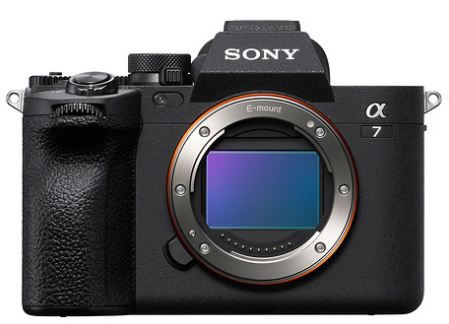
Sony finally announced the new Sony A7 IV camera today. the camera features a newly developed 33 MP Exmor R BSI CMOS Sensor. Optimized video, optimized sensitivity, optimized speed, the Sony Alpha a7 IV raises the bar for what a full-frame mirrorless camera is capable of. The new A7 IV uses a BIONZ XR processor, the same image processor we have seen in the Sony in the A7S III camera, which offers a whopping 15+ stops of dynamic range as well as the new A7 IV processor is 8x more processing power than the BIONZ X processor found in the A7 III.
Buy Sony A7 IV Camera at Amazon.com
Buy Sony A7 IV Camera at B&H Store
Both cameras feature the same High ISO range up to 204800, but due to the new image processor with a new image decoding algorithm as well as a new higher-resolution sensor on the board we will get more details with less noise in the new Sony A7 IV camera compared to the Sony A7 III.
10 Bit internal recording is one of the key eye-catching features of the new Sony A7 IV camera, and that is why it becomes a perfect companion for a filmmaker too looking for a perfect Mid-range Mirrorless camera. 4K/30p video is oversampled from 7K, but unfortunately 4K/60p is oversampled from 4.8K in the APS-C Super 35 mode. So when shooting in 4K at 30p, the camera utilizes the full width of the image sensor to oversample from 7K’s worth of data, but at 60p, a 1.5x crop is applied.
Sony has done a lot of work in improving the AF mechanism of the camera, although the number of Hybrid AF points is slightly improved but we do have a major change in Sony A7 IV It also has the recent focusing algorithm that’s the same as the one used by the recently released A7S III, we also have a major upgrade in the buffer memory of the Sony A7 IV camera when shooting Raw files, being able to shoot at 10fps for up to 830 JPG+RAW images in one high-speed burst.
The Sony A7 IV is a very impressive camera and we do hope and expect it will create a major impact on the Fullframe mirrorless market.
Press Release Sony A7 IV
Sony Electronics’ Alpha 7 IV Goes Beyond ‘Basic’ with 33-Megapixel Full-frame Image Sensor and Outstanding Photo and Video Operability
Sony Also Announces Two New Flashes to Evolve the Powerful Alpha Lighting System
San Diego, CA – October 21, 2021 – Sony Electronics Inc. today announced three new additions to its imaging line-up: the Alpha 7 IV interchangeable-lens camera (model ILCE-7M4) with a newly developed 33-megapixel (approx.,effective) full-frame image sensor, as well as two new flashes – the HVL-F60RM2 and HVL-F46RM.
The Alpha 7 IV takes “basic” to the next level for full-frame cameras with excellent image quality and performance, redefining the lofty standards set by the acclaimed Alpha 7 III. The new model features many of Sony’s most advanced imaging technologies, including the latest BIONZ XR™ processing engine and advanced AF (autofocus) capabilities from the flagship Alpha 1 combined with streamlined operability and enhanced reliability for photos and movies, making it the perfect all-around camera for today’s imaging enthusiasts and professionals. The Alpha 7 IV also boasts a 33MP (approx., effective) image resolution, rich movie expression and various features to support the growing demand for remote communication, bringing new meaning to what a “basic” camera can accomplish.
“Since its introduction over three years ago, the Alpha 7 III has made tremendous impact in our industry, completely redefining the expectations for what can be accomplished with a ‘basic’, or entry-level full-frame camera,” said Yang Cheng, Vice President, Imaging Solutions, Sony Electronics Inc. “Now, it’s time to break through all existing boundaries again. The Alpha 7 IV brings together the best of Sony imaging technologies in both photo and video to deliver a high-end experience to a wider range of customers. This gives today’s creators a new level of freedom to capture, create and share in ways that they’ve never been able to before, no matter the situation in which they find themselves.”
Alpha 7 IV: Innovation Never Ends
The new Alpha 7 IV is an exceptional hybrid camera packed with outstanding still image quality and evolved video technology with advanced autofocus, enhanced operability and improved workflow capability. The model was developed with the environment in mind by using Sony’s original recycled plastic SORPLAS™ for the camera body and packaging with recyclable materials and less plastic.
Outstanding Image Quality
Thanks to a newly developed 33MP (approx., effective) full-frame back-illuminated Exmor R™ CMOS image sensor, superior image quality and Wide ISO sensitivity range expandable to ISO 50 – 204,800 is achieved. The high resolution enables the Alpha 7 IV to express smooth gradation, fine details and textures of the subject while reducing noise, and its 15-stop dynamic range allows a wide expressive range while Creative Look settings can help create original looks effortlessly for both stills and video.
Next-Level AF performance
The latest BIONZ XR™ processing engine is the same that is used in Sony’s flagship Alpha 1, delivering high-speed AF, uninterrupted continuous shooting up to 10fps with AF/AE tracking and a large buffer for a prolonged shooting experience. The Alpha 7 IV tracks subjects with tenacious Real-time Tracking and 759 phase-detection AF points in a high-density focal plane phase-detection AF system that covers approximately 94% of the image area. Additionally, for the first time, Real-time Eye AF can now track birds’ and animals’ eye for both still images and movies, in addition to humans. The Alpha 7 IV also has face and eye detection accuracy for humans that is improved by approximately 30% compared to the Alpha 7 III.
Evolved Movie Technology
The Alpha 7 IV inherits technology taken from real-world movie production, including the S-Cinetone™ picture profile adopted from Sony’s highly regarded Cinema Line cameras. This delivers a rich, cinematic look that has become popularized by a broad range of cinematographers and filmmakers who are shooting on Sony. High quality movie is achieved with 4K 60p recording in Super 35mm mode and up to 4K 30p recording with 7K oversampling is available in full-frame mode. The new camera also features 10-bit depth 4:2:2 color sampling to enable natural gradation, XAVC S-I™ intra-frame encoding for more efficient editing workflows and XAVC HS™ H.265 long-GOP for doubled compression efficiency.
To meet the growing need for precise autofocus performance when shooting videos, unique AF features are achieved when using the Alpha 7 IV with a Sony E-mount lens, including AF Assist that supports focus transitions when using AF, and Focus Map that visualizes depth of field. For the first time in the Alpha series, the new camera features Breathing Compensation to combat focus breathing and maintain a consistent angle of view throughout focus changes and can be switched on or off.
Advanced Operability as a Genuine Hybrid Model
The Alpha 7 IV is a hybrid still and video camera with outstanding operability and reliability that easily allows the user to switch from photo to video and back at their convenience. New to Sony’s lineup of Alpha cameras is a dual-layer mode dial, with a lower layer for selecting Still/Movie/S&Q and a top layer for Auto/P/A/S/M and MR (Memory Recall), enabling users to quickly select and switch between the dedicated settings. It also has 5-axis optical in-body image stabilization for a 5.5-step[v] shutter speed advantage, an improved grip for greater comfort, and a CFexpress Type A compatible media slot to support media with faster writing and clearance. Additionally, the 3.68 million-dot (approx.) OLED Quad-VGA viewfinder is 1.6 times the resolution of the Alpha 7 III viewfinder, benefiting users with an upgraded live-view image quality that minimizes false color and increases resolution.
Videographers can record 4K 60p 10-bit 4:2:2 video continuously for more than an hour thanks to the camera’s heat-dissipating structure. Optical ‘Active Mode image stabilization further stabilizes movie shooting. They can also benefit from the 3-inch (3.0-type) 1.03 million-dot (approx.) side-opening vari-angle touch-panel rear LCD monitor, top-panel REC button and high-capacity Z-series battery.
The Alpha 7 IV body is built with magnesium alloy to achieve a robustness while minimizing its weight. In addition, the redesigned structure and lens lock button contribute to enhanced dust and moisture resistance.
Enhanced Workflow Capabilities
By offering a variety of connectivity options, the Alpha 7 IV enables on-the-spot streaming and sharing of high-quality content to meet the growing need for remote communication in real-time without sacrificing excellent image and sound quality. The connection between the camera and Imaging EdgeMobile™ application[viii] is simplified via Bluetooth, and fast data transfer is possible by 5GHz/2.4.GHz Wi-Fi.
The camera also has a new feature called “Shot Mark” to enable easy access to the marked scenes in a video clip, within camera and on Sony’s Catalyst Browse/Prepare applications.[ix]
Moreover, the camera has a range of new features to support live streaming and remote communication without needing dedicated software. UVC (USB Video Class) and UAC (USB Audio Class) turn the Alpha 7 IV into a high-performance live streaming camera when connected to a computer or smartphone[x]. High image quality such as 4K 15p and 1080 FHD 60p deliver realistic video for remote sharing and the Alpha 7 IV’s digital audio interface can be paired with a range of mics and accessories to deliver high quality sound.
Finally, Sony plans to offer a new cloud service next year, “AI Video Editing Studio”, for automated editing with AI technology. To allow creators to focus on more creative tasks, “AI Video Editing Studio” automatically performs initial editing in the cloud, using AI technology. Sony will continue to strive to offer a wide variety of imaging experiences and services through the active integration and advancement of cameras, cloud and AI.
Designed with the Environment in Mind
In line with Sony’s environmental efforts based on the “Road to Zero” initiative, environment was an important factor in the development of the Alpha 7 IV’s design, production and packaging. The camera uses recycled plastic, SORPLAS™, which does not depend on non-renewable resources and is produced at the sites by using renewable energy such as solar power generation. The product packaging also adopts recyclable plastic-reduced materials.
HVL-F60RM2 and HVL-F46RM: Powerful Flashes to Evolve Alpha Lighting System
The HVL-F60RM2 with GN 60 and 20-200mm coverage and HVL-F46RM with GN 46 and 24-105mm are powerful wireless flashes to offer precise control, enhanced high-speed and intuitive operability. They are designed to meet the needs of both professional and advanced content creators when shooting with a Sony Alpha camera, including the Alpha 7 IV, to offer the ultimate Alpha Lighting System by the detailed communication between cameras and external flash.
Both flashes have upgraded continuous shooting flash performance, up to 200 consecutive flashes at 10 frames per second for the HVL-F60RM2 and 60 times for the HVL-F46RM. The optimized flash algorithm ensures both flashes are overheat-resistant, and a set of four Ni-MH (Nickel-metal hydride) batteries can power up to 240 flashes with a 1.7 second recycle time for the HVL-F60RM2 and up to 320 flashes with a 2.0 second recycle time for the HVL-F46RM .
When used in combination with an Alpha camera, they allow users to experience the unique communication and system benefits of the Alpha Lighting System that sets a new standard for mirrorless camera lighting systems. For example, with the Alpha 7 IV, P-TTL flash control metering for every frame in Mid, and Hi continuous mode has become possible in addition to Lo continuous mode. The flash release time lag is also shortened to capture momentary facial expressions and movements of the subject.
With the Alpha 1, the HVL-F60RM2 achieves a phenomenal up to 20fps of continuous shooting and approximately 20 flashes per second can be produced for more than 10 seconds with the external flash battery adapter FA-EBA1 (sold separately). When the Alpha 1 is used with Sony’s flashes, including HVL-F60RM2 and HVL-F46RM, users can sync up to 1/400 second shutter speed to expand expressive capabilities when shooting in full-frame mode. In addition, with the silent electronic shutter of the camera, silent flash shooting is possible when absolute silence is required.
Other system benefits of HVL-F60RM2 and HVL-F46RM with an Alpha camera include:
-
Flash parameters controlled directly from the menu of a compatible camera
-
Flash control linked to camera face detectionxv
-
Automatic correction of white balance based on the color temperature information from the flash
Both flashes also feature improved robustness and operability. The Multi Interface shoe with Sony’s unique metal shoe foot with rugged side frame significantly increases strength and reliability. Shoe sealing helps the flashes to be more dust and moisture resistant[xvi]. The HVL-F60RM2’s original rotating head mechanism, “Quick Shift Bounce,” that enables flexible positioning and optimum lighting control has also been improved to prevent unintended change in the bounce angle.
They support wireless radio communication and can control up to 15 flashes and/or receiver units in 5 groups via wireless radio communication for enhanced lighting control versatility.
Visual Story is now Supported on Android
“Visual Story” is a mobile application for professional event photographers and video creators to enable immediate and automatic delivery of photos and movies to their clients after an event through gallery creation, utilize AI (artificial intelligence) assistance for easy image selection, upload assets online and more. While the Visual Story app is already available to iOS users, Android user can now also take advantage of the benefits Visual Story provides to professional photographers and videographers.
When using the Alpha 7 IV, “Shot Mark” is also supported by Visual Story on iOS Version 2.1.
Pricing and Availability
The new Alpha 7 IV will be available in December 2021 for approximately $2,500.00 USD and $3,200.00 CAD. It will be sold at a variety of Sony’s authorized dealers throughout North America. The PCK-LG2 Screen Protect Glass Sheet accessory for the Alpha 7 IV will be available at the same time.
A kit version with Sony’s FE 28-70mm F3.5-5.6 OSS zoom lens will also be available for approximately $2,700.00 USD and $3,400.00 CAD.
The new HVL-F46RM will be available in November 2021 for approximately $400.00 USD and $550.00 CAD. It will be sold at a variety of Sony’s authorized dealers throughout North America.
The new HVL-F60RM2 will be available in November 2021 for approximately $550.00 USD and $750.00 CAD. It will be sold at a variety of Sony’s authorized dealers throughout North America.
By admin, on October 13th, 2021 
Nikon officially released the NIKKOR Z DX 18-140mm f/3.5-6.3 VR lens, so roughly it’s an update of 2013 18-140mm DX APSC DSLR Lens. The new Mirrorless 18-140mm DX is more compact, lightweight and Nikon claims that features excellent resolving power. More improved OIS and enhanced AF Mechanism to support Photo and Video.

Key Features
- Z-Mount Lens/DX Format
- 27-210mm (35mm Equivalent)
- Stepping Motor AF System
- Vibration Reduction Image Stabilization
The 18-140mm F3.5-6.3 will be available from November at a recommended price of $600.
Nikon 18-140mm Lens B&H Store | Amazon.com
THE NIKKOR Z DX 18-140MM F/3.5-6.3 VR IS A HIGH-POWER DX-FORMAT ZOOM LENS FOR Z SERIES MIRRORLESS CAMERAS
MELVILLE, NY (October 13, 2021) – Today, Nikon Inc. has announced the NIKKOR Z DX 18-140mm f/3.5-6.3 VR, the latest NIKKOR Z lens compatible with APS-C size (Nikon DX-format) mirrorless cameras
The NIKKOR Z DX 18-140mm f/3.5-6.3 VR is a 7.8x high-power zoom lens that is extremely compact and easy to carry, with a total length of approx. 3.6-inches (90mm) and weight of approx. 11.2 oz (315g). Its wide focal-length range makes the NIKKOR Z DX 18-140mm ideal for capturing a variety of subjects, from travel to daily snapshots and everything in between.
The lens achieves consistently high resolution, regardless of focal length or shooting distance, making it a great choice for both still shooting and video recording. Its short minimum focus distance of 0.2m at the maximum wide-angle position lets users capture dynamic close-up shots such as shooting flowers or tabletop photography. The lens also realizes high vibration reduction (VR) performance with an effect equivalent to a 5.0-stop1 increase in shutter speed for more stable and sharp photos even during telephoto shooting or in low-light situations where vibration is likely to occur.
Primary features of the NIKKOR Z DX 18-140mm f/3.5-6.3 VR:
Covers a focal-length range of 18mm to 140mm (27mm-210mm, 35mm angle of view equivalent), convenient for capturing stills and videos of a wide variety of subjects, from landscapes to portraits.
The short minimum focus distance of 0.2m (at max wide-angle) is optimum for close-up shots.
The maximum reproduction ratio of 0.33x at the maximum telephoto position enables rendering of subjects in large size.
Equipped with an optical VR mechanism that provides camera shake compensation equivalent to a 5.0-stop increase in shutter speed.
High resolution achieved consistently across the entire zoom range, from maximum aperture.
Ideal for shooting video, with effective reduction of shifting of focus when zooming in/out and shifting of angle of view when adjusting focus.
Select functions can be assigned to the control ring for stills and video.
Fast, precise and quiet AF operation is attained with the employment of an STM (stepping motor).
Designed with consideration of dust- and drip-resistant performance.
Pricing and Availability:
The NIKKOR Z DX 18-140mm f/3.5-6.3 VR telephoto zoom lens will be available starting in November (US) for a suggested retail price (SRP) of $599.95*. For more information about the latest Nikon products, including this new NIKKOR Z lens and the entire Nikon Z series cameras, please visit www.nikonusa.com.
By admin, on October 10th, 2021 
Samyang 24-70mm F2.8 FE is about to arrive but Someone already posted Lens images, details about the lens, and even sample images too. So, after Sigma 24-70mm F2.8 ART and Tamron 28-75mm RXD F2.8 Lens now we have the Samyang 24-70mm F2.8 for Sony. So, many options.. So you think Canikon should also open their RF and Z mount? Let us know in the comments
Samyang 24-70mm F2.8 FE
Focal length: 24-70mm
Maximum aperture: F2.8 – F22
Maximum magnification : 0.1 × – 0.27x
Closest focus: 0.35 meters
Lens placement: 17 elements, 14 groups
Special lens elements : 2x ASP, 1x HB, 3x HR, 3x ED
Focus system: Auto Focus
Autofocus Motor : Linear STM
Aperture curtain: 9 pieces
Filter face support: 82 mm
Lens body size: 128.5mm long
Protection: Weather Resistant
Camera support: Sony FE-mount
More Images here

Stay with us on FACEBOOK | TWITTER | GOOGLE+ to get live news + Samyang rumors 24X7
By admin, on October 8th, 2021 
So, finally, we got confirmation about the upcoming lens, according to highly trusted Japanese sources the lens will arrive on October 19, 2021.
It seems that the reservation start date for Sigma “18-50mm F2.8 DC DN | Contemporary” at overseas retailers is currently set to October 19th. Announced around 21:00 on October 19th?
Lens Specification
13 elements in 10 groups
minimum shooting distance 12.1cm (wide angle) / 30cm (telephoto)
maximum shooting magnification 1: 2.8 (wide angle) / 1: 5 (telephoto)
filter diameter 55mm
size φ65.4 × 74.5mm (E-mount version φ61.6×76.5mm)
weight 290g.
Follow us on our social pages FACEBOOK | TWITTER | INSTAGRAM, If you have time –>see more Sony Alpha Rumor
Source
By admin, on October 8th, 2021 
Panasonic has announced that the company will release the firmware update programs for the LUMIX G Series mirrorless cameras to enhance the functions and usability. The firmware program version 2.5 for DC-G9, version 2.2 for DC-GH5S and version 2.3 for DC-BGH1 will be available at LUMIX Global Customer Support website https://panasonic.jp/support/global/cs/dsc/ at UTC 1:00 on 4 November, 2021.
Panasonic is committed to addressing further to enhance the G Series lineup and performance of conventional Micro Four Thirds mirrorless cameras and lenses through firmware updates as the LUMIX’s prominent value-added service.
The cameras and the programs to be updated are as follows.
G9 Firmware Version 2.5
1. Added functions
-[Focus Ring Control ] function has been added.
Compatible lenses: H-XA025, H-ES200, H-E08018, H-X1025, H-HSA12035, H-ES12060, H-FS12060, H-X2550, H-HSA35100, H-FSA45200, H-ES50200, H-FSA100300 and H-RS100400
GH5S Firmware Version 2.2
1. RAW video data can be output over HDMI to save Blackmagic RAW on the Blackmagic Video Assist 12G HDR.
-V-Log L or Rec.709 is selectable on Live View monitor during RAW output.
-Shooting assist functions including V-Log L View Assist, WFM (Wave Form Monitor), Vector Scope and Zebra Pattern can be used during RAW output.
*Selectable recording mode depends on the firmware version of Blackmagic Video Assist 12G HDR.
*Please refer to the Blackmagic Design website for the information on the corresponding firmware version of Blackmagic Video Assist 12G HDR.
*DaVinci Resolve or DaVinci Resolve Studio is required to play back and edit Blackmagic RAW data. DaVinci Resolve Studio is required to deliver projects using Blackmagic RAW data in resolutions over 3840×2160.
*All functions may not be available depending on the situation.
2. Added functions
-[Focus Ring Control] function has been added.
Compatible lenses: H-XA025, H-ES200, H-E08018, H-X1025, H-HSA12035, H-ES12060, H-FS12060, H-X2550, H-HSA35100, H-FSA45200, H-ES50200, H-FSA100300 and H-RS100400
BGH1 Firmware Version 2.3
1. RAW video data can be output over HDMI to save Blackmagic RAW on the Blackmagic Video Assist 12G HDR.
-V-Log L or Rec.709 is selectable on the external monitor through SDI during RAW output.
-Shooting assist functions including V-Log L View Assist, Luminance Spot Meter, and Zebra Pattern can be used during RAW output.
*Selectable recording mode depends on the firmware version of Blackmagic Video Assist 12G HDR.
*Please refer to the Blackmagic Design website for the information on the corresponding firmware version of Blackmagic Video Assist 12G HDR.
*DaVinci Resolve or DaVinci Resolve Studio is required to play back and edit Blackmagic RAW data. DaVinci Resolve Studio is required to deliver projects using Blackmagic RAW data in resolutions over 3840×2160.
*All functions may not be available depending on the situation.
2. Added functions
-[Focus Ring Control ] function has been added.
Compatible lenses: H-XA025, H-ES200, H-E08018, H-X1025, H-HSA12035, H-ES12060, H-FS12060, H-X2550, H-HSA35100, H-FSA45200, H-ES50200, H-FSA100300 and H-RS100400
-It is possible to assign [HDMI RAW data output] function to the Fn button and users can directly turned it ON or OFF from the camera.
3. LUMIX Tether for Multicam software Version 1.3.
-[Photo Style] filters can be used for still image shooting.
-Zoom operation of the LUMIX G power zoom lenses can be controlled.
Download Updates from here
|
KEEP THIS BLOG ALIVE - Support New Camera Buy Canon Lenses, Buy Music CD or Digital Camera at amazon it helps this site, and you do not pay anything extra, it is just a way to help support this site.

|