

In this article, we will share the best Sony cameras and lenses for 2025. If you are a blogger or a wedding photographer, this curated camera and lens lineup will help you navigate the Sony camera options. I have been a professional photographer for over 10 years. At the start of my career, when I was a student, and for more than 15 years, I have been running TheNewCamera.com. The The New Camera YouTube channel is approximately eight years old, where I regularly test and recommend camera gear. It all started with the Sony A7 III camera back in 2018, and after that, I have tried and tested many Sony cameras. Still, most of the content that we shoot is with the Sony ZV-E10 II and the Sony A7 IV.
So, if you’re looking to buy a Sony camera in 2026, or looking for new lenses, whether you are only a photographer, love to shoot photos, or you are into videography and want a perfect camera to shoot videos, I will take you through my recommendations based on over a decade of professional experience that I have gained through shooting photographs and creating videos.
Best Sony Cameras
So here we are talking about the best cameras available in 2026, specifically within Sony, across different price ranges, as well as a clear set of requirements for photographers and content creators/videographers moving forward, depending upon the type of budget you have.
So before you dive into the guide, the best approach is to narrow down your priorities—the things that you actually need from a camera to complete your workflow. Having a clear idea of what you want will surely help you make a very wise choice within a perfect budget.
Select, read into the guide, and dive into the details of the best Sony cameras available at various budgets in 2026.
Buying Tip for Photographers: Don’t rush to buy APS-C. You can get Fullframe Sensor Under $600
Don’t rush towards new models, specifically within Sony, because the older models are still very capable, especially for photographers. If you are into photography and looking for the best cameras, bodies like the Sony A7 II or Sony A7R are still highly capable, even when paired with a traditional 50mm f/1.8 lens, which is budget-friendly and can deliver next-level performance.
Here, we are specifically talking about photographers. These camera bodies generally become available in the $500 to $600 price range on Amazon.com, obviously in used condition. But the best part is that all these bodies are covered under Amazon’s return policy, so if you are not satisfied, you can return them without any hassle.
At the time of writing this article, the Sony A7R camera is available at $597, which puts it under the $600 category. This camera uses a 36MP full-frame sensor, with a standard ISO range from 100 to 25,600, and it also supports Full HD video. You need to understand that no other camera delivers this level of image quality at this price range, while still maintaining a full-frame sensor.
Another important point is to invest in lenses. You can start with a 50mm f/1.8 lens from any brand, Like the Meike 50mm f/1.8 with 4.6 rating from 187 customers, which is not very expensive, and then gradually upgrade your lens lineup based on your requirements and budget.
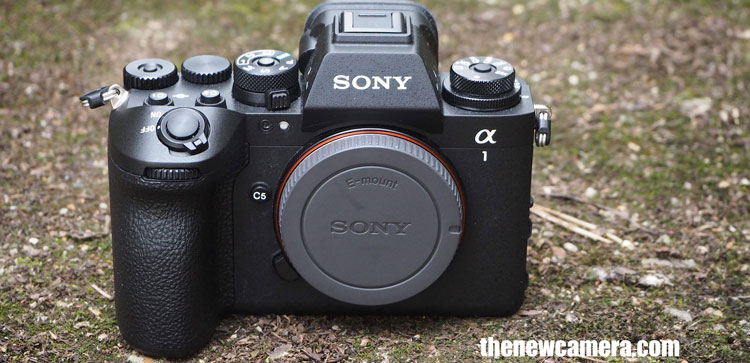
Best Sony Camera of 2026: Sony A1 and A1 II
The best flagship camera from Sony is the Sony A1 II. We need to make it very clear that if budget is not an issue, then the Sony A1 is the current flex camera from Sony. It features a 50-megapixel stacked CMOS sensor and is capable of recording 8K video.
This makes it a true flex camera, designed for both videographers and photographers, and ideal for hybrid use cases.
Price: A1 ~$3,999 used; A1 II ~$7,000
Sensor: 50MP stacked full-frame
Key Specs: 8K/30p, 4K/120p, 30fps, AI chip (A1 II).
Sony’s pinnacle: 8K for future-proofing, god-tier AF. A1 II adds ergonomics/AI.
Pros:
-
- Do-everything: 8K video, 50MP stills.
- Global shutter vibes (minimal rolling shutter).
- Wedding workhorse.
Cons:
-
- Budget-buster.
- Overkill for most.
Who It’s For: Pros with deep pockets. My studio A1 nails everything.
Sony A1 Budget Flagship
If you’re looking for budget alternatives, and specifically interested in getting a budget flagship camera, then we do have some good used deals on the Sony Alpha A1 full-frame camera—and here we are specifically talking about photographers.
Since the Sony A1 uses the same 50-megapixel stacked CMOS sensor as the A1 II, and while the A1 II is much improved on the video side with better overheating control and video optimisations, if you are a photographer, believe me, you will get the same image output from the A1 as from the A1 II.
On Amazon.com, you can find used Sony Alpha A1 cameras priced at around $4,094 in very good condition, and they are covered by Amazon’s guarantee, so you can return them if you are not satisfied.
Another good deal is available at B&H, where there are two used Sony A1 cameras listed. One is in like-new condition for $4,199, and the other is available for $3,999.
So, if you’re interested in getting a flagship “flex” camera at a discounted price, these are excellent deals, and once again, this recommendation is specifically for photographers.

Best Sony Camera for High Resolution: Sony A7RV
The super high-end king comes with a 61-megapixel stacked CMOS sensor, and it is the only Sony Alpha-series camera, other than the Sony A1, that can shoot 8K video.
Essentially, the Sony A7R V is the ideal camera for capturing commercial shoots, landscape photography that demands high dynamic range, and extreme detail. If you are a professional photographer, a pixel-peeper, and love to have the best-in-class high-resolution full-frame sensor in your hands, then the Sony A7R V is made for you.
Price: ~$3,900
Sensor: 61MP full-frame
Key Specs: 8K/24p (crop), 4K/60p, 4-axis flip screen, AI subject detection.
The “R” means resolution: crop-proof landscapes, wildlife, or wedding details. Video’s sharp but not low-light champ.
Pros:
-
- Massive files for heavy editing/cropping.
- Flip screen for vlogging.
- IBIS + high-res sensor = tack-sharp.
Cons:
-
- Noisy above ISO 3200.
- Huge files eat storage.
Who It’s For: Landscape/sports shooters. Paired with A7 V for events.
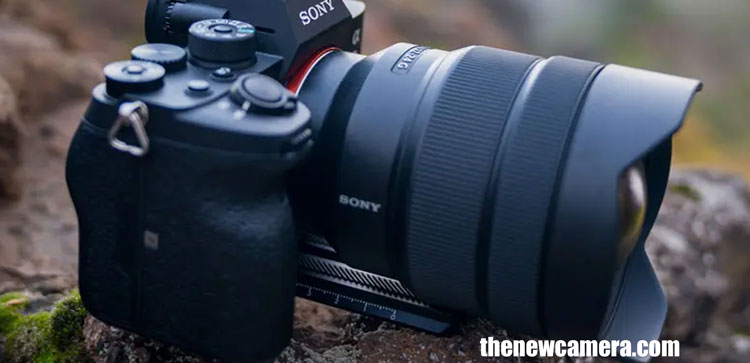
Budget High Resolution Mirrorless: Sony A7R IV, here are some options
The best part is that the Sony A7R IV uses the same 61-megapixel stacked CMOS sensor, but it cannot record 8K video like the Sony A7R V. So, the point is that if you are a photographer, there is no real need to invest in the Sony A7R V unless you have extra budget. It makes more sense to buy the Sony A7R IV right now.
If you are looking for a more budget-friendly option, the Sony A7R IV (renewed) is available for under $2,000. At the same time, used units are also available below $2,000, but my recommendation is to go with the renewed option, as it has already passed multiple quality checks and is generally more reliable and secure than buying a used unit.
Although both renewed and used options are covered under Amazon’s return policy, so if you find any defect, you can return the product easily and get a refund. In the end, it all depends on your budget—if the budget allows the A7R series, go for it; otherwise, there are plenty of solid alternatives available.

Best Sony for Photo Video Hybrid Shooters: Sony A7V
The Sony A7 V is a recent announcement from Sony and features a newly developed 33-megapixel partially stacked CMOS sensor, paired with the BIONZ XR II image processor. This new image processor carries a built-in, dedicated AI chip, which takes the overall performance and camera intelligence to the next level.
You are getting a very high dynamic range, with an ISO range from 100 to 25,600, especially when using the mechanical shutter, thanks to its dual-gain output (DGO) sensor design, which works not only while shooting video but also when capturing still images.
On the video side, you get oversampled 4K recording, with support for 4K 60p and up to 4K 120p modes, along with 7.5 stops of in-body image stabilization. On top of that, the battery performance is rated for up to 750 shots, or around 1 hour and 20 minutes of 4K 24/30p recording in 10-bit 4:2:2 mode.
Overall, this camera redefines the Sony A7 series lineup quite drastically and brings in multiple meaningful upgrades. While you won’t find fancy 6K or Open Gate recording here—features that are usually reserved for dedicated professional cinema cameras—in terms of real-world usability, this is one of the best hybrid cameras Sony has ever announced to date.
Price: ~$2,900
Sensor: 33MP partially stacked full-frame
Key Specs: 4K/120p (crop), 4K/60p no crop, 30fps burst, AI AF.
Sony’s newest mirrorless blows minds with lightning AF and blackout-free bursts. Half the A1 II price, near-identical performance.
Pros:
-
- No-crop 4K/60p—wide cinematic looks.
- 30fps photos rival flagships.
- Best price/performance in Sony history.
Cons:
-
- No open-gate or internal RAW.
- No 6K+ video.
Who It’s For: Serious hybrids. My current favourite—upgraded everything from the A7 IV.
So this is all about the Sony A7 V. If you are looking for a budget solution, you need to understand that in the same price range, you can get the Sony A7R IV for approximately $2,000.
So, instead of investing in the Sony A7 V, if you are a photographer, I would highly recommend getting the Sony A7R IV, which features a 61-megapixel stacked CMOS sensor. As we have discussed already, the Sony A7R IV (renewed) is available for under $2,000. At the same time, used units are also available below $2,000
Coming to budget options, obviously, we have many other camera. $2000 price range, which include the Soni 7C Ma 2 also, but again, if you are a happy shooter, the best fit for you is the Sony A7 R4 camera.
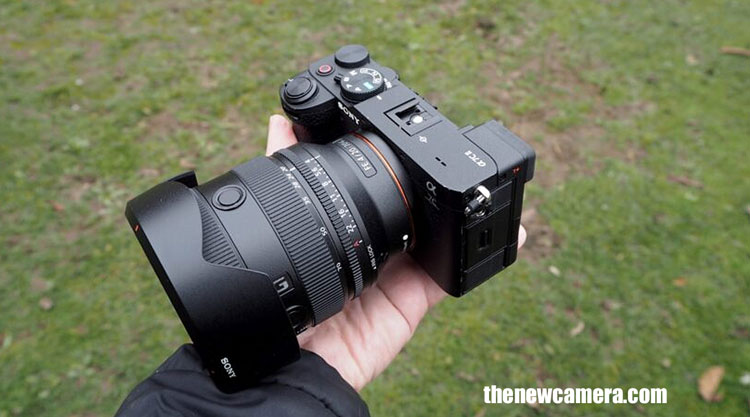
Best Sony Camera for Travel: Sony A7CII
The Sony A7C II is a great travel camera and is roughly the size of an APS-C body, yet it packs a 33-megapixel full-frame sensor, the same sensor we have seen in the Sony A7 IV. Due to its compact and travel-friendly design, it is widely loved by travel photographers and professional content creators.
This is one of the reasons why it is consistently among Sony’s best-selling cameras, especially in the Asian market. Its popularity comes from the fact that it is extremely compact while still being able to record 4K 60p video in 10-bit and 120p in Full HD.
The autofocus system is another major highlight, thanks to AI-based subject recognition, which makes tracking faster and more accurate. On top of that, the up to 7 stops of in-body image stabilisation allow for remarkably smooth handheld shots, and the inclusion of S-Cinetone delivers natural, pleasing skin tones straight out of the camera.
While it does have only a single card slot, the Sony A7C II delivers big performance in a small body, making it a fantastic option for travel shooters, content creators, and photography enthusiasts alike.
Price: Sony A7C II ~$2,200
Sensor: 33MP full-frame
Key Specs: 4K/60p (1.5x crop), 10-bit, AI AF, flip screen.
These share a stellar 33MP sensor for detailed 4K and tack-sharp photos. The A7 IV is the hybrid king (central EVF); A7C II is compact for video (side EVF).
Pros:
-
- Concert/wedding-ready AF—my second body for 100+ gigs.
- Gorgeous bokeh and color straight out.
- Battery grips for all-day shoots.
Cons:
-
- 4K/60p crop kills wide-angle.
- No 120fps full-frame.
Who It’s For: First full-frame buyers. A7 IV for photos; A7C II for portability. B-roll from my A7 IV always stuns.
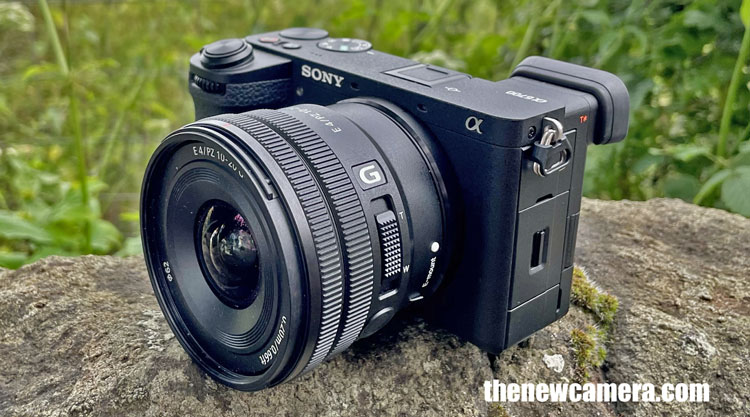
Best Sony Camera APS-C For PROS: Sony A6700
The Sony A6700 camera uses the same 26-megapixel sensor that we have seen in the Sony FX30 and the Sony ZV-E10 Mark II. After using it, I found it to be a real beast and one of my personal favourites, especially if you’re looking for a hybrid camera that excels in both photography and videography.
The major difference you will notice when using the Sony A6700 compared to the ZV-E10 Mark II is that the A6700 has a much better heat-management system. For prolonged video recording, the A6700 body performs more reliably, especially in hot weather conditions, compared to the ZV-E10 II series.
Another big advantage of the Sony A6700 is the built-in EVF and its camera body design, which is clearly aimed at photographers. If you are into photography, prefer a camera with a mechanical shutter, and want a solid hand-grip that makes the entire shooting experience more comfortable, then the Sony A6700 comes highly recommended.
Price: ~$1,400–$1,500
Sensor: APS-C, 26MP (same as ZV-E10 II)
Key Specs: EVF, IBIS, 4K/120p, AI autofocus, weather-sealed.
Sony’s latest A6000-series (successor to the legendary A6000) adds a viewfinder and IBIS for steady handheld shots. It’s a photo-video beast in a tiny body.
Pros:
-
- 4K/120p for epic slow-mo without full-frame bulk.
- IBIS enables slower shutters for sharp photos.
- Underrated gem—best APS-C hybrid value.
Cons:
-
- $300 more than ZV-E10 II for EVF/IBIS.
- Menu system is Sony’s typical labyrinth.
Who It’s For: Photographers dipping into video. I used it for concerts—autofocus nailed every beat.
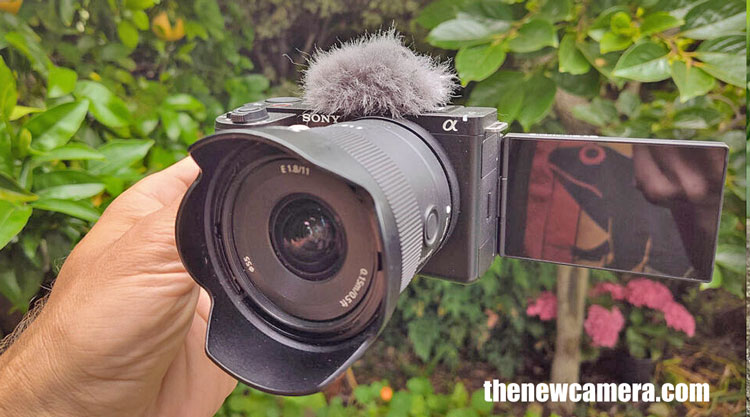
Best Sony Vlogging Camera: Sony ZV10 II
The best part is that Sony has recently upgraded the firmware of the Sony ZV-E10 Mark II camera. With this major firmware update, the camera is now able to shoot 4K at 120fps, which was not possible earlier. However, you do have to face a 1.5× crop while shooting 4K 120fps. When shooting 4K 60fps, there is no crop at all.
Yes, the camera is ready for serious use, but the overall heat sink unit and heat management of the ZV-E10 Mark II are not very strong. So, if you are living in a hot and humid country or region, especially during summer conditions, you should definitely consider a different camera.
That said, we have been using this camera for more than 2 to 3 years in our studio, and since we work in an air-conditioned environment, we have never faced overheating issues.
Price: ~$1,000–$1,100
Sensor: APS-C, 26MP (10-bit)
Key Specs: Same as above + 4K/60p, 1k 120p, vertical menu flip, improved touchscreen, better low-light.
Last year’s refresh brings 10-bit color (richer grading) and 4K/60p for silky slow-mo. The sensor matches pricier models, and low-light is a game-changer for night shoots.
Pros:
-
- First Sony with vertical UI—Reels made easy.
- 4K/120p with 1.5x crop; great for action.
- Touch controls feel modern.
Cons:
-
- $300 premium over original—worth it only if you edit heavily.
- Still no EVF or IBIS.
Who It’s For: Social creators craving better image quality. In tests, slow-mo b-roll popped—ideal for dynamic content.
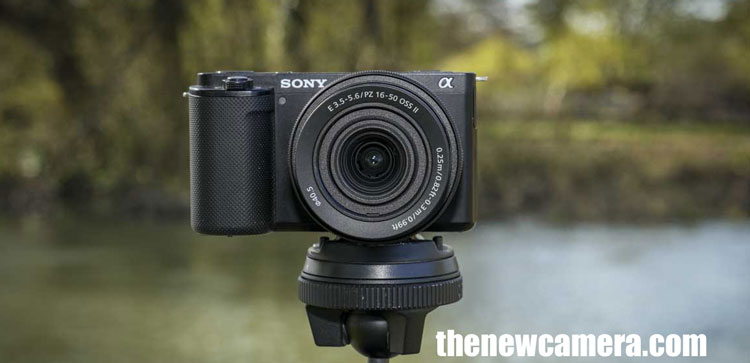
Best BUDGET Sony Vlogging Camera: Sony ZV10
If you’re looking for a more budget-friendly option, then we do have a highly trusted camera, the Sony ZV-E10. This camera is being used by many creators worldwide, and we have one in our studio. It has been a very reliable performer from day one.
If you want to shoot 4K 24p or 4K 30p videos for your YouTube channel, the Sony ZV-E10 is still highly usable. Apart from that, even for handheld vlogging, this Sony camera supports gyro-based image stabilisation.
Although the new-generation APS-C cameras like the Sony A6700 feature Dynamic Active IBIS that works directly inside the camera, with the ZV-E10, you need to use Sony Catalyst Browse software later, after shooting, to stabilise your footage using gyro data.
Overall, even in 2026, if you’re looking for a budget content-creator camera, the Sony ZV-E10 remains one of the best beginner mirrorless options available.
Price: ~$700 (body-only)
Sensor: APS-C, 24MP
Key Specs: E-mount (lenses sold separately), 4K/30p, 1080p/120fps, flip screen, no viewfinder, 8-bit color.
Released in 2021 but still a bestseller (our affiliate top pick), the ZV-E10 is the gateway to Sony’s ecosystem. It crushes thumbnails and vlogs with sharp 4K, plus decent photos. Auto modes make it idiot-proof.
Pros:
-
- Affordable entry to E-mount lenses (start with a 16-50mm kit).
- No 30-min video limit—perfect for long takes.
- Vertical flip for TikTok/Reels.
Cons:
-
- Older 8-bit sensor; colors look dated in log profiles.
- Screen-only composition (no EVF).
Who It’s For: Beginners building a kit. I recommend it as your first Sony—invest in lenses, not body.
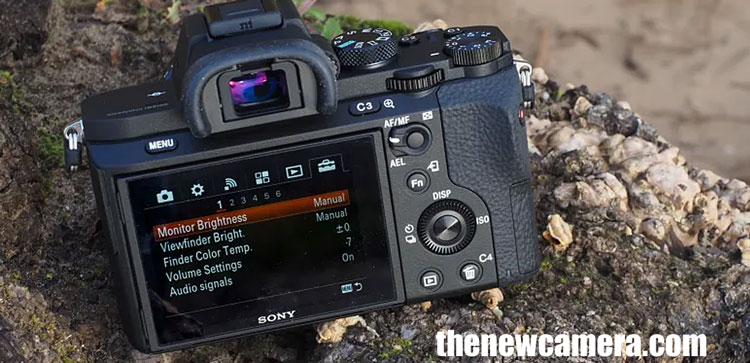
Best Sony Full-Frame Camera on a Budget: Sony A7II
Maybe you know you want a full-frame sensor but you’re on a budget. Beginners looking for a great budget option should check out The Sony a7 II camera was released in 2014, and currently, most used models in good condition are available for around $500 on Amazon.com. And as I have said, the best thing with Amazon.com is that you get a replacement warranty with it. If you don’t like the product, you can replace it.
There are multiple sellers there — the reputed ones — who are selling the Sony a7 II in good condition. Just look for the ratings, sort it out, and now you have your camera in your hand.
The camera has so many great qualities, including:
- 24mp full-frame sensor
- IBIS (Internal Image Stabilization)
- The versatile Sony e-mount
- Tilt screen
We are using multiple Sony cameras, starting with the Sony A7 II, as well as the A7 III, and also crop bodies, on our YouTube channel, The New Camera. And when I’m not shooting with my Sony cameras, I am using the iPhone 17 Pro.
The best part is that you can use most of the lenses without any worry since the Sony E-mount is completely open. Mostly in the studio, I use the Sony 50mm f/1.8 with the A7 III, the cheapest prime available for the camera. And specifically with the Sony ZV-E10 II, I am using the Sigma 16mm f/1.4.
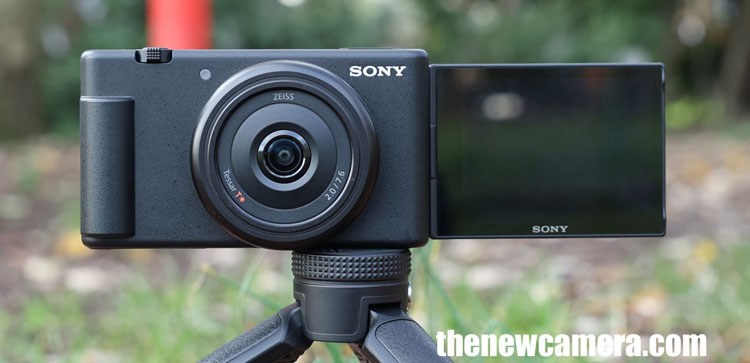
The Most Affordable Entry-Level Vlogging Camera: Sony ZV-1F
If you are looking for a compact point-and-shoot camera from Sony, then the Sony ZV-1F is the obvious answer. You won’t get the same level of image quality that we usually see from Sony mirrorless cameras paired with prime lenses, but for on-the-go use, it is a lightweight and budget-friendly solution.
Price: ~$500
Sensor: 1-inch, 20MP
Key Specs: Fixed 20mm f/2.0 lens (wide-angle only), 4K/30p video, 1080p up to 120fps, flip-out touchscreen, built-in mic with windscreen, USB-C webcam mode.
Pros:
-
- Pocketable and beginner-friendly—no menu dives required.
- Excellent stabilisation for handheld walks.
- Product Showcase mode auto-focuses on objects you hold up (genius for reviews).
Cons:
-
- No zoom (digital crop degrades quality).
- Autofocus hunts in low light or edges—switch to manual for fixes.
- No RAW photos; JPEG-only limits editing.
Who It’s For: Smartphone upgraders or TikTokers. Pair with a $50 grip for run-and-gun. Skip if you need Zoom or pro photos.
So, it’s best to invest in the Sony ZV-E10 with a prime lens. Otherwise, if you are on a very limited budget, you can go with the Sony ZV-1F.
The Sony ZV-1F is Sony’s cheapest new camera in 2026, making it ideal for casual creators who want dedicated camera gear without complexity. Its ultra-wide 20mm fixed lens is perfect for immersive vlogs or talking-head videos, with no extra lenses required. In my testing, the 4K footage looks punchy straight out of the camera, with vibrant colors, making it well-suited for social media content.
So, if you’re looking for a cheap compact camera that can shoot 4K video and allow you to upload videos easily to your vlog or blog, then yes, this is a valid option. However, if you can spend a bit more, I would strongly recommend not investing in 1-inch sensor compact cameras with variable zoom lenses. We have already tested these combinations, and they are not able to deliver the sharpness and image quality that you can achieve even with a Sony ZV-E10 paired with a prime lens.
I hope you found my guide useful, and if you have any questions about a specific camera, leave a comment below! What camera and lenses do you plan to go with? How does the digital viewfinder change the way you shoot?
Best Pro Cameras to Buy in 2026 Under $500: Full Frame, APS-C, and Micro Four Thirds for Savvy Shooters