
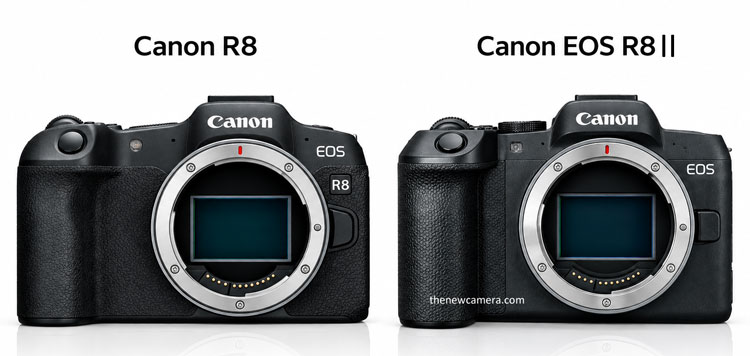
Canon R8 versus Canon R8 Mark II camera: We are comparing both of these cameras since we have almost confirmed a specific set of information about the camera, and we are just comparing the things that have actually been improved inside the Canon R8 Mark II camera that would be beneficial if you are thinking of upgrading your camera or buying the R8 Mark II. If you’re also interested in a comparison with the Canon R6 Mark II or Canon R6 Mark III, let me know in the comment section below.
The real comparison
The R8 already had the important imaging pieces: a 24.2MP full-frame sensor, Dual Pixel AF II, DIGIC X, 40 fps electronic shooting, and 4K/60p oversampled from 6K. What it did not have was in-body stabilisation, a rear joystick, or a card door that did not share the battery compartment. Those three absences are why a lot of buyers paid more for an R6 Mark II even when they liked the R8’s pictures.
The leaked Mark II tries to close two of those gaps and leaves the third almost untouched. That is the whole story.
1. IBIS is the Major difference Between R8 and R8 II
| EOS R8 | EOS R8 Mark II | |
| In-body stabilization | None | 5-axis, claimed up to 7.5 stops |
| Practical fallback | Lens IS and digital movie IS | Body and lens working together, if Canon implements it properly |
The sensor-shift image stabilization system is literally very helpful not only with the prime lenses, but also with the lenses that already have optical image stabilization inside it. Most Canon prime lenses, like the 24mm, 35mm, and 85mm f/2, have built-in optical image stabilisation, but lenses like the 16mm and 50mm don’t. So if you are buying a Canon Mark II camera with a sensor-shift image stabilisation mechanism, lenses without OIS will be even more useful. At the same time, the lenses that already have OIS inside it will pair up with the camera’s sensor-shift image stabilization system to give you more stability in each and every shot that you capture or the video you create.
2. Handling: joystick and card door versus a shallower grip
| EOS R8 | EOS R8 Mark II (from Product Shots) | |
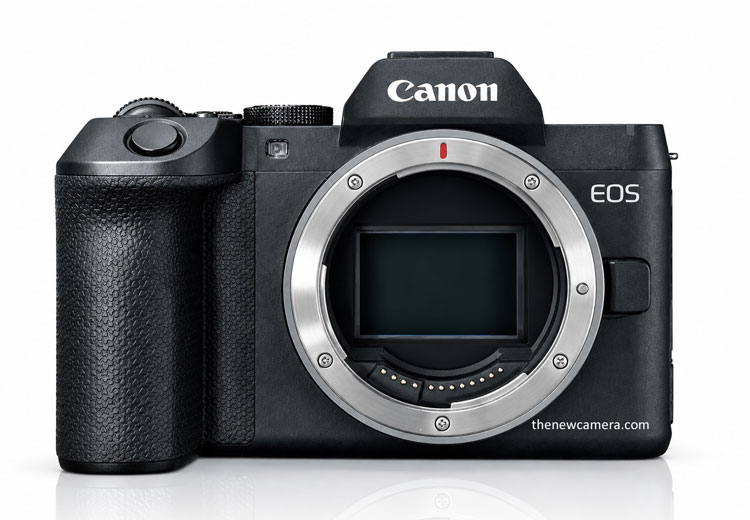
| Rear joystick | No | Yes, high beside the EVF |
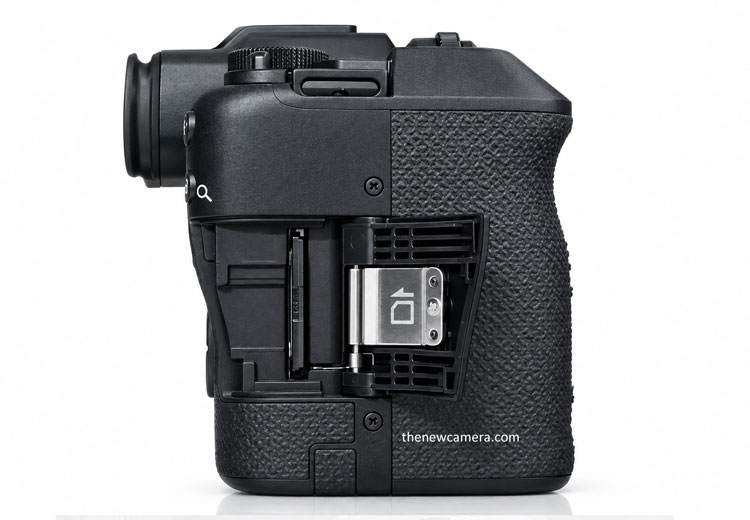
| SD access | Shared battery door | Dedicated side door |
| Shape | Softer compact | Squarer, slightly thicker, narrower grip span |
Moving an AF point with your eye in the finder is the difference between a body you operate and a body you poke. The R8 can do the job from a touchscreen. It cannot do it quickly in cold weather, with gloves, or while a subject is moving. A joystick is the correct fix.
The photos complicate the win. The stick sits in a high position, close to the viewfinder. That layout works for some hands and crowds others. The body also looks thicker through the middle and tighter between grip and lens mount. The card door is an unambiguous improvement. The grip is not. Anyone who already found the R8 small should wait to hold the Mark II before calling the ergonomics solved.
An optional add-on grip is rumored for the same announcement. That is an admission as much as an accessory: the compact brief still fights large hands.
Upgrade weight: high for control, unresolved for comfort.
3. Design: modern compact, not a tribute body
A silver, dial-led, AE-1-flavored R8 was the romantic version of this camera for most of 2026. The leaked body is not that product. It is a squared contemporary shell with a clean left shoulder and controls stacked on the right.
That will please people who wanted the R8 to look current. It will not please people who were waiting for an object to wear. Those are different purchases. The Mark II, as photographed, is a tool refresh. Judging it as a failed heritage camera misses what Canon appears to be building: room for IBIS inside a small RF body.
Looks will not decide the upgrade for anyone who already owns an R8 and loses frames to shake. Looks will decide it for anyone who wanted a retro Canon and now has to look elsewhere.
Upgrade weight: emotional, not technical.
4. The sensor did not move – and that is a strategy, not an accident
| Mid-2026 expectation | Confirming information | |
| Resolution | 32.5MP class | 24MP, same generation as R8 / R6 Mark II |
| Dual cards | Often assumed | Still one SD card |
| Burst | “Newer chip” | Still 40 fps electronic |
A 32.5MP compact full-frame would have been a different camera: more crop for wildlife, more print headroom, a reason to skip the R6 line on resolution alone. The leak says Canon kept the known, fast 24MP chip and spent the engineering on stabilization and the body.
That is conservative and coherent. The R8 was never the resolution body. It was the body that made R6-class files in a smaller shell. Repeating that formula keeps price and readout in a familiar place. It also means the Mark II does not steal the R6 Mark II’s remaining advantages: dual cards, the larger battery, three control dials, and a deeper grip.
If the reason you waited was megapixels, this leak is not your camera.
Upgrade weight: low as a stills quality jump; high as a signal of what Canon refuses to put in this slot.
5. Battery and price: the half of the R8 problem Canon will not fix
| EOS R8 | EOS R8 Mark II (leaked) | |
| Battery | LP-E17 | LP-E17 |
| Cards | One UHS-II SD | One SD, better door |
| Launch price | $1,699 | About $1,799 / €1,879 |
The R8’s other long-term limit was never mysterious. The cell is small. A long afternoon still means a spare. Putting IBIS on that same cell makes the spare more necessary, not less.
Keeping LP-E17 is how Canon protects the size claim. A grown-up battery would force a grown-up grip and collapse the “lightest full-frame” line. The product is being held in its slot on purpose.
Price sits on that choice. A hundred dollars above the R8’s original sticker looks modest until you compare it with current R8 street prices, or with a used R6 Mark II that already has IBIS and a battery that lasts. The Mark II has to be clearly better in the hand to justify that spread. On paper it is better. On a hike, the spare batteries still travel with you.
Upgrade weight: the constraint that keeps this from being an R6 killer.
6. The quieter upgrades – real, not the reason to switch
Pre-capture at 20 fps for half a second is the best stills extra on the sheet. Street and wildlife shooters will use it immediately. A sensor curtain is grown-up housekeeping. New LUTs and downloadable color filters are useful if the implementation is not buried in menus.
Most of the video list is already on the R8: 4K/60 from 6K, Full HD 180p, Canon Log 3. The Mark II is not a cinema bump. The open question is heat and runtime once IBIS is drawing power in a small shell. Until record-time tests exist, ignore slogans about “warm-up.”
The 2D-to-3D video line is a launch-day talking point, not a purchase reason.
Which camera wins which buyer
Keep the R8 if you already own one, shoot from a tripod, or live on stabilized lenses. You would be paying for thickness, a new grip angle, and a modest price bump to solve a problem your glass already handles.
Wait for the Mark II if most of your work is handheld, you want a joystick, and you accept 24 megapixels plus a small battery. That is the buyer this leak is written for.
Buy neither as an R6 Mark II replacement. Dual cards, LP-E6 power, and a proper grip still live one tier up. A 24MP Mark II with LP-E17 does not move that line.
Do not wait for a retro AE-1 in this shell. The leaked body ended that version of the camera.
Do not sell an R8 this week. Six days to a rumored announcement is not a reason to take a used-market loss on a camera that still takes the same picture.
Conclusion
The major difference is not 40 fps versus 40 fps, and it is not 4K versus 4K. It is whether Canon will put stabilization and a real AF controller into the cheap full-frame body without giving that body a real battery.
The leaks say yes to the first half and no to the second.
That produces a narrow, honest verdict. The Mark II, if it ships as photographed and as listed, is the R8 finished — not the R8 replaced, and not the R6 shrunk. Handheld shooters get the two parts they have needed since 2023. Everyone else is being asked to pay more for a thicker compact that still drinks spares and still writes to one card.
Believe the announcement, then believe a battery test. Until both exist, the upgrade is obvious in theory and incomplete in the kit bag.
The article “Canon R8 vs R8 Mark II: The Differences That Decide the Upgrade” was written by thenewcamera.com team on 7:44 pm, Wednesday, 9 September 2026, Greenwich Mean Time (GMT) | You can also follow us on Our Official Social Media Handles FACEBOOK | TWITTER | INSTAGRAM > more live Camera News + Canon Rumors 24X7