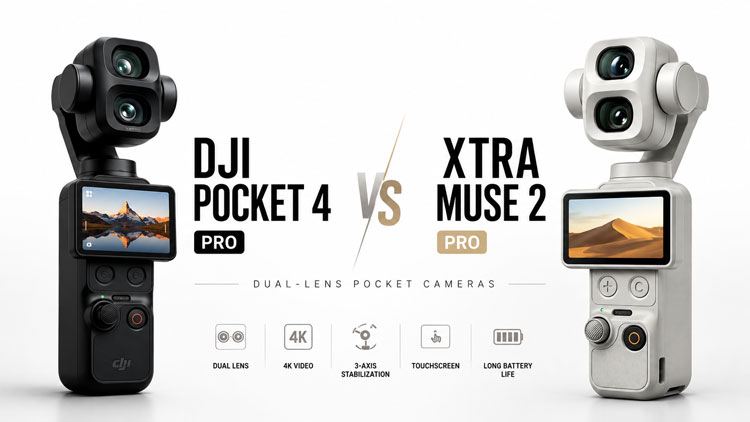
Do the recently announced DJI 4P Pro camera and the recently announced XTRA Muse 2 PRO share almost the same core specifications? The comparison also becomes more important since we do have only one option available here in the USA. To confirm, are we missing something while picking up the Xtra Muse 2 PRO, or are we making the right decision? The comparison will clear all possible doubts you have related to the Xtra Muse 2 PRO vs DJI Pocket 4 Pro.
So finally, we have a new competitor coming in, and it is now official and will soon become widely available for pre-order on leading United States-based online and retail websites.
The DJI Osmo Pocket 4 Pro (also known as Pocket 4P) officially launched in mainland China in mid-June 2026. The Xtra Muse 2 Pro is currently in early access, with a wider US launch expected soon. Here’s a fully updated, cross-verified comparison.
Quick Specs Comparison
| Feature | DJI Osmo Pocket 4 Pro | Xtra Muse 2 Pro |
| Main Sensor | 1-inch LOFIC CMOS (~20mm) | 1-inch CMOS |
| Telephoto | 1/1.28-inch, 60mm f/1.8 (~3x optical) | Dedicated 3x optical zoom module |
| Max Video | 4K/240fps (wide), 4K/200fps (tele) | 4K/240fps |
| Dynamic Range | Up to 17 stops (wide) + 10-bit D-Log 2 | Up to 17 stops + 10-bit X-Log 3 |
| Color Profile | D-Log 2 | X-Log 3 |
| Storage | 103GB internal + microSD | ~103GB internal + microSD expandable |
| Screen | 2.0″ rotatable OLED (1000 nits) | 2.0″ dual/bi-directional flip OLED |
| Weight | ~190g | ~180g |
| Key Strength | LOFIC sensor, zoom rocker, ecosystem | Native 1/4″ mount, value, early US availability |
| Price (June 2026) | China: ~CNY 3,799 (~$530–560) | Expected ~$649 (early access deals available) |
| Availability | China launched; US limited (grey market) | Early access open; US launch imminent |
Design & Ergonomics
Both cameras share a similar design and a dual-lens camera-based setup for high-quality videos. Overall, the cameras are the same at the same time.
Why DJI feels slightly more premium thanks to the new zoom rocker and customizable function button, which improve one-handed operation.
The Xtra Muse 2 Pro stands out with two practical improvements that matter in real-world use:
- A native 1/4″-20 tripod thread built into the base
- A bi-directional flipping screen that works well for both left- and right-handed shooters
The Xtra is also a bit lighter. Many creators consider the native tripod mount a meaningful quality-of-life upgrade.
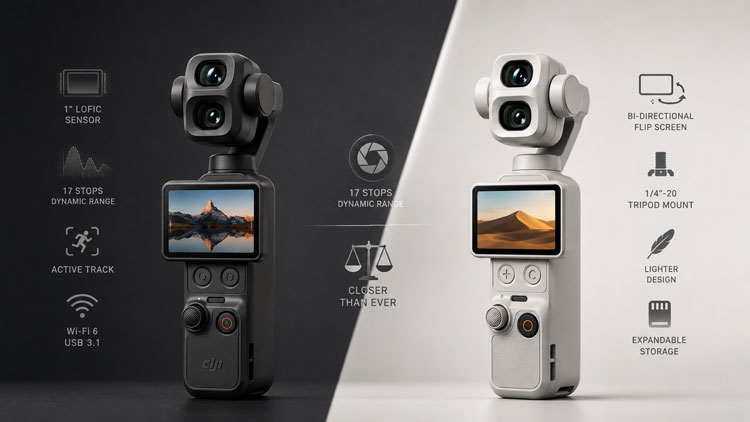
Image Quality & Dynamic Range
This is the most interesting part of the comparison right now.
Before we jump into the technical terms of the sensors and their characteristics, we have to convey one thing. Both cameras carry almost the same type of sensor and image processor inside them. Even the image-processing algorithms running inside both cameras, responsible for neat and clean video output, implementing IBIS, as well as processing high-quality log files, are very similar. The names are different, obviously, but technically both are the same. So, let’s jump into those technical terms and the differences present in both.
DJI Osmo Pocket 4 Pro uses a 1-inch LOFIC sensor on the wide end, which enables up to 17 stops of dynamic range when shooting in D-Log 2. The telephoto uses a smaller 1/1.28-inch sensor at 60mm f/1.8. The LOFIC technology gives the wide lens a hardware advantage in highlight recovery and low-light noise performance.
However, because the two lenses use different sensors, there can be differences in color response and noise characteristics when switching between them. D-Log 2 also locks zoom to 1x only.
Xtra Muse 2 Pro is now officially marketed with up to 17 stops of dynamic range using its 10-bit X-Log 3 profile. The dual-lens system consists of a 1-inch main sensor + a dedicated 3x optical zoom module. Xtra is heavily pushing the 17-stop figure in its marketing and early access materials, positioning the camera as a direct competitor to the DJI Pocket 4 Pro in dynamic range and grading flexibility.
Real-world testing data is still limited, but early low-light and night footage teasers from Xtra look promising, with good detail retention and controlled noise.
Current verdict on image quality: The two cameras are now much closer than previously thought. Both claim 17 stops of dynamic range. DJI has the advantage of LOFIC hardware on the wide lens and more mature color science, while Xtra offers very competitive specs at a lower price.
Video Performance & Features
None of these support 8K but, yes we do have support high-frame-rate 4K recording and 10-bit log profiles suitable for professional color grading. DJI currently has more confirmed details on split frame rates between the two lenses and faster transfer speeds (USB-C 3.1 Gen 2 + Wi-Fi 6).
ActiveTrack-style subject tracking is expected to perform well on both. If you already use DJI microphones or other accessories, the Pocket 4 Pro will integrate more seamlessly.
Price & Availability
This remains the clearest practical difference:
- DJI Osmo Pocket 4 Pro: Launched in China at around CNY 3,799. Official US and global availability is still restricted. Grey market options exist but come with support limitations.
- Xtra Muse 2 Pro: Early access is currently open in USA. The expected price is in the $6XX range, with early supporters receiving a $60 launch coupon after a $20 refundable deposit.
Pros & Cons
DJI Osmo Pocket 4 Pro
Pros: LOFIC sensor advantage on wide lens, mature color science and processing, physical zoom controls, strong ecosystem, better long-term support and resale value.
Cons: Higher price, limited official availability outside China, potential mismatch between the two different sensors, D-Log 2 restricts zoom.
Xtra Muse 2 Pro
Pros: Strong value proposition, native 1/4″ tripod mount, versatile bi-directional screen, lighter weight, easier availability (especially in the US), expandable storage, matching 17-stop DR claim with X-Log 3.
Cons: Newer brand with unproven long-term support, real-world consistency of 17-stop claim still needs verification through independent tests.
Final Verdict
The gap between these two cameras has narrowed significantly with the latest information on the Xtra Muse 2 Pro.
Choose the DJI Osmo Pocket 4 Pro if:
- You want the most refined experience with proven color science and ecosystem support
- You prioritize hardware advantages like LOFIC on the wide lens
- You can reliably source it through grey market channels
Choose the Xtra Muse 2 Pro if:
- You are in USA already connected to DJI eco system
- You want excellent specifications at a more accessible price
- You value practical design improvements (native mount + screen versatility)
- You want easier availability and local support, especially in the US
Our current recommendation: The Xtra Muse 2 Pro has become a much stronger contender. With its 17-stop dynamic range claim via X-Log 3, 3x optical zoom module, and significantly better pricing and availability, it offers very compelling value. Most importantly, the Xtra muse 2 is widely available in USA without any issue.
We’ll continue updating coverage on thenewcamera.com with hands-on testing, sample footage, and India-specific availability information as both cameras become more widely accessible.
Which one are you more interested in right now? Let us know in the comments.
The article “DJI Pocket 4 Pro vs Xtra Muse 2 Pro: Which Dual-Lens Pocket Gimbal Camera Wins in 2026?” was written by thenewcamera.com Team on 7:50 pm, Saturday, 20 June 2026, Greenwich Mean Time (GMT) | You can also follow us on Our Official Social Media Handles FACEBOOK | TWITTER | INSTAGRAM | get live news — > DJI Rumors
DJI Mini 4K Prime Day Deals June 2026: Best Amazon Prices & Bundles (No FAA Registration)

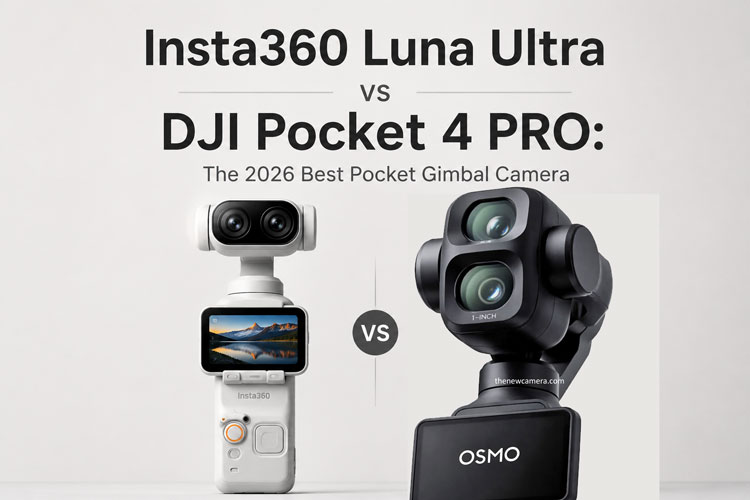
Insta360 Luna Ultra vs DJI Pocket 4 PRO: The 2026 Best Pocket Gimbal Camera